Connect with us

Agriculture

Zimbabwe Finalises Land Rights Policy to Entrench Land Reform

Zimbabwe says a new National Land Policy is at final draft. It aims to give people resettled on former commercial farms stronger, more bankable rights. Cabinet approval is expected by the end of 2026, but the detail that matters most to farmers and lenders has not yet been published.

Published

on

Zimbabwe Finalises Land Rights Policy to Entrench Land Reform

Lands and Rural Development Minister Vangelis Haritatos says the policy is in its final drafting stages and should reach Cabinet before the end of 2026. The government says it will strengthen tenure security for farmers resettled since the 2000 Fast Track Land Reform Programme. Bloomberg reported the finalisation on 30 October.

Haritatos said the policy “guarantees that the land reform is irreversible and moves us safely into a transformative rural economy.” It is presented as part of Vision 2030, with aims including a transparent and inclusive land administration system and wider opportunities for women, young people and vulnerable groups.

Background: the collateral problem

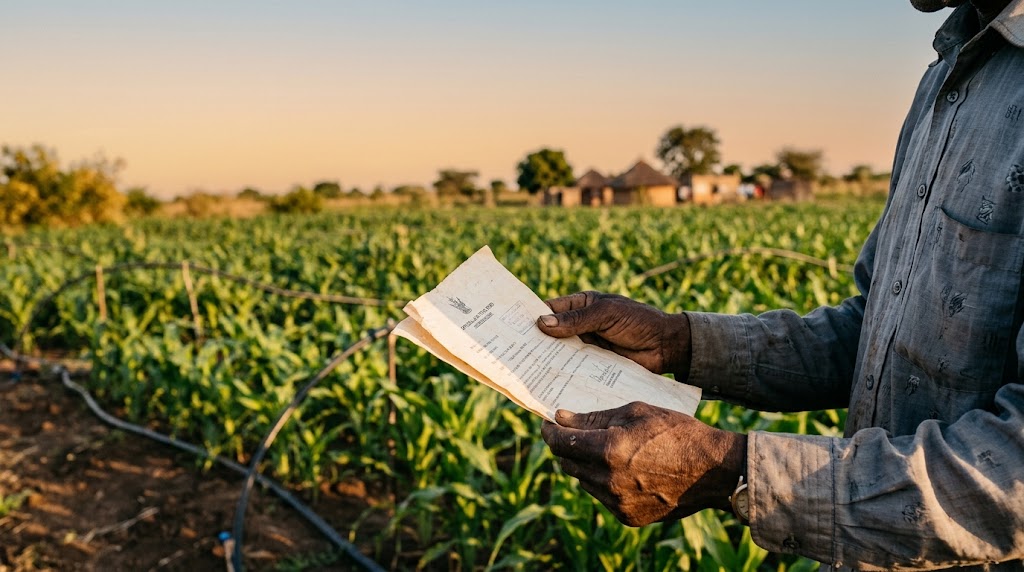
Most resettled farmers hold offer letters or leases, not title deeds, according to lands ministry figures reported by Report Focus News. Because ownership never formally transferred, those documents are hard to use as security for commercial loans. That limits financing for irrigation, mechanisation and other long-term investment.

A separate title deeds programme began in December 2024 to replace 99-year leases. Permanent Secretary Obert Jiri reportedly said that over 500 deeds had gone to A2 farmers and over 400 to A1 farmers. The report doesn’t give the year of that update. Farmers pay for deeds in cash or by mortgage.

What is planned, and what is not yet known

Reported measures include:

  • A single national land registry and a digital land register (e-cadastre).
  • A 50-year National Land Master Plan that zones land by economic use.
  • A faster national survey programme to issue bankable title deeds.
  • About 2 million hectares identified to capitalise the AFC Land Bank. The land stays State property but would serve as collateral.

The government has not yet published detailed provisions on ownership rights, transfers or whether the new arrangements can be used as loan security. These come largely from a single report, and I could not verify them independently.

Compensation: still contested

In 2020, the government agreed a US$3.5 billion compensation framework with about 3,500 former farm owners, for improvements on farms rather than the land itself. Reported payments don’t reconcile:

  • Finance Minister Mthuli Ncube, cited by Bloomberg, said about US$800 million had been paid in cash and Treasury bills.
  • Ncube later put the figure at US$820 million.
  • Deputy Finance Minister Kudakwashe Mnangagwa told Parliament that Treasury bonds worth US$508.8 million were issued to 623 claimants, plus cash payments.
  • A compensation committee cited in the same report says over 85% of the liability remains unsettled and that payment for the land itself is unresolved.

The ministry has not said whether the new policy will change how compensation works.

What it means for the economy

  • Farm finance. The central test is whether banks will accept the new tenure instruments as collateral. If they do, resettled farmers could borrow for irrigation, equipment and inputs. If they do not, the policy will offer security of occupation but limited access to credit.
  • Agribusiness and investment. Clearer rights could support contract farming, processors and input suppliers, which need farmers able to invest. Investors will also look at how compensation and State ownership of land are handled.
  • Government and banks. Using State land to capitalise the AFC Land Bank is a different route from individual title. Its effect depends on how the bank lends against it.
  • Inclusion. The policy’s stated focus on women, youth and vulnerable groups will need clear rules, since smallholder and A1 farmers often have the weakest documentation.

Business Diary Analysis

The policy addresses a real constraint that has held back rural finance for two decades. But “entrenching” rights is a legal and financial question, not a slogan. Its value will depend on whether the rights are transferable, registrable and acceptable to lenders, and on how credibly the Government settles compensation. Until the text is published, the economic claims remain expectations.

Key takeaways

  • Zimbabwe’s National Land Policy is at final draft, with Cabinet approval expected by end-2026.
  • The aim is stronger tenure for resettled farmers and better access to agricultural finance.
  • Planned measures include a single land registry, a digital register, a 50-year land master plan and faster title surveys.
  • Key terms on ownership, transfers and collateral are unpublished, and compensation remains disputed.

What’s next?

Watch for Cabinet approval, publication of the policy text, whether banks accept the new tenure documents as security, progress on the title deeds programme, and any change to compensation arrangements.

Sources

The Business Diary magazine is a comprehensive publication that centers around business and economic development news. It covers a wide range of topics including finance, mining, technology, environment, climate finance, and agriculture. With its focus on providing valuable insights and updates, the magazine caters to readers who are interested in staying informed about the latest developments and trends in the business and economic landscape of Zimbabwe.

Continue Reading

Agriculture

The Green Diamond Reimagined: Why Macadamia Value Addition Could Redefine Zimbabwe’s Horticulture Exports

Published

on

Why Macadamia Value Addition Could Redefine Zimbabwe’s Horticulture Exports - the Business Diary

By Staff Reporter

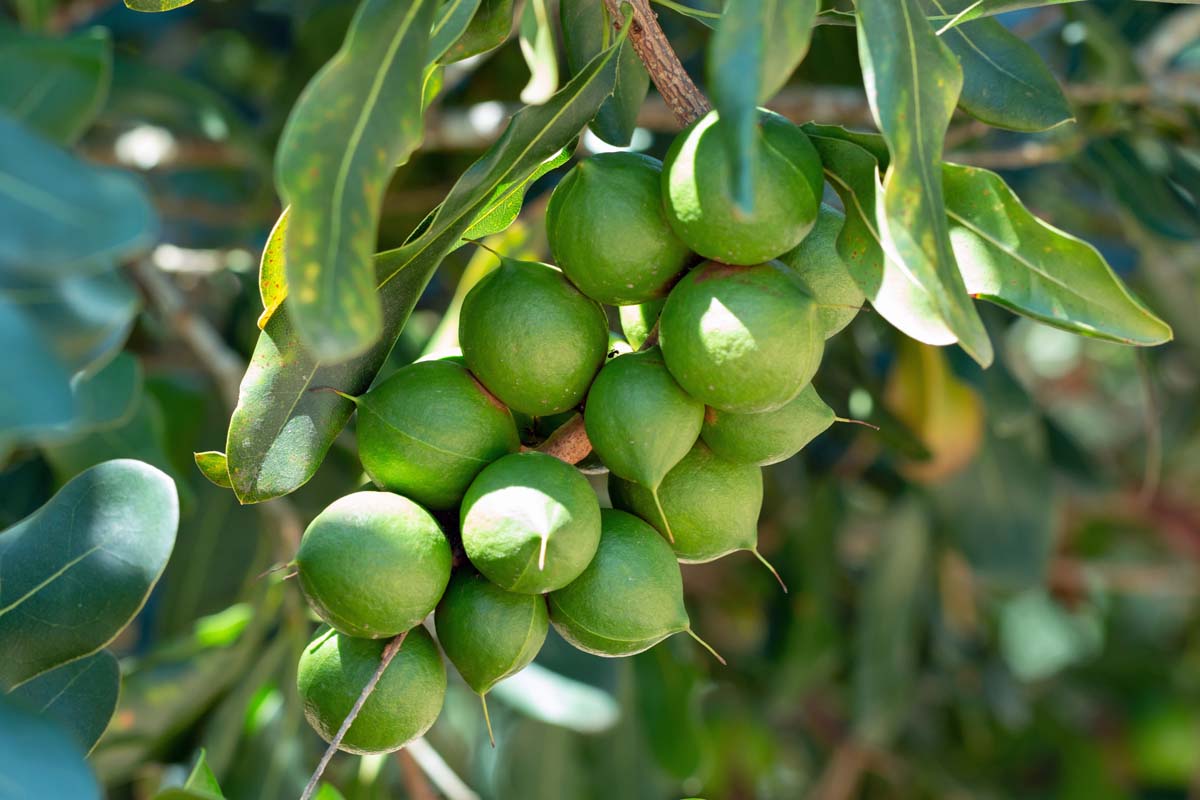
Once a niche crop grown quietly in Zimbabwe’s eastern highlands, macadamia nuts are emerging as one of the country’s most promising agricultural exports — and a potential symbol of how value addition can reshape rural economies.

Often dubbed the “green diamond of Chipinge,” macadamia production is concentrated in Manicaland province, particularly Chipinge and Chimanimani though production is gradually moving to other districts.

With global demand rebounding — especially in Asian markets — Zimbabwean farmers are finding renewed optimism after several years of depressed prices.

The turning point came with Zimbabwe’s successful negotiation of phytosanitary access to the Chinese market, allowing direct exports of macadamia nuts and avocados for the first time.

Zimbabwe recently secured access to export avocados and macadamia nuts to China for the first time after signing the Protocol for Phytosanitary Requirements for Export.

China imports an estimated US$27 million worth of macadamias annually, and Zimbabwe’s current contribution of about US$8.5 million is expected to rise steadily.

Recent visits by Chinese buyers to Chipinge, facilitated by ZimTrade, marked a significant shift. By engaging farmers directly, buyers eliminated intermediaries that have historically absorbed a large share of profits. This move has the potential to increase profit margins for local growers.

Manicaland is home to over 530 macadamia farmers and is well positioned to capitalise on this opportunity, with the sector already showing promising growth, particularly in Chipinge.

“This is a game changer for farmers,” said Mr. Fortunate Gurai, secretary-general of the Macadamia Nuts Association of Zimbabwe. “Direct engagement improves pricing transparency and margins.”

However, all these positive developments will only fully benefit Zimbabwean farmers if they focus on value addition.

Despite export growth, Zimbabwe remains stuck at the lowest rung of the value chain. Most macadamia nuts are exported in-shell, limiting earnings and exporting potential jobs along with raw produce.

“Europe and the United States only buy shelled nuts,” Gurai said. “But Zimbabwe does not yet have a cracking plant.”

According to industry data, the country produces around 8,000 tonnes per year, well below the 20,000-tonne threshold often required by large-scale processors to justify investment.

This structural challenge mirrors a broader regional pattern, where agricultural exporters struggle to move beyond raw commodities.

Mr Munyaradzi Rubaya, Director for Economic Affairs in the Ministry of State for Manicaland Provincial Affairs and Devolution, emphasised the need to scale up value addition projects.

“There is still a long way to go to add value to the macadamia crop in Manicaland,” he said.

There are, however, signs of progress.

Mr. Munyaradzi Rubaya, director for economic affairs in the Ministry of State for Manicaland, confirmed that a private processing plant is under construction in Chipinge, spearheaded by a local investor.

Once operational, the facility is expected to benefit hundreds of farmers.

“Most nuts are currently exported through South Africa without being processed. This is where we currently stand,” said Mr Rubaya.

Tanganda Tea Company, a major agro-industrial player, has also indicated interest in establishing a macadamia processing facility at New Year’s Gift, although timelines remain uncertain.

Small-scale farmers are not waiting idly. Ashirai Mawere, a Chipinge farmer, said cooperatives are pursuing macadamia oil extraction as an entry point into value addition.

“As small-scale farmers, we have secured a place in Harare where we will extract macadamia oil. We are also applying for land in Chipinge to start this project,” he said.

Mr Fortunate Gurai, Secretary-General of the Macadamia Nuts Association, highlighted that Zimbabwean farmers are limited in their ability to export directly.

“Chinese buyers accept macadamia nuts in the shell, which is why we sell there. Other markets, such as Europe and the USA, only buy shelled nuts,” he said.

“However, Zimbabwe does not have a macadamia cracking plant, partly because local production — currently 8,000 tonnes per year — is below the minimum 20,000 tonnes some investors require for processing facilities.”

Due to these limitations, farmers often sell to middlemen who export the nuts, Mr Gurai said,

“Many farmers cannot sell directly to Asia because of small quantities. Since the COVID-19 outbreak, prices have not fully recovered. We are calling for buyers to review prices so we can cover production costs.”

Southern Africa dominates global macadamia production, with South Africa leading exports. Zimbabwe’s comparative advantage lies in climate, land availability and growing institutional support — but analysts warn that without processing capacity, the country risks remaining a price-taker.

ZimTrade communications manager Danai Majaha said the agency is intensifying market development efforts.

“Beyond China, we are exploring emerging markets and niche segments,” he said.

For policymakers, macadamia represents a microcosm of Zimbabwe’s broader economic ambition: export-led growth anchored in value addition.

If processing capacity expands, the sector could generate rural employment, improve foreign currency earnings and stabilise farmer incomes.

The green diamond, economists argue, will only shine brighter if Zimbabwe polishes it at home.

Continue Reading

Agriculture

Beyond the Golden Leaf: How TIMB’s Value Addition Drive Is Repositioning Zimbabwe’s Tobacco Industry

Published

on

Sanganai/Hlanganani Expo: Devolving Tourism, Rebalancing Growth in Zimbabwe’s Provinces - the Business Diary

For decades, tobacco has been Zimbabwe’s most reliable agricultural export — a golden leaf that underwrites rural livelihoods and fuels foreign currency inflows.

But as global consumption patterns evolve and competition intensifies, the Tobacco Industry and Marketing Board (TIMB) is steering the sector toward a more resilient future rooted in value addition and local manufacturing.

The Tobacco Industry and Marketing Board (TIMB) is championing a strategic shift aimed at boosting production and aligning with national economic goals.

TIMB’s push marks a departure from the long-standing model of exporting unprocessed tobacco. Instead, the board is promoting investments in cut-rag production, local cigarette manufacturing, research into non-combustible products designed to capture more revenue within Zimbabwe’s borders and create a more sustainable and lucrative industry for farmers.

“TIMB is encouraging investments in processing facilities and local manufacturing,” said Ms Chelesani Tsarwe, the board’s public affairs officer.

Cut-rag production — the processed tobacco used in cigarettes — retains significantly more value domestically, boosting export earnings and industrial employment.

In response to changing global markets, the TIMB is also looking beyond conventional products.

Ms. Tsarwe revealed that the board is exploring research opportunities into non-combustible tobacco products in collaboration with other industry stakeholders.

“This includes exploring investments into, for example, shisha,” she added, acknowledging the need to adapt to the evolving landscape of consumer preferences.

Globally, tobacco markets are shifting. Demand for traditional cigarettes is plateauing in some regions, while alternatives such as heated tobacco and shisha are gaining traction.

TIMB is exploring these segments cautiously, balancing innovation with regulatory and public health considerations.

This comprehensive strategy is firmly rooted in the government’s Vision 2030 blueprint, which aims to transform Zimbabwe into an upper-middle-income society.

The strategy aligns with Zimbabwe’s Vision 2030, which seeks to transform the country into an upper-middle-income economy. Tobacco already supports more than two million livelihoods and remains the second-largest foreign currency earner after gold.

In 2024, tobacco exports generated US$1.3 billion, following US$1.2 billion in 2023, despite climate-related shocks.

The recently concluded 2025 marketing season recorded a historic 353 million kilogrammes sold, earning farmers US$1.2 billion.

Ms. Tsarwe emphasised that the TIMB’s vision aligns with this national goal by focusing on sustainable economic growth and improved livelihoods for farmers.

“Concrete contributions include promoting financial inclusion through contract farming and promoting local industries tied to tobacco,” she explained.

“All these efforts are aimed at achieving upper-middle-income status as well as moving to attaining value addition.”

Countries such as Malawi and Zambia face similar challenges — heavy reliance on raw leaf exports and limited processing capacity. Zimbabwe’s early move into value addition could strengthen its competitive position.

By anchoring more of the value chain locally, TIMB believes farmers will benefit from improved prices, while the economy captures greater downstream value.

Tobacco farming is a significant contributor to Zimbabwe’s economy, with the sector supporting over two million people and generating substantial foreign currency earnings.

Zimbabwe is projected to reach around 280 million kilogrammes in total production this season, with optimistic forecasts suggesting that the country could surpass the 300 million kilogrammes mark.

The country’s tobacco export earnings hit a record $1.3 billion in 2024, marking the second consecutive year above $1 billion.

The achievement follows $1.2 billion earned in 2023, despite challenges from El Niño-induced droughts.

The 2025 tobacco and cotton marketing seasons have concluded with a record-breaking haul of 353 million kilogrammes of tobacco sold, earning farmers US$1.2 billion and significantly boosting household incomes.

The tobacco industry remains a vital contributor to Zimbabwe’s national economy, ranking behind gold.

By fostering a more robust domestic tobacco processing and manufacturing sector, the TIMB believes it can create more jobs, increase export earnings from higher-value products, and ultimately ensure that the farmers at the heart of the industry see a direct improvement in their prosperity.

Zimbabwe’s tobacco story is evolving from one of volume to one of value. The success of this transition will depend on sustained investment, policy consistency and market access.

If successful, the golden leaf may yet yield greener returns — not just for farmers, but for the entire economy.


Continue Reading

Trending

×