
Connect with us

Business

Zimbabwe’s Beverage Industry: A Digital Marketing Analysis of Delta Beverages and Varun Beverages Zimbabwe

Published

on

Zimbabwe's Beverage Industry: A Digital Marketing Analysis of Delta Beverages and Varun Beverages Zimbabwe

Delta Corporation has been in the Zimbabwean market for 126 years. It first launched in 1898 as The Bulawayo Brewery and this later became Delta Corporation. Before becoming Delta Corporation Limited in 1978, it went through a merger in 1928 and acquired Castle Breweries in 1952. In 1954, Delta Corporation started making Coca-Cola products, making them the oldest and most popular brand in the country. In 2001, it restructured and focused on beverages and associated businesses.

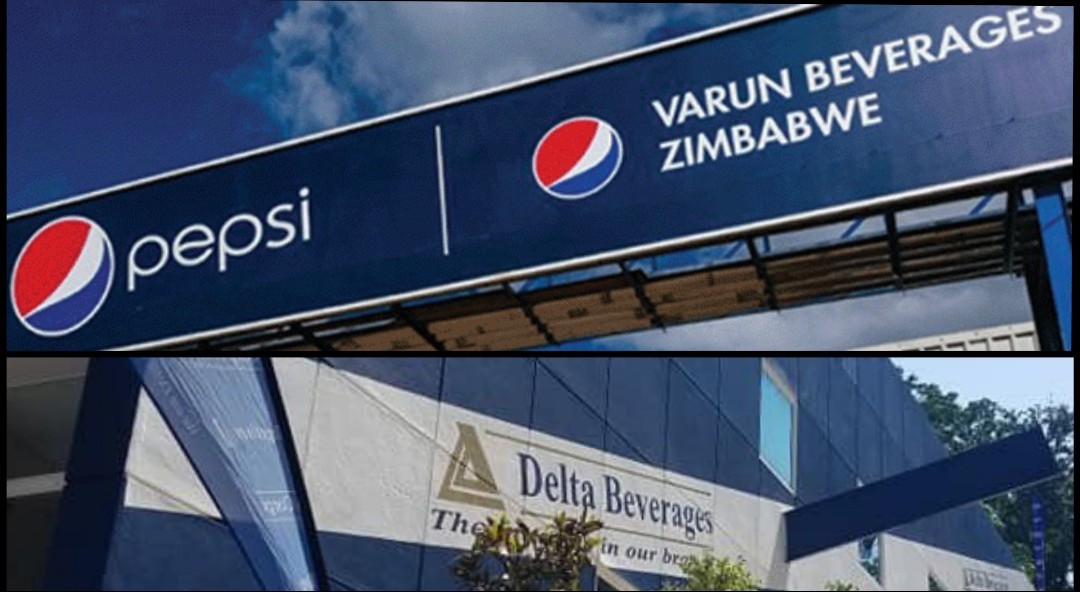
For the longest time, Delta Beverages Pvt Ltd enjoyed a large market share in the Zimbabwean soft drinks market. However, in 2018, VARUN BEVERAGES LIMITEDlaunched in Zimbabwe. It invested USD 110 million, and since then, Varun has been growing rapidly in the past few years. This means that Delta Corporation has been facing competition from Varun Beverages despite an increase in revenue in 2023.

In this article, I will focus on a digital marketing analysis for both Delta, the established leader in the beverage industry, and Varun, the new and innovative player.
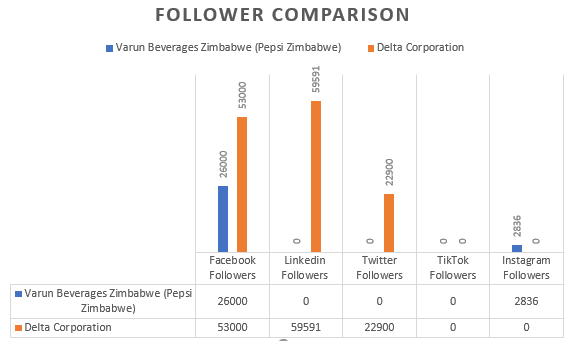
Varun Beverages and Delta Corporation Follower Comparison

First, I looked at the social media presence of the two companies. Varun is only present on Facebook and Instagram with a following of 26,000 and 2,836, respectively. Delta has 53,000 followers on Facebook, but it has the most followers on LinkedIn with 59,591 followers. It also has a decent following on X (formerly Twitter) with 22,900 followers. Both companies are not on TikTok, and Delta is not on Instagram where Varun is present. Based on this analysis, where I looked at five major social media platforms in Zimbabwe, Varun is present on two and Delta is on three. They both need to improve their social media presence, especially considering their size. I give Varun a 3/10 and Delta a 4/10.
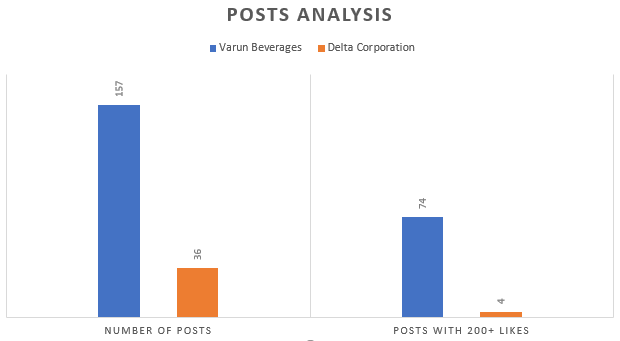
Varun Beverages and Delta Corporation Post Analysis

Varun Beverages and Delta Corporation Post Analysis

After looking at their social media presence, I went to Facebook, the platform where they are both present, and looked at their post frequency over a period of 85 days, from November 1, 2023, to January 25, 2024. Varun made 157 posts in that period, and 47% of those posts (74 posts) had more than 200 likes. Delta, in the same period, made 36 posts, and only 11% of those posts (4 posts) had more than 200 likes. Based on these results, Varun has more engaging content than Delta. We can attribute this to the fact that Varun posts more than Delta.

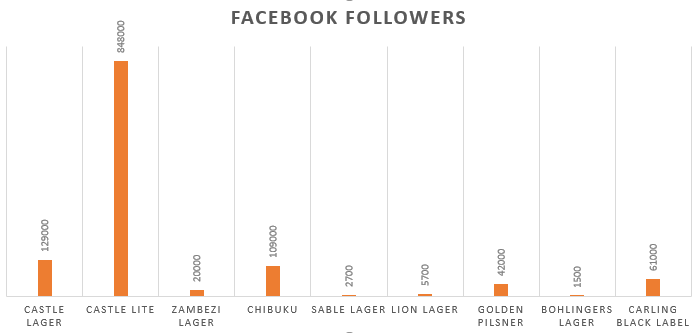
Delta Beverages Facebook Followers

Delta Beverages Facebook Followers

Lets focus on Delta’s product pages on Instagram and Facebook. These pages exclusively promote alcoholic beverages, not non-alcoholic ones. The main outlier on Facebook is the Castle Lite page with 848,000 followers. However, its engagement rate doesn’t match its large following. Between November 1, 2023, and January 25, 2024, they only posted 19 times, and only one post had over 200 likes.
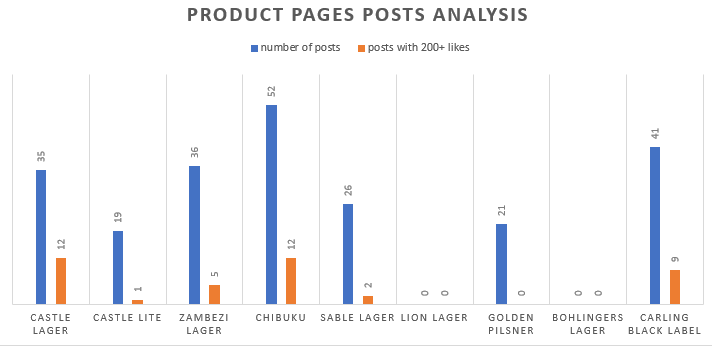
Varun Beverages and Delta Corporation products pages posts analysis

Varun Beverages and Delta Corporation products pages posts analysis

The page with the most posts, Chibuku, has 109k followers and posted 51 times, but only 12 posts garnered over 200 likes. Lion Lager and Bohlingers Lager pages didn’t post at all during this period and also have the lowest follower count. Bohlingers Lager has the fewest followers with 1,500. Castle Lager had the highest engagement rate, with 34% of its 35 posts reaching over 200 likes.
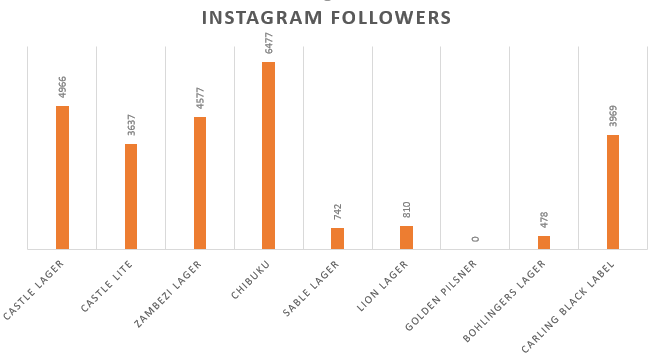
Delta Beverages instagram followers

Delta Beverages instagram followers

On Instagram, their top-followed product pages are Castle Lager, Castle Lite, Zambezi Lager, Chibuku, and Carling “My Darling” Black Label, all with an average following of 4,725. Golden Pilsner is the only one without a product page, and Bohlingers Lager is still the least followed.

The idea of having separate product pages is strategic. Each product has its own audience, branding, and marketing materials. This approach shifts the focus from Delta as a whole to individual products. It also creates a public relations buffer: in case of a Delta scandal, these pages wouldn’t be affected because they don’t draw attention away from the main Delta page. Similarly, they wouldn’t be compromised in a cyber security breach.

However, I question why they don’t do the same for the soft drinks division. Having a dedicated page or even multiple pages focused on soft drinks would be better than lumping them under the main Delta page. This would better reflect the company’s focus on soft drinks. The content quality and posting frequency on these pages suggest a lack of social media marketing strategies beyond simply posting. While the initiative itself deserves an 8/10, their execution merits a 4/10.

Moving on to websites and SEO, I was surprised to find Varun Beverages Zimbabwe doesn’t have its own website. Delta does have a site with an overall score of 74, which is considered average. Its performance score is only 14/30. The page size is 1.3MB, which is acceptable for loading speed. However, it has 60 page requests, which slows down the site significantly. This is reflected in the page speed of 7.6 seconds, far from the standard of 5.3 seconds. While it passes the browser cache test, has minimal page redirects, perfectly fitting images, and minified Java and CSS, its SEO score is only 25/30. It has a meta description, allows page indexing, and uses content plugins, but lacks descriptive link text. Security-wise, it scores a low 5/10 because it’s an HTTP site, not HTTPS, although it does have secure JavaScript libraries.

Its domain authority (DA) is 31, which needs improvement. It has 224 linking root domains, 19 ranking keywords, and a 1% spam score. The site’s most important page is www.delta.co.zw/ with a page authority of 37. The top linking sites are en.wikipedia.org (DA 98), de.wikipedia.org (DA 94), and sakura.ne.jp (DA 93). Its top ranking keywords are “delta corporation,” “castle lager,” “delta airlines corporate governance,” “nampark,” and “delta core values.” The highest-volume keywords reflecting the brand are “delta corporation” and “delta brewery.”

For site aesthetics, I give it a 7/10.

On Google Maps, searching for “beverages companies in Zimbabwe,” Varun ranks 3rd with a 4/5 rating, Pepsi Zimbabwe ranks 6th with a 4/5 rating, and Delta ranks 8th, 16th, 18th, and 19th with an average rating of 4/5.

Based on my analysis of digital presence:

Varun: 3/10

Delta: 7/10

On content quality:

Varun: 6/10

Delta: 5/10

SEO comparison is difficult since Varun lacks a website.

Varun Beverages

Varun Beverages

large companies should invest in digital marketing. Building dedicated social media teams and crafting individual strategies for each page and product is crucial. Additionally, leveraging platforms like TikTok, now a powerful search engine, is essential. The content they create should not only promote their products but also add value to the audience, stimulate conversations, and encourage engagement.

Delta Beverages

Delta Beverages

While Varun excels in traditional marketing with disruptive methods that have fueled its success, neglecting digital marketing would be a mistake. Competition is fierce online as well as offline, and they need a strong digital presence to maintain their market share.

As the established market leader, Delta risks becoming complacent. Varun’s success in the soft drinks sector necessitates a strategic shift for Delta to protect its alcoholic beverage market share. Embracing digital marketing is key to safeguarding their position and remaining competitive.

Source: Simbarashe Mukondo

The Business Diary magazine is a comprehensive publication that centers around business and economic development news. It covers a wide range of topics including finance, mining, technology, environment, climate finance, and agriculture. With its focus on providing valuable insights and updates, the magazine caters to readers who are interested in staying informed about the latest developments and trends in the business and economic landscape of Zimbabwe.

Continue Reading

Business

Zimbabwe’s Investment Agenda Enters a New Chapter as Tagwirei Takes Economic Development Portfolio

Published

on

Zimbabwe’s Investment Agenda Enters a New Chapter as Tagwirei Takes Economic Development Portfolio

The swearing-in of Kudakwashe Tagwirei as Minister of Economic Development and Investment Promotion places investment mobilisation, industrial expansion and the conversion of economic potential into tangible results at the centre of a newly defined government portfolio.

Zimbabwe’s economic development agenda entered a new phase on Monday, 12 October 2026, when President Emmerson Mnangagwa swore in Senator Dr Kudakwashe Regimond Tagwirei as Minister of Economic Development and Investment Promotion at State House in Harare. The ceremony followed the President’s appointment of Tagwirei to the portfolio on 9 October, alongside the reassignment of Professor Mthuli Ncube to the standalone Ministry of Finance.

The reorganisation separates economic development and investment promotion from the Finance Ministry, creating a distinct ministerial portfolio whose mandate places the attraction of capital, the advancement of economic activity and the implementation of national development priorities at the forefront.

For Zimbabwe, the significance of this change will ultimately depend on how effectively the new ministry translates national ambition into commercially viable projects, productive industries and improved economic opportunities for citizens.

From investment interest to investment delivery

Zimbabwe is not starting from a blank slate. The country has substantial mineral resources, agricultural potential, an established industrial base, a strategic position within Southern Africa and opportunities to expand regional trade.

The challenge has been to convert these advantages into a larger and more diversified productive economy.

According to figures reported by the Zimbabwe Investment and Development Agency (ZIDA), the country approved 378 investment licences valued at more than US$3 billion during the first half of 2026. Mining and manufacturing accounted for significant portions of the investment pipeline. These figures reflect approved investment proposals, however, and should not be confused with capital already deployed or projects fully operational.

This distinction is central to the new ministerial assignment.

An investment licence is an important first step, but its economic value becomes tangible when financing is secured, construction begins, equipment is installed, production starts and workers are employed.

The opportunity before Minister Tagwirei is to help strengthen the systems that move projects through these stages. Closer coordination between investment agencies, regulators, local authorities, financial institutions and infrastructure providers could help investors navigate approval processes, resolve implementation bottlenecks and bring viable projects to market more efficiently.

Such an approach would shift the national conversation from the value of investment announced to the value of investment realised.

A mandate aligned with Vision 2030

The appointment comes as Zimbabwe implements the National Development Strategy 2 (NDS 2), covering 2026–2030. The strategy seeks to accelerate progress towards the country’s ambition of becoming a prosperous and empowered upper-middle-income society by 2030. It emphasises economic transformation, infrastructure development, agricultural productivity, innovation, job creation and stronger international economic engagement.

This framework provides a clear context for the new ministry.

Economic development is not simply a matter of attracting more money into the country. It involves directing investment towards activities that expand productive capacity, strengthen domestic supply chains, increase exports and create sustainable employment.

For Minister Tagwirei, alignment between investment promotion and NDS 2 could provide an opportunity to connect national priorities with the commercial interests of domestic and international investors.

The most consequential investments will be those that create enduring economic value: factories that manufacture locally, mines that develop downstream processing capacity, agricultural enterprises that support agro-processing, and infrastructure projects that reduce the cost of doing business.

The task is to ensure that investment serves as a catalyst for broader economic transformation rather than remaining an isolated collection of individual projects.

Industrialisation: unlocking value beyond raw materials

Zimbabwe’s natural resource endowment presents an important opportunity for economic expansion, particularly when extraction is linked to domestic processing and manufacturing.

In mining, this means creating stronger connections between mineral production and downstream industries. In agriculture, it means moving further along the value chain, from primary production towards food processing, packaging, storage and export-ready products.

The potential benefits extend beyond the industries themselves. A growing manufacturing sector can create demand for transport, engineering, maintenance, packaging, financial services and professional expertise.

For smaller enterprises, stronger domestic value chains can create opportunities to supply larger businesses, participate in procurement programmes and expand into new markets.

The ministry can contribute by helping to coordinate investment opportunities across these interconnected sectors, identifying gaps in industrial capacity and supporting the development of projects with credible commercial prospects.

Energy reliability, transport infrastructure, access to finance and predictable regulation will remain critical to this process. Investment promotion is most effective when the environment in which investors operate supports production, competitiveness and long-term planning.

Building investor confidence

Investment decisions are influenced by more than the availability of natural resources or the size of a potential market. Investors also consider policy consistency, currency and financial risks, the predictability of regulations, the enforceability of contracts and the transparency of public institutions.

Zimbabwe’s ability to attract sustained investment will therefore depend on continued efforts to strengthen these fundamentals.

A credible investment-promotion programme must communicate opportunities clearly while providing investors with reliable information, consistent administrative processes and confidence that published rules will be applied fairly.

It must also demonstrate that investment opportunities are accessible to a broad range of legitimate participants, from major international institutions and regional investors to Zimbabwean entrepreneurs and smaller domestic businesses.

For the new minister, building confidence will require engagement across the investment community and close coordination with the institutions responsible for economic policy, regulation and implementation.

This is particularly important as Zimbabwe seeks to deepen regional trade, attract new productive capital and strengthen its position within African and global value chains.

The international investment community will judge progress not only by the announcements made by government, but also by the consistency of policy, the transparency of processes and the results delivered on the ground.

The significance of business leadership in public service

Tagwirei enters the portfolio with a background in business, including interests associated with Sakunda Holdings across sectors such as energy and agriculture. His experience in the commercial environment may offer familiarity with the practical considerations involved in operating businesses, mobilising resources and assessing investment opportunities.

That experience could be relevant to a portfolio concerned with the relationship between policy and enterprise. Understanding the challenges faced by investors can help inform discussions about project financing, infrastructure constraints, regulatory procedures and the conditions required for commercial activity to expand.

However, public office carries responsibilities that differ fundamentally from those of private enterprise. The ministerial role requires decisions to serve the national interest, with public confidence supported by accountability, transparent procedures and the consistent application of the law.

The opportunity is to apply commercial understanding within a framework of public service, ensuring that investment promotion is conducted in a manner that strengthens confidence in Zimbabwe’s institutions and supports fair economic participation.

For a country seeking to expand its investment base, the credibility of the process is as important as the opportunities being promoted.

What could this mean for Zimbabwean businesses?

A more effective investment-promotion framework could have benefits that extend well beyond large corporations.

For small and medium-sized enterprises, new industrial and infrastructure projects can create opportunities to supply goods and services, develop specialist capabilities and establish longer-term commercial relationships.

For farmers, investment in processing, storage, logistics and agricultural technology can help improve market access and reduce losses along the supply chain.

For young people entering the labour market, new productive enterprises can create demand for technical skills, professional services and entrepreneurship.

For established manufacturers, a more predictable business environment can support decisions to expand capacity, upgrade equipment and develop new products.

These outcomes are not automatic. They depend on the quality of investment, the strength of local supply chains, the availability of skills and the ability of businesses to compete. Nevertheless, they provide a practical way of assessing whether investment promotion is delivering benefits beyond headline figures.

The public interest lies in ensuring that economic growth generates opportunities across sectors, provinces and communities.

The priorities that will define the next chapter

As the ministry begins its work, several priorities are likely to be central to its contribution to the national development agenda.

First, converting approved investments into operating projects. Greater attention to implementation milestones, project financing and the removal of administrative bottlenecks could help narrow the gap between investment approvals and realised capital.

Second, strengthening coordination across government. Investors often require decisions and services from several institutions. Better coordination can help reduce uncertainty and improve the experience of doing business.

Third, prioritising productive and export-oriented investment. Projects that expand manufacturing, support mineral beneficiation, strengthen agro-processing and develop competitive services can contribute to diversification and foreign-exchange generation.

Fourth, broadening participation in economic growth. Local suppliers, small businesses, young entrepreneurs and skilled professionals should have opportunities to participate in the commercial activity generated by new investments.

Fifth, strengthening transparency and accountability. Clear investment criteria, predictable regulations and measurable performance indicators can help demonstrate that opportunities are being pursued in the national interest.

Together, these priorities offer a practical framework for translating the ambitions of NDS 2 into measurable economic outcomes.

Measuring success by results

Minister Tagwirei’s appointment creates an opportunity to sharpen the focus on investment delivery and economic development. The scale of that opportunity should not obscure the complexity of the task.

Zimbabwe’s economic prospects will be influenced by domestic policy choices, global market conditions, access to finance, infrastructure capacity and the competitiveness of local industries. No single ministry can resolve all these challenges independently.

The new portfolio can nevertheless play an important coordinating role by bringing investors, government institutions and productive sectors around a common set of national priorities.

Over time, progress should be assessed through evidence: the amount of investment actually deployed, projects completed, productive capacity added, exports generated, businesses supported and sustainable jobs created.

These are the indicators that connect economic policy to the lived experience of Zimbabweans.

A new chapter, with results to deliver

President Mnangagwa’s decision to establish a distinct economic development and investment promotion portfolio places renewed emphasis on the relationship between investment, production and national development.

For Tagwirei, the immediate task is to turn that mandate into a clear programme of action, working with government institutions and the private sector to improve the conditions for productive investment.

The opportunity is significant. Zimbabwe has resources to develop, agricultural potential to unlock, industries to expand and entrepreneurs capable of creating new enterprises. Converting these strengths into sustained prosperity will require sound policy, effective institutions, investor confidence and consistent implementation.

The measure of this new chapter will not be the appointment itself, but what follows: investments realised, industries strengthened, opportunities expanded and economic value created for the nation.

For Zimbabwe, that is the promise against which the work of the Ministry of Economic Development and Investment Promotion will be judged.

Editorial note: This article is based on publicly reported appointment and swearing-in details, published investment-approval figures and Zimbabwe’s NDS 2 development framework. Projections concerning the ministry’s potential impact are analysis, not claims that those outcomes have already been achieved.

The Business Diary – Telling Zimbabwe’s Business Story | “We Mean Business”

Continue Reading

Business

ZSE and NVCCZ Forge Strategic Partnership to Build Venture-Backed SME Pipeline for ZEEX

Published

on

ZSE and NVCCZ Forge Strategic Partnership to Build Venture-Backed SME Pipeline for ZEEX

Harare, Zimbabwe – June 2026 – In a significant development for Zimbabwe’s entrepreneurial and capital markets ecosystem, the Zimbabwe Stock Exchange (ZSE) and the National Venture Capital Company of Zimbabwe (NVCCZ) have signed a Memorandum of Understanding (MOU) aimed at creating a structured pathway for startups and small-to-medium enterprises (SMEs) to access capital markets through the Zimbabwe Entrepreneurship Exchange (ZEEX).

The partnership marks a major step toward bridging the gap between venture capital financing and public market participation, providing entrepreneurs with a clear roadmap from startup funding to long-term growth and investment opportunities.

Creating a Growth Journey for Zimbabwean Enterprises

Historically, venture capital funding and capital markets have operated independently, leaving many promising businesses without a clear route to scale beyond their initial funding stages. Through this partnership, ZSE and NVCCZ seek to change that by establishing a continuum of support that combines financing, governance, compliance readiness, and market access.

The collaboration will focus on identifying high-potential startups and SMEs already supported by NVCCZ and preparing them for eventual participation on ZEEX, Zimbabwe’s newly approved digital capital market platform.

Key Areas of Collaboration

1. Pipeline Development

The two institutions will jointly identify venture-backed businesses with strong growth potential and develop structured graduation pathways that guide them from early-stage financing to public capital market participation. Clear eligibility standards and quality benchmarks will be established to support this transition.

2. Co-Financing and Blended Finance

The partnership will explore innovative financing models that combine venture capital and public market funding. This includes co-investment opportunities and blended finance mechanisms that leverage both public and private sector capital to accelerate business growth.

3. Capacity Building

Recognising that access to capital alone is not enough, the partners will offer training programmes focusing on corporate governance, financial reporting, investor readiness, and compliance with ZEEX listing requirements. Selected enterprises will also receive advisory support to strengthen their readiness for market participation.

4. Market Development

Joint awareness campaigns, investor roadshows, SME financing conferences, and sector-specific financing platforms will be developed to deepen understanding of capital market opportunities among entrepreneurs and investors alike.

5. Product Innovation

The agreement also opens the door for the development of innovative financial products tailored to growth-stage businesses, including SME bond programmes, sustainability-linked instruments, structured SME funds, and alternative digital listing platforms.

Strengthening Zimbabwe’s Entrepreneurial Ecosystem

Speaking on the partnership, ZSE Holdings Group CEO Justin Bgoni highlighted the importance of creating a structured connection between venture capital and public markets.

He noted that entrepreneurs receiving venture capital support can now see a credible pathway toward public market participation from the outset, providing greater certainty and long-term planning opportunities.

NVCCZ Chief Executive Officer Tinotenda Kambasha described the partnership as a milestone for Zimbabwe’s innovation ecosystem, emphasizing that successful venture investing requires support throughout the entire growth journey of a business.

According to Kambasha, the collaboration will provide venture-backed enterprises with strategic exit opportunities while promoting investor participation, improving liquidity, and enabling the recycling of capital into future generations of innovative Zimbabwean businesses.

What This Means for Zimbabwe

The partnership arrives at a critical time when Zimbabwe is seeking new ways to stimulate entrepreneurship, attract investment, create employment, and accelerate economic growth.

By connecting startups, SMEs, investors, venture capital providers, and the capital markets through ZEEX, the initiative is expected to strengthen financial inclusion, support business formalisation, and create sustainable pathways for enterprise growth.

As ZEEX moves closer to full operationalisation, the growing number of institutional partnerships being secured by ZSE demonstrates increasing confidence in the platform’s potential to transform how Zimbabwean businesses raise capital and how investors participate in the country’s economic development.

For entrepreneurs and investors alike, the ZSE-NVCCZ partnership represents an important step toward building a more vibrant, innovative, and investment-ready Zimbabwean economy.

Continue Reading

Business

A Leader’s Next Chapter: Justice Matsatsira Appointed to the Board of Directors of Manica Diamonds Football Club

Published

on

A Leader's Next Chapter: Justice Matsatsira Appointed to the Board of Directors of Manica Diamonds Football Club

The Business Diary proudly celebrates a significant milestone in the professional journey of its Chief Executive Officer and Publisher, Justice Matsatsira, following his appointment to the Board of Directors of Manica Diamonds Football Club.

This prestigious appointment reflects Mr. Matsatsira’s growing influence as a business leader, strategist, and advocate for sustainable institutional growth. It is a recognition of his unwavering commitment to excellence, visionary leadership, and his continued contribution to Zimbabwe’s economic and social development.

Over the years, Justice Matsatsira has established himself as a respected voice within Zimbabwe’s business community. Through his leadership of The Business Diary, he has played a pivotal role in promoting entrepreneurship, fostering dialogue on economic development, and providing a platform that highlights business opportunities, innovation, and thought leadership across various sectors.

His appointment to the Manica Diamonds Football Club Board comes at a time when football clubs are increasingly embracing professional governance structures and strategic leadership to drive long-term success both on and off the field. Mr. Matsatsira brings with him extensive experience in business development, corporate communications, stakeholder engagement, and strategic management—qualities that will undoubtedly add value to the club’s vision and future aspirations.

Speaking on the significance of leadership, Justice Matsatsira often emphasizes that true leadership is measured not by title, but by impact.

“Leadership is not about position. It is about impact, influence and inspiration.”

This philosophy has guided his professional journey and continues to shape the way he approaches business, community development, and organizational growth.

At The Business Diary, we view this appointment as more than a personal achievement. It is a reflection of the confidence that institutions place in leaders who consistently demonstrate integrity, professionalism, and the ability to deliver meaningful results. We are confident that Justice Matsatsira’s strategic insight and commitment to excellence will contribute significantly to the continued growth and success of Manica Diamonds Football Club.

As he embarks on this exciting new chapter, we extend our heartfelt congratulations and best wishes. We celebrate not only the achievement itself, but the leadership, dedication, and vision that made it possible.

Congratulations, Justice Matsatsira, on your appointment to the Board of Directors of Manica Diamonds Football Club. May this new role bring continued success and create even greater opportunities to inspire positive change.


The Business Diary

Ground Floor, Bard House
69 Samora Machel Avenue
Harare, Zimbabwe

“We Mean Business”

Continue Reading

Trending