HARARE – Simbisa Brands Limited increased revenue by 20% to US$367.2 million in the financial year ended 30 June 2026, supported by higher customer traffic and increased average spending across its markets.
The Zimbabwe Stock Exchange-listed group’s profit after tax rose to US$24.1 million from US$16.9 million in the previous financial year. Profit before tax increased 36% to US$31.9 million, while headline earnings per share advanced 45% to 4.33 US cents from 2.98 US cents.
Operating profit before impairment, depreciation and amortisation increased 28% to US$58.1 million, compared with US$45.4 million in FY2025.
The audited results, released on 29 September, show that customer volumes increased 11% during the year, while average spend grew 8%. Cash generated from operations rose 27% to approximately US$65.2 million, representing a 112% operating-profit-to-cash conversion rate.
The board declared a final dividend of 0.622 US cents per share, bringing the total dividend for the financial year to 1.556 US cents. This includes the interim dividend of 0.934 US cents.
Zimbabwe remains the group’s largest market
Zimbabwe continued to anchor Simbisa’s regional operations, contributing 72% of group revenue.
Revenue in the local market increased 23%, while customer numbers reached a record 53.6 million, representing an 11% increase from the previous year. Operating profit rose 39%.
The performance came despite higher employee costs, energy expenses, intermittent electricity supply challenges and the introduction of the Fast-Food Tax.
Simbisa disclosed that it paid US$2.1 million in Fast-Food Tax during FY2026. The company said procurement savings, productivity improvements and tighter expenditure controls helped absorb some of the additional costs.
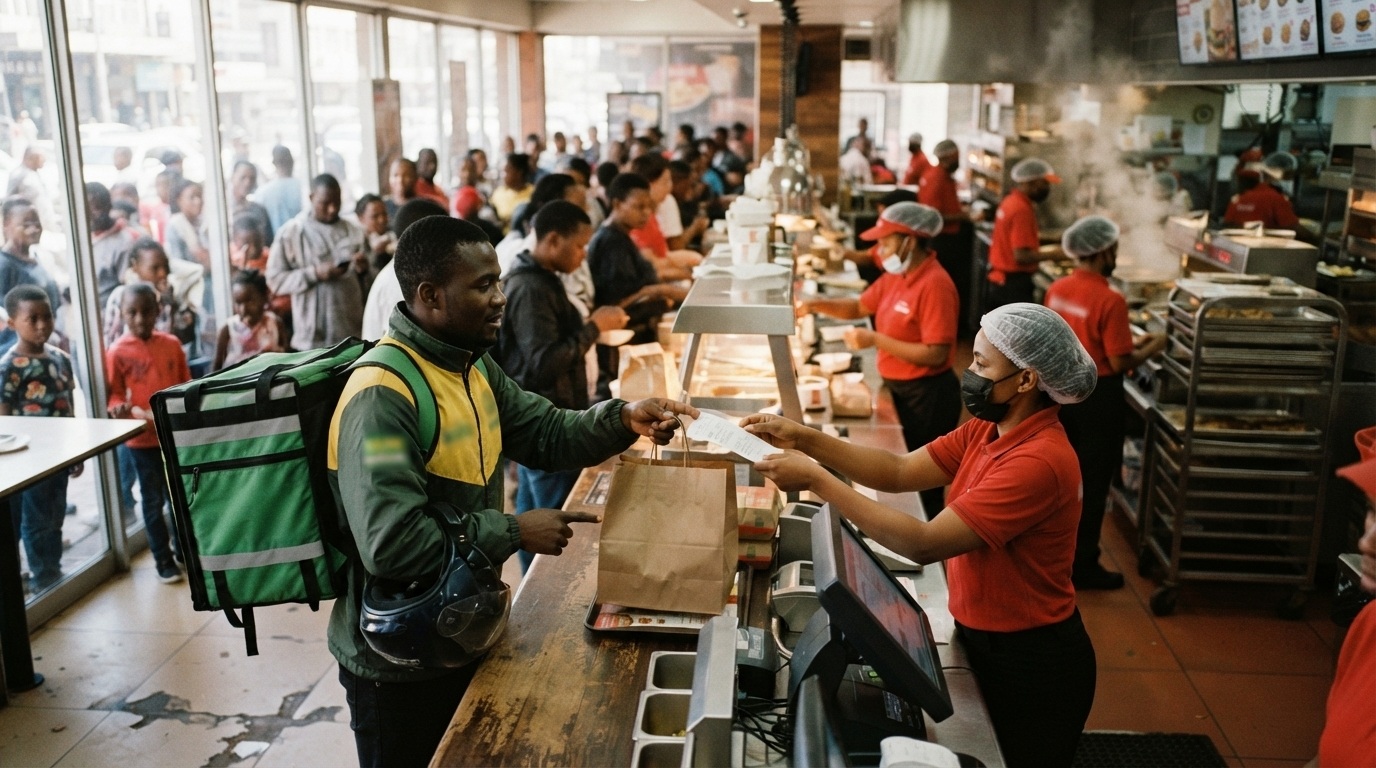
Delivery was another important growth driver. Orders in Zimbabwe increased 75% during the year, contributing to higher average spending and extending the group’s customer reach.
The results underline the importance of Zimbabwe to Simbisa’s earnings. They also expose the group to domestic changes in taxation, household purchasing power, energy costs and the wider operating environment.
Regional operations deliver mixed performance
Revenue from Simbisa’s regional operations increased 13% during the year, although performance differed across markets.
In Kenya, revenue increased 11%, supported by a 14% rise in customer volumes. Average US dollar spend declined 3%, reflecting the group’s value-led pricing strategy.
Despite the lower average spend, operating profit in Kenya increased 16%, supported by cost management and operational efficiencies.
Delivery orders in the market increased 59% to 3.23 million, contributing 27.4% of market turnover. The company has been expanding its delivery operations as part of its strategy to improve convenience and reach more customers.
Eswatini also recorded growth, with revenue increasing 24%. Customer volumes rose 10%, average spend increased 12%, and operating profit grew 4%.
The franchised markets added a net four outlets during the year. These operations provide Simbisa with a regional footprint while allowing local franchise partners to participate in the expansion of its brands.
Store network expands to 759 outlets
Simbisa added a net 29 stores during FY2026, taking its network to 759 outlets across nine African markets. It also refurbished 25 existing outlets.
The year-end network comprised 629 company-operated stores and 130 franchised outlets.
The expansion reflects the group’s continued investment in physical access to its brands. However, the pace of openings fell short of the 36 net new stores anticipated in its May 2026 third-quarter trading update.
The company has continued to prioritise selective expansion and refurbishment, with management emphasising the need for new outlets to deliver sustainable returns.
First-quarter trading points to continued growth
Simbisa entered FY2027 with strong trading momentum.
In its first-quarter update for the three months ended 30 September 2026, the group reported a 24% increase in revenue to US$104.4 million.
Customer volumes rose 10% to 18.5 million, while average spend increased 12%.
Zimbabwe revenue grew 27% to US$77.6 million. Customer volumes increased 11% to 14.6 million, while average spend rose 15%.
The Kenyan business recorded 15% revenue growth to US$24.1 million, with customer volumes increasing 9% to 3.6 million and average spend rising 5%.
The group’s network reached 773 counters by 30 September, comprising 642 company-owned and 131 franchised outlets.
Simbisa opened 13 new stores during the first quarter and plans to open a further 74 during the remaining nine months of FY2027. This would bring its targeted new store openings to 87 for the financial year ending June 2027.
Management said higher input prices, employee expenses and energy costs continued to require attention. Procurement improvements, supply-chain optimisation, solarisation and digitisation remain central to its cost-management strategy.
Business Diary Analysis
Simbisa’s FY2026 results show that its growth strategy is delivering higher customer traffic and stronger sales. However, the relationship between revenue growth and profitability deserves closer attention.
A comparison of the full-year and half-year results suggests that the pace of profit growth slowed considerably in the second half.
Group revenue in the second half of FY2026 is estimated at approximately US$184.4 million, compared with about US$149.0 million in the corresponding period of FY2025. This represents growth of approximately 24%.
However, subtracting the reported first-half profit after tax from the full-year figures suggests that second-half profit after tax increased by only about 3%.
These are Business Diary calculations based on published figures, not separately reported second-half results. They indicate that faster sales growth did not translate into a comparable increase in profit.
The distinction matters. Higher revenue can strengthen a company’s market position, but shareholders ultimately need to see sustainable earnings and cash generation.
Simbisa has identified higher taxation, employee expenses, energy costs and input inflation as pressures on its operations. Its third-quarter update also highlighted the effect of higher fuel prices on operating costs and gross profit margins.
The company’s ability to manage these costs will therefore be as important as its ability to attract more customers.
Zimbabwe’s contribution presents both an advantage and a concentration risk. The local market provides the bulk of group revenue, but changes in taxation, household disposable incomes and operating costs can have a significant effect on overall performance.
Delivery is another important part of the growth strategy. The sharp increase in delivery orders in Zimbabwe and Kenya shows how digital ordering and convenience are becoming central to quick-service restaurant operations.
However, delivery growth must be assessed alongside the costs of operating delivery fleets, maintaining service quality and managing third-party partnerships. Simbisa’s disclosures point to continued investment in these channels, but do not provide a complete breakdown of their contribution to group profitability.
The expansion programme also requires disciplined capital allocation. Opening new outlets can increase customer access and revenue, but the long-term value of expansion depends on store-level profitability, payback periods and the ability to manage operating costs.
What’s next?
Simbisa’s immediate challenge is to convert strong trading momentum into sustained earnings growth.
The company’s first-quarter FY2027 performance provides a positive start, with revenue and customer volumes increasing across its principal markets. Its plan to open 87 stores during the year also signals continued confidence in regional demand.
However, investors will be watching whether the additional sales translate into stronger operating margins and cash generation.
The group’s annual general meeting is scheduled for 20 November 2026. Subsequent financial disclosures should provide further insight into the sustainability of its growth strategy, the performance of new outlets and the impact of operating costs.
For Zimbabwe’s fast-food sector, Simbisa’s results demonstrate the opportunities available to businesses that combine established brands, competitive pricing, operational efficiency and investment in customer convenience.
The next phase will test whether the group can maintain that growth while protecting profitability in an increasingly demanding cost environment.