Business & Economy
ZIMRA Moves to Track Digital Payments as Government Targets Offshore Platforms for More Tax
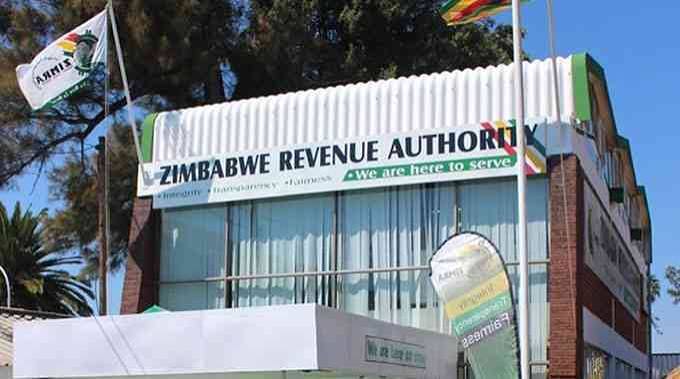
Zimbabwe is stepping up efforts to capture revenue from the growing digital economy, with ZIMRA set to procure an electronic transaction-monitoring system and Treasury proposing tighter tax rules for foreign platforms including Meta, Netflix, Spotify and inDrive.
Published
43 minutes agoon
HARARE – The Zimbabwe Revenue Authority (ZIMRA) is set to acquire a digital transaction-monitoring system as Government intensifies efforts to collect more tax from foreign digital service providers operating in the country’s expanding online economy.
The proposed Electronic-Transaction Recording Analysing Controlling and Exchange System (e-TRACE) will enable ZIMRA to monitor and track electronic payments associated with offshore digital platforms, strengthening the enforcement of tax obligations on services consumed in Zimbabwe.
The system will be procured through a competitive tender, according to the 2027 National Budget presented by Finance Minister Mthuli Ncube on November 19.
The initiative forms part of a broader strategy to expand Zimbabwe’s tax base by targeting economic activity increasingly conducted through digital platforms, international payment systems and online services.
ZIMRA targets digital payment flows
The e-TRACE system is expected to strengthen the authority’s ability to monitor transactions involving foreign digital service providers and establish whether applicable taxes are being correctly collected and remitted.
The move comes as Zimbabwe seeks to improve tax collection from services supplied by international companies that operate locally without necessarily maintaining a substantial physical presence in the country.
These include digital advertising, streaming subscriptions, cloud services, online marketplaces, e-hailing platforms and other electronically delivered services.
The 2027 Budget identifies taxation of imported digital services as an area requiring stronger enforcement, with Government proposing measures to improve revenue attribution, registration and compliance among foreign digital providers.
The proposed system is expected to support the Digital Services Withholding Tax (DSWT), which is already collected through financial intermediaries when qualifying payments are made to foreign digital service providers.
Foreign digital platforms face tighter tax rules
Government is also proposing changes aimed at ensuring foreign technology companies pay tax on income generated from Zimbabwean users.
Platforms such as Meta, Netflix, Spotify and inDrive operate across borders, providing advertising, entertainment, subscription and transport-related services to Zimbabwean consumers.
Under the proposed policy direction, Government intends to strengthen rules determining when income earned by non-resident digital businesses is attributable to Zimbabwe, including consideration of the location of users.
The measures also seek to tighten registration and tax filing requirements for foreign digital service providers while addressing practices that may allow companies to fragment or restructure revenue to reduce their tax liabilities.
The proposals are intended to close gaps in the taxation of businesses whose economic activities increasingly take place through digital channels rather than traditional physical establishments.
However, the proposed expansion of digital taxation should be distinguished from the existing Digital Services Withholding Tax framework. The new policy measures outlined in the 2027 Budget are not all yet fully implemented in law.
Digital services tax already applies
Zimbabwe introduced the Digital Services Withholding Tax framework with effect from January 1, 2026, following amendments to the Value Added Tax Act.
Under the existing system, financial intermediaries, including banks and other designated payment institutions, are required to withhold applicable tax when processing payments to foreign suppliers of qualifying digital services.
The tax covers services such as streaming, online advertising, cloud computing, digital content, subscriptions and certain platform-based services.
The mechanism was introduced to improve collection of tax on imported digital services, shifting much of the collection responsibility to intermediaries handling payments.
The e-TRACE procurement is expected to strengthen monitoring and compliance around these transactions, although Treasury has not publicly detailed the system’s technical architecture, implementation timeline, procurement cost or the precise institutions required to provide data.
Treasury seeks to close revenue leakages
The digital taxation measures reflect Zimbabwe’s wider effort to increase domestic revenue mobilisation without relying exclusively on new taxes on conventional businesses and consumers.
As digital services become increasingly embedded in commerce, entertainment, advertising, communications and transport, Government sees the sector as a growing source of taxable economic activity.
The challenge for ZIMRA is establishing effective mechanisms to identify transactions, determine the appropriate tax treatment and ensure that liabilities are collected, particularly where providers, payment processors and customers operate across different jurisdictions.
The procurement of e-TRACE could strengthen the authority’s ability to reconcile transaction information with tax payments, potentially improving compliance and reducing revenue losses.
However, the effectiveness of the system will depend on its integration with financial institutions, the quality of transaction data, enforcement capacity and the regulatory framework governing information sharing.
BUSINESS DIARY ANALYSIS
Zimbabwe’s digital economy is becoming a more important tax frontier as consumers and businesses increasingly depend on foreign platforms for essential services.
For Government, the opportunity is to capture revenue from economic activity that may be difficult to monitor through traditional tax administration systems.
For businesses, however, the expansion of digital taxation raises questions about the cost of accessing international services, including cloud computing, software subscriptions, digital advertising and online business tools.
Zimbabwean SMEs, digital marketers, content creators and technology companies depend on these services to operate, market products, process information and reach customers. Any changes in the taxation of imported digital services could therefore influence operating costs across the business sector.
The policy challenge is to improve tax compliance without making digital services more expensive or discouraging investment in technology.
A transparent, predictable tax framework could improve competitive conditions between foreign providers and locally registered businesses. However, implementation costs, overlapping taxes and poorly defined obligations could undermine that objective.
The acquisition of e-TRACE also places renewed emphasis on the governance of financial and transaction data. As ZIMRA expands its monitoring capabilities, the scope of information collected, access controls, security safeguards and taxpayer protections will become increasingly important.
WHAT’S NEXT?
The immediate next step is ZIMRA’s procurement of the e-TRACE system through a competitive tender.
The cost of the project, implementation timetable, successful bidder and operational capabilities will determine how quickly the authority can deploy the technology.
Businesses and consumers will also be watching developments in the proposed legislation governing the taxation of foreign digital platforms, particularly how Government defines Zimbabwe-generated income, registration requirements and compliance obligations.
Zimbabwe’s digital economy is expanding, but the next phase will increasingly involve ensuring that the economic value generated by digital activity is reflected in the country’s tax system.
The success of the strategy will depend not only on how much revenue ZIMRA can collect, but also on whether the new framework remains efficient, predictable and supportive of digital business growth.
The Business Diary magazine is a comprehensive publication that centers around business and economic development news. It covers a wide range of topics including finance, mining, technology, environment, climate finance, and agriculture. With its focus on providing valuable insights and updates, the magazine caters to readers who are interested in staying informed about the latest developments and trends in the business and economic landscape of Zimbabwe.
Business & Economy
Dangote’s US$2.5bn Namibia Fuel Project Could Reshape Southern African Markets
Dangote’s planned fuel storage terminal and regional pipeline network in Namibia could open a new petroleum supply corridor for Zimbabwe and other landlocked economies, potentially changing fuel logistics, competition and business costs across Southern Africa.
Published
1 hour agoon
November 23, 2026
The proposed Dangote petroleum infrastructure project in Namibia could mark a significant shift in Southern Africa’s fuel supply chain, with implications for fuel imports, logistics, energy investment, competition and regional trade.
The project, centred on a major fuel storage terminal at Walvis Bay and a proposed regional pipeline network, is intended to strengthen Namibia’s position as a petroleum distribution gateway serving neighbouring economies.
For Zimbabwe, the development could create an alternative fuel supply corridor, potentially improving supply security, introducing competition and reducing transportation costs. However, the extent of its impact will depend on construction progress, regulatory approvals, pipeline access and commercial pricing arrangements.
Dangote’s Namibia project is not a refinery
Despite descriptions circulating about a “Dangote refinery in Namibia”, the proposed development is not a new petroleum refinery.
It is a fuel storage and distribution infrastructure project intended to facilitate the movement of refined petroleum products from supply sources, including Dangote’s Nigerian refinery, into Southern African markets.
The project was launched in November 2026 at Walvis Bay, with an estimated investment of US$2.5 billion.
The proposed facility is expected to have storage capacity of approximately 600 million litres, comprising 360 million litres of diesel and 240 million litres of petrol.
The associated pipeline network is expected to extend approximately 1,700 kilometres, with the intention of connecting Walvis Bay to inland regional markets, including Botswana, Zimbabwe and Zambia.
The investment could transform Walvis Bay from a maritime entry point into a major regional petroleum storage and distribution hub.
However, the project remains subject to regulatory approvals, construction and the implementation of its associated pipeline infrastructure.
Project status
The project has moved beyond an initial investment announcement, with a groundbreaking ceremony held in November 2026.
However, the groundbreaking does not mean that all construction approvals have been secured.
Environmental clearance for the proposed petroleum storage facilities and pipeline infrastructure remained outstanding as of 19 November 2026.
The environmental assessment process was underway, with public consultation completed and assessment reports being prepared for submission to the relevant authorities.
The project requires environmental approval before the petroleum infrastructure can proceed with construction.
The distinction is important for businesses and investors. Although the project has attracted considerable commercial and political attention, its delivery timetable remains dependent on regulatory approvals, financing, construction and the implementation of the pipeline network.
The pipeline is particularly important because the storage terminal alone would not eliminate transportation costs associated with moving fuel into landlocked markets.
Why Namibia is emerging as a strategic fuel corridor
Namibia’s attraction lies in its geographical position, port infrastructure and access to landlocked Southern African economies.
Walvis Bay offers a maritime entry point for petroleum products that can subsequently be distributed inland.
A large storage terminal could allow fuel importers to purchase, store and distribute products more efficiently, potentially reducing dependence on immediate delivery arrangements and a single transport route.
The development also aligns with Namibia’s ambition to strengthen Walvis Bay as a logistics and transport hub serving regional economies.
Dangote’s wider African strategy increasingly focuses on connecting production capacity with storage infrastructure and distribution networks.
Its Nigerian refinery provides the supply base, while regional terminal and pipeline investments could give the group greater control over how refined products reach customers.
Producing fuel is only one part of the petroleum business. Storage, transportation, trading, distribution and market access are equally important in determining how efficiently products reach consumers and how competitively they can be priced.
The Walvis Bay project could therefore become an important component of Dangote’s regional expansion strategy.
What the project could mean for Zimbabwe
Zimbabwe is among the regional markets that could potentially benefit from the proposed pipeline and storage infrastructure.
The country relies heavily on imported petroleum products to sustain transport, mining, agriculture, manufacturing, electricity generation and retail distribution.
Fuel costs feed directly into the operating expenses of almost every major productive sector.
A supply corridor connecting Walvis Bay to Zimbabwe could introduce an additional distribution route, potentially reducing dependence on existing fuel import corridors.
However, the scale of the benefit will depend on whether the pipeline reaches Zimbabwe, the commercial terms governing access, the volumes delivered and the costs of distributing fuel from the terminal to consumers.
Potential reduction in fuel logistics costs
Fuel logistics form a significant component of the landed cost of petroleum products.
A pipeline could reduce reliance on long-distance road transportation, particularly for bulk diesel and petrol deliveries.
Compared with trucking, pipelines can potentially move large volumes continuously, with fewer vehicle-related costs, less exposure to road congestion and potentially improved transport efficiency.
If the Walvis Bay-Zimbabwe connection becomes operational and offers competitive tariffs, fuel importers could benefit from lower transportation costs.
Potential savings could extend to fuel wholesalers, mining companies, transport operators, agricultural producers, manufacturers and retail fuel operators.
The critical question, however, is whether lower logistics costs translate into lower wholesale prices.
Pipeline tariffs, storage charges, financing costs, handling fees, fuel procurement prices, taxation and downstream distribution could absorb some of the potential savings.
A new infrastructure route does not automatically mean cheaper fuel. It creates the possibility of improved cost efficiency, which must be demonstrated through actual pricing and operating arrangements.
Greater supply security and diversification
Zimbabwe’s access to an additional fuel supply corridor could strengthen its resilience against disruptions affecting existing routes.
A diversified supply system reduces risks associated with congestion, transport interruptions, infrastructure failures and disruptions in particular trading markets.
Walvis Bay could potentially complement Zimbabwe’s existing fuel supply arrangements rather than replace them.
For businesses, the benefit of diversified fuel supply is not simply about availability at filling stations. It concerns the ability to plan operations, manage inventories, reduce interruptions and maintain production during periods of logistical uncertainty.
Mining operations, trucking companies and agricultural businesses are particularly exposed when fuel deliveries are delayed or become expensive.
Additional storage capacity in the region could create greater flexibility in supply planning and inventory management.
More competition in the fuel import business
The emergence of a large regional storage and distribution network could change the competitive landscape of petroleum trading.
Fuel importers compete through procurement arrangements, supplier relationships, financing, transport networks, inventory management and distribution infrastructure.
A Dangote-backed supply corridor could introduce a new source of competition in wholesale fuel supply and potentially change how companies negotiate petroleum purchases.
Importers with access to the Walvis Bay terminal could benefit from alternative sourcing arrangements.
Companies relying on established supply chains may face greater pressure to improve efficiency, negotiate better procurement terms and diversify their supply portfolios.
The potential market impact will depend on whether Dangote supplies Zimbabwe directly, sells to existing importers, establishes local commercial partnerships or develops its own distribution arrangements.
The project could increase competition, but its commercial structure will determine how much of that competition reaches wholesale and retail markets.
Opportunities for transport, logistics and infrastructure businesses
The proposed pipeline could generate opportunities beyond the petroleum industry.
Its development and operation could stimulate demand for engineering and construction services, pipeline maintenance, technical services, warehousing, storage management, security, transport support, equipment supply, industrial procurement, insurance and financial services.
Zimbabwean companies could potentially participate in construction, maintenance, procurement and support services if the project creates opportunities for regional contractors and suppliers.
The wider business opportunity is the development of a petroleum logistics ecosystem around a new supply corridor.
Companies that position themselves early in engineering, industrial services, freight, storage, safety and supply-chain management could benefit from increased commercial activity.
Which sectors stand to benefit?
Mining
Lower fuel transportation costs could improve operating margins for diesel-intensive mines, particularly where fuel accounts for a significant share of production costs.
Transport and logistics
Transport operators could benefit if lower wholesale fuel costs reduce fleet operating expenses and improve route profitability.
Agriculture
Diesel-dependent farmers could benefit from more reliable supply and potentially improved fuel procurement costs during planting, irrigation and harvesting.
Manufacturing
Manufacturers could benefit from reduced transport costs, more reliable deliveries and lower fuel-related overheads where price reductions materialise.
Fuel retail
Retailers could face a more competitive supply environment, creating opportunities to improve pricing, service, location strategy and customer retention.
The regional implications
The Dangote project introduces the possibility of a more competitive petroleum logistics environment in Southern Africa.
Zimbabwe’s fuel supply infrastructure has historically relied heavily on regional import corridors and established bulk transport networks.
A Walvis Bay connection could offer another route through Namibia and Botswana, potentially changing fuel logistics economics.
This could increase competition between supply corridors, storage operators, transport providers and petroleum traders.
However, existing infrastructure is not easily displaced. Established routes have developed commercial relationships, operating systems, infrastructure capacity and access to markets.
For Walvis Bay to compete successfully, it will need to offer commercially attractive supply prices, reliable throughput, efficient operations and competitive pipeline tariffs.
The project could gradually alter regional fuel distribution patterns if it delivers these advantages.
It is unlikely, however, that a single corridor would immediately replace the existing petroleum infrastructure serving Zimbabwe.
The more realistic outlook is increased route diversification and competition.
The risks businesses and investors should watch
The project’s scale creates opportunities, but its commercial success is not guaranteed.
Regulatory delays
Environmental approvals remain a critical requirement.
The outstanding clearance process could affect the construction schedule, particularly if additional assessments, conditions or modifications are required.
Pipeline execution
A regional pipeline crossing multiple jurisdictions will require coordination among governments, regulators, land authorities, infrastructure operators and commercial partners.
The route, financing arrangements, construction costs, operating agreements and cross-border regulatory framework will influence the project’s viability.
Commercial pricing
For Zimbabwe, the decisive factor will be the final landed cost of fuel.
Businesses should not assume that fuel will become cheaper simply because a pipeline is constructed.
Savings must be measured against fuel procurement costs, storage, pipeline tariffs, financing, taxation and downstream distribution.
Competition and market structure
A major supplier entering the regional market could increase competition.
However, the extent of that benefit will depend on the number of participants using the infrastructure, access terms and the pricing model.
If the infrastructure becomes commercially dominated by a limited number of suppliers, the benefits of additional capacity may not necessarily be reflected in lower consumer prices.
Energy transition risks
The project is a long-term infrastructure investment in petroleum products at a time when electric mobility, renewable energy, energy efficiency and alternative technologies are gradually changing energy markets.
Although diesel and petrol are expected to remain important to African economies for years, investors must consider future demand, utilisation rates, infrastructure payback periods and changing fuel consumption patterns.
The commercial challenge will be ensuring that the infrastructure remains economically viable throughout its operating life.
Business Diary Analysis
The Dangote project is potentially more significant for Zimbabwe than its headline investment figure suggests.
Its importance lies in the possibility of changing the economics of fuel distribution in a country where petroleum prices influence almost every productive sector.
If the Walvis Bay terminal and regional pipeline are completed as planned, Zimbabwe could gain access to an alternative bulk fuel supply corridor.
This could improve supply resilience, introduce additional competition among fuel suppliers and potentially reduce transportation costs for businesses.
For the mining sector, transport operators, farmers and manufacturers, even modest reductions in fuel-related operating costs could improve margins, particularly for businesses operating on tight margins or consuming large volumes of diesel.
But the benefits are not guaranteed.
The infrastructure must be completed, access to the pipeline must be commercially viable, and the resulting savings must reach the businesses purchasing fuel.
The project also presents a strategic question for Zimbabwe: whether the country will simply become a destination market for imported fuel or actively position itself to benefit from the investment through logistics, trading, industrial services, infrastructure partnerships and regional commerce.
The opportunity extends beyond buying fuel. It could involve participating in the business infrastructure that makes fuel distribution possible.
What happens next?
The developments that will determine the project’s commercial significance include:
- Environmental approvals: Whether outstanding regulatory processes are completed and the project receives the necessary construction clearances.
- Construction commencement: Whether physical construction progresses beyond the groundbreaking stage.
- Pipeline route confirmation: The final route, connection points and infrastructure arrangements serving Zimbabwe and other regional markets.
- Financing and implementation: Confirmation of how the project will be financed, delivered and operated.
- Zimbabwean participation: Whether local businesses, petroleum companies, transport operators and industrial suppliers secure opportunities within the project.
- Fuel pricing: Whether the new corridor produces measurable savings in landed fuel costs and wholesale prices.
These developments will determine whether Walvis Bay becomes a major alternative petroleum supply hub for Zimbabwe or remains primarily a large storage investment with a more limited regional reach.
Key takeaways
- Dangote’s Namibia project is a fuel storage and distribution infrastructure development, not a refinery.
- The proposed US$2.5 billion project includes a 600-million-litre terminal and a planned regional pipeline network.
- Zimbabwe is among the intended markets that could benefit from improved fuel supply logistics.
- Potential benefits include supply diversification, lower transportation costs, greater competition and improved fuel security.
- The economic benefits will depend on construction, regulatory approvals, pipeline access, commercial tariffs and whether cost savings reach businesses and consumers.
The bottom line
Namibia’s emerging role in Dangote’s petroleum distribution strategy could reshape fuel logistics across Southern Africa.
For Zimbabwe, the opportunity is potentially lower logistics costs, greater supply resilience and new commercial opportunities.
But the real economic impact will be determined not by the size of the investment announcement, but by the cost, reliability and accessibility of the fuel that eventually reaches the market.

Business & Economy
Zimbabwe completes steps to join BRICS bank with US$63m subscription as bloc bid stays pending
Treasury says parliamentary approval is done, but the bank is not the bloc, lending is not automatic, and arrears with traditional lenders remain unresolved.
Published
4 hours agoon
November 23, 2026
HARARE, 23 November – Zimbabwe has completed the prerequisite steps to join the BRICS-backed New Development Bank (NDB), including parliamentary approval, and has taken up US$63 million in capital, Finance Minister Mthuli Ncube said in the 2027 National Budget Statement.
Ncube said Zimbabwe opted for a 200 percent subscription, made up of US$12.6 million in paid-in capital and US$50.4 million in callable capital. Callable capital is money a member backs the bank with but pays only if the bank calls on it to meet its obligations.
Membership gives access to long-term funding through loans, guarantees and equity participation, and potentially to local-currency lending that reduces exchange-rate risk. Government has earmarked the financing for power generation and transmission, roads, rail and border posts, and value-addition plants in mining and agriculture, including local lithium processing.
The approval does not make Zimbabwe a member of BRICS. Membership of the bank is separate from membership of the bloc, and does not by itself bring immediate financing approvals. Foreign Minister Amon Murwira said on 11 November that Zimbabwe wants full participation in BRICS and is preparing to submit documents. He has acknowledged that BRICS decisions are made by consensus.
The timeline for the bank is partly unclear. The bank’s Board of Governors adopted a resolution admitting Zimbabwe on 10 July. Ncube announced the membership publicly on 23 July. A Herald report said the credit lines will become fully operational once Parliament ratifies the agreement and government meets its capital subscription, although the budget statement now says Parliament has approved. The bank’s practice is that an admitted country becomes an effective member after depositing its instrument of accession, as Algeria did in 2025. The reports reviewed do not say whether Zimbabwe has done so, or when the paid-in capital falls due.
Zimbabwe’s trade is already concentrated on bloc members. The UAE, South Africa and China took about 89 percent of exports in December 2025. Central bank data put their combined share above 90 percent in June 2026, with the UAE alone at 40.5 percent. ZimStat has said UAE purchases are primarily gold.
The bank’s appeal lies in debt. Treasury estimates total arrears at about US$10.3 billion, of which US$8.1 billion is external. Arrears to the World Bank, African Development Bank and European Investment Bank total about US$2.7 billion. Ncube told Parliament last week that government wants to clear arrears to international financial institutions by the end of March 2027.
Economists quoted by the Herald called the bank an alternative to the IMF and World Bank. Prof Gift Mugano argued that fresh capital would raise production and revenue to service debt. Enock Musara said patient capital could build capacity to settle obligations while reforms continue.
Background
The bank was established in 2014 by Brazil, Russia, India, China and South Africa, and began operating in 2015. It had approved US$42.9 billion for 139 projects by March 2026. Zimbabwe first applied in 2023. The bank’s board placed it on its list of potential members on 25 March 2026. Formal negotiations were confirmed in May. A February 2026 civil-society fact sheet said all of the bank’s projects so far were in the five founding members, with Egypt and Bangladesh next.
Business Diary Analysis
Membership gives Zimbabwe an option, not cash. The bank’s president says its model is demand-driven and assesses projects on technical, not political, criteria. A NewsDay analysis described the admission as a strategic gain rather than an immediate windfall, and said Zimbabwe must present commercially viable projects. Given the bank’s thin record outside its founders, Zimbabwe is likely to be an early test of how it lends to newer members. That is interpretation, not established fact.
The projects most likely to matter are in power and transport. The budget cuts 2027 growth to 3.5 percent because El Niño is expected to reduce farm output, hydropower and revenue. Capital spending is planned to rise from 2.3 percent of GDP in 2026 to 3.8 percent in 2027 and 8.8 percent by 2030. Contractors and suppliers should watch which projects are submitted first.
The trade figures also need care. Dependence on BRICS partners is largely gold shipped to the UAE. NDB membership does not change market access for SME exporters.
What’s Next?
Watch for confirmation from the bank that Zimbabwe’s accession is effective, the first project submissions, and progress on the March 2027 arrears target. On the bloc, watch for Zimbabwe lodging its documents. China chairs BRICS in 2027 and hosts the 19th summit.
Business & Economy
Zimbabwe Presents ZiG358.3bn 2027 Budget With Tax Relief and a US$400m Drought Buffer
Finance Minister Mthuli Ncube has tabled a ZiG358.3 billion (US$12.8 billion) budget for 2027. It raises the tax-free income threshold, cuts levies on electronic transfers and removes duty on mobile phones. Treasury is also setting aside a contingency reserve against an expected El Niño drought, while forecasting slower growth of 3.5 percent.
Published
3 days agoon
November 20, 2026
HARARE, 19 November 2026 – Finance Minister Mthuli Ncube on Thursday presented a ZiG358.3 billion (about US$12.8 billion) national budget for 2027 to Parliament. It combines targeted tax relief with a larger contingency reserve, as Treasury braces for a drought that could slow the economy.
The budget, delivered at the New Parliament Building in Mt Hampden under the theme “Accelerating Economic Transformation and Building Resilience to Climate and Global Shocks”, proposes tax relief measures while maintaining the existing tax framework and rates. Treasury expects the revenue forgone from selected tax adjustments to be offset partly by improved economic activity, consumption and compliance.
From 1 January 2027, the monthly tax-free income threshold rises from US$100 to US$150, or the ZiG equivalent, with tax bands adjusted accordingly. The Intermediated Money Transfer Tax (IMTT) falls from 1.5 percent to 1.25 percent on ZiG transactions and from 2 percent to 1.75 percent on foreign currency transfers.
The 25 percent customs duty on cellular phones is scrapped, while the duty on electric vehicles falls from 25 percent to 10 percent. Customs duty on semi-knocked-down kits imported by approved local assemblers of motorcycles, tricycles, trucks and electric commercial vehicles is suspended from 1 December 2026. A duty rebate for the fertiliser manufacturing value chain took effect on 1 November 2026.
The hybrid excise duty on cigarettes will be replaced by a specific duty of US$15 per 1,000 sticks from 1 January 2027. From the same date, Government, mining companies and large entities must source at least 15 percent of their inputs locally where capacity exists, with the supporting framework due by 31 March 2027.
Treasury projects revenue of ZiG349.5 billion (US$12.5 billion), leaving a deficit of about ZiG8.8 billion, or roughly US$300 million, equivalent to 0.5 percent of gross domestic product. Growth is forecast at 3.5 percent in 2027, down from an estimated 5 percent in 2026 and 8.3 percent in 2025. Ncube cited weaker commodity prices and drought risk.
A ZiG10.9 billion (about US$400 million) contingency reserve, financed from 2026 fiscal buffers, is intended to cushion severe shocks. Government expects a potential cereal deficit of up to 541,881 tonnes. The Grain Marketing Board had bought 365,000 tonnes by the end of October towards a 600,000-tonne strategic reserve. Treasury has also taken out African Risk Capacity drought insurance at a US$3.4 million premium. Zimbabwe received a US$31.8 million payout from the same facility after the 2023/24 drought.
Education receives the largest allocation at ZiG47.7 billion, followed by Health at ZiG35.5 billion and Agriculture at ZiG27.6 billion. Defence is allocated ZiG23.4 billion, Home Affairs ZiG21.8 billion and Social Welfare ZiG21.5 billion. Devolution transfers total ZiG17.5 billion, transport infrastructure ZiG10.8 billion and housing ZiG1.5 billion. New Zimbabwe reported that security-related ministries combined would receive ZiG59.5 billion. It noted that agriculture and climate ranked only fourth among national priorities despite the drought warning.
Ministries submitted spending bids of ZiG974 billion, nearly three times the budget ceiling. Treasury will now require prior approval for contracts above US$2 million and says it will enforce the Public Finance Management Act against projects started outside the approved framework.
Background
The budget is the second under the National Development Strategy 2 (NDS2), which covers 2026 to 2030 and targets upper-middle-income status by 2030. Treasury says the economy has grown to about US$66 billion, from US$21 billion in 2019. ZiG inflation averaged 4.0 percent over the first ten months of 2026, and foreign currency receipts rose 33.7 percent to US$15.9 billion in the first nine months.
Public and publicly guaranteed debt stood at about ZiG594.1 billion (US$22.2 billion, or 33.4 percent of GDP) at the end of September 2026. Of that, ZiG331.2 billion is external and ZiG262.9 billion is domestic. Ncube said Zimbabwe plans to clear overdue payments to the World Bank, the African Development Bank and the European Investment Bank by the end of March 2027, according to Reuters. He pointed to Zimbabwe’s exit from the World Bank’s fragile-states list on 1 July 2026, its admission to the BRICS New Development Bank and its election to the UN Security Council for 2027–2028 as signs of improved standing.
Treasury plans to lift capital expenditure from 2.3 percent of GDP in 2026 to 3.8 percent in 2027 and 8.8 percent by 2030. It aims to cut the wage bill from 52.3 percent of the budget to 38.1 percent over the same period.
Business Diary Analysis
The budget is attempting to balance four competing priorities: easing the tax burden, stimulating industrial production, maintaining fiscal discipline and preparing for climate-related shocks. These objectives are mutually reinforcing in theory, but their execution will determine whether they translate into stronger economic activity.
The increase in the tax-free income threshold and reductions in IMTT put more money into household and business cash flow. For workers, the higher threshold offers some relief against living costs. For businesses, lower transaction taxes marginally reduce the cost of moving money through formal payment channels. The impact, however, will depend on whether the savings are sufficient to encourage consumption, investment and greater use of formal financial systems.
The industrial policy measures are more consequential over the longer term. Lower cellphone duties could improve access to digital technology, while EV duty reductions, vehicle assembly incentives and fertiliser manufacturing rebates are designed to support investment, local production and value addition. The 15 percent local procurement requirement could create demand for domestic manufacturers and suppliers, particularly those serving mining, construction, agriculture and public-sector procurement.
But tax relief alone does not guarantee industrialisation. Manufacturers still face constraints related to finance, electricity reliability, machinery, technology, imported inputs and demand. The local procurement requirement will be meaningful only if domestic suppliers can meet quality, price, volume and delivery standards. The implementation framework due in March will therefore be critical in determining whether the measure creates sustainable business opportunities or remains largely a policy target.
Fiscal discipline is the other test. Treasury is projecting a deficit of just 0.5 percent of GDP while ministries submitted spending bids nearly three times the approved expenditure ceiling. The requirement for prior Treasury approval of large contracts and enforcement of the Public Finance Management Act signal an effort to contain unbudgeted expenditure and protect the fiscal framework.
That discipline could strengthen confidence in the budget if Government avoids accumulating arrears, making unplanned commitments or delaying payments to contractors and suppliers. However, tighter controls could also slow project implementation if approval systems are inefficient. The challenge is not simply to restrict expenditure, but to ensure that limited resources are released predictably and spent on productive priorities.
Drought risk could complicate all three objectives. A weaker agricultural season could reduce output, raise food prices, weaken rural incomes, increase import requirements and place pressure on fiscal revenue. It could also affect electricity generation, industrial production and transport activity. The US$400 million contingency reserve provides a meaningful buffer, but it is not a substitute for sustained investment in irrigation, water infrastructure, climate-resilient agriculture and efficient grain procurement.
The reserve is also a one-off cushion financed from accumulated fiscal buffers. Its effectiveness will depend on the scale of the shock, the speed at which resources can be deployed and the Government’s ability to preserve fiscal stability while responding to emergencies.
The budget therefore places a premium on execution. Zimbabwe has tax relief intended to stimulate demand, industrial incentives intended to increase domestic production, spending controls intended to protect stability and contingency resources intended to absorb climate shocks. If these measures are implemented consistently, they could support business confidence and strengthen resilience. If implementation falters, the country could face the familiar gap between policy ambition and economic outcomes.
Conclusion
The 2027 budget is cautious, offering targeted tax relief and industrial incentives while protecting a narrow fiscal deficit and preparing for a potentially difficult agricultural season. It seeks to put more money into consumers’ pockets, lower selected business costs and encourage domestic production without compromising fiscal stability.
Its success will depend on whether the rains hold, revenue meets the ZiG349.5 billion target, industrial incentives attract productive investment and Treasury enforces spending discipline. The Finance Bill, which will turn the proposals into law, is expected to be debated in the coming weeks.
ZIMRA Moves to Track Digital Payments as Government Targets Offshore Platforms for More Tax
Dangote’s US$2.5bn Namibia Fuel Project Could Reshape Southern African Markets
China backs Zimbabwe’s lithium processing drive as export ban nears with one plant built
What is Robert Kiyosaki’s net worth after his latest book flop?
Egypt’s Richest Man, Nassef Sawiris’ Wealth Surges by $410M in Just over a Week.
Billionaires Who Didn’t Go to College
Trending
-
Business & Economy3 years agoWhat is Robert Kiyosaki’s net worth after his latest book flop?
-
Business & Economy3 years agoEgypt’s Richest Man, Nassef Sawiris’ Wealth Surges by $410M in Just over a Week.
-
Business & Economy3 years agoBillionaires Who Didn’t Go to College
-
Business & Economy3 years agoAfrica’s youngest billionaire: Mo Dewji’s impactful empire extends beyond wealth
-
Business & Economy3 years agoMeet World’s Richest Family Who live In $478m House, Own 700 Cars
-
Technology & Telecommunications3 years agoLiquid C2 partners with Google Cloud and Anthropic to bring advanced cloud, cyber security and generative AI capabilities to Africa
-
Business & Economy3 years agoMalawian Billionaire Thom Mpinganjira’s Fortune Drops by $8 Million in a Month
-
Business & Economy3 years agoZimbabwe’s Beverage Industry: A Digital Marketing Analysis of Delta Beverages and Varun Beverages Zimbabwe