
Connect with us

Technology & Telecommunications

Cassava Technologies Seeks US$1 Billion to Expand AI Infrastructure Across Africa

Strive Masiyiwa’s pan-African technology group is negotiating with US and Middle Eastern investors to finance Nvidia chips and expand AI computing, data-centre and fibre infrastructure across African markets.


Published

on

Cassava Technologies Seeks US$1 Billion to Expand AI Infrastructure Across Africa

HARARE – Cassava Technologies, the pan-African digital infrastructure group founded by Zimbabwean entrepreneur Strive Masiyiwa, is seeking to raise up to US$1 billion to expand its artificial intelligence infrastructure across the continent.

The proposed capital raise would primarily finance the acquisition of Nvidia graphics processing units (GPUs) for AI data centres, alongside upgrades to the company’s fibre-optic networks and data-centre infrastructure.

According to Bloomberg, Cassava is in discussions with prospective investors in the United States and Middle East. The negotiations remain ongoing, and there is no guarantee that the fundraising will be completed.

The company declined to comment on the reported financing discussions.

The fundraising would support Cassava’s ambitions to expand access to advanced computing infrastructure as African businesses, governments and technology developers increase demand for artificial intelligence services.

Building Africa’s AI computing capacity

Cassava’s fundraising ambitions build on an existing investment programme involving 12,000 Nvidia GPUs across African markets, estimated to cost up to US$720 million.

Its AI factory in Cape Town is operational and has reached full capacity, reflecting growing demand for computing resources capable of supporting AI development and deployment.

The group is expanding its infrastructure footprint across strategic African markets, including South Africa, Egypt, Kenya, Nigeria and Morocco.

The planned facilities are intended to provide computing capacity to businesses, governments, developers and research institutions seeking to train and run AI models closer to their markets.

The infrastructure could also reduce dependence on computing services hosted outside Africa, particularly for organisations handling sensitive information or applications requiring faster processing and reliable connectivity.

Africa’s AI ambitions will depend not only on the number of processors installed, but on the economic value businesses and governments are able to generate from them.

Sovereign cloud and data infrastructure

Cassava’s expansion is also linked to growing demand for sovereign cloud and AI infrastructure, allowing governments and businesses to maintain greater control over where their data is stored and processed.

In Egypt, the group is working with Vodafone Business and Elsewedy Electric on a separate data-centre development incorporating sovereign AI infrastructure.

The project is expected to begin with 20 megawatts of capacity, with plans to scale to 200 megawatts.

Sovereign cloud infrastructure is increasingly relevant to governments, financial institutions, healthcare providers and large enterprises that must manage sensitive data within specific regulatory and security frameworks.

The investments position Cassava to offer more than connectivity, potentially integrating cloud computing, AI processing, data hosting and enterprise digital services.

Competition for Africa’s AI market

Cassava’s expansion comes as global technology companies increase investment in African cloud computing and data-centre infrastructure.

Amazon Web Services, Microsoft and Google are among the major technology companies expanding their cloud and AI capabilities in African markets, competing for enterprise customers and government contracts.

The growth of AI applications is creating demand for specialised processors, high-performance computing, reliable electricity, cooling systems and high-capacity networks.

These requirements make AI infrastructure significantly more capital-intensive than conventional telecommunications services.

Cassava’s existing fibre network and data-centre operations provide a foundation for its expansion, but the company must continue investing in equipment, energy, physical infrastructure and technical capacity to sustain growth.

Our Analysis

Cassava’s proposed US$1 billion fundraising underscores a growing shift in Africa’s technology industry: the competition is no longer limited to internet access and mobile connectivity but increasingly extends to ownership of the computing infrastructure powering artificial intelligence.

For African businesses, the availability of locally accessible AI computing could create opportunities to develop products, automate processes, analyse data and deploy AI applications without relying exclusively on overseas infrastructure.

Zimbabwean businesses could potentially benefit from expanded regional computing capacity through cloud services, AI development platforms and enterprise technology solutions, particularly as demand grows for automation, data analytics and digital customer services.

However, infrastructure investment alone will not guarantee widespread AI adoption. Access costs, electricity reliability, connectivity, digital skills and the commercial viability of AI applications will determine how much value businesses can extract from these facilities.

Cassava’s challenge will be to translate its infrastructure investment into sustainable demand and recurring revenue. Data centres require substantial capital expenditure and ongoing operating costs, making capacity utilisation and long-term customer contracts critical to profitability.

The proposed fundraising would strengthen the company’s ability to compete for Africa’s emerging AI market, but its long-term returns will depend on whether the continent’s demand for AI computing develops fast enough to justify the scale of investment.

Whats next?

The immediate focus is whether Cassava can secure the proposed US$1 billion financing and on what terms.

The identity of investors, financing structure, deployment timetable and planned allocation of capital will provide a clearer picture of the scale and pace of the company’s expansion.

As African governments and businesses accelerate digital transformation, AI infrastructure is likely to become an increasingly strategic component of investment in telecommunications, cloud computing and technology services.

For Cassava, the fundraising represents an opportunity to strengthen its position in that market. For Africa, the broader question is whether the expansion of computing infrastructure can translate into affordable access, stronger local innovation and commercially sustainable AI businesses.

The continent’s AI ambitions will ultimately depend not only on the number of processors installed, but on the economic value businesses and governments are able to generate from them.

The Business Diary magazine is a comprehensive publication that centers around business and economic development news. It covers a wide range of topics including finance, mining, technology, environment, climate finance, and agriculture. With its focus on providing valuable insights and updates, the magazine caters to readers who are interested in staying informed about the latest developments and trends in the business and economic landscape of Zimbabwe.

Technology & Telecommunications

Cassava’s Cape Town AI Factory Reaches Full Capacity as Demand for Computing Surges

Cassava Technologies’ Cape Town AI factory has reached full capacity with more than 2,000 Nvidia GPUs, signalling growing demand for AI computing across Africa.

Published

on

Cassava Technologies Seeks US$1 Billion to Expand AI Infrastructure Across Africa

CAPE TOWN – Cassava Technologies’ artificial intelligence factory in Cape Town has reached full capacity, marking a major milestone in the Zimbabwe-founded group’s ambitions to build a continental AI computing network.

The facility, which operates with more than 2,000 Nvidia graphics processing units (GPUs), is running at full utilisation, according to Africa Data Centres chief executive Boyd Chislett, who disclosed the milestone on November 23.

Chislett said the 3-megawatt facility had reached full capacity on November 1, reflecting the demand Cassava has experienced for its AI computing services.

The milestone strengthens the commercial case for Cassava’s investment in specialised computing infrastructure as African businesses increasingly move from experimenting with artificial intelligence to deploying applications within their operations.

AI investment moves beyond experimentation

Cassava’s Cape Town facility provides computing capacity for businesses seeking to develop, train and run artificial intelligence models without having to rely entirely on infrastructure located outside Africa.

The demand is emerging as organisations explore AI applications in customer service, financial services, automation, data analysis, software development and business operations.

Vinay Hiralall, chief commercial officer of Cassava’s Liquid C2 business, said enterprise demand for AI services had accelerated over the past six months.

He indicated that AI-related work now accounted for approximately one in three deals being handled by the business, as companies shifted from testing AI tools towards implementation.

The change suggests that businesses are increasingly looking beyond AI demonstrations towards practical applications capable of improving productivity, automating workflows and supporting decision-making.

However, adoption remains uneven, with organisations still working to identify commercially viable use cases and understand how AI can be integrated into existing operations.

Cassava targets continental expansion

The Cape Town facility is part of Cassava Technologies’ broader plan to deploy approximately 12,000 Nvidia GPUs across African markets.

The group has identified South Africa, Egypt, Kenya, Nigeria and Morocco as strategic markets for its AI infrastructure expansion.

The investment programme is expected to combine specialised computing hardware with the company’s existing fibre networks, cloud services and data-centre operations.

Cassava’s infrastructure businesses include Liquid Intelligent Technologies, Liquid C2 and Africa Data Centres, giving the group an established connectivity and hosting platform on which to build its AI services.

The strategy is to provide businesses and institutions with access to computing capacity closer to their markets, potentially improving access, reducing latency and supporting data-governance requirements.

Capacity constraints raise expansion questions

The Cape Town facility’s full utilisation presents an opportunity for Cassava but also raises questions about how quickly the company can add capacity to meet demand.

AI infrastructure requires significant capital investment in GPUs, data-centre buildings, electricity, cooling systems, fibre connectivity and specialised technical skills.

Unlike conventional data-centre infrastructure, AI facilities are designed to support high-density computing workloads that place substantial demands on power and cooling systems.

Cassava is pursuing further expansion, including plans for additional AI facilities in Johannesburg and other African markets. The scale and timing of further deployments will depend on customer demand, financing, infrastructure availability and the economics of operating GPU-intensive facilities.

The company is also seeking up to US$1 billion from investors in the United States and Middle East to support its wider AI infrastructure expansion, according to Bloomberg. The fundraising remains under discussion and has not been confirmed as secured capital.

Our Analysis

Cassava’s Cape Town milestone is significant because it provides an indication that demand for AI computing capacity in Africa is beginning to translate into infrastructure utilisation.

The distinction matters. Building AI data centres requires substantial upfront capital, but commercial sustainability depends on customers using the infrastructure and generating recurring revenue sufficient to cover operating and financing costs.

Full capacity at the Cape Town facility strengthens the case for further investment, although utilisation alone does not establish profitability, pricing strength or the long-term returns on the project.

For Zimbabwe, the development is relevant because AI computing infrastructure is becoming a regional economic asset rather than simply a technology-sector investment.

Zimbabwean companies could potentially access AI computing services through Cassava’s regional network, enabling businesses to deploy data-intensive applications without investing in their own expensive GPU infrastructure.

Potential applications include financial modelling, customer analytics, agricultural forecasting, manufacturing optimisation, document processing, software development and business automation.

The opportunity, however, will depend on affordability, connectivity, data protection, skills and whether AI applications deliver measurable productivity gains.

Cassava’s expansion could also strengthen regional technology ecosystems by supporting developers, software companies, universities, research institutions and enterprises that require advanced computing resources.

The longer-term strategic question is whether Africa can build enough infrastructure to support AI adoption while ensuring that the facilities are commercially viable, energy-efficient and accessible to businesses beyond large corporations.

Whats next?

Cassava’s immediate challenge is expanding computing capacity as demand grows and its existing infrastructure reaches utilisation limits.

The company is pursuing a wider continental GPU deployment programme, while its proposed US$1 billion fundraising could provide additional capital for processors, data centres and supporting network infrastructure if successfully completed.

The pace of expansion will be closely tied to the ability to secure financing, reliable electricity, suitable facilities and customers willing to commit to AI computing services.

Cape Town’s full-capacity milestone gives Cassava a stronger commercial argument for expansion. But the next measure of success will be whether the group can replicate that demand across multiple markets while converting infrastructure investment into sustainable returns.

Africa’s AI race is increasingly moving from announcements to computing capacity. Cassava’s challenge now is to scale that capacity without losing sight of the economics.

Continue Reading

Business & Economy

Cabinet Approves National AI Charter Setting Ethical Rules for Developers and Users

Zimbabwe’s Cabinet has approved the Zimbabwe National Artificial Intelligence Charter, which commits developers and users of AI to human-centred, transparent and inclusive practice. It gives investors an early signal on the rules of engagement, but the enforcement detail is yet to be published.

Published

on

Cabinet Approves National AI Charter Setting Ethical Rules for Developers and Users

Zimbabwe has adopted a National Artificial Intelligence Charter that sets ethical principles for building and using AI and creates oversight and complaints mechanisms. It is the Government’s first formal attempt to attach binding commitments to a technology it is promoting as a driver of growth.

Cabinet approved the Charter on 17 November 2026. Finance Minister Mthuli Ncube presented it as chairman of the Cabinet Committee on National Development. Briefing journalists afterwards, Information Minister Zhemu Soda said the Charter turns the pillars of the National AI Strategy into binding ethical principles and commitments, so that AI development and deployment stay human-centric, transparent, inclusive and aligned with national values and the Constitution.

The Charter sets up a governance structure covering strategic oversight, day-to-day coordination and complaints-handling. It covers AI research, development, deployment and use, calls for transparency and accountability from those who build and operate AI systems, and draws in part on the Ubuntu/Unhu philosophy. Soda said it was not solely a Government initiative. He described it as a “collective contract” among Government, business, academia, civil society and citizens.

The Charter is the second layer of Zimbabwe’s AI policy. Cabinet approved the National AI Strategy (2026–2030) in October 2025, and President Emmerson Mnangagwa launched it on 13 March 2026. The Strategy rests on six pillars, including talent development, national AI infrastructure and computational sovereignty, adoption and service transformation, and governance. Its planned projects include a National AI Regulatory Sandbox, a National AI Innovation Fund and a National Digital Regulatory Committee under POTRAZ, with an implementation office housed in the ICT Ministry. The Charter supplies the governing framework for putting these pillars into practice.

Public statements so far leave several questions open. They do not say what penalties apply for breaches, which institution will decide complaints, or whether Parliament will back the Charter with legislation. Legal analysts have noted that the Strategy itself has no direct legal force and draws its authority from political and administrative backing rather than binding law. The Government describes the Charter’s principles as binding, and the full text and any enabling instruments will show how that is achieved in practice. Zimbabwe’s Data Protection Act of 2021 already governs the handling of personal data and will remain relevant to AI systems that process it.

Business Diary Analysis

For investors and technology firms, the main value of the Charter is predictability. Companies weighing AI products, data centres or software ventures in Zimbabwe now have a stated set of expectations on transparency, accountability and local alignment, and a complaints route. That reduces uncertainty, which is often a bigger deterrent to capital than regulation itself.

The cost will fall unevenly. Larger firms and multinationals can absorb compliance work, while start-ups and SMEs using AI in lending, hiring, marketing or customer service may struggle to document how their systems operate. The regulatory sandbox and innovation fund in the Strategy could ease that burden, but only if they are operational and accessible to small firms.

The “locally relevant” element carries both promise and risk. Anchoring AI rules in the Constitution and Ubuntu/Unhu may favour solutions built for Zimbabwean languages, contexts and data. Rights groups have cautioned, however, that open-ended concepts in AI governance can be interpreted expansively, particularly where they touch digital communication. Precise definitions, risk tiers and published decisions will determine whether the Charter reassures investors or adds discretion.

Key Takeaways

  • Cabinet approved the National AI Charter on 17 November 2026, setting ethical rules for AI research, development, deployment and use.
  • The Charter operationalises the National AI Strategy (2026–2030) and provides for oversight, coordination and complaints-handling.
  • Penalties, the adjudicating body and any legislative backing have not been publicly detailed.
  • Investors gain clearer expectations, while SMEs face a compliance learning curve.

What’s Next?

The full Charter text, and the designation of the bodies that will oversee it and handle complaints, are the immediate things to watch. The next questions are whether sector-specific guidance follows for finance, health and telecommunications, and whether the Government moves to put the framework into law.

Continue Reading

Technology & Telecommunications

China’s 19-Seat Electric Aircraft Completes First Crewed Flight, Targets Regional Aviation Market

The COMAC-developed CE-25A has a stated range of 400 kilometres and a cruising speed of 300km/h. Its first piloted flight moves the programme closer to certification, but commercial operations remain some distance away.

Published

on

China’s 19 Seat Electric Aircraft Completes First Crewed Flight, Targets Regional Aviation Market

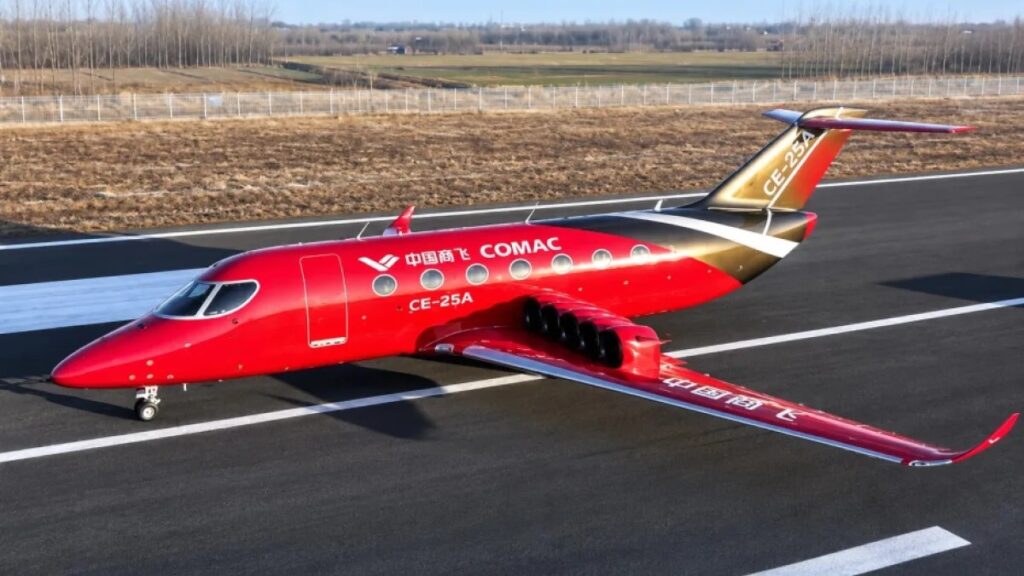
China has completed the first piloted flight of its CE-25A electric commercial aircraft, marking a new stage in the country’s efforts to develop battery-powered passenger aviation.

The aircraft, developed by the state-owned Commercial Aircraft Corporation of China (COMAC) with domestic partners, flew on 14 November in Binzhou, Shandong Province. It carried two pilots and a flight-test engineer.

COMAC reported that the aircraft operated normally and that its performance indicators met expectations. The flight followed an earlier phase of autonomous testing, which began with an uncrewed flight on 2 February 2026.

The CE-25A is designed primarily for short intercity journeys. It can accommodate up to 19 passengers and has a maximum take-off weight of 10 tonnes.

China’s 19-Seat Electric Aircraft Completes First Crewed Flight, Targets Regional Aviation Market

China’s 19-Seat Electric Aircraft Completes First Crewed Flight, Targets Regional Aviation Market

The development is significant because it takes electric aviation into a larger passenger-aircraft category. Most electric aircraft projects have concentrated on smaller training aircraft, drones and vertical take-off and landing vehicles.

However, the CE-25A remains a development aircraft. It must complete the required testing and obtain regulatory approval before it can carry paying passengers.

Key specifications

COMAC’s published specifications place the aircraft in the short-range regional transport market.

Specification Published figure
Aircraft

CE-25A

Developer

COMAC and partners

Passenger capacity

19

Maximum take-off weight

10 tonnes

Cruising speed

300 km/h

Stated range

400 km

Cruising altitude

2,400 metres

Propulsion

Distributed electric ducted-fan system

Intended market

Intercity commercial flights

The aircraft uses multiple electrically driven fans distributed along the wings. This configuration differs from conventional aircraft that rely on conventional jet or turboprop engines.

Its development involved COMAC, battery manufacturer Contemporary Amperex Technology Co. Limited (CATL), Shanghai Jiao Tong University and other partners.

The partnership brings together aircraft manufacturing, battery technology and academic engineering expertise. Battery performance is particularly important because it affects an electric aircraft’s range, payload, operating costs and ability to complete repeated flights.

First piloted flight follows autonomous testing

The November flight followed the aircraft’s first autonomous, uncrewed flight in February.

COMAC has completed 19 unmanned autonomous flight validations, according to the Civil Aviation Administration of China (CAAC). The first piloted flight was therefore a further milestone in the programme’s testing sequence, rather than the beginning of its development.

City News Service reported that the aircraft covered 60.4 kilometres and spent just under 17 minutes in the air during the piloted test. That distance is considerably shorter than its stated 400-kilometre design range. The test should not be interpreted as proof that the aircraft has already demonstrated its full advertised range.

The CAAC has accepted COMAC’s application for a type certificate. Acceptance of the application is an important regulatory step, but it does not mean the aircraft has been certified or cleared for commercial passenger operations.

The certification process includes technical documentation reviews, witnessed testing and certification flight tests.

Future prospects

The CE-25A’s commercial prospects will depend on whether its technical performance can translate into a reliable and economically viable passenger service.

Its stated 400-kilometre range points towards short regional and intercity routes. Such aircraft could eventually serve connections between smaller cities, regional centres and airports that do not support larger passenger aircraft.
China’s 19-Seat Electric Aircraft Completes First Crewed Flight, Targets Regional Aviation Market

China’s 19-Seat Electric Aircraft Completes First Crewed Flight, Targets Regional Aviation Market

For operators, the attraction would be the potential to reduce dependence on conventional aviation fuel. Electric propulsion could also offer lower noise and fewer direct operational emissions than conventional combustion engines.

These advantages, however, are not automatic guarantees of lower overall operating costs. Airlines and operators would still need to account for aircraft acquisition, battery replacement, electricity supply, charging infrastructure, maintenance, insurance and regulatory compliance.

The aircraft’s 19-seat capacity also creates a specific commercial challenge. Operators would need sufficient passenger demand and suitable fares to make regular services financially sustainable.

Battery technology remains central

Battery performance will be one of the decisive factors in the aircraft’s future.

Unlike conventional aircraft, which can replenish energy through established aviation-fuel infrastructure, electric aircraft require suitable charging systems and access to sufficient electrical capacity.

Operators will also need to manage battery degradation, charging time, operating reserves and performance under different weather and temperature conditions.

These considerations will determine how frequently the CE-25A can fly, how far it can operate under real-world conditions and how much payload it can carry while maintaining safe reserves.

Certification will determine the commercial timetable

The CE-25A must progress from experimental testing to full regulatory approval.

Certification will require evidence that its structure, propulsion systems, electrical architecture, flight controls and safety systems meet applicable airworthiness requirements.

The aircraft’s designation references China’s CCAR-25 transport-aircraft airworthiness framework, according to City News Service. The acceptance of its type-certificate application does not establish that the aircraft has already met all certification requirements.

The timeline for certification, production and entry into commercial service has not been confirmed in the available announcements.

What the development means for Africa and Zimbabwe

China’s electric-aircraft programme is worth watching in Africa, where many countries face the challenge of connecting smaller cities, regional economic centres and remote communities.

In principle, a 19-seat aircraft could be relevant to selected short routes, including tourism, business travel and regional connectivity. However, the CE-25A’s suitability for African markets will depend on its eventual certification, actual operating range, acquisition cost, charging requirements and local aviation infrastructure.

For Zimbabwe, potential applications could include connections between Harare, Bulawayo, Victoria Falls and other regional destinations. But these are prospective route possibilities, not announced plans or evidence that the aircraft is ready for local deployment.

Zimbabwe would also need to assess airport infrastructure, electricity reliability, charging capacity, maintenance capability and the regulatory requirements for introducing electric passenger aircraft.

The broader opportunity may extend beyond aircraft operations. Electric aviation could create demand for specialist engineering, battery systems, charging infrastructure, maintenance services and aviation training.

For African policymakers and investors, the development highlights the importance of preparing for changes in aviation technology without assuming that emerging aircraft will immediately be commercially viable.

A developing aviation market

COMAC’s CE-25A adds to China’s wider effort to build domestic capability across the aviation value chain.

The company is already developing and manufacturing conventional commercial aircraft, including the C909 regional jet and C919 single-aisle passenger aircraft. The CE-25A represents a different technological direction, focused on electric propulsion and shorter-distance transport.

Its success will depend on more than the ability to fly. It must demonstrate safety, reliability, useful operating range and competitive economics.

The first piloted flight is an important milestone. The more consequential test will be whether COMAC can turn the prototype into a certified aircraft that airlines and passengers can depend on.

Business Diary Analysis

The CE-25A is significant because it represents an attempt to scale electric aviation beyond small aircraft and experimental air taxis.

Its 19-seat configuration targets a potentially useful segment between small private aircraft and larger regional jets. This could open opportunities for operators serving routes with limited passenger volumes.

However, the 400km stated range remains a critical commercial constraint. Real-world operating range must account for passenger and baggage loads, weather, reserves, charging requirements and airport infrastructure.

The commercial question is whether electric propulsion can deliver sufficient cost savings to offset the investment required in batteries, aircraft technology and charging facilities.

For Zimbabwe and the wider African market, the technology merits attention, particularly as countries consider regional aviation, tourism connectivity and transport infrastructure investment. But local adoption should be based on demonstrated operating economics rather than the novelty of electric flight.

What’s next?

The key developments to watch are:

  1. Progress towards type certification by China’s aviation regulator.
  2. Further piloted and certification flight tests.
  3. Independent evidence of actual range, payload and battery performance.
  4. Production plans and potential airline or operator partnerships.
  5. Commercial pricing and the infrastructure required to support regular operations.

Continue Reading

Trending

×