
Connect with us

Business & Economy

Dairibord Revenue Climbs 28% to US$82.6m as Beverages Lead Volume Growth

Dairibord Holdings grew first-half revenue by 28% to US$82.6m, with beverages up 33% by volume. Operating profit doubled as new plant capacity came online. Higher interest costs, a 30% fall in exports and a pending control-block negotiation shape what comes next.

Published

on

Dairibord Holdings reported revenue of US$82.56m for the six months to 30 June 2026, up from US$64.32m a year earlier. Sales volumes rose 26% to 78.3 million litres. Beverages supplied 52.8 million litres, about two-thirds of the total. Profit for the period rose 169% to US$3.25m.

Background

Dairibord spent over US$10m on plant and equipment in 2025. Projects included extra Cascade capacity at Simon Mazorodze, a maheu expansion at Chitungwiza, and a Steri Milk plant in Chipinge commissioned in December. The company reported full-year 2025 revenue of US$137.4m, up 8%, on volume growth of 12% (Newsday summary of the FY2025 results). The 2026 first half is the first period to show the full effect of that capacity.

Key developments

Beverages (52.8m litres, +33%). Quench cordial rose 82%, bottled Cascade 68%, Fun n Fresh 56% and Pfuko maheu 43%.

Foods (7.3m litres, +30%). Bulk ice cream rose 80%, salad cream 72%, Yogie drinking yoghurt 42%.

Liquid milks (18.2m litres, +8%). Steri Milk rose 72%, helped by the Chipinge plant. Raw milk use was flat at 20.4m litres.

Margins. Gross margin rose from about 24.5% to 26.3%. Operating profit rose from US$2.76m to US$5.54m, lifting operating margin from about 4.3% to 6.7%. Revenue per litre rose only about 1.7%. Growth came from volume, not price.

Costs and debt. Administration expenses rose 35% to US$6.03m. Finance costs rose to US$1.15m. Interest-bearing borrowings went from US$11.63m at end-2025 to US$13.83m. Interest cover improved to about 4.8 times. Operating cash flow was US$4.38m, against a small outflow a year earlier.

Dividend. The board declared 0.22 US cents per share, about US$774,000.

Business implications

Volume over price. With prices roughly flat, Dairibord is winning on availability and capacity. That suits a market where many consumers weigh price closely. It also means margin gains depend on keeping plants full and costs controlled.

Exports fell 30%. The company redirected product to the domestic market, where demand was strong. This lifts local supply, but exports bring foreign currency, and the group says growing its foreign currency earnings is a strategic goal. South African revenue was US$0.72m, under 1% of the group.

Dairy supply is the limit. Liquid milks grew far more slowly than beverages. Equity Axis notes that category expansion was constrained by raw milk supply. The FY2025 coverage put national milk demand at about 190 million litres against supply of just under 122 million. Beverages carry the growth in the meantime, but dairy is the company’s heritage and its supply problem is structural.

Working capital. Prepayments rose from US$2.38m to US$8.37m, and receivables rose 31% to US$9.35m. Both tie up cash.

Industry analysis

Dairibord’s AGM trade update on 28 September said growth continued into Q3 at a more moderate pace, which it attributes to a higher base. A cold July reduced beverage sales, and August recovered. It cited Iran-related tension raising plastic packaging and distribution costs. It also reported a relatively stable exchange rate and inflation, more fault-related power outages, and softening interest rates. Capital expenditure is expected at about US$9m by end-2026.

Outlook

Management expects growth to continue through the year. The things to watch are the Q3 trading update, packaging and fuel costs, the El Niño risk to raw milk and cereal supply, and the debt build-up.

Possible control change. Equity Axis reports that three shareholders holding over 51% combined have told the board they are negotiating over a controlling block with an unnamed third party. No price or terms have been disclosed.

Business Diary Analysis

The first half shows that capacity spending can convert demand into profit. The harder questions are second-half costs and whether a dairy-rooted business can keep growing while raw milk supply stays short. For SMEs in the supply chain, rising Dairibord volumes mean more demand for packaging, transport and agricultural inputs. For investors, a control deal could change strategy, and shareholders will want the terms.

What’s next?

Watch for the Q3 trading update, the full-year results, any announcement on the control negotiations, and whether export volumes recover.

Sources

The Business Diary magazine is a comprehensive publication that centers around business and economic development news. It covers a wide range of topics including finance, mining, technology, environment, climate finance, and agriculture. With its focus on providing valuable insights and updates, the magazine caters to readers who are interested in staying informed about the latest developments and trends in the business and economic landscape of Zimbabwe.

Continue Reading

Business & Economy

Sable Chemicals Targets 240,000 Tonnes of Fertiliser a Year as Zimbabwe Seeks to Cut Imports

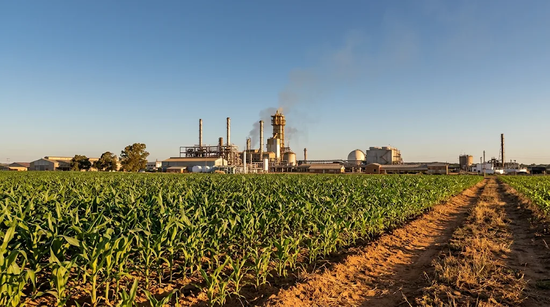
Sable Chemicals, Zimbabwe’s only ammonium nitrate producer, is back in production after a closure of about three years. It says it can reach 240,000 tonnes a year, roughly 63% of national need. The target matters because the country spent a record US$22.8m on ammonium nitrate imports in May alone. But the plant is still ramping up, and its 2026/27 output is not confirmed.
Published

on

Sable Chemicals Targets 240,000 Tonnes of Fertiliser a Year as Zimbabwe Seeks to Cut Imports

Sable Chemical Industries has restarted ammonium nitrate production at its Kwekwe plant, according to a Fertilizer Daily report of 27 May 2026. Chief executive Harrison Shumba has said the company is targeting up to 240,000 tonnes a year once fully operational. A capital injection from the Mutapa Investment Fund made the restart possible.

Background

Sable made ammonia by electrolysis from 1972 to 2015, according to Equity Axis. The plant stopped producing in about 2023 because of high energy costs, financial constraints and operational difficulties. Equity Axis reports that the cost of electricity rose from about US$30 to US$90 per megawatt-hour.

A 2015 Sunday News report shows the 240,000-tonne figure is long-standing: it was the plant’s installed capacity then, when Sable was producing about 75,000 tonnes a year and aimed for 100,000. The target is a capacity figure, not a record of past output.

Key developments

Funding. In April, Mutapa Investment Fund chief executive John Mangudya told Parliament the fund had committed more than US$153m across the fertiliser sector, of which US$13.3m was for Sable. The same package covered Dorowa Mine (US$5.3m), ZimPhos (US$3m) and a US$30m working capital facility for Zimbabwe Fertiliser Company, with a further US$75m facility planned. African Trade Chamber reported that Sable’s ownership is also being restructured to give the government more control.

Cost structure. Sable currently imports ammonia, which Shumba said accounts for almost 80% of its costs. The company puts the import lead time at 30 to 45 days. The long-term plan is to produce ammonia locally.

Price claim. The Herald reported Shumba as saying the decrease in prices “will greatly benefit local farmers.” Fertiliser at US$36 to US$50 a bag is expected to fall to US$17 to US$22 a bag. The report does not say which product or bag size this refers to but its most likely a 50kg bag.

Business implications

Import bill. Ammonium nitrate imports were US$87.9m in 2023, US$51.9m in 2024 and US$63.6m in 2025, according to Equity Axis. May 2026 imports reached US$22.8m, a record month, and January to May totalled US$53.7m. Equity Axis estimates that Sable at full capacity could cut the bill by US$50m to US$60m a year. That is the publication’s calculation, not a company figure.

Global prices. Fertilizer Daily says global nitrogen prices rose sharply in 2026, which it attributes to the Strait of Hormuz closure constraining Middle East supply. Local production reduces exposure to that kind of shock, although Sable still imports ammonia.

Farmers and food security. National ammonium nitrate need is about 380,000 tonnes a year, per Equity Axis, including top-dressing for Pfumvudza households and winter wheat. Winter wheat covered 128,459 hectares in 2026, according to Equity Axis, citing a 23 June Cabinet statement. Local supply helps only if the product arrives on time and priced competitively with imports.

Industry analysis

Sable is one piece of a wider import-substitution push. In June, a Cabinet committee was reported to be driving local fertiliser production, with procurement rules favouring local suppliers (Herald). Equity Axis reports a planned US$200m Chinese-backed nitrogen plant, Xintai, with construction starting in June 2026 and operations expected in 2027. It says Xintai plus Sable would exceed national need.

The risks are practical. Ammonia import dependence and electricity costs are the plant’s main weak points. In June, Agriculture Minister Anxious Masuka was reported as describing a plan to refurbish Sable with an initial output goal of only 20,000 tonnes. That is far below the 240,000-tonne target. Equity Axis calls 120,000 to 150,000 tonnes for 2026/27 “plausible but unconfirmed.”

Outlook

The first test is how quickly output rises from the restart. The second is whether the cost of ammonia and power allows Sable to price below imports. The third is whether the ownership restructuring and Mutapa financing give the company working capital for the next season. Farmers should watch for confirmed production figures before planning inputs around local supply.

Business Diary Analysis

The 240,000-tonne figure describes what the plant could do, not what it has done. The story to watch is the gap between that capacity and actual deliveries. For farmers and agro-dealers, the practical question is price and timely supply this season. For policymakers, Sable shows that restarting an asset requires fixing its cost structure, especially power and ammonia, and not only funding it.

What’s next?

Watch for monthly production figures, Sable’s 2026/27 supply plans, the ammonia localisation plan, ownership restructuring details, and the progress of Xintai.

Sources

Continue Reading

Business & Economy

Zimbabwe Business Update: 2027 Budget Priorities, Energy Infrastructure, and Corporate Growth

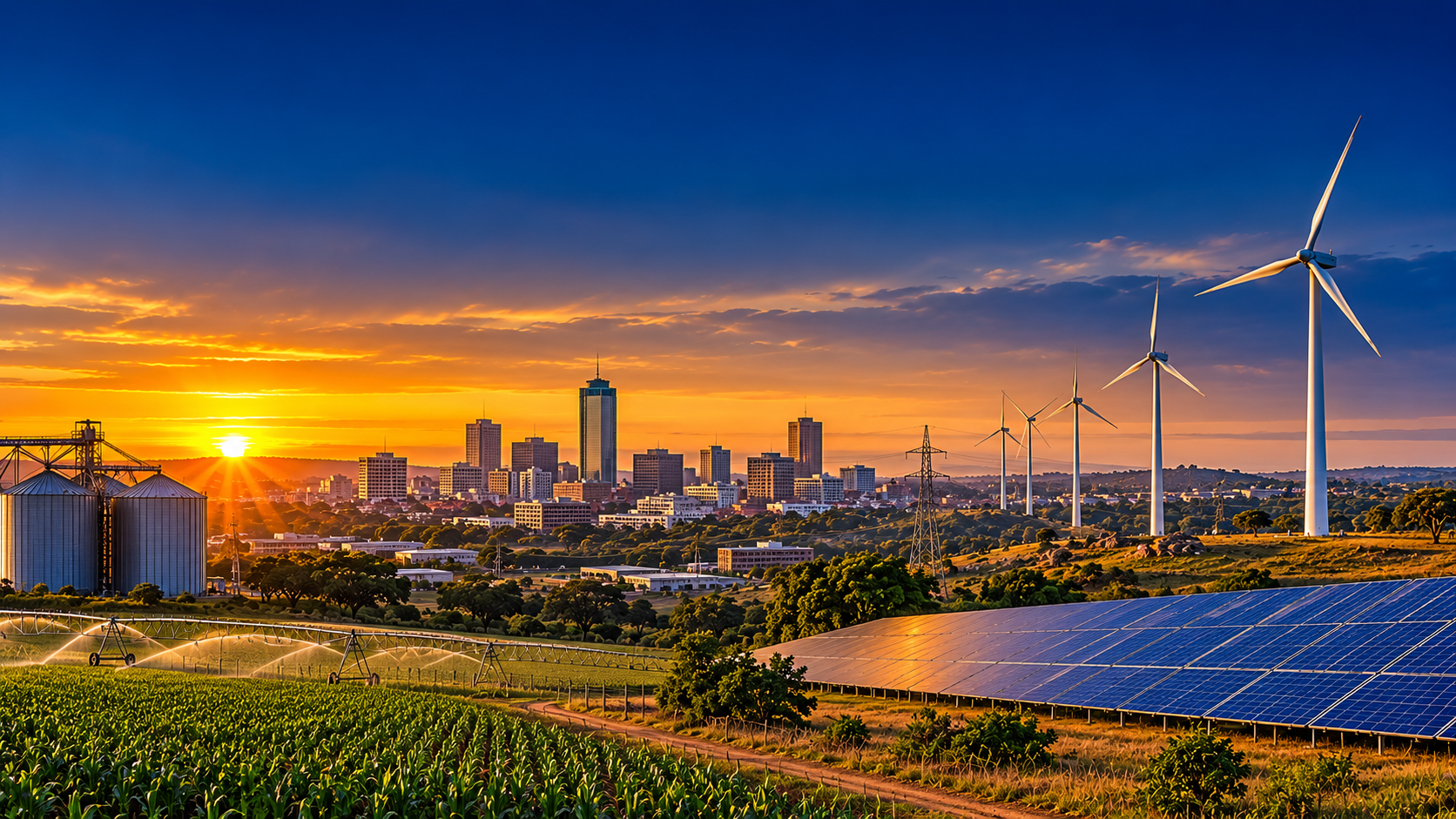
Zimbabwe’s commercial landscape is navigating pivotal policy shifts and infrastructure investments, with Treasury preparing the 2027 National Budget amid weather-related risks, while major capital projects in renewable energy and property take shape across the country.
Published

on

Zimbabwe Business Update: 2027 Budget Priorities, Energy Infrastructure, and Corporate Growth
HARARE — Zimbabwe’s commercial and macro-economic landscape is undergoing significant shifts as policymakers, corporate leaders, and institutional investors align strategy ahead of upcoming fiscal announcements and major infrastructure deployments.

Treasury Focuses 2027 Budget on Climate Risk and Currency Stability

Finance Minister Mthuli Ncube is preparing the 2027 National Budget presentation against a backdrop of competing economic demands. Business leaders and market analysts are urging Treasury to prioritize measures that safeguard currency stability and deliver targeted tax relief to the formal corporate sector.
A central focus for the budget remains national climate resilience. With agricultural planners warning of potential El Niño weather patterns, policy recommendations highlight the urgent need for expanded grain reserves, modern irrigation rehabilitation, and municipal water infrastructure funding. The Agricultural Rural Development Authority (ARDA) recently delivered over 248,000 tonnes of grain to fortify the country’s national food buffer.

Renewable Energy & Infrastructure Investments Gain Momentum

Investment activity in the energy sector continues to expand to meet industrial power demands:
  • Utility-Scale Wind Energy: Plans have been unveiled for Zimbabwe’s first utility-scale wind farm, a project valued at $300 million aimed at injecting grid-scale clean energy into the national network.
  • Industrial Solar & Development Funding: Institutional development partnerships are accelerating distributed power projects across industrial hubs, expanding renewable access for commercial enterprises.
  • Mining Power Offtake: Mining and agricultural operations continue to scale up captive solar installations to hedge against power supply fluctuations and lower long-term operating costs.

Capital Markets & Corporate Sector Highlights

On the financial markets, liquidity and listing movements reflect shifting corporate strategy:
  • Victoria Falls Stock Exchange (VFEX): The foreign-currency denominated exchange continues to draw interest from primary counters seeking hard-currency capital raising, with tangible property REITs and agricultural producers evaluating listings.
  • Real Estate & Construction: Development activity remains resilient. Tigere REIT is negotiating the acquisition of three income-producing properties, while PPC Zimbabwe reported improved earnings margins and completed the sale of its 418-hectare Arlington landbank.
  • Beverages & Manufacturing: Consumer-facing manufacturers show volume growth. African Distillers (Afdis) reported a revenue surge of 40% to $56.5 million in its recent half-year update, while Varun Beverages expanded its local production capacity.
  • Mining & Resource Processing: Mutapa Energy Resources is accelerating initiatives to establish local lithium processing capacity, mirroring broader policy pushes toward domestic mineral beneficiation.
As official monetary statistics reflect a steady year-on-year inflation environment and managed policy rates, businesses across the country remain focused on cash-generation capabilities and defensive capital allocation.

Continue Reading

Business & Economy

South Africa Set for AGOA Exit as US Finalises Major Trade Exclusion

Published

on

South Africa Set for AGOA Exit as US Finalises Major Trade Exclusion

Johannesburg — South Africa is preparing to exit the landmark African Growth and Opportunity Act (AGOA) after the United States government formally announced its intention to terminate the country’s preferential trade eligibility effective January 1, 2027.

The decision, communicated by the U.S. Trade Representative’s office following a directive from Washington, concludes months of speculation surrounding bilateral tensions and brings an impending end to South Africa’s quarter-century participation in the duty-free export program.

Strained Relations and Trade Policy Hurdles

As the historic powerhouse and largest beneficiary of AGOA since its inception in 2000, South Africa exported approximately US$1.7 billion worth of goods under the framework in 2025. However, mounting diplomatic and trade frictions under the current U.S. administration have precipitated the exclusion.

U.S. officials cited persistent trade and investment barriers, concerns over economic policies, and foreign policy positions that Washington claims run counter to its strategic interests as the core drivers behind the termination notice. The removal notice also encompasses Rwanda, marking a significant narrowing of Washington’s preferential trade footprint on the continent.

South African officials have consistently maintained that the nation will not compromise its sovereign foreign policy stances or domestic socio-economic transformation frameworks to satisfy external demands. While President Cyril Ramaphosa previously warned business and political leadership to brace for a potential worst-case scenario, government representatives have emphasized that standard trade with the U.S. will continue outside of the preferential tariff framework.

Economic Implications and Diversification Strategies

Economists and trade analysts note that while the loss of AGOA preferential tariffs is a notable setback for bilateral commercial ties, the broader macroeconomic shock may be cushioned by existing market adjustments. A substantial portion of South Africa’s exports to the United States already moves under ordinary World Trade Organization (WTO) terms.

In response to the announcement, Trade, Industry and Competition Minister Parks Tau affirmed that the government is aggressively accelerating market diversification strategies. Pretoria is intensifying efforts to expand commercial footprints across the African Continental Free Trade Area (AfCFTA), alongside growing trade corridors in India, the European Union, and China, to safeguard local industries and secure jobs.

As the January 2027 transition window approaches, policymakers and private sector stakeholders are pivoting toward a redefined trade landscape—one that relies less on preferential U.S. access and more on robust multi-lateral partnerships across emerging global markets.

Continue Reading

Trending

×