Connect with us

Energy & Infrastructure

ZETDC Puts Grid Rehabilitation Bill at US$2.4bn as Ageing Network Becomes Industry’s Biggest Power Risk

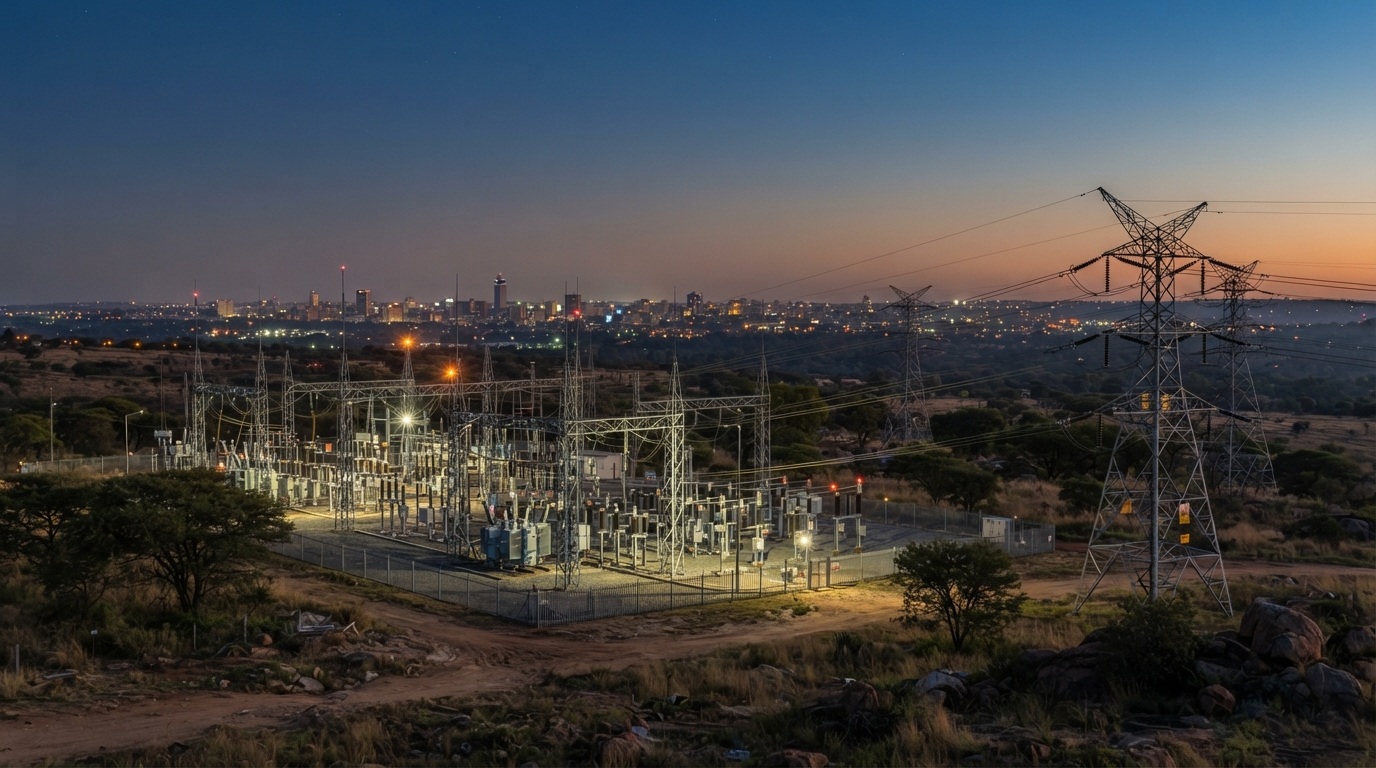
The Zimbabwe Electricity Transmission and Distribution Company says it needs about US$2.4 billion to restore a network starved of maintenance funding for two decades. The utility says generation is adequate but the grid that carries the power is not.

Published

on

ZETDC Puts Grid Rehabilitation Bill at US$2.4bn as Ageing Network Becomes Industry’s Biggest Power Risk

The Zimbabwe Electricity Transmission and Distribution Company (ZETDC) says it needs about US$2.4 billion to rehabilitate the country’s transmission and distribution network. The utility describes the network as the greatest threat to power reliability for industry.

ZETDC senior manager Engineer John Diya gave the figure to mining executives at the launch of the State of the Mining Industry Report in Harare, according to the Herald. He said an audit of the network had identified stations that lack redundancy and need additional lines and transformers. “In totality, we require about US$2.4 billion for us to bring the network up to speed,” he said.

Eng Diya traced the problem to pricing. He said the network was underfunded for 20 years, during which the tariff averaged two cents per kilowatt hour against a procurement cost of 9.8 cents. The shortfall left the utility unable to maintain, refurbish or expand its assets. “We tended to neglect the power system and hence the frequent breakdowns,” he said.

He said ZETDC is refurbishing the network in phases while also extending it to serve new loads and generators. He also stressed that the current interruptions are not load shedding. On supply, he said generation is adequate, with measures in place for a projected 300-megawatt shortfall at Kariba in the first quarter of 2027. The utility will keep buying bridging imports and will support miners who import their own power, offering network access, balancing, scheduling and reconciliation services.

The claim of adequate generation sits alongside some less comfortable supply facts. Hwange Units 7 and 8, which normally contribute about 600MW, went offline for planned maintenance on 15 November, with return dates reported as 4 and 26 January 2027, according to Green Building Africa. The Zambezi River Authority has also cut the combined 2027 water allocation for power generation at Kariba by 36.1%, Equity Axis reported in October. Both developments narrow the supply buffer in the months ahead.

The Herald reported in late October that Zimbabwe had gone 304 consecutive days without scheduled load shedding, though ZESA said faults and planned maintenance still caused interruptions. Those interruptions are the grid problem the US$2.4 billion is meant to address.

Background

The utility’s finances explain why the gap has persisted. The Independent reported, citing the National Energy Compact, that debt repayments absorbed ZETDC’s entire capital budget for two consecutive years. It said that left essential maintenance and infrastructure work unfunded. The same report said tariffs were frozen below cost-reflective levels while the Zimbabwe dollar lost more than 85% of its value between 2019 and 2022.

Equity Axis reported in August that ZETDC recorded an operating loss before tax of ZWG10 billion. Its current liabilities exceeded current assets by ZWG29.9 billion. Cabinet approved the rebundling of generation, transmission and distribution under one structure in August.

Funding so far has been small relative to the need. ZETDC has announced a US$86 million infrastructure and equipment programme and secured a US$210 million Afreximbank facility, which also covers vandalism control and a US$5 million SCADA upgrade. The utility also reports a connection backlog of more than 350,000 households.

The government has begun opening distribution to private capital. Statutory Instrument 128 of 2026 provides for 25-year renewable licences awarded by competitive bidding, with private tariffs capped at ZETDC’s approved rates. Energy News Network reported on 1 September that no applicant or licence holder had been named. ZETDC retains the transmission network.

Business Diary Analysis

The US$2.4 billion figure moves the national power debate from generation to the grid. Zimbabwe has spent several years adding megawatts at Hwange, Kariba and independent solar plants. Extra generation delivers little if substations cannot evacuate it or distribution lines cannot connect the mines, factories and households that need it.

The scale is the main concern. The US$86 million programme and the US$210 million facility total US$296 million, roughly an eighth of the stated requirement. That is a Business Diary calculation, and it assumes both amounts go entirely to network work. The Afreximbank money covers a wider range of projects. A utility whose debt service has consumed its capital budget cannot close that gap from its own cash flow.

The mining sector is the audience for the announcement for a reason. Mining executives surveyed for the same report called the general tariff of US cents 14.21 per kilowatt hour uncompetitive. Three-quarters said they could not sustain operations above US cents 10. Miners want lower tariffs, while ZETDC says historically low tariffs caused the neglect. Network capital cannot come from lower tariffs alone. It will have to come from private distribution investors, development finance or the self-import arrangements ZETDC is encouraging. So far none of the private licences has been taken up.

Readers should also note that the 2.4 billion figure is not directly comparable with earlier estimates. ZETDC sought about US$2.95 billion to strengthen its network in 2023, according to Pindula. A separate US$2.8 billion estimate that year referred to Hwange, a generation project. The scope and basis of each estimate differ, so the change should not be read as a reduction.

What’s Next?

Watch three things. First is whether ZETDC publishes a phased investment programme with costings and funding sources, since “bit by bit” is not yet a schedule. Second is whether any private operator applies for a distribution licence under SI 128 of 2026. Third is how the grid performs in January, when Hwange Units 7 and 8 are due back and Kariba’s reduced allocation begins to bite.

The Business Diary magazine is a comprehensive publication that centers around business and economic development news. It covers a wide range of topics including finance, mining, technology, environment, climate finance, and agriculture. With its focus on providing valuable insights and updates, the magazine caters to readers who are interested in staying informed about the latest developments and trends in the business and economic landscape of Zimbabwe.

Energy & Infrastructure

Tesla Unveils Powercore Solid-State Power Platform Aimed at Grid Bottlenecks and AI Data Centres

Tesla has introduced Powercore, a 7.4 MW unit that combines a transformer, inverter and circuit breaker in one enclosure. It targets long equipment lead times in storage, solar and data-centre projects, but Tesla has not disclosed a price, size or launch customer.
Published

on

Tesla Unveils Powercore Solid-State Power Platform Aimed at Grid Bottlenecks and AI Data Centres

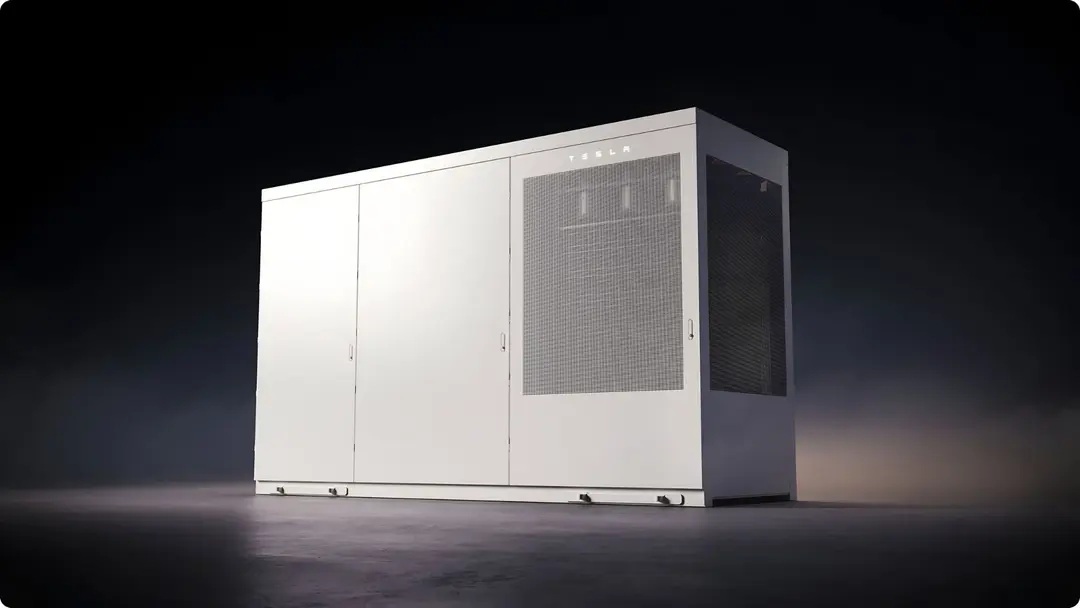
Tesla has unveiled Powercore, a solid-state medium-voltage unit that combines a transformer, an inverter and a circuit breaker in one enclosure, aimed at data centres, large solar farms and its own Megapack storage sites. The company announced it on 17 November 2026 through its Megapack account on X.

The unit is rated for 7.4 megawatts (MW), or 9 megavolt-amperes (MVA), continuously at 34.5 kilovolts AC, with grid-forming support for 10 MVA of peak power. Tesla claims a peak efficiency of 98.86 percent. The company says it will be made in America and operating in 2027. Electrek reported that the unit will be built in the US “of U.S. and imported parts.”

Conventional installations need separate inverters, transformers and breakers. Powercore replaces the large iron-and-copper transformer with fast-switching power electronics. Tesla says the unit includes the industry’s first built-in solid-state circuit breaker, which can clear electrical faults in 100 microseconds. The company puts that at roughly 1,000 times faster than traditional mechanical breakers. Tesla also says the design removes the flammable insulating oil used in classic transformers, operates from minus 40 to plus 55 degrees Celsius, and carries a warranty of up to 25 years.

The data-centre case is central to the launch. According to pv magazine USA, it is designed to take grid power from the feeder and deliver 800-volt DC to servers in a single step. That matches a shift led by Nvidia, which said in May 2025 that it would move to 800-volt direct-current power to support 1-megawatt server racks, with full-scale production of such data centres in 2027. Tesla also markets the unit for 1,500 to 2,000 volt DC solar sites and off-grid data centres.

Timing matters because equipment is scarce. Electrek notes that lead times on conventional transformers are stretching into years as data centres and renewable projects pile into interconnection queues. Tesla says it can build Powercore in factories that already produce power electronics for its vehicles and Megapack batteries.

Important details are missing. Tesla did not give a price, the unit’s size or weight, or a launch customer. Electrek reported that Tesla has not shared a factory location. The efficiency, fault-clearing and uptime figures are the company’s own claims, and no independent testing has been published.

Tesla is not the first to market. Heron Power, founded by former Tesla senior vice president Drew Baglino, announced that it has raised $140 million to build gigawatts’ worth of solid-state transformers for data centres and the grid. Heron also plans volume production in 2027 and has named customers, including Intersect and RWE. At about 5 MW for solar and storage and about 4.2 MW for data centres, its Heron Link is smaller per unit than Powercore.

Business Diary Analysis

Powercore is a bet that integrating several grid components into one factory-built product can beat the queue for custom equipment. If Tesla delivers on its claims, project developers could save on site work and component sourcing, while Tesla gains a product that ties together its Megapack batteries, solar and data-centre business. The company has said it already has 10 GWh of Megapack running at data centres.

The unknowns are commercial. Without a price, a factory location or a customer, Powercore remains an announcement, and the 2027 date means Tesla and Heron will reach the market together. Solid-state transformers have been in development for more than a decade, and large-scale reliability and cost parity with conventional units are still to be shown in service.

For Zimbabwe, the direct relevance is limited for now. Powercore is a utility-scale product made in the US, and Tesla has said nothing on pricing or export availability. Its significance is as an indicator of where grid equipment is heading. Zimbabwean developers of solar, storage and mining power projects have had to plan around long equipment lead times and import costs, so power-electronics products that cut component count and site work could in time become relevant to them. That is our assessment, not a Tesla claim, and it depends on pricing, service support and availability in the region.

What’s Next?

Watch for pricing, a factory location and named customers. Independent testing and the first 2027 installations will show whether Powercore performs as claimed. Competing launches from Heron and others will show how quickly solid-state transformers enter the mainstream.

Sources

Continue Reading

Energy & Infrastructure

Mutapa Fund Pushes Zimbabwe Towards Regional Fuel Hub

The Mutapa Investment Fund, which controls the National Oil Infrastructure Company (NOIC), wants Zimbabwe to move from importing fuel for itself to handling it for its landlocked neighbours. Pipeline expansion is already under way, with capacity set to rise from 3 billion to 5 billion litres a year by the end of 2027. The plan’s value will depend on cost, financing, pricing and competing routes, none of which is fully public.

Published

on

Mutapa Fund Pushes Zimbabwe Towards Regional Fuel Hub

Mutapa Investment Fund chief executive Dr John Mangudya said at a public lecture this year that NOIC’s fuel handling capacity is being raised from 3 billion to 5 billion litres a year. Zimbabwe, he said, aims to become a regional fuel hub using its location and pipeline infrastructure, with Zambia, Botswana and Malawi as target markets.

On 3 September, Presidents Emmerson Mnangagwa and Daniel Chapo announced the expansion of the Beira–Harare fuel corridor. Mozambique’s CPMZ pipeline is to rise 67%, from 3 million to 5 million cubic metres a year, which equals an extra 2 billion litres annually. Completion is targeted for the end of 2027.

Background

NOIC is a Mutapa subsidiary. The Mutapa Investment Fund manages a portfolio of about US$16 billion and more than 30 State-owned enterprises. The Feruka pipeline, which runs between Harare and Beira in Mozambique, carries most of Zimbabwe’s fuel imports. The Herald put the share above three-quarters. An Afreximbank-related report put it at about 85%.

A 2024 upgrade raised the CPMZ pipeline’s capacity from 2 million to 3 million cubic metres a year. NewsDay reported in May that NOIC plans a US$400 million second phase to reach 5 billion litres by the end of 2027.

Demand is growing. The Herald reported diesel consumption of 1.04 billion litres in 2022, 1.07 billion in 2023 and 1.12 billion in 2024, with total fuel consumption up nearly 30% in the 11 months to November 2024. It attributed the demand mainly to mining, including lithium and platinum, transport and agriculture. Those figures are now almost two years old.

Key developments

  • Pipeline expansion: new pumping stations at Nhamatanda and Messica in Mozambique, coordinated with a planned expansion of the Petrozim Line between Feruka and Harare. Work is to proceed without disrupting current supply.
  • Longer-term options: a larger-diameter line of about 12 million cubic metres a year, aimed at meeting regional demand through 2050, and a possible extension of the Harare–Lusaka route into Zambia’s Copperbelt.
  • Financing: Afreximbank is reported to be in talks with the Mutapa fund and private firms to expand the Beira–Msasa pipeline and extend it to Zambia. Zimbabwe’s annual fuel bill is cited at US$1.86 billion.
  • Beneficiaries: Mozambique, Zimbabwe, Zambia, Malawi, Botswana and the DRC.

CPMZ chairman António Laice said the project “adds substantial capacity to one of the region’s most important fuel routes.” Mnangagwa said it “will support Zimbabwe’s energy security.”

What it means for the economy

Costs and the external balance. More pipeline capacity can lower transport costs by reducing reliance on road tankers. The Herald said NOIC’s expansion aims to meet demand, cut import costs and strengthen strategic reserves. Savings depend on actual tariffs and prices, which are unpublished.

Mining and industry. Mining is among the main drivers of fuel demand, so dependable supply matters to producers.

Transit revenue and regional trade. A hub could earn fees from fuel moving to neighbours. The size of that market has not been published, and neighbours have other supply options.

Competition. Afreximbank is working with Dangote Refinery on a tank farm at Walvis Bay in Namibia. It says Zimbabwe, Zambia and Botswana could receive fuel from Lagos within five days. Analyst Walter Mandeya of Trigrams Investments said landed fuel prices could fall 15–20% within 18 months if the Walvis Bay tank farm is delivered. That is one analyst’s estimate. If it proves right, it would compete with the Beira route.

Risks. Heavy dependence on one corridor is itself a supply risk. The capacity increase also needs financing and delivery on time. And a regional hub depends on prices that neighbouring buyers find attractive.

Our Analysis

Zimbabwe’s geography gives it a credible claim to be a transit point, and the pipeline work shows the plan is more than rhetoric. But a hub is a commercial proposition, not a title. It succeeds when fuel arrives reliably, costs less than alternatives and is priced competitively for buyers in Zambia, Botswana and Malawi. Readers should watch for published tariffs, financing terms and signed supply agreements with neighbours.

What’s next?

Watch for the financing structure of the US$400 million expansion, construction progress on the pumping stations and the Petrozim Line, signed supply agreements with neighbouring countries, and published pipeline tariffs.

Continue Reading

Energy & Infrastructure

Harare’s 7.4MW Rooftop Solar Project Nears Commissioning and Tests Zimbabwe’s Power Wheeling Framework

A 7.4MW rooftop solar installation at Willowvale in Harare is close to commissioning. It will deliver power to an industrial customer through the national grid, under Zimbabwe’s wheeling framework. That makes it an early test of whether businesses can buy electricity from private generators away from their own premises. Many details, including cost and the customer, have not been disclosed.


Published

on

Harare’s 7.4MW Rooftop Solar Project Nears Commissioning and Tests Zimbabwe’s Power Wheeling Framework

Limpopo Way Power’s 7.4MW rooftop solar project at the Willowvale Industrial Site in Harare is nearing commissioning, according to a report published on 8 November 2026 by GreentechLead. The panels cover about 33,500 square metres across two warehouses. A 7.2-kilometre, 33-kilovolt line will connect the plant to the Kambuzuma substation.

The power will go to an unnamed industrial customer under Zimbabwe’s electricity wheeling framework. The report says delivery is “subject to final testing and approvals”. No commissioning date was given. The investment amount, the customer and the commercial terms are undisclosed, and the report carried no quotes from the developer, the customer or officials.

What wheeling means

Wheeling lets a generator send electricity to a customer at a different location by using the grid, usually in exchange for a fee to the grid owner. For a business, it means buying solar power from a plant that is not on its own roof. This matters in a country where factories and mines have faced unreliable supply.

Background

Zimbabwe has been moving towards private and captive generation. Mining Zimbabwe reported in March 2026 that new Own-Consumption Licensing Regulations legalise captive power and set licensing procedures and minimum installation standards. It also reported Energy Management Regulations requiring monitoring and reporting of consumption, and Backbone Infrastructure Provision Regulations inviting private investment in high-voltage transmission. The same report said unreliable national supply and load-shedding were pushing mines towards self-generation, and that Zimplats is targeting 185MW of self-generation. The Zimbabwe Energy Regulatory Authority enforces the rules.

What it means

Industry. A 7.4MW supply can cover a meaningful part of a large factory’s daytime demand. If the wheeling arrangement works and is affordable, other manufacturers and commercial users could copy the model without building their own plants.

Developers and investors. The project is a precedent for how long approvals take, what wheeling costs and how contracts are structured. Clear answers would encourage more rooftop and ground-mounted projects. Unclear or costly terms would discourage them.

The grid and the utility. Wheeling uses the existing network. Its effect depends on the charges, the technical conditions and how the arrangement affects the utility’s revenue and grid stability. None of these details has been published.

Mining and the wider economy. Mining is among the largest users of power, so a working wheeling model could matter beyond Harare. For scale, the Zimplats solar plant at Selous is 35MW. The Willowvale project is a fifth of that size but sits on existing roofs and sells to a third party.

Risks. The main ones are failure to secure final approvals, unattractive wheeling charges, grid constraints and, for any solar plant, the fact that it generates mainly in daylight and does not remove the need for night-time supply.

Business Diary Analysis

The importance of this project lies less in its 7.4MW than in what it tests. If the regulator, utility and developer can make a wheeling deal work in Harare, the model could spread. If approvals drag or charges erode the savings, the framework will look better on paper than in practice. Businesses weighing similar arrangements should watch the published terms, not just the headline capacity.

What’s next?

Watch for final approvals and commissioning, the publication of wheeling charges and contract terms, the customer’s identity, and whether other developers announce similar projects.

Continue Reading

Trending

×