Connect with us

Business & Economy

Zimbabwe Pitches VFEX Dollar Stocks for MSCI Frontier Markets Index Inclusion

Zimbabwe’s US-dollar-denominated Victoria Falls Stock Exchange is lobbying global index provider MSCI for entry into its Frontier Markets Index, a strategic push aimed at unlocking international institutional capital and deepening secondary-market liquidity.

Published

on

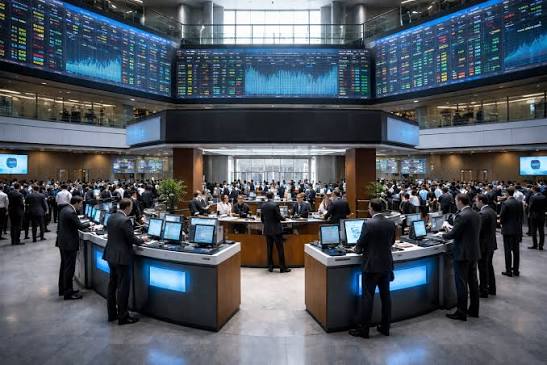
BULAWAYO — Zimbabwe’s US-dollar-denominated Victoria Falls Stock Exchange (VFEX) is actively lobbying global index provider MSCI Inc. for inclusion in its benchmark Frontier Markets Index, marking a decisive step in the country’s push to reconnect with international portfolio investors and deepen secondary-market liquidity.

Speaking from Bulawayo, VFEX Chief Executive Officer Justin Bgoni confirmed that the bourse has written to MSCI on multiple occasions to request consideration for index entry. While Bgoni declined to disclose the specific counters submitted for review, the outreach signals growing confidence in the dollar exchange’s rapid scale since its launch in 2020. MSCI has not yet issued a public comment on the application.

Zimbabwean equities have never featured in the MSCI Frontier Markets Index and are currently classified by the New York-based provider as a standalone market. Securing frontier market status would place qualifying VFEX-listed companies directly on the radar of passive funds and institutional asset managers that track the 246-member benchmark, which covers roughly 85 percent of the free-float-adjusted market capitalization in each eligible economy.

The push comes after a landmark year of capital market expansion on the VFEX. Driven by major listings throughout 2026—most notably financial services heavyweight Old Mutual and telecommunications infrastructure giant Econet InfraCo—the bourse has overtaken the local-currency Zimbabwe Stock Exchange in overall valuation. The exchange now commands a reported market capitalization of approximately $8.96 billion, alongside an average daily turnover of roughly $2.8 million.

Despite its rapid growth in market value, analysts note that liquidity and free-float thresholds remain the primary hurdles for MSCI qualification. Unlike the broader MSCI Zimbabwe standalone index, which currently tracks a single consumer staples constituent, broader Frontier Markets inclusion requires sustained trading volume and accessible free float across multiple large- and mid-cap counters.

Market watchers point to established blue-chip issuers on the exchange as the most likely contenders to meet MSCI’s stringent criteria. According to Imara Asset Management Chief Executive Officer Shelton Sibanda, counters such as Innscor Africa, Padenga Holdings, Simbisa Brands, and AXIA Corporation possess the operational scale and profile best positioned for potential eligibility, alongside recent heavyweight entrants Old Mutual and Econet InfraCo.

Designed as an offshore-style financial hub within the Victoria Falls Special Economic Zone, the VFEX offers foreign investors full repatriation of capital and dividends, zero capital gains tax on securities disposals, and insulation from domestic currency volatility. For Zimbabwe’s capital markets, transitioning from a standalone classification into the MSCI Frontier Markets Index would represent a structural milestone, converting hard-currency market scale into sustained cross-border capital inflows.

Business & Economy

CBZ Holdings Posts ZWG 1.12 Billion Profit After Tax on Digital Efficiency and Cost Control

Diversified financial services giant CBZ Holdings Limited has recorded a ZWG 1.12 billion profit after tax for its latest quarterly reporting period, underscoring disciplined cost containment and ongoing digital transformation across its core banking and investment operations.
Published

on

CBZ Holdings Posts ZWG 1.12 Billion Profit After Tax on Digital Efficiency and Cost Control

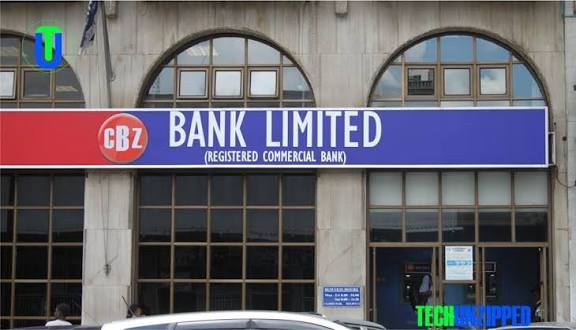
HARARE — Diversified financial services conglomerate CBZ Holdings Limited has posted a ZWG 1.12 billion profit after tax for its latest quarterly reporting period, reinforcing its position as Zimbabwe’s largest banking group by balance sheet and earnings scale.

The strong bottom-line performance reflects sustained operational momentum following a first quarter in which the Zimbabwe Stock Exchange-listed group recorded a ZWG 361.34 million profit after tax. Management attributed the accelerated earnings trajectory to disciplined expense management, steady customer activity across its banking and non-banking subsidiaries, and ongoing investments in digital service delivery.

In a statement accompanying the trading update, CBZ Holdings Group Chief Governance Officer Rumbidzayi Jakanani noted that expanding market share and deepening customer reach remain central to the conglomerate’s near-term execution. She emphasized that rigorous cost containment and digital transformation will continue to anchor improvements in operating efficiency as the group scales its product offerings.

Operating across four primary business clusters—banking, insurance, asset management, and agribusiness—CBZ Holdings has consistently leveraged its diversified revenue model to cushion against tight domestic liquidity and shifting monetary conditions. Earlier in the 2026 financial year, the group reported total assets exceeding ZWG 40.81 billion and customer deposits of ZWG 27.83 billion, highlighting strong institutional and retail depositor confidence.

For market analysts, CBZ’s latest earnings release signals resilience within Zimbabwe’s top-tier banking sector. As financial institutions navigate a disciplined monetary environment, large-cap lenders with established digital ecosystems and diversified non-funded income streams continue to outpace smaller rivals in both balance sheet growth and profitability.

With management prioritizing market development and technological upgrades heading into the final stretch of the financial year, shareholders will be watching closely to see how the group’s efficiency gains translate into full-year dividend capacity and sustained return on equity.

Continue Reading

Business & Economy

Sable Chemicals Targets 240,000 Tonnes of Fertiliser a Year as Zimbabwe Seeks to Cut Imports

Sable Chemicals, Zimbabwe’s only ammonium nitrate producer, is back in production after a closure of about three years. It says it can reach 240,000 tonnes a year, roughly 63% of national need. The target matters because the country spent a record US$22.8m on ammonium nitrate imports in May alone. But the plant is still ramping up, and its 2026/27 output is not confirmed.

Published

on

Sable Chemicals Targets 240,000 Tonnes of Fertiliser a Year as Zimbabwe Seeks to Cut Imports

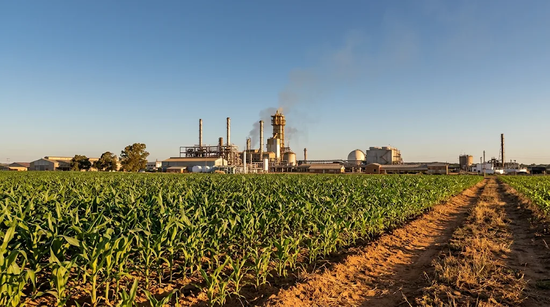
Sable Chemical Industries has restarted ammonium nitrate production at its Kwekwe plant, according to a Fertilizer Daily report of 27 May 2026. Chief executive Harrison Shumba has said the company is targeting up to 240,000 tonnes a year once fully operational. A capital injection from the Mutapa Investment Fund made the restart possible.

Background

Sable made ammonia by electrolysis from 1972 to 2015, according to Equity Axis. The plant stopped producing in about 2023 because of high energy costs, financial constraints and operational difficulties. Equity Axis reports that the cost of electricity rose from about US$30 to US$90 per megawatt-hour.

A 2015 Sunday News report shows the 240,000-tonne figure is long-standing: it was the plant’s installed capacity then, when Sable was producing about 75,000 tonnes a year and aimed for 100,000. The target is a capacity figure, not a record of past output.

Key developments

Funding. In April, Mutapa Investment Fund chief executive John Mangudya told Parliament the fund had committed more than US$153m across the fertiliser sector, of which US$13.3m was for Sable. The same package covered Dorowa Mine (US$5.3m), ZimPhos (US$3m) and a US$30m working capital facility for Zimbabwe Fertiliser Company, with a further US$75m facility planned. African Trade Chamber reported that Sable’s ownership is also being restructured to give the government more control.

Cost structure. Sable currently imports ammonia, which Shumba said accounts for almost 80% of its costs. The company puts the import lead time at 30 to 45 days. The long-term plan is to produce ammonia locally.

Price claim. The Herald reported Shumba as saying the decrease in prices “will greatly benefit local farmers.” Fertiliser at US$36 to US$50 a bag is expected to fall to US$17 to US$22 a bag. The report does not say which product or bag size this refers to but its most likely a 50kg bag.

Business implications

Import bill. Ammonium nitrate imports were US$87.9m in 2023, US$51.9m in 2024 and US$63.6m in 2025, according to Equity Axis. May 2026 imports reached US$22.8m, a record month, and January to May totalled US$53.7m. Equity Axis estimates that Sable at full capacity could cut the bill by US$50m to US$60m a year. That is the publication’s calculation, not a company figure.

Global prices. Fertilizer Daily says global nitrogen prices rose sharply in 2026, which it attributes to the Strait of Hormuz closure constraining Middle East supply. Local production reduces exposure to that kind of shock, although Sable still imports ammonia.

Farmers and food security. National ammonium nitrate need is about 380,000 tonnes a year, per Equity Axis, including top-dressing for Pfumvudza households and winter wheat. Winter wheat covered 128,459 hectares in 2026, according to Equity Axis, citing a 23 June Cabinet statement. Local supply helps only if the product arrives on time and priced competitively with imports.

Industry analysis

Sable is one piece of a wider import-substitution push. In June, a Cabinet committee was reported to be driving local fertiliser production, with procurement rules favouring local suppliers (Herald). Equity Axis reports a planned US$200m Chinese-backed nitrogen plant, Xintai, with construction starting in June 2026 and operations expected in 2027. It says Xintai plus Sable would exceed national need.

The risks are practical. Ammonia import dependence and electricity costs are the plant’s main weak points. In June, Agriculture Minister Anxious Masuka was reported as describing a plan to refurbish Sable with an initial output goal of only 20,000 tonnes. That is far below the 240,000-tonne target. Equity Axis calls 120,000 to 150,000 tonnes for 2026/27 “plausible but unconfirmed.”

Outlook

The first test is how quickly output rises from the restart. The second is whether the cost of ammonia and power allows Sable to price below imports. The third is whether the ownership restructuring and Mutapa financing give the company working capital for the next season. Farmers should watch for confirmed production figures before planning inputs around local supply.

Business Diary Analysis

The 240,000-tonne figure describes what the plant could do, not what it has done. The story to watch is the gap between that capacity and actual deliveries. For farmers and agro-dealers, the practical question is price and timely supply this season. For policymakers, Sable shows that restarting an asset requires fixing its cost structure, especially power and ammonia, and not only funding it.

What’s next?

Watch for monthly production figures, Sable’s 2026/27 supply plans, the ammonia localisation plan, ownership restructuring details, and the progress of Xintai.

Sources

Continue Reading

Business & Economy

Dairibord Revenue Climbs 28% to US$82.6m as Beverages Lead Volume Growth

Dairibord Holdings grew first-half revenue by 28% to US$82.6m, with beverages up 33% by volume. Operating profit doubled as new plant capacity came online. Higher interest costs, a 30% fall in exports and a pending control-block negotiation shape what comes next.

Published

on

Dairibord Holdings reported revenue of US$82.56m for the six months to 30 June 2026, up from US$64.32m a year earlier. Sales volumes rose 26% to 78.3 million litres. Beverages supplied 52.8 million litres, about two-thirds of the total. Profit for the period rose 169% to US$3.25m.

Background

Dairibord spent over US$10m on plant and equipment in 2025. Projects included extra Cascade capacity at Simon Mazorodze, a maheu expansion at Chitungwiza, and a Steri Milk plant in Chipinge commissioned in December. The company reported full-year 2025 revenue of US$137.4m, up 8%, on volume growth of 12% (Newsday summary of the FY2025 results). The 2026 first half is the first period to show the full effect of that capacity.

Key developments

Beverages (52.8m litres, +33%). Quench cordial rose 82%, bottled Cascade 68%, Fun n Fresh 56% and Pfuko maheu 43%.

Foods (7.3m litres, +30%). Bulk ice cream rose 80%, salad cream 72%, Yogie drinking yoghurt 42%.

Liquid milks (18.2m litres, +8%). Steri Milk rose 72%, helped by the Chipinge plant. Raw milk use was flat at 20.4m litres.

Margins. Gross margin rose from about 24.5% to 26.3%. Operating profit rose from US$2.76m to US$5.54m, lifting operating margin from about 4.3% to 6.7%. Revenue per litre rose only about 1.7%. Growth came from volume, not price.

Costs and debt. Administration expenses rose 35% to US$6.03m. Finance costs rose to US$1.15m. Interest-bearing borrowings went from US$11.63m at end-2025 to US$13.83m. Interest cover improved to about 4.8 times. Operating cash flow was US$4.38m, against a small outflow a year earlier.

Dividend. The board declared 0.22 US cents per share, about US$774,000.

Business implications

Volume over price. With prices roughly flat, Dairibord is winning on availability and capacity. That suits a market where many consumers weigh price closely. It also means margin gains depend on keeping plants full and costs controlled.

Exports fell 30%. The company redirected product to the domestic market, where demand was strong. This lifts local supply, but exports bring foreign currency, and the group says growing its foreign currency earnings is a strategic goal. South African revenue was US$0.72m, under 1% of the group.

Dairy supply is the limit. Liquid milks grew far more slowly than beverages. Equity Axis notes that category expansion was constrained by raw milk supply. The FY2025 coverage put national milk demand at about 190 million litres against supply of just under 122 million. Beverages carry the growth in the meantime, but dairy is the company’s heritage and its supply problem is structural.

Working capital. Prepayments rose from US$2.38m to US$8.37m, and receivables rose 31% to US$9.35m. Both tie up cash.

Industry analysis

Dairibord’s AGM trade update on 28 September said growth continued into Q3 at a more moderate pace, which it attributes to a higher base. A cold July reduced beverage sales, and August recovered. It cited Iran-related tension raising plastic packaging and distribution costs. It also reported a relatively stable exchange rate and inflation, more fault-related power outages, and softening interest rates. Capital expenditure is expected at about US$9m by end-2026.

Outlook

Management expects growth to continue through the year. The things to watch are the Q3 trading update, packaging and fuel costs, the El Niño risk to raw milk and cereal supply, and the debt build-up.

Possible control change. Equity Axis reports that three shareholders holding over 51% combined have told the board they are negotiating over a controlling block with an unnamed third party. No price or terms have been disclosed.

Business Diary Analysis

The first half shows that capacity spending can convert demand into profit. The harder questions are second-half costs and whether a dairy-rooted business can keep growing while raw milk supply stays short. For SMEs in the supply chain, rising Dairibord volumes mean more demand for packaging, transport and agricultural inputs. For investors, a control deal could change strategy, and shareholders will want the terms.

What’s next?

Watch for the Q3 trading update, the full-year results, any announcement on the control negotiations, and whether export volumes recover.

Sources

Continue Reading

Trending

×