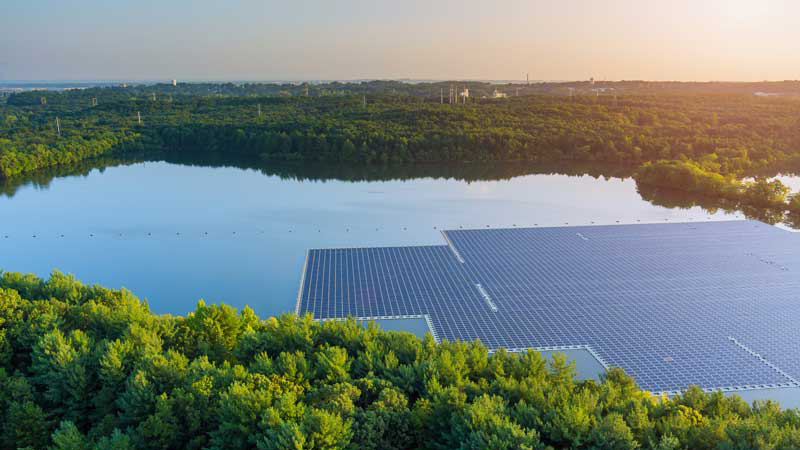
Cabinet has approved implementation of a 600-megawatt Kariba floating solar plant valued at US$650 million, according to a post-Cabinet briefing reported on 14 October 2026. Basic engineering is under way and a ground-breaking ceremony has been held, but no financial close or construction contractor has been announced.
The plant targets a weakness in Zimbabwe’s power system. Hydropower supplies more than half of the country’s electricity, and drought has cut output at Kariba South. The station has an installed capacity of 1,050MW but was producing about 550MW in December 2025, Ecofin Agency reported, citing Bloomberg. The Zambezi River Authority has also lowered its 2027 power-water allocation to 23 billion cubic metres from 36 billion in 2026, according to Discovery Alert.
Under the plan, panels generate power during the day so that water is held back for hydropower at night. Information Minister, Dr Soda Zhemu, said the Zimbabwe Electricity Transmission and Distribution Company (ZETDC) will be the sole buyer of the power, with GreenGrid Energy Private Limited, formerly Sunspire, as developer. Cabinet said grid and technical studies, land surveys, environmental impact assessment and regulatory licensing are complete, and that commercial agreements have been negotiated. Discovery Alert, citing The Herald, reported that the Zimbabwe Energy Regulatory Authority issued a generation licence on 30 July 2026.
How Kariba floating solar fits national policy
President Emmerson Mnangagwa directed ministries in December 2023 to facilitate private investment in the project. That matches the approach in the National Development Strategy 2 (NDS2), the 2026 to 2030 plan, which stresses more generation, private-sector participation and regional integration, The Herald reported. NDS2 targets gross national income per capita above US$4,900 and formal employment of 45.3 percent by 2030.
Electricity is central to those targets. The Herald reported that the power system has capacity of about 3,000MW, against use of about 2,500MW, with roughly 4,000MW of new capacity lined up by 2030. The World Bank estimates power shortages cost Zimbabwe 6.1 percent of GDP a year, a figure cited by The Standard. Agriculture Minister Dr Anxious Masuka said the plant would supply power for 3 million people and create 1,000 direct jobs in Kariba at full capacity.
Mining users stand to gain from steadier supply. The Intensive Energy Users Group (IEUG), made up of large mining and industrial consumers, backed an earlier version of the project through a vehicle called Green Hybrid Power.
Environmental questions
Local experts quoted by Down To Earth said floating panels shade the reservoir and reduce evaporation, and that cooler panels can produce 5 to 10 percent more power. The plant would also use existing transmission lines at Kariba and avoid clearing land.
Evidence on the lake itself is thinner. A 2011 study found evaporation around Kariba had risen 31 percent since 1963, while kapenta catches have fallen since 1974. Coverage estimates also differ: Sunday World put the array at about 10 square kilometres, roughly 1 percent of the lake, while Equity Axis cited under 0.2 percent for the first phase. Daily Maverick noted in 2024 that the effects of floating solar on aquatic ecosystems are not fully understood.
Key figures
- Project value: US$650 million, 600MW (Cabinet, reported 14 October 2026)
- Jobs and reach: 1,000 direct jobs, power for 3 million people at full capacity (Dr Masuka, 14 October 2026)
- Kariba South output: about 550MW against 1,050MW installed (Ecofin Agency, 11 December 2025)
- Cost of shortages: 6.1 percent of GDP a year (World Bank, cited by The Standard)
What to watch
Financial close is the next test. Energy Minister July Moyo said in August he hoped to close financing by October, and the target has not yet been confirmed as met. Investors will also look for the tariff, the construction contractor, transmission terms, publication of the environmental findings and formal approval from the Zambezi River Authority, which manages the lake jointly for Zambia and Zimbabwe. Reporting from New Zimbabwe also noted that the Gwanda solar project, which received a US$5 million advance in April 2016, has shown no meaningful progress, so delivery milestones will carry weight.