Connect with us

Energy & Infrastructure

Zimbabwe Gazettes Invictus Energy’s Cabora Bassa Gas Deal: What It Means for the Economy

Zimbabwe has formally published its production sharing agreement with Invictus Energy for the Cabora Bassa gas project, completing a deal signed in May. The agreement gives investors legal certainty. Any benefit to the economy depends on what drilling finds and whether the gas can be financed, processed and sold.

Published

on

Zimbabwe Gazettes Invictus Energy’s Cabora Bassa Gas Deal: What It Means for the Economy

The Government Gazette published the agreement on Friday 30 October 2026 as General Notice 2101 of 2026. Invictus announced it on 2 November. Gazettal completes the formal steps for the petroleum production sharing agreement (PPSA), which was signed in Harare on 27 May. Finance Minister Mthuli Ncube and Mines Minister Polite Kambamura attended the ceremony. The parties are the Government, Invictus as operator, and Geo Associates (Pvt) Ltd, the license holder, which is 80% owned by Invictus.

Invictus managing director Scott Macmillan called the signing “finally done” and a “model contract for future agreements”. Ncube called the project “a strategic national undertaking with the potential to reshape Zimbabwe’s economic landscape” and said it could reduce petroleum import dependence.

What the deal provides

  • A long-term fiscal, legal and commercial framework for exploration, appraisal, development and production in the Cabora Bassa Basin, a 360,000-hectare area in northern Zimbabwe.
  • A government share of benefits through production and profit sharing, plus royalties and corporate tax. The Mutapa Investment Fund’s participation is also formalised.
  • National Project Status and Special Economic Zone status, described as providing contract stability and investment protection.
  • Rules on the environment, decommissioning, local employment and local procurement.

Percentages, royalty rates, licence duration and cost-recovery terms have not been published yet.

The resource: promising, but not yet proven reserves

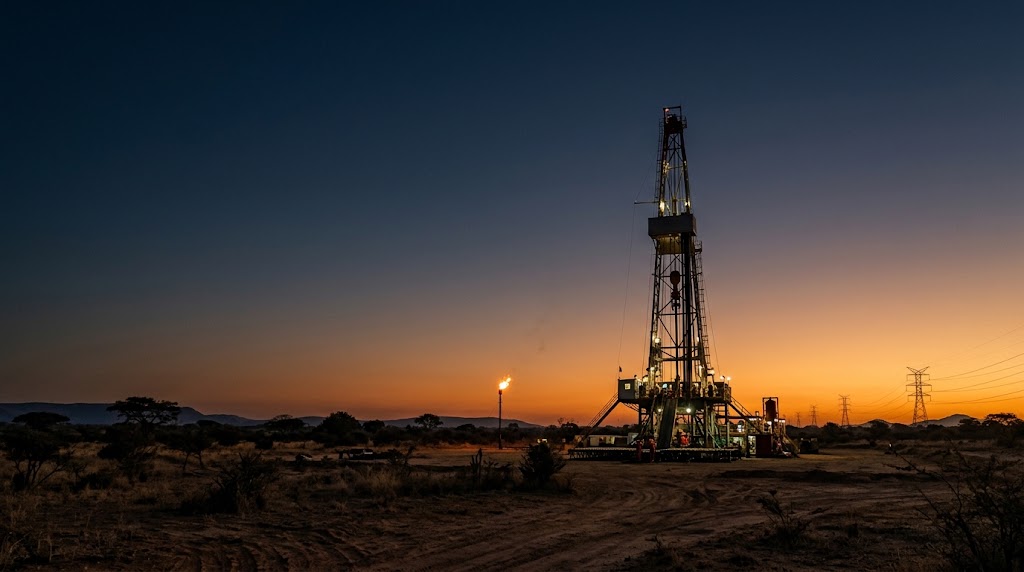
The Mukuyu gas-condensate discovery was ranked by Wood Mackenzie as Sub-Saharan Africa’s second-largest petroleum discovery of 2023. Estimates cited in local coverage run to as much as 20 trillion cubic feet of gas and 845 million barrels of condensate. The next well, Musuma-1, targets an unrisked mean prospective resource of 1.2 trillion cubic feet and 73 million barrels. Prospective resources are estimates of what might be found, not reserves, and drilling can disappoint.

Invictus says Musuma-1 is expected to spud in November 2026. It raised A$10 million in a placement to fund pre-drill work and the well.

What it could mean for the economy

Energy and power

Development economist Dr Eddie Mahembe said gas could become a third source of base-load electricity, since hydropower is less reliable and coal output is constrained by ageing infrastructure. Reliable power is a constraint on mining, manufacturing, farming and households alike.

Imports and the external balance

Ncube’s argument is that domestic gas and condensate could reduce spending on imported petroleum products. That would ease pressure on foreign currency. No figures have been published on import savings, gas prices or buyers, so the size of any effect is unknown.

Agriculture

Mahembe also pointed to possible nitrogen fertiliser production, which would matter for a country that imports much of its farm inputs. This is a possibility, not a plan.

Jobs and local business. The agreement includes local employment and procurement provisions, and Mahembe noted that construction before drilling could create activity. Employment numbers have not been published.

The risks

Mahembe flagged resource quality and depth, transport infrastructure, land and resettlement for rural residents, and unpublished environmental and compensation information. He called commercial viability “the central test.” Development costs, gas pricing and offtake arrangements have not been disclosed.

Business Diary Analysis

The gazettal removes a legal uncertainty that has held the project back for years. It does not remove the geological, financial or infrastructure risks. The sensible reading is that Zimbabwe now has a credible framework and an operator ready to drill. Whether that becomes power, fertiliser and export earnings will be decided by Musuma-1, appraisal results and financing over the next few years. Until then, claims about GDP uplift are premature, and the public deserves to see the fiscal terms.

Key takeaways

  • The Cabora Bassa PPSA was gazetted on 30 October 2026, completing the deal signed on 27 May.
  • Musuma-1 drilling is expected to start in November 2026 and will test a 1.2 trillion cubic feet prospect.
  • Possible gains are power supply, lower fuel imports and fertiliser. None has a published size or date.
  • The fiscal terms and the Government’s equity position are not fully public.

What’s next?

Watch for the Musuma-1 spud and results, Invictus’s appraisal plan for Mukuyu, financing and partner announcements, publication of the fiscal terms, and environmental and compensation disclosures.

Sources

The Business Diary magazine is a comprehensive publication that centers around business and economic development news. It covers a wide range of topics including finance, mining, technology, environment, climate finance, and agriculture. With its focus on providing valuable insights and updates, the magazine caters to readers who are interested in staying informed about the latest developments and trends in the business and economic landscape of Zimbabwe.

Energy & Infrastructure

Kariba Floating Solar Plant Wins Cabinet Approval at US$650m

Published

on

Kariba Floating Solar Plant Wins Cabinet Approval at US$650m

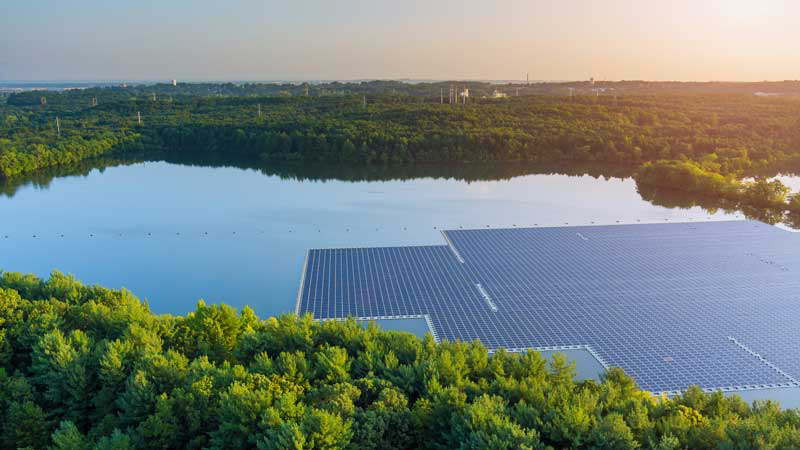
Cabinet has approved implementation of a 600-megawatt Kariba floating solar plant valued at US$650 million, according to a post-Cabinet briefing reported on 14 October 2026. Basic engineering is under way and a ground-breaking ceremony has been held, but no financial close or construction contractor has been announced.

The plant targets a weakness in Zimbabwe’s power system. Hydropower supplies more than half of the country’s electricity, and drought has cut output at Kariba South. The station has an installed capacity of 1,050MW but was producing about 550MW in December 2025, Ecofin Agency reported, citing Bloomberg. The Zambezi River Authority has also lowered its 2027 power-water allocation to 23 billion cubic metres from 36 billion in 2026, according to Discovery Alert.

Under the plan, panels generate power during the day so that water is held back for hydropower at night. Information Minister, Dr Soda Zhemu, said the Zimbabwe Electricity Transmission and Distribution Company (ZETDC) will be the sole buyer of the power, with GreenGrid Energy Private Limited, formerly Sunspire, as developer. Cabinet said grid and technical studies, land surveys, environmental impact assessment and regulatory licensing are complete, and that commercial agreements have been negotiated. Discovery Alert, citing The Herald, reported that the Zimbabwe Energy Regulatory Authority issued a generation licence on 30 July 2026.

How Kariba floating solar fits national policy

President Emmerson Mnangagwa directed ministries in December 2023 to facilitate private investment in the project. That matches the approach in the National Development Strategy 2 (NDS2), the 2026 to 2030 plan, which stresses more generation, private-sector participation and regional integration, The Herald reported. NDS2 targets gross national income per capita above US$4,900 and formal employment of 45.3 percent by 2030.

Electricity is central to those targets. The Herald reported that the power system has capacity of about 3,000MW, against use of about 2,500MW, with roughly 4,000MW of new capacity lined up by 2030. The World Bank estimates power shortages cost Zimbabwe 6.1 percent of GDP a year, a figure cited by The Standard. Agriculture Minister Dr Anxious Masuka said the plant would supply power for 3 million people and create 1,000 direct jobs in Kariba at full capacity.

Mining users stand to gain from steadier supply. The Intensive Energy Users Group (IEUG), made up of large mining and industrial consumers, backed an earlier version of the project through a vehicle called Green Hybrid Power.

Environmental questions

Local experts quoted by Down To Earth said floating panels shade the reservoir and reduce evaporation, and that cooler panels can produce 5 to 10 percent more power. The plant would also use existing transmission lines at Kariba and avoid clearing land.

Evidence on the lake itself is thinner. A 2011 study found evaporation around Kariba had risen 31 percent since 1963, while kapenta catches have fallen since 1974. Coverage estimates also differ: Sunday World put the array at about 10 square kilometres, roughly 1 percent of the lake, while Equity Axis cited under 0.2 percent for the first phase. Daily Maverick noted in 2024 that the effects of floating solar on aquatic ecosystems are not fully understood.

Key figures

  • Project value: US$650 million, 600MW (Cabinet, reported 14 October 2026)
  • Jobs and reach: 1,000 direct jobs, power for 3 million people at full capacity (Dr Masuka, 14 October 2026)
  • Kariba South output: about 550MW against 1,050MW installed (Ecofin Agency, 11 December 2025)
  • Cost of shortages: 6.1 percent of GDP a year (World Bank, cited by The Standard)

What to watch

Financial close is the next test. Energy Minister July Moyo said in August he hoped to close financing by October, and the target has not yet been confirmed as met. Investors will also look for the tariff, the construction contractor, transmission terms, publication of the environmental findings and formal approval from the Zambezi River Authority, which manages the lake jointly for Zambia and Zimbabwe. Reporting from New Zimbabwe also noted that the Gwanda solar project, which received a US$5 million advance in April 2016, has shown no meaningful progress, so delivery milestones will carry weight.

Continue Reading

Trending

×