Connect with us

Mining & Minerals

Ariana Resources Seeks Up to US$5m From Zimbabwean Investors in VFEX Listing Plan for Dokwe Gold Project

London-listed Ariana Resources plans a private placement of up to US$5 million, followed by a secondary listing on the Victoria Falls Stock Exchange. The raise would give local investors a direct stake in the largest undeveloped gold project in Zimbabwe and fund exploration around it.

Published

on

Ariana Resources Seeks Up to US$5m From Zimbabwean Investors in VFEX Listing Plan for Dokwe Gold Project

Ariana Resources PLC intends to enter the Victoria Falls Stock Exchange (VFEX) through a private placement of up to US$5 million, followed by a secondary listing that opens the company to Zimbabwean investors. The funds would go to exploration around the Dokwe Gold Project in Matabeleland North, not to construction of the mine.

The placement is expected to raise between US$3 million and US$5 million. Dendere Asset Management, an investment manager licensed by the Securities and Exchange Commission of Zimbabwe, has already committed US$1 million as an early investor. The Herald, which reported the plan, cited IH Securities as saying the listing would let Zimbabweans invest directly in the company that wholly owns Dokwe.

The use of proceeds is specific. US$1.5 million is earmarked for resource-extension drilling at Dokwe North and Central, and US$1.35 million for target generation through aeromagnetic and geochemical surveys. The reported plan also sets aside up to US$1.8 million for exploration and sterilisation drilling, and US$240,000 for identifying new projects across Zimbabwe. Sterilisation drilling tests whether planned plant and infrastructure sites sit on top of mineralisation.

Background

Ariana is a mineral exploration and development company with gold interests in Africa and Europe. It is listed in London and on the Australian Securities Exchange through CHESS Depositary Interests. The ASX listing took place on 10 September 2025 and raised AU$11 million. In December 2025 Hongkong Xinhai Mining Services agreed a strategic investment of about US$5.3 million to fund metallurgical test work and a definitive feasibility study.

Dokwe lies in Tsholotsho District, about 110 kilometres north-west of Bulawayo. A revised pre-feasibility study published on 26 May 2026 sets out the economics. It puts pre-production capital at US$164 million, with a pre-tax net present value of US$1.06 billion and a post-tax value of US$740 million. The internal rate of return is 92% at a gold price of US$4,250 an ounce. Those figures depend on that gold price assumption.

The study raised the mineral resource estimate by 13% to 1.598 million ounces of gold. The Dokwe North ore reserve stands at 1.13 million ounces, with life-of-project production of about 1.06 million ounces over 20 years and peak output near 100,000 ounces a year. A definitive feasibility study is due in the first quarter of 2027, and the company is targeting first gold production by 2028.

The company’s financial position

IH Securities described Ariana as debt-free, with cash of about US$27.7 million and a 9.9% interest in Zenit, which owns the Tavşan gold mine in Türkiye. Ariana reported a first-half 2026 pre-tax profit of £6.25 million, helped by monetising part of its Turkish investment portfolio. That is a strong balance sheet for a company asking local investors for as little as US$3 million, and it shapes how the raise should be read.

Business Diary Analysis

The size of the raise relative to Ariana’s resources is the most revealing detail. The company does not appear to need US$5 million to survive. It is asking for the money partly to widen its shareholder base to Zimbabweans, which fits a wider push to deepen domestic participation in the mining sector.

For Zimbabwean investors, the proposition is unusual. VFEX is a US dollar-denominated market, and investors would be buying into a project still two stages from production: a definitive feasibility study, a US$164 million financing and construction. The pre-feasibility returns are attractive on paper, but they rest on a gold price assumption and carry the usual risks of early-stage studies. Investors will want to see the placement price, the listing timetable and the regulatory approvals before they judge the valuation.

For the exchange, a Dokwe listing would add a gold development asset with an identifiable resource, a named local anchor investor and a credible path to production. Whether it improves liquidity depends on how much stock actually changes hands after listing.

The next milestones are clear. Ariana must set out the placement terms, secure listing approval and deliver the feasibility study in early 2027. The financing for the US$164 million build will follow, and it will determine how much of Dokwe’s value reaches shareholders, local ones included.

The Business Diary magazine is a comprehensive publication that centers around business and economic development news. It covers a wide range of topics including finance, mining, technology, environment, climate finance, and agriculture. With its focus on providing valuable insights and updates, the magazine caters to readers who are interested in staying informed about the latest developments and trends in the business and economic landscape of Zimbabwe.

Mining & Minerals

Zimbabwe’s Gold Boom: Can US$3.1bn in Export Earnings Transform the Mining Economy?

Published

on

Namib Minerals Accelerates Redwing Gold Mine Restart to November 2026

Gold is now Zimbabwe’s most important source of foreign currency, and 2026 is on course to be a record year. The central question for investors and policymakers is whether this earnings surge is a one-off price effect or the start of a more durable shift in the mining economy.

Background

Export receipts have climbed sharply over two years. One industry analysis puts 2025 gold export earnings at about US$4.38 billion, against US$2.25 billion in 2024, growth of roughly 94.6%. Another report puts the 2025 total at a record US$4.61 billion, driven by favourable global prices and increased artisanal mining. The two estimates differ, and the RBZ’s final audited figure should be treated as the reference.

The monthly pattern in 2026 has been strong but uneven. January receipts were US$498.3 million, February US$549 million, March US$406.1 million, April about US$528 million and May US$503.3 million. June was the strongest month at US$597.1 million.

Key Developments

Price is the main driver. In August, Zimbabwe’s average realised export price reached US$4,676.82 per ounce, producing monthly receipts of US$417.48 million. Price is not the whole story, though. One analysis says the government has pushed small-scale and informal miners to sell through the state buyer rather than smuggle gold abroad. Output was about 50 tonnes in 2025, and Treasury expects 55.6 tonnes in 2026.

Deliveries are rising. Zimbabwe channelled 26.05 tonnes of gold through Fidelity Gold Refinery in the first seven months of 2026, more than halfway to its 50-tonne annual target. That figure is a physical-volume measure. The US$3.84 billion valuation attached to those deliveries is a gross market value at average international prices, not actual export receipts.

The year-end target. The wider ambition is to raise annual mining export earnings to US$5 billion through higher production, formalisation of artisanal and small-scale mining and investment in processing infrastructure. Official projections cited in local reporting anticipate output above 55 tonnes and gold export earnings of US$5bn.

Investment is following. Eleven Zimbabwean banks committed US$160 million towards Mutapa Gold Resources’ US$240 million Shamva Hill expansion in November 2026, and Kavango Resources has a pilot processing plant under way. Domestic bank financing of a mining expansion is notable because it suggests local lenders are now willing to back sector projects.

Data Discrepancies Readers Should Know About

The figures reported in the market do not fully reconcile, and The Business Diary has not been able to resolve the differences from the sources available:

  • First-half total: RBZ-sourced reports give about US$3.1bn. Other media, citing RBZ mid-year materials, report gold earnings of US$3.82 billion in the first half. The gap may reflect different definitions (for example, receipts versus gross export value).
  • Five-month figure: One report puts January–May earnings at a record US$3.071bn, with May alone at US$1.158bn. That sits awkwardly with the monthly series above, where May is about US$503m and the six-month total is about US$3.1bn.
  • Nine-month figure: Gold earnings were reported at US$2.95bn for January to September, up 53% on US$1.93bn a year earlier. That is lower than the six-month total in other reports, so the series cannot all be on the same basis.

Until the RBZ publishes a reconciled series, the US$3.1bn first-half figure should be read as an indicative RBZ-sourced estimate, and year-to-date comparisons should be made with care.

Business Implications

Foreign currency and the ZiG. Gold is one of the reserve assets backing the Zimbabwe Gold (ZiG) currency, so higher earnings and official deliveries give the Reserve Bank more scope to strengthen its gold reserves over time. Currency stability is the benefit most directly felt by SMEs, which depend on predictable import costs and pricing.

Formalisation. Part of the surge reflects gold moving from informal channels to official ones. That raises recorded earnings, and it also widens the tax base and brings small-scale miners closer to formal finance.

Spillovers. Mining equipment, logistics, assaying, security, catering and accommodation firms gain from higher activity. The benefit to SMEs is real but not automatic. It depends on local procurement and on how quickly miners are paid.

Industry Analysis

The 2026 earnings surge is better understood as a price event layered on a policy shift than as a structural transformation. Value addition is the test of transformation. Exporting doré or semi-refined gold captures only part of the value chain, while refining, processing and downstream services keep more of it in-country. The Shamva Hill financing and the pilot processing plants point in that direction but remain early-stage.

The sector also carries risks that the headline numbers hide:

  • Price dependence. Earnings that nearly tripled in a year can fall just as quickly if bullion prices retreat.
  • Monthly volatility. The swing between a very weak and a very strong month in some reports shows how lumpy deliveries and receipts can be.
  • Artisanal sector formalisation. Sustaining official deliveries requires prompt, competitive payment to small-scale miners. Otherwise informal channels regain appeal.
  • Regulatory and environmental pressure on small-scale operations, which account for a significant share of output.

Market Outlook

If prices stay near recent levels and output reaches the Treasury’s projected 55.6 tonnes, 2026 would be another record year. The more consequential question is 2027 and beyond: whether producers expand capacity, whether processing investment translates into higher in-country value, and whether foreign currency inflows are converted into lasting reserves and productive investment, not just consumption.

Conclusion

The US$3.1bn first-half gold figure confirms that mining is the engine of Zimbabwe’s foreign-currency economy. Whether it transforms the mining economy depends on what follows: refining capacity, supply-chain linkages and policy discipline when prices eventually cool.

Our Analysis

Record earnings and structural change are different things. The first can be delivered by a strong price, the second only by investment in processing, finance and supplier networks. For SMEs, the practical opportunity lies in the supply chain around mines, not in the headline export figure.

What’s Next?

Watch for the RBZ’s reconciled monthly series, full-year 2026 deliveries against the 50-tonne target, progress at Shamva Hill and the processing projects, and any change in how small-scale miners are paid.

Continue Reading

Mining & Minerals

Government Lines Up 2027 Exploration Drive, With Aeromagnetic Surveys and Copper in Focus

Zimbabwe plans a 12-month exploration programme in 2027 on three copper areas in Mashonaland West, and the Government says it is using aeromagnetic surveys to fill gaps in geological data. A wider nationwide airborne survey has been promised for months, but no start date, budget or contractor has been announced. Exploration can show where minerals are. It does not guarantee that mines will open.

Published

on

Government Lines Up 2027 Exploration Drive, With Aeromagnetic Surveys and Copper in Focus

The Zimbabwe Mail reported on 9 November that the state-owned Mining Promotion Corporation (MPC) will lead a 12-month geological exploration programme in 2027 across three copper-bearing areas in Mashonaland West. They are Mhangura-Silverside, Makonde and Sanyati, within the reserved mining area MSW-004. The aim is to establish the commercial potential of historic deposits and attract investment.

Deputy Minister of Mines and Mining Development Caleb Makwiranzou said the Government is using modern exploration techniques, including aeromagnetic surveys, to address gaps in geological information. “There are knowledge gaps regarding some of our minerals,” he said.

What aeromagnetic surveys do

An aeromagnetic survey flies an aircraft fitted with sensors over land to measure small variations in the Earth’s magnetic field. Those variations reflect rock types and structures below the surface. The results do not find minerals directly. They help geologists decide where to drill, which saves cost and reduces risk.

Background

MPC chief executive Tapiwa Nyamutukwa said earlier mining focused mainly on gold, leaving copper deposits inadequately assessed. He said the exercise “will assess the economic potential of those deposits.” The Zimbabwe Mail noted that the Mhangura copper mine closed around 2000, which hurt the town’s economy, and that Zimbabwe produces far less copper than the DRC or Zambia.

The Government has also promised a larger programme. In June, the Financial Gazette reported that the Ministry of Mines will launch a nationwide airborne geophysical survey using aeromagnetic and electromagnetic methods, covering about six million hectares of largely unexplored prospective ground. Mines Minister Polite Kambamura said Zimbabwe “remains under-explored by modern international standards.” He said the survey was “on the cusp”. The report gave no start date, funding or contractors.

What it means for the economy

Investment. Modern geophysical data can reduce risk for explorers. Mining Zimbabwe noted that Zambia attracted exploration investment after launching a US$100 million nationwide high-resolution aerial survey in July 2024. It argued Zimbabwe could gain from similar open data, but also noted obstacles such as underfunded provincial survey departments and mapping that still relies partly on manual pegging and paper maps.

Mining. Mining is already the economy’s leading export earner. The Financial Gazette reported gold deliveries of 46.7 tonnes in 2025, up 28%, and record mining export earnings of US$7.3 billion, against US$5.9 billion in 2024. Exploration is how the sector plans to sustain that growth. Copper adds diversification beyond gold, and the Zimbabwe Mail links copper demand to electric vehicles, renewable energy and power transmission.

Local communities. Better data could eventually revive towns such as Mhangura, but that is a long chain from survey to mine and depends on deposit size, grade, access and development costs.

Public finances. If the State funds surveys directly, the cost is public. If partners fund them, the terms matter, including who owns the data.

Business Diary Analysis

The announcements point in the same direction: the Government wants better geological data to attract capital. But the headline claim should match the facts. The only confirmed 2027 commitment is a copper exploration programme, and the nationwide aeromagnetic survey remains an intention without a published date or budget. The test for investors will be whether the data is funded, collected on schedule and released openly.

Key takeaways

  • The MPC plans a 12-month exploration programme in 2027 across three copper areas in Mashonaland West.
  • The deputy minister says aeromagnetic surveys are among the techniques being used.
  • A nationwide airborne survey of about six million hectares has been promised, with no start date or funding announced.
  • Exploration reduces risk but doesn’t guarantee a mine.

What’s next?

Watch for the funding and contractor announcements, a start date for the nationwide survey, whether geological data will be released to investors, and the first results from the Mashonaland West copper programme.

Sources

Continue Reading

Mining & Minerals

Zimbabwe Unveils US$63 Million Financing Facility to Scale Up Small-Scale Mining and Broaden Mineral Sector Growth

Published

on

Zimbabwe Unveils US$63 Million Financing Facility to Scale Up Small-Scale Mining and Broaden Mineral Sector Growth

Harare — In a major step toward commercializing the informal mining sector, the Government of Zimbabwe has announced a US$63 million credit guarantee scheme established through a strategic partnership between the Minerals Marketing Corporation of Zimbabwe (MMCZ) and FBC Bank.

The landmark facility—officially slated for launch on November 12 with seven initial beneficiary projects lined up for immediate support—aims to transition artisanal and small-scale mining (ASM) operations into sustainable, well-capitalized commercial enterprises.

Expanding Access to Capital Beyond Gold

The initiative was disclosed by Ministry of Mines and Mining Development Permanent Secretary Dr. Thomas Utete Wushe during the Zimbabwe Miners Federation (ZMF) Annual General Meeting in Harare. For years, small-scale operators have driven national output but faced severe constraints in accessing formal development finance.

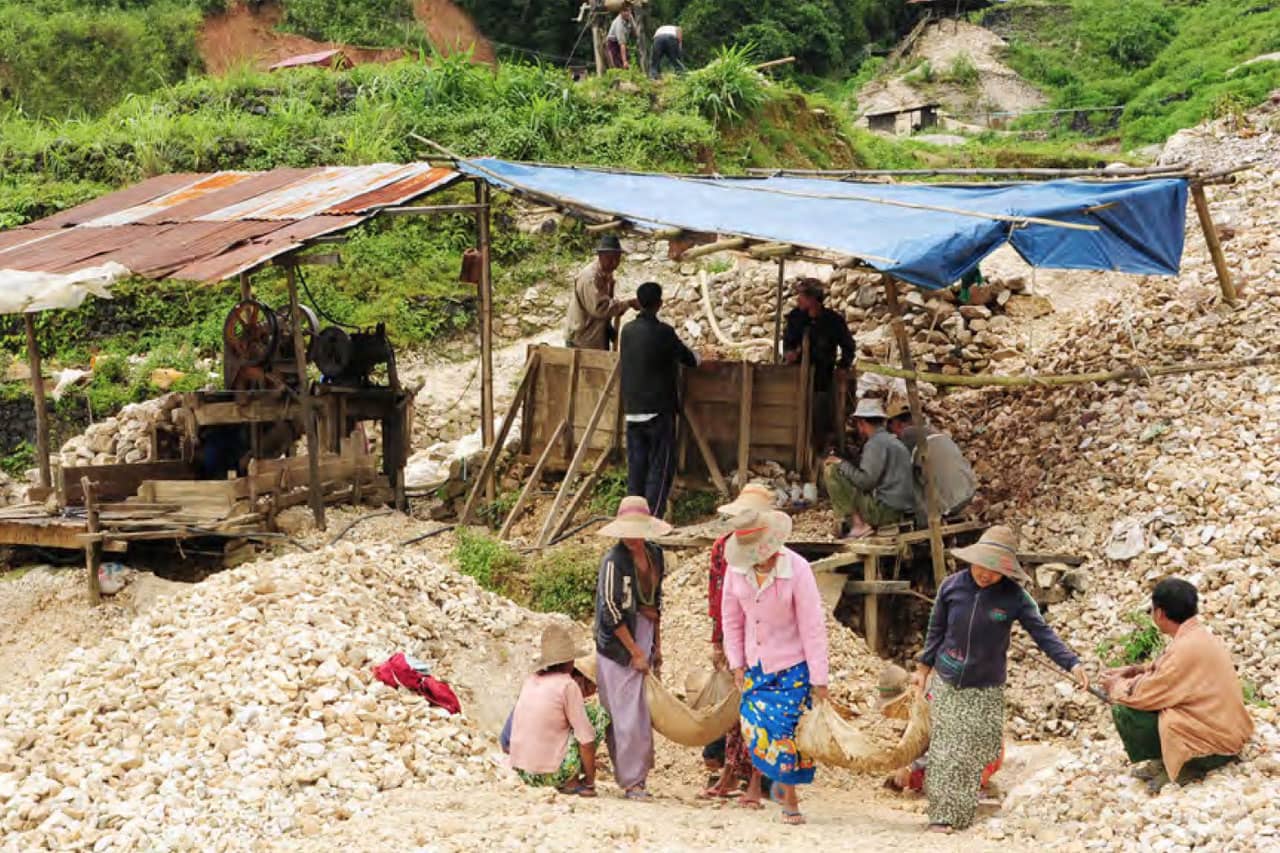
While artisanal and small-scale miners remain the backbone of the industry—contributing 74.5 percent of Zimbabwe’s record 46.7 tonnes of gold produced in 2025—the new US$63 million facility places a vital focus on non-gold minerals, broadening financial backing across the wider mineral commodities spectrum.

Reflecting the sector’s soaring trajectory, the government has revised its long-term mining vision from a US$12 billion framework to an ambitious US$15 billion economy, with gold projected to anchor roughly 65 percent of that value. Although the 2026 national gold production target is officially set at 50 tonnes, Dr. Wushe expressed confidence that output holds much greater potential, stating that the nation could realistically push toward 100 tonnes.

Overhauling State Support and Simplifying Access

To ensure maximum uptake and impact, the government has instituted sweeping reforms across its funding vehicles:

  • Restructuring the Mining Industry Loan Fund: Past administrative barriers—including inflated equipment pricing and cumbersome application procedures—have been removed. Revised pricing models and streamlined requirements are now in place to encourage broader participation.

  • Decentralized Governance: Provincial Affairs Boards will be deployed across all eight mining districts, embedding ZMF representatives alongside Provincial Mining Directors in regional decision-making workflows.

  • Anti-Corruption Measures: Government, the Chamber of Mines of Zimbabwe, and the ZMF are cooperating closely to eliminate bureaucratic bottlenecks and stamp out rent-seeking practices.

Raising the Bar on Compliance and Professionalism

Addressing delegates at the AGM, re-elected ZMF President Henrietta Rushwaya—whose leadership mandate was extended by seven years—stressed that the small-scale sector must embrace high standards of corporate responsibility and regulatory compliance.

She emphasized that environmental stewardship, strict land rehabilitation, and operating exclusively within designated mining zones are non-negotiable requirements if the sector is to retain long-term government backing.

By coupling financial injections like the US$63 million FBC Bank facility with stringent governance and structured accountability, Zimbabwe is laying a strong foundation for small-scale miners to operate safely, transparently, and profitably as core drivers of national economic development.

Continue Reading

Trending

×