Connect with us

Business & Economy

Zimbabwe Presents ZiG358.3bn 2027 Budget With Tax Relief and a US$400m Drought Buffer

Finance Minister Mthuli Ncube has tabled a ZiG358.3 billion (US$12.8 billion) budget for 2027. It raises the tax-free income threshold, cuts levies on electronic transfers and removes duty on mobile phones. Treasury is also setting aside a contingency reserve against an expected El Niño drought, while forecasting slower growth of 3.5 percent.

Published

on

Zimbabwe Presents ZiG358.3bn 2027 Budget With Tax Relief and a US$400m Drought Buffer

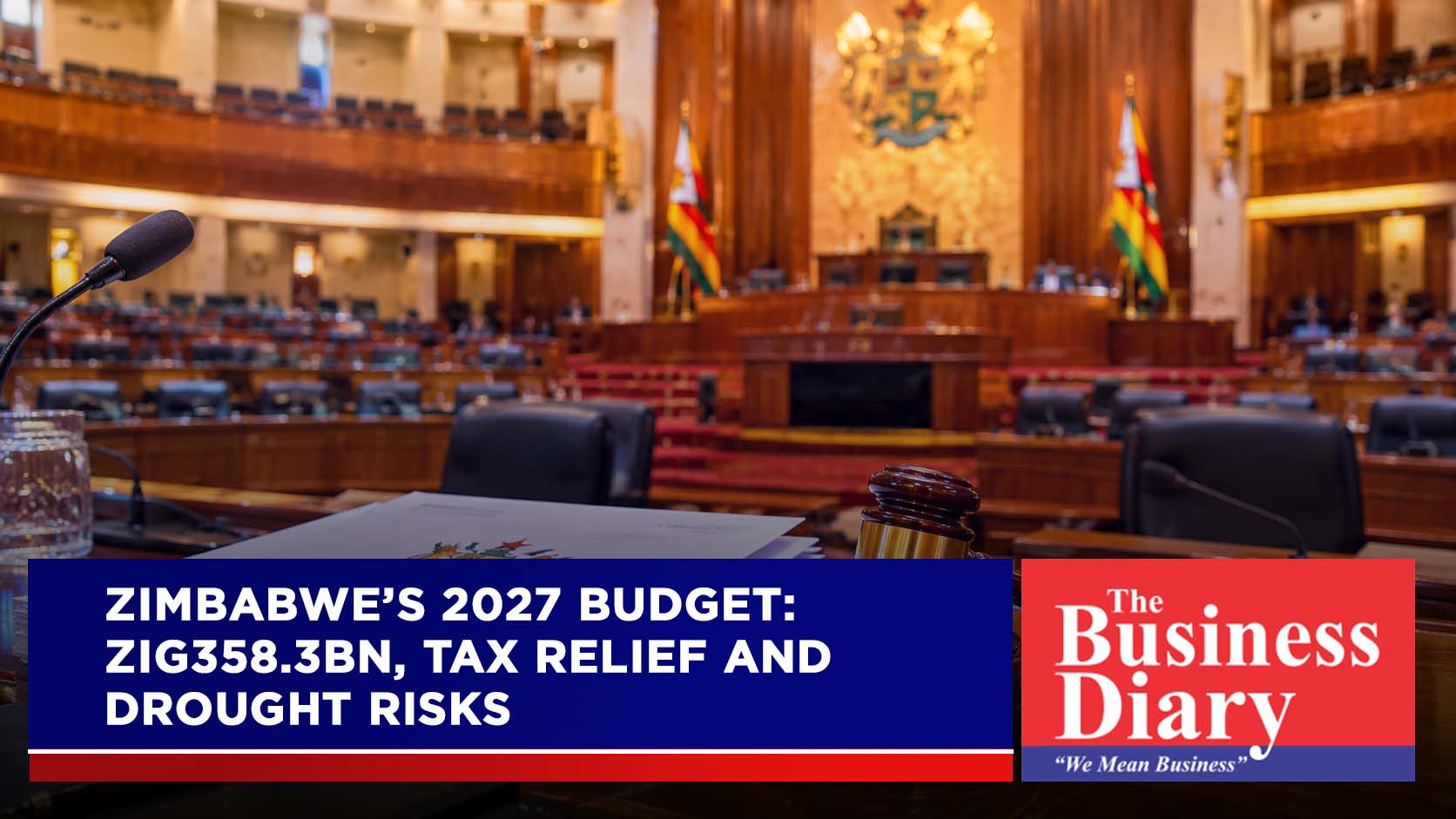
HARARE, 19 November 2026 – Finance Minister Mthuli Ncube on Thursday presented a ZiG358.3 billion (about US$12.8 billion) national budget for 2027 to Parliament. It combines targeted tax relief with a larger contingency reserve, as Treasury braces for a drought that could slow the economy.

The budget, delivered at the New Parliament Building in Mt Hampden under the theme “Accelerating Economic Transformation and Building Resilience to Climate and Global Shocks”, proposes tax relief measures while maintaining the existing tax framework and rates. Treasury expects the revenue forgone from selected tax adjustments to be offset partly by improved economic activity, consumption and compliance.

From 1 January 2027, the monthly tax-free income threshold rises from US$100 to US$150, or the ZiG equivalent, with tax bands adjusted accordingly. The Intermediated Money Transfer Tax (IMTT) falls from 1.5 percent to 1.25 percent on ZiG transactions and from 2 percent to 1.75 percent on foreign currency transfers.

The 25 percent customs duty on cellular phones is scrapped, while the duty on electric vehicles falls from 25 percent to 10 percent. Customs duty on semi-knocked-down kits imported by approved local assemblers of motorcycles, tricycles, trucks and electric commercial vehicles is suspended from 1 December 2026. A duty rebate for the fertiliser manufacturing value chain took effect on 1 November 2026.

The hybrid excise duty on cigarettes will be replaced by a specific duty of US$15 per 1,000 sticks from 1 January 2027. From the same date, Government, mining companies and large entities must source at least 15 percent of their inputs locally where capacity exists, with the supporting framework due by 31 March 2027.

Treasury projects revenue of ZiG349.5 billion (US$12.5 billion), leaving a deficit of about ZiG8.8 billion, or roughly US$300 million, equivalent to 0.5 percent of gross domestic product. Growth is forecast at 3.5 percent in 2027, down from an estimated 5 percent in 2026 and 8.3 percent in 2025. Ncube cited weaker commodity prices and drought risk.

A ZiG10.9 billion (about US$400 million) contingency reserve, financed from 2026 fiscal buffers, is intended to cushion severe shocks. Government expects a potential cereal deficit of up to 541,881 tonnes. The Grain Marketing Board had bought 365,000 tonnes by the end of October towards a 600,000-tonne strategic reserve. Treasury has also taken out African Risk Capacity drought insurance at a US$3.4 million premium. Zimbabwe received a US$31.8 million payout from the same facility after the 2023/24 drought.

Education receives the largest allocation at ZiG47.7 billion, followed by Health at ZiG35.5 billion and Agriculture at ZiG27.6 billion. Defence is allocated ZiG23.4 billion, Home Affairs ZiG21.8 billion and Social Welfare ZiG21.5 billion. Devolution transfers total ZiG17.5 billion, transport infrastructure ZiG10.8 billion and housing ZiG1.5 billion. New Zimbabwe reported that security-related ministries combined would receive ZiG59.5 billion. It noted that agriculture and climate ranked only fourth among national priorities despite the drought warning.

Ministries submitted spending bids of ZiG974 billion, nearly three times the budget ceiling. Treasury will now require prior approval for contracts above US$2 million and says it will enforce the Public Finance Management Act against projects started outside the approved framework.

Background

The budget is the second under the National Development Strategy 2 (NDS2), which covers 2026 to 2030 and targets upper-middle-income status by 2030. Treasury says the economy has grown to about US$66 billion, from US$21 billion in 2019. ZiG inflation averaged 4.0 percent over the first ten months of 2026, and foreign currency receipts rose 33.7 percent to US$15.9 billion in the first nine months.

Public and publicly guaranteed debt stood at about ZiG594.1 billion (US$22.2 billion, or 33.4 percent of GDP) at the end of September 2026. Of that, ZiG331.2 billion is external and ZiG262.9 billion is domestic. Ncube said Zimbabwe plans to clear overdue payments to the World Bank, the African Development Bank and the European Investment Bank by the end of March 2027, according to Reuters. He pointed to Zimbabwe’s exit from the World Bank’s fragile-states list on 1 July 2026, its admission to the BRICS New Development Bank and its election to the UN Security Council for 2027–2028 as signs of improved standing.

Treasury plans to lift capital expenditure from 2.3 percent of GDP in 2026 to 3.8 percent in 2027 and 8.8 percent by 2030. It aims to cut the wage bill from 52.3 percent of the budget to 38.1 percent over the same period.

Business Diary Analysis

The budget is attempting to balance four competing priorities: easing the tax burden, stimulating industrial production, maintaining fiscal discipline and preparing for climate-related shocks. These objectives are mutually reinforcing in theory, but their execution will determine whether they translate into stronger economic activity.

The increase in the tax-free income threshold and reductions in IMTT put more money into household and business cash flow. For workers, the higher threshold offers some relief against living costs. For businesses, lower transaction taxes marginally reduce the cost of moving money through formal payment channels. The impact, however, will depend on whether the savings are sufficient to encourage consumption, investment and greater use of formal financial systems.

The industrial policy measures are more consequential over the longer term. Lower cellphone duties could improve access to digital technology, while EV duty reductions, vehicle assembly incentives and fertiliser manufacturing rebates are designed to support investment, local production and value addition. The 15 percent local procurement requirement could create demand for domestic manufacturers and suppliers, particularly those serving mining, construction, agriculture and public-sector procurement.

But tax relief alone does not guarantee industrialisation. Manufacturers still face constraints related to finance, electricity reliability, machinery, technology, imported inputs and demand. The local procurement requirement will be meaningful only if domestic suppliers can meet quality, price, volume and delivery standards. The implementation framework due in March will therefore be critical in determining whether the measure creates sustainable business opportunities or remains largely a policy target.

Fiscal discipline is the other test. Treasury is projecting a deficit of just 0.5 percent of GDP while ministries submitted spending bids nearly three times the approved expenditure ceiling. The requirement for prior Treasury approval of large contracts and enforcement of the Public Finance Management Act signal an effort to contain unbudgeted expenditure and protect the fiscal framework.

That discipline could strengthen confidence in the budget if Government avoids accumulating arrears, making unplanned commitments or delaying payments to contractors and suppliers. However, tighter controls could also slow project implementation if approval systems are inefficient. The challenge is not simply to restrict expenditure, but to ensure that limited resources are released predictably and spent on productive priorities.

Drought risk could complicate all three objectives. A weaker agricultural season could reduce output, raise food prices, weaken rural incomes, increase import requirements and place pressure on fiscal revenue. It could also affect electricity generation, industrial production and transport activity. The US$400 million contingency reserve provides a meaningful buffer, but it is not a substitute for sustained investment in irrigation, water infrastructure, climate-resilient agriculture and efficient grain procurement.

The reserve is also a one-off cushion financed from accumulated fiscal buffers. Its effectiveness will depend on the scale of the shock, the speed at which resources can be deployed and the Government’s ability to preserve fiscal stability while responding to emergencies.

The budget therefore places a premium on execution. Zimbabwe has tax relief intended to stimulate demand, industrial incentives intended to increase domestic production, spending controls intended to protect stability and contingency resources intended to absorb climate shocks. If these measures are implemented consistently, they could support business confidence and strengthen resilience. If implementation falters, the country could face the familiar gap between policy ambition and economic outcomes.

Conclusion

The 2027 budget is cautious, offering targeted tax relief and industrial incentives while protecting a narrow fiscal deficit and preparing for a potentially difficult agricultural season. It seeks to put more money into consumers’ pockets, lower selected business costs and encourage domestic production without compromising fiscal stability.

Its success will depend on whether the rains hold, revenue meets the ZiG349.5 billion target, industrial incentives attract productive investment and Treasury enforces spending discipline. The Finance Bill, which will turn the proposals into law, is expected to be debated in the coming weeks.

The Business Diary magazine is a comprehensive publication that centers around business and economic development news. It covers a wide range of topics including finance, mining, technology, environment, climate finance, and agriculture. With its focus on providing valuable insights and updates, the magazine caters to readers who are interested in staying informed about the latest developments and trends in the business and economic landscape of Zimbabwe.

Business & Economy

Cabinet Approves National AI Charter Setting Ethical Rules for Developers and Users

Zimbabwe’s Cabinet has approved the Zimbabwe National Artificial Intelligence Charter, which commits developers and users of AI to human-centred, transparent and inclusive practice. It gives investors an early signal on the rules of engagement, but the enforcement detail is yet to be published.

Published

on

Cabinet Approves National AI Charter Setting Ethical Rules for Developers and Users

Zimbabwe has adopted a National Artificial Intelligence Charter that sets ethical principles for building and using AI and creates oversight and complaints mechanisms. It is the Government’s first formal attempt to attach binding commitments to a technology it is promoting as a driver of growth.

Cabinet approved the Charter on 17 November 2026. Finance Minister Mthuli Ncube presented it as chairman of the Cabinet Committee on National Development. Briefing journalists afterwards, Information Minister Zhemu Soda said the Charter turns the pillars of the National AI Strategy into binding ethical principles and commitments, so that AI development and deployment stay human-centric, transparent, inclusive and aligned with national values and the Constitution.

The Charter sets up a governance structure covering strategic oversight, day-to-day coordination and complaints-handling. It covers AI research, development, deployment and use, calls for transparency and accountability from those who build and operate AI systems, and draws in part on the Ubuntu/Unhu philosophy. Soda said it was not solely a Government initiative. He described it as a “collective contract” among Government, business, academia, civil society and citizens.

The Charter is the second layer of Zimbabwe’s AI policy. Cabinet approved the National AI Strategy (2026–2030) in October 2025, and President Emmerson Mnangagwa launched it on 13 March 2026. The Strategy rests on six pillars, including talent development, national AI infrastructure and computational sovereignty, adoption and service transformation, and governance. Its planned projects include a National AI Regulatory Sandbox, a National AI Innovation Fund and a National Digital Regulatory Committee under POTRAZ, with an implementation office housed in the ICT Ministry. The Charter supplies the governing framework for putting these pillars into practice.

Public statements so far leave several questions open. They do not say what penalties apply for breaches, which institution will decide complaints, or whether Parliament will back the Charter with legislation. Legal analysts have noted that the Strategy itself has no direct legal force and draws its authority from political and administrative backing rather than binding law. The Government describes the Charter’s principles as binding, and the full text and any enabling instruments will show how that is achieved in practice. Zimbabwe’s Data Protection Act of 2021 already governs the handling of personal data and will remain relevant to AI systems that process it.

Business Diary Analysis

For investors and technology firms, the main value of the Charter is predictability. Companies weighing AI products, data centres or software ventures in Zimbabwe now have a stated set of expectations on transparency, accountability and local alignment, and a complaints route. That reduces uncertainty, which is often a bigger deterrent to capital than regulation itself.

The cost will fall unevenly. Larger firms and multinationals can absorb compliance work, while start-ups and SMEs using AI in lending, hiring, marketing or customer service may struggle to document how their systems operate. The regulatory sandbox and innovation fund in the Strategy could ease that burden, but only if they are operational and accessible to small firms.

The “locally relevant” element carries both promise and risk. Anchoring AI rules in the Constitution and Ubuntu/Unhu may favour solutions built for Zimbabwean languages, contexts and data. Rights groups have cautioned, however, that open-ended concepts in AI governance can be interpreted expansively, particularly where they touch digital communication. Precise definitions, risk tiers and published decisions will determine whether the Charter reassures investors or adds discretion.

Key Takeaways

  • Cabinet approved the National AI Charter on 17 November 2026, setting ethical rules for AI research, development, deployment and use.
  • The Charter operationalises the National AI Strategy (2026–2030) and provides for oversight, coordination and complaints-handling.
  • Penalties, the adjudicating body and any legislative backing have not been publicly detailed.
  • Investors gain clearer expectations, while SMEs face a compliance learning curve.

What’s Next?

The full Charter text, and the designation of the bodies that will oversee it and handle complaints, are the immediate things to watch. The next questions are whether sector-specific guidance follows for finance, health and telecommunications, and whether the Government moves to put the framework into law.

Continue Reading

Business & Economy

Zimbabwe to host AfCFTA trade ministers on 28 November as officials open preparatory talks

Harare will host the 19th Council of Ministers Responsible for Trade on 28 November, with senior officials and services negotiators already at work. The meeting puts Zimbabwe at the centre of continental efforts to move the African Continental Free Trade Area from negotiation to implementation.

Published

on

Zimbabwe to host AfCFTA trade ministers on 28 November as officials open preparatory talks

HARARE – Zimbabwe will host the 19th Meeting of the African Continental Free Trade Area (AfCFTA) Council of Ministers Responsible for Trade on 28 November 2026 at the New Parliament Building in Mount Hampden, the foreign affairs ministry has announced.

Preparatory work has begun. The 19th Meeting of the Committee on Trade in Services began in Harare on 16 November and runs through the following week. Its outcomes will feed into the 23rd Meeting of the Committee of Senior Trade Officials on 24 November, where recommendations will be consolidated for ministers. A Regional Economic Communities Co-ordination Meeting follows on 29 and 30 November to align regional blocs on the continental trade agenda.

The ministry has not published the ministers’ agenda, and no outcome documents are available. The meeting was reported as an effort to accelerate implementation of the AfCFTA and deepen regional integration.

One agreement may be signed on the sidelines. Nigeria’s Trade and Investment Minister, Jumoke Oduwole, told Reuters that a digital-trade agreement bringing together Nigeria, Kenya, Ghana, Rwanda, South Africa and Egypt is expected to be signed during the Zimbabwe meeting. That signing has not been confirmed by the host or the AfCFTA Secretariat.

Background

Ministers endorsed Zimbabwe as host at the 18th Council meeting in Abuja, which concluded in early July. The AfCFTA Secretariat said the focus there shifted decisively from negotiating rules to making them work, with the legal architecture now substantially in place. One annex to the Protocol on Intellectual Property Rights remains to be finalised. The Council also adopted an Agri-trade Action Plan aimed at agro-industrialisation and food security.

Reporting at the time quoted Foreign Affairs and International Trade Minister Amon Murwira as saying the 19th meeting would be held in Victoria Falls in 2027, alongside Zimbabwe hosting the 2029 Intra-African Trade Fair. The ministry’s current notice instead gives 28 November 2026 in Harare. The change of date and venue has not been explained in the reports reviewed.

The African Union Assembly directed ministers in February 2026 to open negotiations on a Protocol on Industrial Policy and Development. Zimbabwe is also due to host the headquarters of the Intra-African Trade Fair Company in Harare, which Finance Minister Mthuli Ncube linked to trade, investment and infrastructure gains in the 2026 Budget.

Business Diary Analysis

For Zimbabwean business, the practical value of these meetings lies in what ministers adopt and how quickly it reaches the border. The AfCFTA’s legal texts are largely in place, but implementation has proceeded unevenly across the continent, and a 2026 academic study questions whether Zimbabwe can move beyond policy design to fix the implementation failures that have long limited its trade competitiveness. Without domestic reforms, the study warns, liberalisation could raise import penetration instead of strengthening local production.

The services committee’s presence is a signal. Services is the area where most Zimbabwean professional firms, banks and technology businesses would seek regional market access, and negotiations there have lagged those on goods.

Hosting gives Zimbabwe agenda influence and visibility, but it does not bring commitments by itself. Officials in a ZIMRA release in July tied regional customs digitalisation to lower costs of doing business and better border efficiency, and that is the sort of outcome exporters will measure.

What’s next

Senior officials meet on 24 November, ministers on 28 November, and the regional economic communities on 29 and 30 November. Business should watch for the ministers’ communiqué, any decisions on trade in services, progress on the intellectual property annex and the industrial policy protocol, and whether the digital-trade agreement is signed. The measure of the week will be whether decisions reach exporters and importers at the border.

Continue Reading

Business & Economy

Simbisa Revenue Climbs 20% to US$367.2m as Profit After Tax Reaches US$24.1m

Zimbabwe’s contribution to group revenue remained dominant, accounting for 72% of sales, as the fast-food operator benefited from higher customer volumes, stronger spending and regional growth. However, rising operating costs and taxation remain important risks as the group enters FY2027.

Published

on

Simbisa Brands lifts full-year profit 43% to US$24.1m as Zimbabwe drives 20% revenue growth

HARARE – Simbisa Brands Limited increased revenue by 20% to US$367.2 million in the financial year ended 30 June 2026, supported by higher customer traffic and increased average spending across its markets.

The Zimbabwe Stock Exchange-listed group’s profit after tax rose to US$24.1 million from US$16.9 million in the previous financial year. Profit before tax increased 36% to US$31.9 million, while headline earnings per share advanced 45% to 4.33 US cents from 2.98 US cents.

Operating profit before impairment, depreciation and amortisation increased 28% to US$58.1 million, compared with US$45.4 million in FY2025.

The audited results, released on 29 September, show that customer volumes increased 11% during the year, while average spend grew 8%. Cash generated from operations rose 27% to approximately US$65.2 million, representing a 112% operating-profit-to-cash conversion rate.

The board declared a final dividend of 0.622 US cents per share, bringing the total dividend for the financial year to 1.556 US cents. This includes the interim dividend of 0.934 US cents.

Zimbabwe remains the group’s largest market

Zimbabwe continued to anchor Simbisa’s regional operations, contributing 72% of group revenue.

Revenue in the local market increased 23%, while customer numbers reached a record 53.6 million, representing an 11% increase from the previous year. Operating profit rose 39%.

The performance came despite higher employee costs, energy expenses, intermittent electricity supply challenges and the introduction of the Fast-Food Tax.

Simbisa disclosed that it paid US$2.1 million in Fast-Food Tax during FY2026. The company said procurement savings, productivity improvements and tighter expenditure controls helped absorb some of the additional costs.

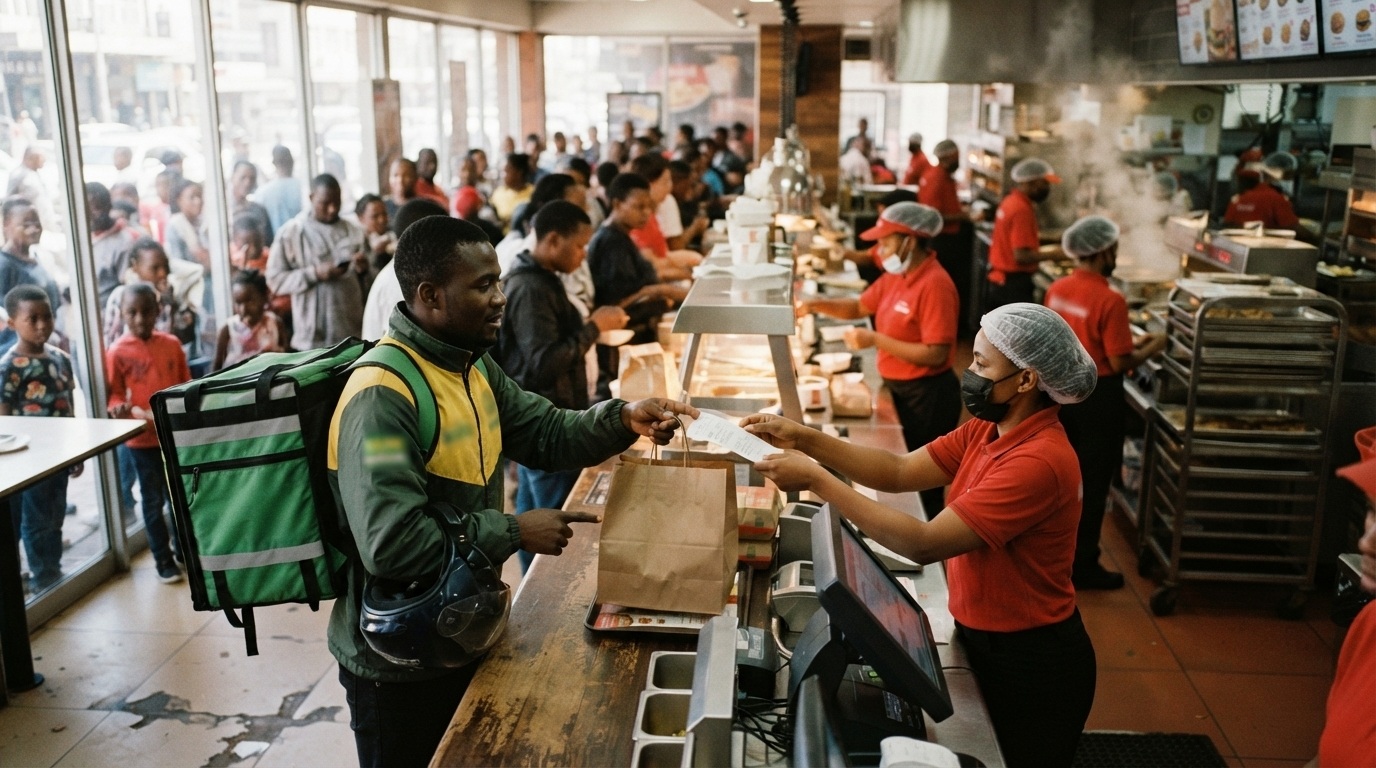
Delivery was another important growth driver. Orders in Zimbabwe increased 75% during the year, contributing to higher average spending and extending the group’s customer reach.

The results underline the importance of Zimbabwe to Simbisa’s earnings. They also expose the group to domestic changes in taxation, household purchasing power, energy costs and the wider operating environment.

Regional operations deliver mixed performance

Revenue from Simbisa’s regional operations increased 13% during the year, although performance differed across markets.

In Kenya, revenue increased 11%, supported by a 14% rise in customer volumes. Average US dollar spend declined 3%, reflecting the group’s value-led pricing strategy.

Despite the lower average spend, operating profit in Kenya increased 16%, supported by cost management and operational efficiencies.

Delivery orders in the market increased 59% to 3.23 million, contributing 27.4% of market turnover. The company has been expanding its delivery operations as part of its strategy to improve convenience and reach more customers.

Eswatini also recorded growth, with revenue increasing 24%. Customer volumes rose 10%, average spend increased 12%, and operating profit grew 4%.

The franchised markets added a net four outlets during the year. These operations provide Simbisa with a regional footprint while allowing local franchise partners to participate in the expansion of its brands.

Store network expands to 759 outlets

Simbisa added a net 29 stores during FY2026, taking its network to 759 outlets across nine African markets. It also refurbished 25 existing outlets.

The year-end network comprised 629 company-operated stores and 130 franchised outlets.

The expansion reflects the group’s continued investment in physical access to its brands. However, the pace of openings fell short of the 36 net new stores anticipated in its May 2026 third-quarter trading update.

The company has continued to prioritise selective expansion and refurbishment, with management emphasising the need for new outlets to deliver sustainable returns.

First-quarter trading points to continued growth

Simbisa entered FY2027 with strong trading momentum.

In its first-quarter update for the three months ended 30 September 2026, the group reported a 24% increase in revenue to US$104.4 million.

Customer volumes rose 10% to 18.5 million, while average spend increased 12%.

Zimbabwe revenue grew 27% to US$77.6 million. Customer volumes increased 11% to 14.6 million, while average spend rose 15%.

The Kenyan business recorded 15% revenue growth to US$24.1 million, with customer volumes increasing 9% to 3.6 million and average spend rising 5%.

The group’s network reached 773 counters by 30 September, comprising 642 company-owned and 131 franchised outlets.

Simbisa opened 13 new stores during the first quarter and plans to open a further 74 during the remaining nine months of FY2027. This would bring its targeted new store openings to 87 for the financial year ending June 2027.

Management said higher input prices, employee expenses and energy costs continued to require attention. Procurement improvements, supply-chain optimisation, solarisation and digitisation remain central to its cost-management strategy.

Business Diary Analysis

Simbisa’s FY2026 results show that its growth strategy is delivering higher customer traffic and stronger sales. However, the relationship between revenue growth and profitability deserves closer attention.

A comparison of the full-year and half-year results suggests that the pace of profit growth slowed considerably in the second half.

Group revenue in the second half of FY2026 is estimated at approximately US$184.4 million, compared with about US$149.0 million in the corresponding period of FY2025. This represents growth of approximately 24%.

However, subtracting the reported first-half profit after tax from the full-year figures suggests that second-half profit after tax increased by only about 3%.

These are Business Diary calculations based on published figures, not separately reported second-half results. They indicate that faster sales growth did not translate into a comparable increase in profit.

The distinction matters. Higher revenue can strengthen a company’s market position, but shareholders ultimately need to see sustainable earnings and cash generation.

Simbisa has identified higher taxation, employee expenses, energy costs and input inflation as pressures on its operations. Its third-quarter update also highlighted the effect of higher fuel prices on operating costs and gross profit margins.

The company’s ability to manage these costs will therefore be as important as its ability to attract more customers.

Zimbabwe’s contribution presents both an advantage and a concentration risk. The local market provides the bulk of group revenue, but changes in taxation, household disposable incomes and operating costs can have a significant effect on overall performance.

Delivery is another important part of the growth strategy. The sharp increase in delivery orders in Zimbabwe and Kenya shows how digital ordering and convenience are becoming central to quick-service restaurant operations.

However, delivery growth must be assessed alongside the costs of operating delivery fleets, maintaining service quality and managing third-party partnerships. Simbisa’s disclosures point to continued investment in these channels, but do not provide a complete breakdown of their contribution to group profitability.

The expansion programme also requires disciplined capital allocation. Opening new outlets can increase customer access and revenue, but the long-term value of expansion depends on store-level profitability, payback periods and the ability to manage operating costs.

What’s next?

Simbisa’s immediate challenge is to convert strong trading momentum into sustained earnings growth.

The company’s first-quarter FY2027 performance provides a positive start, with revenue and customer volumes increasing across its principal markets. Its plan to open 87 stores during the year also signals continued confidence in regional demand.

However, investors will be watching whether the additional sales translate into stronger operating margins and cash generation.

The group’s annual general meeting is scheduled for 20 November 2026. Subsequent financial disclosures should provide further insight into the sustainability of its growth strategy, the performance of new outlets and the impact of operating costs.

For Zimbabwe’s fast-food sector, Simbisa’s results demonstrate the opportunities available to businesses that combine established brands, competitive pricing, operational efficiency and investment in customer convenience.

The next phase will test whether the group can maintain that growth while protecting profitability in an increasingly demanding cost environment.

Continue Reading

Trending

×