Connect with us

Business

Billionaires Who Didn’t Go to College

Published

on

Billionaires Who Didn't Go to College

One for the Books

Richard Branson 

A university education is far from the only path to success — just ask the nearly 30% of living billionaires who never got even a bachelor’s degree. There’s also a smaller pool of billionaires, living and deceased, who never had any secondary education whatsoever. Find out which notable billionaires found an alternate path to success after skipping the time and money needed for higher learning, and subsequent attitudes to the formal educations they eschewed.

John D. Rockefeller

John D. Rockefeller

Net worth (if alive today): $371 billionOil magnate John D. Rockefeller is one of the most famous tycoons and richest men in American history, but the closest he ever came to college was a 10-week business and bookkeeping course taken at Folsom’s Commercial College before starting work at age 16. Rockefeller must have still valued education, though; he later donated millions to the University of Chicago, and helped establish schools and colleges to educate black freedmen after the Civil War.

Henry Ford 

Henry Ford

Net worth (if alive today): $219 billionHenry Ford left his family farm at 16 for Detroit, where he became a machine shop apprentice and an engineer before revolutionizing transportation and industrial production methods with his assembly-line-enabled Model T Ford. Ford summed up his views on education: “A man’s college and university degrees mean nothing to me until I see what he is able to do with them.”

Richard Branson 

Richard Branson

Net worth today: $3.9 billion

One of the world’s most recognizable billionaires, Sir Richard Branson dropped out of school due to struggles with dyslexia and poor academic performance at 15, at which point his headmaster speculated he’d either end up a millionaire or in jail. Branson developed his first business, a mail-order record retailer, into the Virgin Group he oversees today, which controls more than 400 companies. “University isn’t the be-all and end-all, and it’s certainly not a prerequisite for business success,” Branson has written. “I’m not saying that people shouldn’t go to university if they want to, but simply calling attention to the benefits of learning from the school of life.”

liliane bettencourt 

Liliane Bettencourt

Net worth (if alive today): $47.8 billionLiliane Bettencourt was born the heiress to one of the world’s largest cosmetics companies, L’Oreal, and so had no real need for higher education to achieve her fortune. She joined the family company as an apprentice at 15 and became its principal shareholder from 1957 when she was 35. She was the world’s wealthiest woman when she died in 2017 at age 94 with a $44.7 billion net worth.

Amancio Ortega 

Amancio Ortega

Net worth today: $77 billionAmancio Ortega is among the richest men in Europe, best known for co-founding Inditex and its chain of Zara fashion stores in 1975. Ortega left school at the age of 14 and never returned, instead finding work as a shop hand for a shirtmaker where he learned to make clothes by hand. His philanthropic foundation nonetheless devotes considerable funds to education and scholarships.

Ingvar Kamprad 

Ingvar Kamprad

Net worth (if alive today): $51.1 billionAt age 5, Ingvar Kamprad was already displaying a business sense by selling matches around his neighborhood, but he struggled in school due to dyslexia. This may have driven him to choose work over continuing education at age 17, when he founded a mostly mail-order furniture business called Ikea. Today, the store has 445 locations worldwide.

kirk kerkorian smiling 

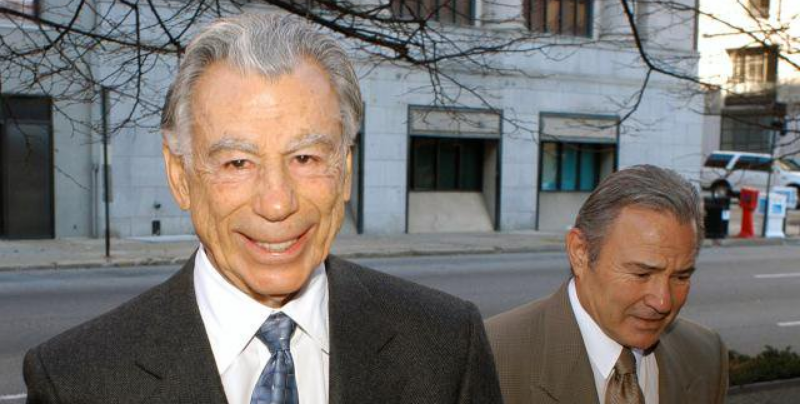
Kirk Kerkorian

Net worth (if alive today): $5.2 billionKirk Kerkorian had a singularly unusual path to success, dropping out of the eighth grade to become an amateur boxer and later a World War II fighter pilot before developing the MGM Grand in Las Vegas. He died in 2015.

Francois Pinault 

François Pinault

Net worth today: $33.5 billionFrançois Pinault founded the French luxury brands group Kering in 1963, and today he has holdings that include Gucci, Samsonite, and Saint Laurent. He left school at 15 when classmates made fun of his rural accent and scruffy clothes.

David H. Murdock 

David H. Murdock

Net worth today: $2.2 billionDavid H. Murdock also took an unconventional path from rags to riches after leaving school in ninth grade. He worked at a gas station before being drafted in World War II, then bought and sold a Detroit diner before acquiring the Hawaiian real estate outfit Castle & Cooke, which happened to own a fruit company called Dole. It’s become the world’s largest fruit and vegetable producer under Murdock.

Carl Lindner Jr. 

Carl Lindner Jr.

Net worth (if alive today): $1.9 billionDuring the height of the Great Depression, Carl Lindner Jr. dropped out of school at age 14 to join the family dairy business, which he helped expand into the widely successful convenience chain United Dairy Farmers. Before his death in 2011, Lindner became a prominent donor to the University of Cincinnati and the namesake for the school’s business college, despite his own lack of secondary schooling.

Best Buy exterior  

Richard M. Schulze

Net worth today: $3.8 billionBest Buy founder and former CEO Richard Schulze dropped out of Central High School in St. Paul, Minnesota — not that it seems to have held him back, or even kept him off campus: Though his plans to attend college anyway never came to be, Schulze became a donor, trustee, and honorary degree recipient at the University of St. Thomas later in life.

Find more must-read stories on the latest celebrity news with Cheapism Search and Save

Joe Lewis 

Joe Lewis

Net worth today: $5.1 billionBritish businessman Joe Lewis made his riches through investing in the international Tavistock Group and currency trading, which led to him being labeled a tax exile and moving to the Bahamas. Before all that, he left school at 15 to help run his father’s London catering business Tavistock Banqueting, which Lewis expanded into selling luxury goods for American tourists, then sold to make his initial fortune.


Alan Sugar

Net worth today: $1.3 billionDropping out of school at age 14 didn’t stop Alan Sugar from finding work as a statistician with the U.K.’s Ministry of Education, then moving on to sell electronics from the back of his van. These humble beginnings led to Sugar gaining his wealth as owner of electronics company Amstrad, as well as being a British media personality and political adviser. When asked if he regrets not getting a formal education, Sugar dismissed university as “a waste of time.”


John Caudwell

Net worth today: $2.8 billionAn English businessman and philanthropist, John Caudwell left school at age 15 and spent some years as a car dealer before getting a certificate in mechanical engineering and entering the mobile provider market with the companies SinglePoint and Phones 4u. He’s vowed to give away half his wealth for charity, and opened the Caudwell International Children’s Centre to study and treat autism.


Laurence Graff

Net worth today: $6 billionNow the multibillionaire founder of jewel supplier Graff Diamonds, Laurence Graff started out cleaning toilets after his mother decided he should leave school due to poor performance when he was 15. In 2008, he founded the Facet Foundation to raise standards of health, education, and well-being in South Africa — where so many diamonds are mined — with leadership and pre-employment skills programs and teacher training.

Roman Abramovich 

Roman Abramovich

Net worth today: $10.6 billionRoman Abramovich is a billionaire by virtue of his investments in steel and ownership of the Chelsea Football Club. His humble beginnings include an orphaned childhood in northern Russia and a departure from school at age 17, when he launched his career selling imported rubber ducks. As far back as 2013 he won the distinction of having donated more money than any other living Russian, with a substantial portion going toward education causes. That didn’t stop him from getting sanctioned by the U.K. government following the Russian invasion of Ukraine, and a Jersey court imposed a freezing of his assets that could be worth more than $7 billion.


Haim Saban

Net worth today: $2.9 billionHaim Saban is an Israeli-American media mogul and investor, earning his billions mostly earned by producing children’s programming such as the “Mighty Morphin Power Rangers” for Saban Entertainment and now spends on pro-Israel and Democratic political causes. Growing up, he was expelled from an Israeli boarding school for troublemaking and told by the principal, “You’re not cut out for academic studies; you’re cut out for making money.” Saban finished high school but pursued formal education no further.

John Paul Dejoria

John Paul DeJoria

Net worth today: $2.9 billionPaul DeJoria is a self-made entrepreneur and philanthropist best known for co-founding the Paul Mitchell haircare line and Patrón Spirits. He had a rough childhood growing up in Los Angeles, being sent from his mother into foster care and joining a street gang before a high school math teacher inspired him to change. DeJoria finished high school, but joined the Navy and later worked as a salesman rather than attend university.


David Green

Net worth today: $13.9 billion

As the founder of Hobby Lobby, David Green and his family employ more than 43,000 employees at around 900 stores across the nation. He completed high school in Oklahoma but never attended university, instead becoming a retail manager and using a $600 loan to start a home business assembling and selling picture frames. Today, he’s an avid donor to evangelical Christian colleges, even giving an entire campus to the Zion Bible College in 2007.

Continue Reading
Click to comment

Leave a Reply

Your email address will not be published. Required fields are marked *

Business

Zimbabwe’s Economic Diplomacy on the Global Stage: Minister Ncube’s Abidjan Engagement

Published

on

Zimbabwe's Economic Diplomacy on the Global Stage: Minister Ncube's Abidjan Engagement

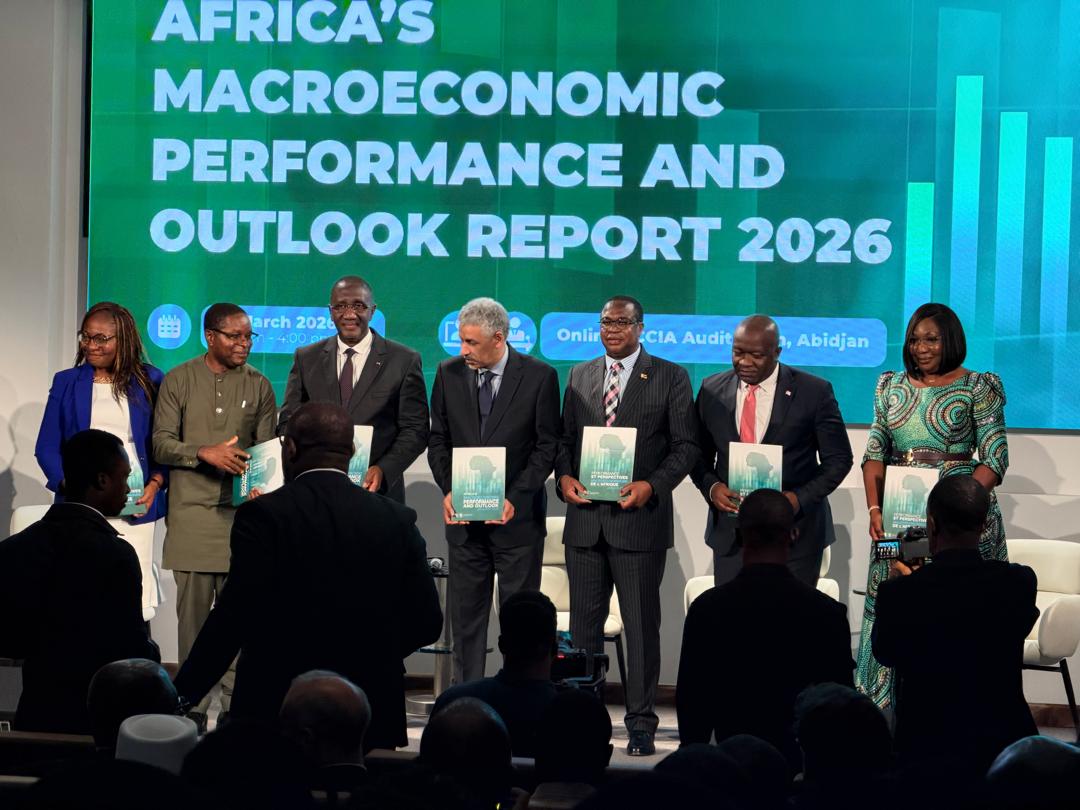
ABIDJAN-In a significant stride for Zimbabwe’s economic revitalization, Hon. Prof. Mthuli Ncube, Minister of Finance, Economic Development, and Investment Promotion, led a high-level delegation to Abidjan on 30 March 2026. The delegation’s primary objective was to engage with Dr. Sidi Ould Tah, President of the African Development Bank (AfDB), to galvanize support for Zimbabwe’s Arrears Clearance and Debt Resolution (AC & DR) Process. This strategic move underscores Zimbabwe’s commitment to re-engaging with international financial institutions and bolstering its economic recovery trajectory.

The visit provided a platform for Minister Ncube to participate in the Strategic Ministerial Dialogue on Debt Sustainability and Financing Africa’s Development Priorities. The dialogue emphasized the imperative of strengthening domestic resource mobilization through digitalization, enhancing public financial management systems, and promoting transparency and accountability in debt reporting. These measures are critical for Zimbabwe as it seeks to optimize its resource utilization and attract sustainable investments.

A key takeaway from the dialogue was the call for prudent debt management, innovative financing instruments, and stronger partnerships to mitigate rising debt vulnerabilities while safeguarding critical development spending. Minister Ncube’s participation in this dialogue highlights Zimbabwe’s proactive approach to addressing its debt challenges and fostering sustainable economic growth.

On the sidelines of the Abidjan engagements, Minister Ncube attended the launch of the Africa’s Macroeconomic Performance and Outlook 2026 Report as a panellist. The report painted a promising picture of Africa’s economic resilience, with a real GDP growth of 4.2% in 2025, surpassing the global average of 3.1%. Growth is projected at 4.3% in 2026 and 4.5% in 2027, with GDP per capita growth standing at 1.9%.

The report’s findings underscore Africa’s potential as a growth hub, notwithstanding risks from debt pressures and external shocks. It recommended coordinated policy action, structural reforms, and targeted investments in job creation, social protection, and human capital development to ensure inclusive and sustainable growth across the continent.

Minister Ncube’s engagement in Abidjan is a testament to Zimbabwe’s commitment to leveraging international partnerships and expertise to drive its economic agenda. The country’s participation in high-level dialogues and strategic engagements is crucial for attracting investments, clearing debt arrears, and fast-tracking economic recovery.

The outcomes of the Abidjan engagements are expected to inform Zimbabwe’s policy direction, particularly in areas of debt management, investment promotion, and economic diversification. As Zimbabwe charts its path towards sustainable development.

In conclusion, Minister Ncube’s Abidjan visit underscores Zimbabwe’s resolve to engage proactively with international financial institutions and development partners. By prioritizing debt sustainability, economic resilience, and inclusive growth, Zimbabwe is positioning itself for a brighter economic future.

Continue Reading

Business

Broadening the Base : Why Zimbabwe’s SME Strategy Could Define Fiscal Sustainability

Published

on

Broadening the Base : Why Zimbabwe’s SME Strategy Could Define Fiscal Sustainability

By Staff Reporter

For decades, tax authorities across Southern Africa have grappled with the same paradox: economies dominated by small and medium enterprises (SMEs) that generate substantial economic value, yet contribute disproportionately little to national tax revenues.

In Zimbabwe, where informal and small-scale businesses now account for more than 60 percent of gross domestic product, that challenge has moved to the centre of fiscal policy — and with the 2026 National Budget, government is signalling a decisive shift in how it intends to close the gap.

At the heart of this strategy is a clear directive to the Zimbabwe Revenue Authority (ZIMRA): make tax compliance simpler, fairer and more accessible for SMEs — not as a concession, but as a growth strategy.

Government has directed the ZIMRA to develop tailored, simplified strategies to bring small businesses and start-ups into the tax net in a bid to widen the tax base and meet ambitious revenue targets.

The policy push comes as Treasury sets its sights on US$7.57 billion in revenue for 2026, up from about US$6.2 billion previously, amid tightening fiscal conditions and rising demand for public services.

The medium-term revenue target stands at US$7.2 billion by end-2025, underscoring the urgency of broadening the tax base rather than increasing the burden on existing compliant taxpayers an uphill battle as a significant portion of economic activity remains outside the tax net.

Deputy Minister of Finance, Mr Kudakwashe Mnangagwa, framed SME compliance as both an economic and civic imperative and urged ZIMRA to widen the tax base and include the SME sector which accounts for more than 60% of Gross Domestic Product.

He said every tax payment is an act of patriotism, essential for national development in line with Vision 2030.

“ZIMRA must develop sector-specific strategies to bring start-ups, macro-operators, and small to medium enterprises into voluntary compliance and compliance must be fair, simple and enabling, never a barrier to innovation or enterprise,” Mr Mnangagwa said during the recent ZIMRA Taxpayer Appreciation Awards

“Taxes should create space for businesses to thrive, start-ups to grow and creativity to flourish.”

His remarks echo a growing regional consensus that coercive enforcement alone cannot sustainably integrate informal businesses into the tax system.

Zimbabwe’s SME sector has grown rapidly over the past decade, driven by de-industrialisation, demographic pressure and the expansion of informal trade.

According to the 2022 FinScope SME Survey, the sector contributes an estimated US$8.2 billion to National GDP, making it one of the most significant engines of economic activity.

Yet much of that value remains outside the formal tax net.

With more than 70 percent of the economy operating informally and largely cash-based, collecting value-added tax (VAT), corporate income tax and presumptive levies has proven increasingly difficult.

Weak record-keeping, limited digital access and mistrust of tax authorities have compounded the challenge.

Mr Mnangagwa condemned smuggling activities and tax evasion saying it undermined the country’s development.

Reports indicate that rampant tax evasion and widespread smuggling are crippling Zimbabwe’s revenue collection efforts, costing the nation millions of United States dollars annually and directly threatening the funding of critical public services, officials have warned.

According to official statistics, the government continues to lose vast sums to smuggling, tax fraud, under-invoicing and other illicit financial activities.

Some registered businesses fail to use or tamper with fiscalised electronic registers to underreport sales and avoid paying the correct amount of VAT.

Alongside reform, government has intensified its messaging on the costs of non-compliance. Smuggling, under-invoicing and tax fraud continue to drain public resources, costing the country millions of US dollars annually, according to official estimates.

Mnangagwa was blunt in his assessment, “Compliance is more than law, it is a moral commitment to our communities and future generations.”

“Every act of smuggling, evasion or corruption steals from our children, our communities and our future,” he said.

He linked revenue leakage directly to service delivery gaps, arguing that undeclared goods and falsified returns deprive hospitals of medicines, schools of textbooks and communities of infrastructure.

The challenge is not unique to Zimbabwe. The African Development Bank estimates that illicit financial flows cost the continent over US$80 billion annually, undermining development and investor confidence.

ZIMRA Chairperson, Mr Anthony Mandiwanza, said the authority is recalibrating its approach, balancing revenue mobilisation with practical support for taxpayers, making compliance simpler, especially for small and medium enterprises (SMEs) and start-ups.

Mr Mandiwanza said ZIMRA is pursuing a dual strategy anchored on aggressively expanding revenue collection while making compliance more accessible.

“In the spirit of leaving no one and no place behind, we are also taking services directly to citizens through mobile units, digital platforms, and kiosks at all regional offices,” he said.

“These initiatives are designed to address structural barriers faced by SMEs, including limited internet access, lack of digital literacy and high compliance costs relative to business size,” he said.

He said the push for “sector-specific strategies” and the expansion of mobile and digital tax services are designed to bring more players into the formal system voluntarily.

ZIMRA’s strategy aligns with international best practice. Across Africa, revenue authorities are increasingly adopting “facilitative compliance” models — simplifying registration, reducing filing frequency for small firms and offering education before penalties.

The Kenya Revenue Authority, for example, has rolled out mobile tax clinics and simplified turnover taxes for micro-enterprises, while South Africa’s SARS operates a graduated compliance framework for small businesses. Zimbabwe’s reforms suggest a similar trajectory.

Treasury’s revenue targets reflect growing confidence in macroeconomic stability, particularly following improved inflation control and currency management under the Zimbabwe Gold (ZiG) regime.

But analysts warn that targets of this scale cannot be met without tapping into the informal economy.

Economists note that Zimbabwe’s tax-to-GDP ratio, while improving, remains constrained by narrow compliance.

“Broadening the base is more sustainable than raising rates,” said one Harare-based fiscal analyst. “You cannot keep taxing the same formal firms harder while the majority of economic activity sits outside the system.”

Government’s SME support programmes strengthen this argument.

Treasury officials argue that formalisation and tax compliance should increasingly be tied to access to finance, markets and government support — a model used successfully in countries such as Rwanda and Mauritius.

In 2023, the government disbursed US$5,3 billion to support small and medium scale enterprises last year using the Small and Medium Enterprises Development Corporation, the Zimbabwe Women Microfinance Bank, the Zimbabwe Community Development Fund and the Women Development Fund.

Across Southern Africa, fiscal pressures are intensifying. Slower global growth, climate-related shocks and rising debt servicing costs have forced governments to seek more reliable domestic revenue streams.

Zimbabwe’s strategy reflects this regional reality. By focusing on SMEs — the most dynamic yet under-taxed segment of the economy — authorities are attempting to align revenue mobilisation with inclusive growth.

The 2026 Budget reinforces this logic by avoiding aggressive new taxes and instead focusing on compliance efficiency, digitalisation and behavioural change.

The push to ease SME compliance is not about lowering standards, but about widening opportunity. In an economy where small businesses are no longer peripheral but central, fiscal systems must adapt.

As the 2026 Budget takes effect, Zimbabwe’s revenue strategy sends a clear message: growth, compliance and development are not competing goals — they are mutually reinforcing.

The success of ZIMRA’s reforms will ultimately depend on execution. Simplification must be real, not rhetorical. Digital platforms must work reliably. Enforcement must remain firm but fair.

If successful, Zimbabwe could offer a regional case study in how to transition from a narrow, enforcement-heavy tax system to one built on participation and trust.

Continue Reading

Business

Meet World’s Richest Family Who live In $478m House, Own 700 Cars

Published

on

Meet World’s Richest Family Who live In $478m House, Own 700 Cars

According to The Jerusalem Post, the Nahyan royal family of the United Arab Emirates is a dominant corporate and political force in the Gulf area, as well as one of the world’s wealthiest families.

Their net worth is greater than the combined wealth of Microsoft founder Bill Gates and Amazon founder Jeff Bezos.

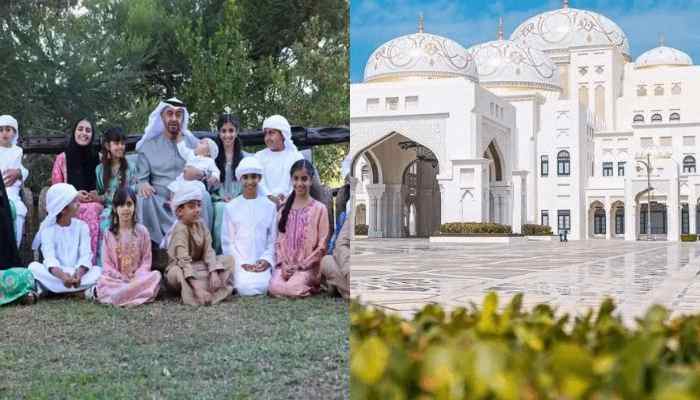
Sheikh Mohammed bin Zayed Al Nahyan, the head of the Nahyan family, is the UAE’s President and the ruler of Abu Dhabi.

He has 18 brothers, 11 sisters, nine children, and eighteen grandchildren. All of the family members reside together in the “Qasr Al-Watan,” a massive edifice spanning 380,000 square meters and valued at $478 million.

The family’s real estate holdings comprises opulent houses and developments both in the UAE and abroad.

They own eight aircraft, including one Airbus A320-200 and three Boeing 787-9s. Sheikh Mohammed’s personal collection includes a $478 million Boeing 747 and a $176 million Boeing 787.

In addition, they have three of the world’s largest yachts.

Their car collection is nothing short of astounding. According to reports, their vehicles are split out over four museums in the UAE and Morocco. The family owns more than 700 cars, including Ferraris and Lamborghinis.

The family owns 81% of the City Football Group, which includes football clubs like Manchester City, Mumbai City, Melbourne City, and New York City.

Continue Reading

Trending