
Business How-To
How Zimbabwean Start-ups Can Test Demand Before Spending Their Capital
Most small businesses in Zimbabwe fail through weak demand or poor pricing, not for lack of effort. A few weeks of structured market research and competitor analysis can show whether an idea will earn money, and it costs far less than a failed launch.




Business How-To
How to Start a Business in Zimbabwe: A Practical Step-by-Step Guide
Thinking of starting a business in Zimbabwe? This comprehensive guide takes you through 13 practical steps, from identifying and validating your business idea to registration, funding, marketing, staffing and opening day.

From developing your business idea to opening your doors, here is what every aspiring entrepreneur needs to know.
Starting a business is one of the most rewarding ways to create an income, develop a career, solve a problem and contribute to economic growth. For many people, entrepreneurship offers an opportunity to become financially independent, employ others and build something that can grow beyond its founder.
However, the journey from having a business idea to operating a profitable enterprise is rarely straightforward.
A good idea does not automatically become a good business. A product that people admire may not be something they are willing to buy. A busy shop may still lose money. And a business that attracts customers can struggle if its owner does not understand cash flow, pricing, stock management or basic financial controls.
The difference between starting a business and building a sustainable one lies in preparation, execution and the ability to learn from the market.
Zimbabwe offers opportunities across agriculture, retail, manufacturing, transport, construction, professional services, technology, food processing, tourism and the creative industries. There is also room for businesses that address everyday challenges, improve convenience, offer better value or serve customers who are overlooked by existing providers.
But opportunities must be approached with discipline. Entrepreneurs need to understand their customers, calculate the cost of doing business, comply with relevant regulations and build a system that can survive difficult trading conditions.
This guide provides a practical roadmap for anyone considering starting a business in Zimbabwe. It is designed for first-time entrepreneurs, informal traders seeking to formalise their operations, professionals planning to establish independent businesses and existing small-business owners looking to build stronger foundations.
The central principle is simple: do not start by building a business; start by proving that a business is worth building.
Table of Contents
- Starting Your Journey: Understand What It Takes to Build a Business
- Are You Ready to Start a Business?
- Defining and Validating Your Business Idea
- Business Plan or Business Model Canvas?
- Finding Funding: How Much Money Do You Really Need?
- Setting Up Your Business: Registration, Ownership and Identity
- Accounting, Insurance and Legal Considerations
- Marketing Your Business: Make Sure Customers Know You Exist
- Pricing, Sales and Distribution: Turning Interest into Revenue
- Setting Up Your Physical Location
- Staffing Your Business: Building the Right Team
- Open for Business: Preparing for Launch Day
- After Launch: Manage, Improve and Grow
Step 1 — Starting Your Journey: Understand What It Takes to Build a Business
Before registering a company, renting premises or buying stock, take time to understand what starting a business actually involves.

Entrepreneurship is not simply being your own boss. It means taking responsibility for identifying an opportunity, organising resources, finding customers, delivering value and managing the financial and operational risks involved.
When you are employed, your employer generally provides the business infrastructure, pays agreed remuneration and assumes responsibility for many operational decisions. When you start a business, those responsibilities become yours.
You must find customers, negotiate with suppliers, manage expenses, collect payments, solve complaints and ensure that the business can continue operating.
This requires a change in mindset.
Think like a problem-solver, not just a product seller.
Successful businesses exist because they provide something that customers value. That value could be a useful product, a professional service, convenience, affordability, reliability, speed or a better customer experience.
For example:
- A food-delivery business is not simply selling transport. It is selling convenience and saved time.
- A small agricultural enterprise is not merely growing vegetables. It is supplying a consistent product to customers who need reliable quality and availability.
- A graphic-design business is not just producing attractive images. It helps organisations communicate, promote products and build their brands.
- A repair business is not simply fixing equipment. It helps customers avoid the cost and inconvenience of replacement.
Understanding the value you intend to provide will influence almost every decision you make.
Understand the different stages of starting a business
A business normally moves through several stages:
- Opportunity identification: Recognising a problem, unmet need or market opportunity.
- Validation: Establishing whether customers actually want the proposed solution and will pay for it.
- Planning: Working out how the business will operate and make money.
- Establishment: Arranging registration, licences, finance, suppliers, equipment and other resources.
- Launch: Introducing the business to the market and acquiring its first customers.
- Stabilisation: Improving operations, managing cash flow and establishing consistent sales.
- Growth: Expanding capacity, entering new markets, introducing products or employing more people.
These stages do not always happen in a straight line. You may discover during testing that your original idea needs to change. That is not failure. It is part of developing a business that can work.
Start with a manageable objective
Your first objective should not necessarily be to build a large company. It should be to establish a business that can attract customers, deliver consistently and cover its costs.
You may begin from home, operate online, sell through an existing marketplace, use shared facilities or work with a small number of customers before investing in a permanent location.
Starting small is not the same as thinking small. It is a way of controlling risk while learning what works.
Your first task: Write down what you want to sell, who you want to sell it to, what problem it solves and why customers should choose you.
Step 2 — Are You Ready to Start a Business?
Having a business idea is one thing. Being ready to run a business is another.
Entrepreneurship can be financially and emotionally demanding, particularly during the early stages when sales may be inconsistent and the owner must perform several roles.

Before committing your savings or leaving employment, assess your personal readiness.
1. Examine your motivation
Why do you want to start a business?
Some people want additional income. Others want independence, an opportunity to pursue an interest, the chance to solve a problem or the ability to create employment.
There is no single correct motivation. However, it is important to understand yours because the early stages may not deliver immediate financial rewards.
If you are starting because you believe business ownership guarantees quick money, reconsider your expectations. Most businesses require time to establish a customer base and achieve consistent profitability.
2. Assess your skills and experience
You do not need to know everything before starting, but you should understand the main activities required to operate your proposed business.
Ask yourself:
- Do I understand the product or service I intend to offer?
- Do I know how to identify and communicate with customers?
- Can I negotiate with suppliers?
- Can I manage money and maintain basic records?
- Do I have the technical skills needed to deliver the product or service?
- What skills will I need to acquire or outsource?
Identify your strengths and weaknesses honestly. You may need training, a business partner, a mentor or professional support.
3. Consider your financial position
Starting a business involves financial risk. You may need money for equipment, stock, transport, marketing, registration, rent, utilities and operating expenses.
It is important to distinguish between money available to start the business and money you need to maintain your personal life.
Avoid committing all your household savings to an untested idea. If possible, maintain an emergency reserve and separate personal finances from business funds.
4. Assess your time and commitment
A business may require attention outside normal working hours, especially during its early stages.
Consider whether you can manage the business alongside your current employment or other responsibilities. If the business requires your full-time attention, establish what would need to happen before you make that transition.
5. Develop resilience and discipline
There will be difficult customers, delayed payments, supplier problems, unexpected expenses and periods when sales are lower than expected.
The ability to adapt, make decisions and maintain discipline is important.
Entrepreneurship also requires patience. Do not measure success only by the amount of money you make in the first month.
A simple readiness assessment
Before proceeding, rate yourself honestly against the following questions:
- I understand the market I want to enter.
- I can explain what problem my business will solve.
- I have identified potential customers.
- I have considered the financial requirements.
- I understand the risks involved.
- I know which skills I need to improve.
- I can commit sufficient time to the business.
- I am prepared to learn, adapt and make difficult decisions.
You do not need a perfect score. The purpose is to identify gaps that should be addressed before you invest heavily.
Practical advice: If you are uncertain about the opportunity, test it while maintaining your current source of income, where possible.
Step 3 — Defining and Validating Your Business Idea
A business idea becomes commercially meaningful when it is connected to a real customer need.
One of the most common mistakes made by new entrepreneurs is investing in a product or service based on personal enthusiasm rather than evidence of demand.

You may love baking, fashion, technology or agriculture. But the important question is whether a sufficient number of people will pay for what you intend to offer.
1. Identify a problem or unmet need
Look around your community, workplace, industry or area of interest.
What do people complain about? What products are difficult to find? Which services are unreliable? What takes customers too much time or costs them too much money?
Opportunities often emerge from everyday problems.
For example:
- Businesses struggling to maintain their social media presence may need affordable digital marketing services.
- Urban households may need reliable delivery of groceries and other essentials.
- Small retailers may need simple inventory and accounting systems.
- Farmers may need better access to buyers, transport or agricultural inputs.
- Parents may need affordable educational resources.
- Property owners may need reliable maintenance services.
A useful business idea often begins with a question: What can I make easier, better, faster, more affordable or more reliable for someone?
2. Define your target customer
Avoid describing your market as “everyone”.
A business selling affordable school shoes may target parents and guardians with school-going children. A company providing corporate branding services may target SMEs, professional firms and organisations that need marketing support.
Be specific about the people or organisations most likely to buy from you.
Consider:
- Age group or business sector.
- Location and accessibility.
- Income or purchasing power.
- Lifestyle or professional needs.
- Buying habits.
- Problems they are trying to solve.
- How they currently obtain similar products or services.
The more clearly you understand your customer, the easier it becomes to develop the right product, price and marketing message.
3. Research your competitors
Competition is not necessarily a reason to abandon an idea. It is evidence that a market may already exist.
Visit businesses offering similar products. Examine their prices, product quality, customer service, location, delivery arrangements and marketing.
Look at both direct and indirect competitors.
A direct competitor sells a similar product or service. An indirect competitor offers an alternative solution to the same customer problem.
For example, a new restaurant competes not only with other restaurants but also with takeaway outlets, food vendors and customers who prepare meals at home.
Ask:
- What are competitors doing well?
- Where are customers dissatisfied?
- Which products are missing?
- Are competitors too expensive, inconvenient or unreliable?
- Can you offer something meaningfully different?
Do not assume you must be the cheapest. You may compete through quality, convenience, specialist knowledge, speed, reliability or customer service.
4. Speak to potential customers
Market research does not have to begin with an expensive survey.
Talk to people who might buy from you. Ask about their current experiences, spending habits and frustrations.
For example, if you want to start a laundry service, ask potential customers:
- How do you currently manage your laundry?
- What do you find inconvenient about existing services?
- How frequently would you use a collection and delivery service?
- What would make you trust a new provider?
- What would you consider a reasonable price?
Avoid asking only whether people like your idea. People may praise an idea without ever buying it.
Look for evidence of purchasing behaviour, not compliments.
5. Test demand before investing heavily
A small experiment can reveal more than weeks of speculation.
Depending on your business, you could:
- Offer a limited batch of products.
- Take legitimate pre-orders with clear delivery terms.
- Create a simple online catalogue.
- Run a small advertising campaign.
- Offer a trial service to a few paying customers.
- Sell through an existing retailer or marketplace.
- Conduct a demonstration or product sampling exercise.
Measure how many people enquire, how many actually purchase, what they are willing to pay and whether they return.
6. Establish your competitive advantage
Your competitive advantage is the reason a customer should choose your business instead of another provider.
It could be:
- Better product quality.
- More convenient delivery.
- Specialist expertise.
- Faster turnaround times.
- Reliable availability.
- Better after-sales support.
- Stronger customer relationships.
- A product tailored to a specific market.
Your advantage must be something customers value and your business can consistently deliver.
Before moving forward, complete this statement:
“My business will serve __________ by providing __________, helping them to __________. Customers should choose us because __________.”
If you cannot explain this clearly, return to your research.
Step 4 — Business Plan or Business Model Canvas?
Once you have identified and tested your idea, you need a framework for organising the business.

Business Plan or Business Model Canvas
Two useful planning tools are the Business Model Canvas and the traditional business plan. They serve related but different purposes.
The Business Model Canvas
The Business Model Canvas is a one-page framework that helps entrepreneurs understand how a business creates, delivers and captures value.
It contains nine building blocks:
- Customer segments: Who will buy your products or services?
- Value propositions: What problem are you solving, and why is your solution valuable?
- Channels: How will customers discover, purchase and receive your offering?
- Customer relationships: How will you attract, serve and retain customers?
- Revenue streams: How will the business earn money?
- Key resources: What people, equipment, technology, capital and assets are required?
- Key activities: What must the business do exceptionally well?
- Key partnerships: Which suppliers, distributors, service providers or strategic partners will you need?
- Cost structure: What will it cost to establish and operate the business?
The Canvas is particularly useful when you are still refining your idea or comparing different business opportunities.
The traditional business plan
A business plan is a more detailed document explaining how the business will operate, compete and achieve its objectives.
A practical business plan should include:
1. Executive summary
A concise overview of the business, its products or services, target market, objectives and financial requirements.
2. Business description
Explain what the business does, its ownership structure, mission, vision and long-term objectives.
3. Products and services
Describe what you will sell, the benefits offered and how the products or services will be delivered.
4. Market analysis
Explain the market opportunity, customer segments, competitors, industry trends and evidence of demand.
5. Marketing and sales strategy
Show how you will attract customers, generate sales and encourage repeat business.
6. Operations plan
Explain the day-to-day activities, suppliers, equipment, premises, technology and processes required.
7. Management and staffing
Identify who will manage the business, the skills required and the staffing structure.
8. Financial plan
Include startup costs, operating expenses, pricing, sales forecasts, cash-flow projections, expected profitability and funding requirements.
9. Risk assessment
Identify possible risks and explain how the business will manage them.
10. Implementation timetable
Set out the activities required to establish and launch the business, with realistic deadlines.
Which should you use?
Use the Business Model Canvas when you need to clarify the business concept quickly. Develop a full business plan when you need a detailed operating document, are preparing to approach lenders or investors, or require a more structured implementation roadmap.
You do not necessarily have to choose one. A sensible approach is to complete the Canvas first, then use it as the foundation for your business plan.
Remember: A business plan is not a guarantee of success. It is a working document. Review it as you learn more about customers, costs and market conditions.
Step 5 — Finding Funding: How Much Money Do You Really Need?
Many aspiring entrepreneurs believe that lack of capital is the biggest obstacle to starting a business. Finance is certainly important, but the first question should be how much money the business actually needs.

Borrowing too much or investing heavily before validating demand can create unnecessary pressure.
Start by preparing a realistic startup budget.
1. Calculate your startup costs
Startup costs are the expenses required to establish the business and prepare it to begin trading.
Depending on the type of business, these may include:
- Company or business registration.
- Relevant licences and permits.
- Initial stock or raw materials.
- Equipment and machinery.
- Furniture and fittings.
- Computers, phones and software.
- Website development and branding.
- Rent deposits and renovations.
- Transport and delivery arrangements.
- Initial marketing.
- Professional and consultancy fees.
Separate essential expenses from optional purchases.
For example, a small catering business may need basic cooking equipment, food supplies, suitable packaging and the necessary approvals. It may not need an expensive vehicle, a large commercial kitchen or elaborate branding at the beginning.
2. Calculate working capital
Working capital is the money needed to keep the business operating.
You may need to pay suppliers, workers, transport providers, landlords and utility bills before customers pay you.
This is particularly important for businesses that sell on credit or experience seasonal demand.
Estimate the operating costs for at least the first few months, using realistic sales assumptions. The appropriate reserve will depend on your business model, payment cycles and ability to generate revenue quickly.
3. Explore different funding sources
There is no single funding method suitable for every business.
Personal savings: This gives you greater control and avoids borrowing costs, but you should avoid putting all your personal financial security at risk.
Family and friends: People close to you may be willing to contribute. Treat these arrangements professionally. Put the amount, ownership or repayment terms and responsibilities in writing.
Business partners: A partner may contribute capital, expertise, contacts or operational support. Agree on ownership, decision-making, responsibilities and profit-sharing before starting.
Bank loans: Banks may provide working-capital facilities, asset finance or business loans. Understand interest, fees, repayment schedules, security requirements and the consequences of default.
Microfinance: Some microfinance institutions offer smaller facilities, although the cost of borrowing can be high. Compare the full repayment obligation rather than looking only at the amount offered.
Investor funding: Investors may provide capital in exchange for equity or another agreed financial arrangement. They generally expect a credible business opportunity, a capable team, evidence of demand and a realistic path to growth.
Supplier credit: Some suppliers may allow established customers to purchase goods and pay later. Negotiate carefully and do not treat supplier credit as free money.
Customer pre-orders and deposits: Where appropriate, early customer payments can help finance production or procurement. Be transparent about delivery dates and refund conditions.
Grants and enterprise programmes: Monitor credible government, development-partner, innovation and entrepreneurship programmes. Check eligibility, application requirements and whether the funding is a grant, loan or investment.
4. Prepare to approach lenders and investors
A funding request should be supported by evidence.
Prepare:
- A clear business plan.
- A realistic startup budget.
- A breakdown of how the money will be used.
- Sales and cash-flow projections.
- Evidence of customer demand.
- Supplier quotations where relevant.
- Details of your own contribution.
- Repayment or investment-return assumptions.
Do not inflate projected sales simply to make the business appear attractive. Credible assumptions are more useful than unrealistic promises.
5. Start with the smallest viable investment
Consider whether you can launch a smaller version of the business.
A retailer could begin with a carefully selected product range. A digital agency could start with a few service packages. A food producer could test a limited production run.
This approach helps you establish demand and understand operating costs before committing more capital.
Important: Funding should support a business model that makes sense. It cannot permanently compensate for poor pricing, weak demand or uncontrolled spending.
Step 6 — Setting Up Your Business: Registration, Ownership and Identity
Once you have established that your idea has commercial potential, it is time to organise the business formally.

Setting Up Your Business — Registration, Ownership and Identity
The appropriate structure depends on your objectives, ownership arrangements, risk exposure, expected size and regulatory requirements.
1. Choose a business structure
Common structures in Zimbabwe include:
Sole trader: A business operated by one individual. It is generally simpler to establish and manage, but the owner and the business are not separate legal persons in the way a company is. Personal liability can therefore be a significant consideration.
Partnership: Two or more people operate a business together. Partners should agree in writing on capital contributions, responsibilities, profit-sharing, decision-making and what happens if someone leaves.
Private Limited Company: A separate legal entity with shareholders and directors. It can be useful where ownership, investment, contracts and business continuity need a more formal structure. It also involves statutory and administrative responsibilities.
Private Business Corporation (PBC): A business structure provided for under Zimbabwean law, which may suit certain smaller enterprises. Understand its legal characteristics and suitability before choosing it.
Do not select a structure simply because it sounds more prestigious. Choose one that fits the business.
2. Select and protect your business name
Your name should be distinctive, appropriate to the market and easy for customers to remember.
Before settling on it:
- Check whether the name is available for registration.
- Search for similar businesses and brands.
- Consider whether the name is suitable for future expansion.
- Check domain-name availability.
- Check relevant social media usernames.
- Consider trademark protection where appropriate.
A registered company name does not automatically give you comprehensive trademark protection. If your brand is commercially important, investigate intellectual property registration.
3. Register the business
If you choose to incorporate a company, follow the applicable process through Zimbabwe’s Companies Registry and Companies and Other Business Entities framework.
Depending on the entity and current filing requirements, incorporation involves matters such as name approval, company particulars, registered office information, directors, constitutional documents and the prescribed registration process.
For a company, ensure that you obtain and safely retain its incorporation documents and other official records.
If you operate as a sole trader or under a separate trading name, establish which registrations and permits apply to your particular activity.
4. Open a business bank account
Where appropriate, open a dedicated account in the business’s name.
This helps separate business transactions from personal spending, improves financial record-keeping and makes it easier to understand the company’s actual financial position.
Ask your bank about account requirements, transaction charges, foreign-currency arrangements, merchant facilities and available digital banking services.
5. Establish your business identity
A business needs more than a registered name.
Develop a basic identity that includes:
- A professional business name and logo.
- A clear description of what the business does.
- A consistent colour and visual identity.
- A business email address.
- A telephone number.
- A company profile where relevant.
- A website or credible online presence.
- Standard quotation, invoice and receipt templates.
Your identity should help customers recognise the business and understand what it offers.
A word of caution: Registration is not the same as permission to operate. Depending on your activity, you may need additional local-authority licences, sector approvals, inspections or professional registrations before trading.
Step 7 — Accounting, Insurance and Legal Considerations
A business can generate sales and still fail because it does not manage its money properly.

Financial management should begin before the first customer makes a purchase.
1. Set up a basic accounting system
You need to know how much money comes in, how much goes out, what the business owes and what customers owe it.
At a minimum, maintain records of:
- Sales and revenue.
- Purchases and stock.
- Operating expenses.
- Cash and bank transactions.
- Customer debts and supplier obligations.
- Assets and equipment.
- Payroll.
- Taxes and statutory payments.
You can begin with a well-organised spreadsheet or suitable accounting software. As the business grows, consider engaging a qualified accountant or bookkeeper.
2. Understand the difference between revenue, profit and cash flow
These terms are not interchangeable.
Revenue is the money earned from selling products or services.
Profit is what remains after the relevant costs and expenses have been deducted.
Cash flow tracks the actual movement of money into and out of the business.
A business may report sales but struggle to pay its bills because customers have not yet paid. Similarly, buying large quantities of stock may tie up money that could otherwise be used to meet operating expenses.
Monitor all three.
3. Understand your tax obligations
Businesses operating in Zimbabwe need to understand their obligations to the Zimbabwe Revenue Authority (ZIMRA).
Depending on the nature and structure of the business, these may include income tax, corporate tax, Value Added Tax (VAT), withholding obligations, Pay As You Earn (PAYE) and other applicable tax requirements.
ZIMRA provides registration and tax services through its Tax and Revenue Management System (TaRMS).
New traders should establish the relevant registration requirements and applicable deadlines. ZIMRA’s published guidance states that businesses should register within 30 days of commencing business. Employer-related registration obligations also apply when a business hires workers.
VAT registration is particularly important. ZIMRA’s published guidance identifies a compulsory registration threshold of US$25,000 or its ZiG equivalent in taxable supplies over a 12-month period. Because tax thresholds and currency arrangements can change, verify the current threshold and rules directly with ZIMRA before making decisions.
Do not charge VAT unless properly registered to do so. Keep proper records, submit returns on time and retain supporting documents.
4. Understand local-authority and sector requirements
Depending on where and how you operate, you may need:
- A shop or business licence.
- Health registration or clearance.
- Fire-safety approval.
- Food-handling or food-premises approvals.
- Environmental approvals.
- Transport or trading permits.
- Professional or sector-specific licences.
For example, a food business may face health and food-safety requirements that do not apply to an online consultancy.
Requirements differ between local authorities and business activities. A business operating in Harare should establish its requirements with the City of Harare, while businesses elsewhere should consult the relevant local authority.
5. Protect the business with appropriate insurance
Insurance helps protect the business against risks that could otherwise cause serious financial damage.
Depending on your activities, consider:
- Property and equipment insurance.
- Fire and burglary cover.
- Public liability insurance.
- Product liability insurance.
- Motor vehicle insurance.
- Professional indemnity insurance.
- Business interruption cover.
- Workers’ compensation and other applicable employment-related cover.
Do not buy policies simply because they are available. Identify the risks that could materially affect your business and obtain advice on suitable cover.
6. Understand your legal responsibilities
Put important business arrangements in writing.
These may include:
- Supplier agreements.
- Customer contracts.
- Employment contracts.
- Partnership or shareholder agreements.
- Lease agreements.
- Loan agreements.
- Confidentiality arrangements.
- Intellectual property ownership agreements.
If your business collects personal information, operates online, processes payments or employs people, investigate the laws and regulatory requirements that apply to those activities.
Where necessary, consult a lawyer, accountant or relevant professional. The cost of appropriate advice at the beginning can be considerably lower than the cost of resolving a dispute later.
Step 8 — Marketing Your Business: Make Sure Customers Know You Exist
A business can have an excellent product and still struggle if potential customers do not know it exists.
Marketing is not simply advertising. It is the process of understanding customers, communicating value, creating demand and building relationships that generate sales.

Your marketing strategy should explain who you want to reach, what you want them to know, where you will reach them and what action you want them to take.
1. Develop a clear marketing message
A customer should be able to understand quickly:
- What do you sell?
- Who is it for?
- What benefit does it provide?
- Why should they choose you?
- How can they buy it?
Avoid vague statements such as “We offer quality services at affordable prices.” Explain what makes the offer useful and credible.
For example, instead of simply saying “We provide cleaning services”, a business could communicate that it provides scheduled home and office cleaning with trained personnel and transparent pricing.
2. Build a basic online presence
Customers increasingly use digital platforms to discover businesses, compare options and make purchasing decisions.
Depending on your market, consider:
WhatsApp Business: Create a professional profile, add product catalogues, configure business hours and use labels to organise customer enquiries.
Facebook: Useful for community engagement, product promotion, customer communication and targeted advertising.
Instagram: Particularly useful for visually appealing products, fashion, food, beauty, lifestyle and creative businesses.
TikTok: Can help businesses demonstrate products, share useful information and reach new audiences through short-form video.
Google Business Profile: For eligible businesses with physical locations or service areas, this can help customers discover the business through Google Search and Maps.
Website: A website provides a more permanent platform for product information, service descriptions, enquiries, bookings and online transactions.
Do not attempt to maintain every platform simply because it exists. Select channels that your customers actually use and manage them consistently.
3. Use traditional marketing where it makes sense
Digital marketing does not replace every traditional method.
Depending on the business, useful channels may include:
- Posters and flyers.
- Outdoor signage.
- Business cards.
- Local newspapers and radio.
- Community events.
- Trade fairs and exhibitions.
- Product demonstrations.
- Networking meetings.
- Referral programmes.
A local hardware shop, for example, may benefit from visible signage, relationships with builders and contractors, and a well-maintained WhatsApp catalogue.
4. Build trust through consistency
Customers are more likely to buy from a business they trust.
Build credibility by:
- Using genuine product photographs.
- Providing accurate information.
- Publishing clear prices or quotation terms.
- Responding promptly to enquiries.
- Delivering what you promise.
- Handling complaints professionally.
- Asking satisfied customers for genuine reviews.
- Sharing customer feedback with permission.
Avoid misleading claims, fake testimonials and unrealistic promises.
5. Create a simple marketing calendar
Plan your communication rather than posting randomly.
A small business could schedule:
- Monday: Product or service promotion.
- Tuesday: Educational or useful information.
- Wednesday: Customer feedback or a case study.
- Thursday: Product demonstration.
- Friday: Special offer or weekend promotion.
- Saturday: Behind-the-scenes content.
Adapt the schedule to your business and audience. The objective is to remain visible while providing information customers find useful.
6. Measure your marketing results
Track enquiries, sales, customer acquisition costs, repeat purchases and the performance of different marketing channels.
A post that receives many likes but produces no enquiries may be less valuable than a smaller campaign that generates paying customers.
Remember: Marketing creates opportunities for sales. The quality of your product, pricing, service and delivery determines whether those opportunities become lasting customer relationships.
Step 9 — Pricing, Sales and Distribution: Turning Interest into Revenue
A business needs a reliable way to convert customer interest into income.

This requires three connected decisions: what to charge, how to sell and how to get the product or service to the customer.
1. Calculate your costs before setting prices
Start by identifying the full cost of providing your product or service.
For a product-based business, costs may include:
- Purchase price or raw materials.
- Manufacturing or processing.
- Packaging.
- Transport and delivery.
- Storage.
- Labour.
- Utilities.
- Transaction charges.
- Relevant taxes and levies.
- A reasonable allocation of overheads.
For a service business, include the time spent delivering the service, staff costs, software, equipment, transport and administrative expenses.
A common mistake is to calculate the cost of buying or producing a product but ignore the other costs involved in getting it to the customer.
2. Understand your margins
Suppose a retailer buys a product for US$10 and sells it for US$15.
The gross profit is US$5 before other operating expenses.
The gross profit margin is:
(US$15 − US$10) ÷ US$15 × 100 = 33.3%
The markup is different:
(US$15 − US$10) ÷ US$10 × 100 = 50%
Understanding this distinction is important when pricing products and assessing profitability.
3. Consider your market and customer
A price should reflect more than cost.
Consider:
- What customers are willing and able to pay.
- What competitors charge.
- The value your product provides.
- The quality and reliability of your offering.
- Your desired profit margin.
- The volume of sales you can reasonably achieve.
Do not automatically undercut competitors. Very low prices can damage margins and create expectations that are difficult to sustain.
4. Choose an appropriate sales model
Depending on the business, you could sell through:
- A physical shop.
- Direct sales.
- Door-to-door or field sales.
- WhatsApp and social media.
- An e-commerce website.
- Online marketplaces.
- Distributors and wholesalers.
- Retail partnerships.
- Corporate or institutional contracts.
Some businesses benefit from combining several channels.
For example, a clothing business could sell through a shop, social media and selected resellers. A consultancy could generate leads online and close business through meetings and formal proposals.
5. Establish payment arrangements
Make it easy for customers to pay.
Depending on your market and applicable regulations, this may include bank transfers, cash, card facilities, mobile money and approved digital payment services.
Businesses operating in Zimbabwe should understand the applicable currency, exchange-control, pricing, tax and payment requirements.
Display payment terms clearly. Confirm payments through reliable channels rather than relying solely on screenshots or customer messages.
6. Develop a distribution strategy
For product-based businesses, distribution determines how goods move from suppliers or production facilities to customers.
Consider:
- Collection from your premises.
- Own delivery arrangements.
- Third-party couriers.
- Retail distribution.
- Wholesale arrangements.
- Regional distribution partnerships.
For service businesses, distribution may mean delivering the service at the customer’s premises, online or through a scheduled appointment.
7. Establish a sales process
A simple sales process can improve consistency:
- Generate awareness.
- Receive an enquiry.
- Understand the customer’s needs.
- Recommend an appropriate solution.
- Provide a quotation or price.
- Confirm the order and payment terms.
- Deliver the product or service.
- Follow up and request feedback.
Record enquiries and follow up with prospective customers. Many sales are lost not because customers are uninterested, but because businesses fail to respond or follow up.
Step 10 — Setting Up Your Physical Location
Not every business needs a shop, office or factory. However, if your business requires a physical location, choose it carefully.
The wrong premises can increase costs, restrict customer access and make operations unnecessarily difficult.

1. Decide what type of premises you need
Your business may require:
- A retail shop.
- An office.
- A workshop.
- A warehouse.
- A production facility.
- A restaurant or food outlet.
- A storage facility.
- A home-based workspace.
The premises should support the actual activities of the business.
A small consultancy may only need a professional home office and meeting facilities. A manufacturing business may need suitable power, water, ventilation, storage and access for deliveries.
2. Choose the right location
Consider:
- Proximity to your target customers.
- Foot traffic and visibility.
- Access to public transport.
- Road and delivery access.
- Security.
- Availability of electricity and water.
- Internet connectivity.
- Nearby suppliers.
- Parking and loading facilities.
- Rental and operating costs.
Do not choose a location simply because it is busy. It must be busy with the right customers.
3. Assess the total cost of occupation
Rent is only one part of the cost.
Include deposits, service charges, utilities, security, repairs, cleaning, signage, furniture, fittings and any required renovations.
Understand the lease agreement before signing. Check the rental period, escalation provisions, maintenance responsibilities, permitted use, deposit conditions and termination clauses.
4. Obtain the necessary approvals
Before opening, establish which permissions are required for the premises and the business activity.
For example, a shop or food outlet in Harare may require City of Harare licensing processes, inspections and relevant health clearances. Other local authorities may have different procedures.
Check whether the premises are approved for the intended use. Do not assume that an existing building or previous tenant’s licence automatically authorises your business.
5. Design the space around operations
Your premises should help the business work efficiently.
Think about:
- Customer movement.
- Product displays.
- Storage.
- Staff work areas.
- Safety and accessibility.
- Cash-handling arrangements.
- Security systems.
- Lighting and ventilation.
- Signage and customer information.
A well-organised space can improve productivity and customer experience without requiring expensive decoration.
Step 11 — Staffing Your Business: Building the Right Team
As your business grows, you may need additional people to help deliver products and services.
Hiring should be based on operational need, not the desire to make the business appear larger.

1. Identify the work that needs to be done
List the activities required to operate the business.
These may include:
- Sales and customer service.
- Production.
- Procurement.
- Stock management.
- Delivery.
- Administration.
- Accounting.
- Marketing.
- Technical support.
- Cleaning and maintenance.
Identify which activities must be handled internally and which can be outsourced.
2. Start with essential roles
A small business may initially operate with the owner handling several responsibilities.
As sales increase, the first hire should address a genuine operational bottleneck.
For example, a growing retail business may need a sales assistant. A food business may need production support. A digital agency may need a designer or project coordinator.
Avoid employing people simply because you expect the business to grow. Hire when the workload and finances justify it.
3. Recruit for ability and attitude
Qualifications and experience matter, but so do reliability, communication, honesty and willingness to learn.
Clearly define each position’s responsibilities, working arrangements, reporting lines and performance expectations.
4. Understand employment obligations
Before hiring, understand the applicable employment laws and sector-specific requirements.
These may include employment contracts, working hours, leave, remuneration, occupational safety, termination procedures and statutory contributions.
Zimbabwean employers must also understand their obligations to the National Social Security Authority (NSSA). NSSA states that employers must register within 30 days of becoming employers. ZIMRA also has employer-related tax registration and PAYE requirements.
Confirm the current procedures and deadlines with the relevant authorities.
5. Establish basic management systems
Even a small team needs clear procedures.
Develop simple systems for:
- Attendance and work schedules.
- Customer service.
- Stock handling.
- Cash management.
- Reporting.
- Performance monitoring.
- Workplace safety.
- Handling complaints and incidents.
Create a working environment where people understand what is expected of them and can contribute to the success of the business.
Important: Employees are not simply an expense. The right people can improve productivity, customer satisfaction and the ability of the business to grow. However, staffing costs must be supported by sustainable revenue.
Step 12 — Open for Business: Preparing for Launch Day
Opening day is an important milestone, but it should not be the first time you discover whether the business is ready to operate.
Before announcing your launch, make sure the essential systems are in place.

1. Complete your operational checks
Confirm that:
- The business is properly registered where required.
- Relevant licences and approvals have been obtained.
- Suppliers and stock arrangements are ready.
- Equipment is functioning.
- Prices have been established.
- Payment methods are working.
- Staff understand their responsibilities.
- Customer communication channels are active.
- Safety and security arrangements are in place.
If you operate online, test the website, payment process, order notifications and delivery arrangements.
2. Test the customer experience
Walk through the process as if you were a customer.
Can someone find your business? Is it easy to understand what you offer? Can they obtain a price? Is the ordering process straightforward? Can they pay? Will they receive what they ordered on time?
Test the entire process before opening to the public.
3. Consider a soft launch
A soft launch allows you to begin operating on a limited scale before a major public launch.
You might invite a small group of customers, serve a limited number of orders or introduce selected products.
This helps you identify problems with pricing, stock, staff, payment systems and customer service while the operation is still manageable.
4. Plan your launch campaign
Announce your opening through the channels most relevant to your customers.
You could use:
- Social media announcements.
- WhatsApp broadcasts to opted-in contacts.
- Posters and signage.
- Local media.
- Product demonstrations.
- Opening-day promotions.
- Partnerships with complementary businesses.
- Referral incentives.
An opening promotion should encourage customers to try the business without creating a pricing expectation that you cannot sustain.
5. Collect customer feedback
Pay attention to the first customers.
Ask what they liked, what they found confusing and what could be improved.
Keep track of complaints, enquiries, popular products and frequently requested services.
Early feedback can help you make useful changes before problems become expensive.
6. Monitor the first 90 days
The first three months should be treated as an important learning period.
Track a small set of performance indicators:
- Total sales.
- Number of customers.
- Average transaction value.
- Gross profit margin.
- Operating expenses.
- Cash available.
- Outstanding customer payments.
- Stock turnover, where applicable.
- Repeat purchases.
- Customer complaints and satisfaction.
Review these figures regularly.
If sales are lower than expected, investigate why. Is the price too high? Is the location unsuitable? Are customers unaware of the business? Is the product not meeting expectations? Is the sales process too complicated?
Do not respond to every problem by spending more money on advertising. First identify the actual cause.
Opening day is not the finish line. It is the beginning of the work of building a sustainable business.
Step 13 — After Launch: Manage, Improve and Grow
A business does not become successful simply because it has opened its doors. Long-term performance depends on how well the owner manages the enterprise after launch.
Once the business is operating, shift your attention from establishment to sustainability.

1. Review your financial performance
Compare actual sales and expenses with your original projections.
Identify which products or services generate the strongest margins. Understand where money is being lost and whether the business is collecting payments on time.
Prepare regular cash-flow forecasts. Do not wait until the bank balance becomes low before reviewing expenses.
2. Build customer loyalty
It is often more efficient to retain satisfied customers than to continually search for new ones.
Maintain good service, communicate consistently, resolve problems promptly and reward repeat business where appropriate.
Create a simple customer database, while respecting applicable privacy and data-protection requirements.
3. Improve the product or service
Customer feedback, sales records and competitor activity can reveal opportunities to improve.
You may need to adjust packaging, introduce new sizes, improve delivery times, change operating hours or offer additional services.
Make changes based on evidence rather than copying every new trend.
4. Strengthen internal systems
As the business grows, informal arrangements may become difficult to manage.
Introduce clear procedures for stock control, procurement, customer records, cash handling, staff responsibilities and financial reporting.
Technology can help. Even a small business may benefit from digital invoicing, inventory tools, customer relationship management software and online payment systems.
5. Expand carefully
Growth may involve:
- Introducing additional products.
- Serving new customer segments.
- Opening another location.
- Increasing production.
- Hiring additional staff.
- Developing online sales.
- Entering new geographical markets.
- Securing larger contracts.
However, expansion should be supported by evidence of demand, sufficient working capital and the capacity to maintain quality.
A business that cannot manage its current operations effectively may struggle even more when it expands.
A Practical Business Startup Checklist
Use this checklist to track your progress from idea to opening day.
Planning and validation
- I have identified a problem or market opportunity.
- I have defined my target customers.
- I have researched competitors.
- I have spoken to potential customers.
- I have tested demand or obtained credible evidence of interest.
- I can explain what makes my business different.
Business model and finance
- I have completed a Business Model Canvas or equivalent plan.
- I have prepared a business plan appropriate to my needs.
- I have calculated startup costs.
- I have estimated working capital requirements.
- I have established a pricing strategy.
- I have identified potential funding sources.
- I have prepared basic financial projections.
Registration and compliance
- I have selected an appropriate business structure.
- I have checked and secured the business name where required.
- I have completed the relevant registration.
- I have investigated ZIMRA requirements.
- I have checked local-authority licences and permits.
- I have identified any sector-specific approvals.
- I have considered insurance and legal requirements.
Operations and marketing
- I have identified reliable suppliers.
- I have arranged the necessary equipment and stock.
- I have established payment methods.
- I have created a basic brand identity.
- I have prepared my marketing channels.
- I have established a sales and distribution process.
- I have set up accounting and record-keeping systems.
People and launch
- I have identified the staff or skills required.
- I understand applicable employment obligations.
- I have tested the customer experience.
- I have checked that the business is ready to operate legally.
- I have planned my launch.
- I have established performance indicators for the first 90 days.
Final Thoughts: Start Small, Think Strategically and Build to Last
Starting a business does not require you to have everything figured out from day one. It requires you to make informed decisions, understand your customers and remain disciplined as you build.
The most important lesson for a first-time entrepreneur is that a business should be developed around a real market need, not simply the owner’s enthusiasm.
Research before investing. Test before expanding. Understand your numbers. Treat customers well. Comply with the law. Build systems that allow the business to operate without depending entirely on the owner’s daily intervention.
Zimbabwe’s entrepreneurs face real challenges, including access to finance, infrastructure constraints, changing costs, competition and market uncertainty. These challenges make preparation and sound management even more important.
But opportunities exist for businesses that understand their markets, solve practical problems and deliver consistently.
You do not have to begin with a large factory, an expensive office or a substantial workforce. You can start with a focused product, a small customer base and a clear plan.
What matters is building something that people need, are willing to pay for and can trust.
The goal is not simply to open a business. It is to build an enterprise that can survive, serve its customers, create value and grow.
Starting a business? Share this guide with an aspiring entrepreneur, or explore more practical business advice in Business Diary’s SME & Entrepreneurship section.
Editorial disclaimer
This article is intended for general business education and information. Business registration, tax, licensing, employment and other regulatory requirements may change and differ according to the nature and location of the enterprise. Readers should confirm current requirements with the relevant Zimbabwean authorities and qualified professional advisers before making business decisions.
Business How-To
From Zero to Main Event: How to Grow Your Brand the WWE Way (The Zimbabwean Playbook)
In the world of global business, few entities have accomplished what World Wrestling Entertainment (WWE) has done. WWE took a localized, regional wrestling circuit and transformed it into a multi-billion-dollar global entertainment titan. Today, WWE commands sold-out stadium shows, millions of live pay-per-view streams, billions of social media views, massive merchandise revenues, video game blockbusters, and a fanatical global fanbase spanning every continent.

Phase 1: Craft Your Larger-Than-Life Persona (Character Development)
1. Define Your Brand’s “Gimmick” & Voice
-
The Babyface (The Hero): Is your brand the champion of the people? (e.g., offering ultra-affordable solar kits or budget-friendly EcoCash-integrated financing)
-
The Rebel/Disruptor: Are you taking on slow, overpriced corporate giants? (e.g., a fast-moving logistics startup taking on traditional hauliers).
-
Actionable Step: Write down your brand’s core motto in one sentence. Translate it into a catchy Shona/Ndebele phrase or local slang that rolls off the tongue. Make it your tag line on billboards, email signatures, radio jingles, and social media bios.
2. Audio & Visual Entrances (Signature Brand Signals)
-
Audio Identity: Create a recognizable audio logo or signature jingle for your radio ads, podcast intros, and TikTok/Instagram Reels.
-
Visual Identity: Settle on bold, high-contrast brand colors (think of WWE’s iconic black, red, and gold styling). Ensure your staff uniforms, delivery bikes, social media cards, and storefronts use the exact same visual cues.
Phase 2: Master the Art of Storytelling (“The Promo” & The Feud)
1. Cut a High-Stakes “Promo”
-
Example: If you run an agritech business in Zimbabwe, don’t just sell drip irrigation kits. Cut a promo on how traditional farming methods waste water and burn through farmers’ hard-earned money, and declare how your technology is stepping into the ring to fight back.
2. Create a “Feud” with the Status Quo
-
High transaction fee
-
Unreliable delivery times
-
Poor customer support
-
Long queues at government offices or banks
Phase 3: The Omnichannel Ring (Blending Low-Tech & High-Tech)
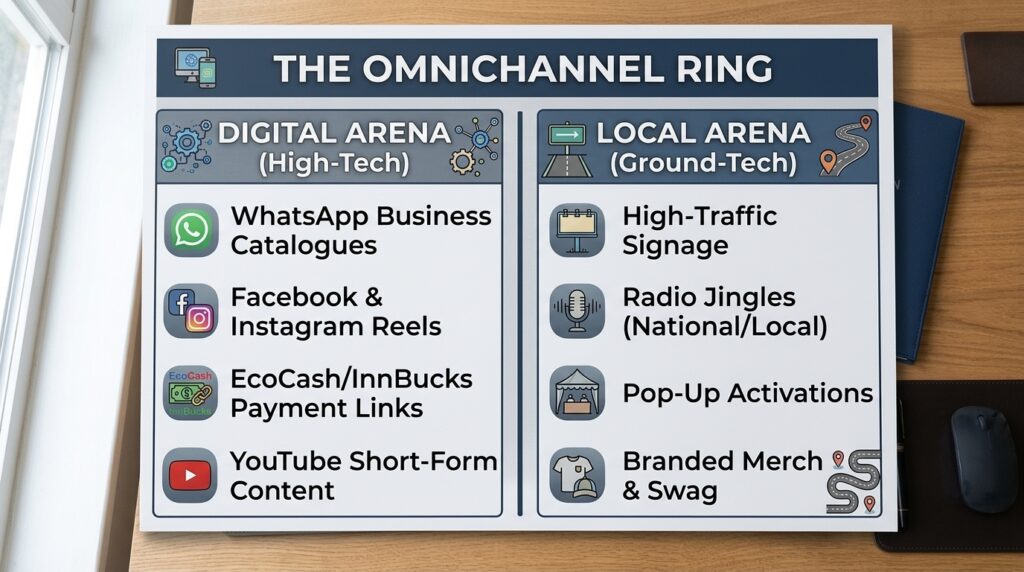
The omnichannel ring
1. Ground-Tech (Traditional Media & Physical Visibility)
-
Radio Promos: Radio remains a dominant force across Zimbabwe’s provinces. Sponsor morning traffic reports or run short, dramatic 15-second spots on Radio Zimbabwe, Star FM, ZiFM, or local community stations.
-
High-Visibility Street Presence: Utilize eye-catching signage, street banners, and vehicle wraps on local commuter omnibuses (kombis) and delivery vehicles. Turn every asset into a mobile billboard.
2. High-Tech (Digital & Mobile First)
-
WhatsApp Business Funnels: In Zimbabwe, WhatsApp accounts for a vast portion of internet traffic. Build an automated WhatsApp workflow featuring catalog displays, automated ordering, and instant customer service reps.
-
Short-Form Video (TikTok & Reels): Create dramatic, behind-the-scenes content showing your team solving real customer problems. Showcase real client reactions (“The Pop of the Crowd”).
-
Seamless Local Payments: Integrate seamless payment gateways (EcoCash, InnBucks, ZimSwitch, USD cards) directly into your website or WhatsApp bot to reduce friction at checkout.
Phase 4: Turn Customers into Fanatics (Community & Merch)
1. Build a “Catchphrase Culture”
-
Encourage user-generated content by launching social media challenges where customers use your hashtag or sound bite to win prizes.
2. Merchandise as a Revenue Engine & Billboard
-
Produce high-quality, trendy t-shirts, caps, water bottles, or tote bags featuring your brand’s catchy slogan rather than just a dry corporate logo.
-
Offer merch as loyalty rewards for your top 10% of customers or sell them directly online to turn your customers into walking brand ambassadors across Zimbabwe and the diaspora.
Phase 5: The “WrestleMania” Strategy (Launch Big Events)
-
The Tease: Announce a major upcoming change 30 days in advance. Use countdown timers on social media and broadcast teaser clips over WhatsApp status updates.
-
The Soft Launch: Invite key influencers, local media, and loyal customers to an exclusive preview event or early-access link.
-
The Pay-Per-View Moment: Go live across Facebook, Instagram, and YouTube simultaneously. Offer limited-time flash sales, exclusive discounts, or bonus downloads during the event to trigger instant conversions.
The Growth Framework Summary for Zimbabwean SMEs
| WWE Element | Business Strategy Equivalent | Local Zimbabwean Execution |
| Superstar Gimmick |
Brand Identity & Persona
|
Distinct tone of voice, clear color scheme, local tagline. |
| The Mic Promo |
Storytelling & Content
|
Video teasers, engaging social media posts, dramatic radio ads.
|
| The Ring/Arena |
Omnichannel Presence
|
WhatsApp Storefronts + Radio Spots + Street-level Kombi Ads. |
| Crowd Chants |
Customer Engagement
|
Interactive WhatsApp polls, TikTok challenges, user reviews.
|
| WrestleMania |
Flagship Launch Event
|
Live-streamed product reveals, physical pop-up activations.
|
| Royal Rumble | Strategic Collaborations |
Partnering with non-competing local brands for joint promos.
|
Final Takeaway: Step into the Ring
It’s time to step into the ring and take your belt.
Business How-To
“Brands that build up their identity will be the winners”: Why branding should be at the centre of your marketing strategy in 2024
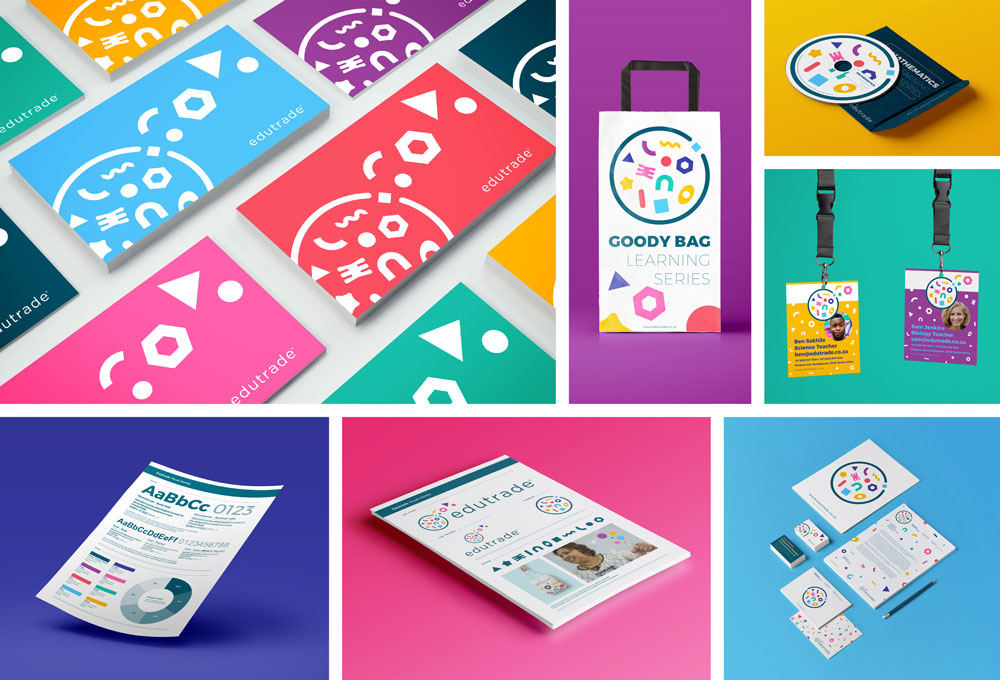
In an era dominated by the likes of social media, consumers are constantly surrounded by new brands. With more options than ever before to choose from online, the competition to perform well has become harder for small businesses (which are competing with big brands with the bucks to spend on the best logos). Business branding will play an important role in industry success in 2024.
Your visual identity can boost your revenue.
In 2024, branding should be at the centre of your marketing strategy, as it can increase revenue by 23% alone. Not only does a consistent branding strategy encourage recognisability in an omnichannel landscape, but it also fosters trust, loyalty and connection between brand and consumer.
“A business’ branding is more important than you might think. On the outside, your brand may seem like it consists only of elements such as logos and colours, but your brand is actually the entire identity of your business,” says Kristopher Jones, CEO of LSEO. Your brand gives you personality.”
For businesses looking to boost their chances of success in 2024, branding is the place to begin. Stick with us as we jump into the meaning of branding and reveal why it plays a crucial role in your marketing strategy.
What is branding?
Your brand is your business’s customer-facing identity. Branding defines how your target audience perceives you and tells your buyers what they can expect from your business.
As defined by the American Marketing Association: “A brand is a name, term, design, symbol, or any other feature that identifies one seller’s good or service as distinct from those of other sellers.
Your branding strategy is your unique selling point. Your logo, slogan or content design should become a recognisable element that your demographic associates with your brand and your brand only.
Take Coca-Cola, for example. With one of the most recognisable logos around the world and it’s classic red colour, the brand is easily spotted and associated with globally. The same goes for Nike’s ‘Just Do It’ slogan. While it does not contain the name Nike, it would be recognised on a billboard as an association with the sportswear brand.
Improving your brand awareness strategy comes with a number of benefits:
- Credibility: Brands with the best logos, slogans, messages and values are automatically perceived as more credible. If a consumer recognises your brand cross-channel, they are more likely to engage with it.
- Exposure: The better your branding strategy, the more likely you are to see engagement on multiple platforms. Popular brands are more likely to be shared and linked online. For businesses hoping to improve their backlinking strategy, prioritising branding is a must, as more competitors are likely to link out to key industry players who are recognised across a range of channels.
- Loyalty: Businesses that take their branding seriously are able to craft messages that keep their consumers coming back. Branding humanises your business, in turn fostering connections with customers that stick.
- Growth: Iconic brands find it much easier to grow and expand as an umbrella company. If your consumers recognise your key branding, they are likely to trust new umbrella companies and products on the back of your brand’s success.
Why focus on branding in 2024?
With the benefits in mind, let’s have a closer look at why your branding strategy could improve your overall success in 2024.
01. You’ll stand out from competitors
A strong brand identity instantly makes your business more recognisable to your target consumers. In a competitive online landscape, brands that have distinguishable features, such as a recognisable logo or viral message, are most likely to outperform competitors on social channels.
“One of the most obvious reasons that businesses need branding is to help them get recognised more often,” claims Jones. “A business with elements such as a distinct logo, attractive colours and other visual elements will be much more memorable. Someone might see your brand for only a moment, but if it sticks out in a positive way, there’s a good chance they won’t forget it, even if this person isn’t ready to use your products or services just yet.”
In fact, over half of all brand first impressions are visual in 2024. Therefore, a strong focus on your logo design and brand colours is essential when renovating your brand strategy.
Take Coca-Cola as a base point. Their iconic red and white logo has existed for years and still remains one of the most recognisable designs on the market.
Coca-Cola’s use of consistency within its design strategy has made it one of the most recognisable brands on the planet. While this is hard to replicate, it’s important to take a look at your own niche market and identify the brands that are most recognisable. Look at their colours, design and messaging and create a unique indeed that could rival their exposure.
02. You’ll gain credibility
Did you know that 4 out of 5 consumers will only buy products from brands they trust?
If your branding strategy is strong, you’re likely to be more recognisable cross-platform and will hold more authority within your niche market. Brands that lead industry conversations are perceived as experts within their field, which evokes a sense of trust amongst their target consumers.
If you prioritise consistency, unique content and a strong identity, you enhance your credibility as a business and gain a competitive edge within your marketplace.
However, as more brands fight for the limelight, it is becoming harder to gain consumer trust from messaging alone.
“Consumers have become more sceptical of brand messages. They understand that marketing departments may not always be honest about products and services. That is why social proof and user-generated content have become so important in the digital age,” says Jessica Wong, CEO of PR firms Valux Digital and uPro Digital.
As we step into 2024, social proof and UGC have become key branding strategies businesses are adopting to improve credibility.
ASOS is a great example of a brand that does this well, with their #AsSeenOnMe campaign. Rather than relying on their own content production, they have launched a section on their website dedicated to consumers wearing and posting about the clothes they have purchased on their website.
This has not only helped boost credibility for the brand but is essentially also free advertising, bosting consumer trust without the cost of campaigning.
03. You’ll connect with clientele
Branding is not limited to visual identity. The messages you deliver as a brand should aim to speak to consumers on a human level. Essentially, branding humanises your business. You’re able to communicate your mission and messages through the use of colour, content and campaigning for a shot at evoking human emotion and connection that consumers will associate with your products/services.
“Fundamentally, branding is a profound manifestation of the human condition; belonging to a tribe, to a religion, to a family. Branding demonstrates that sense of belonging,” says Wally Olins, CEO of Design Thinker.
Consumers in 2024 are more conscious of what they purchase online. In fact, a whopping 82% of online shoppers will only buy from brands with a greater mission or purpose.
This means that your brand messaging should convey your values to your target consumers. For example, if you believe in sustainable manufacturing, make sure you’re conveying that within your content and campaigns.
Take Patagonia, for example. The sustainable clothing brand released this clever green content campaign to deliver messages of sustainability to their shoppers.
“In many ways, you can appeal to people’s emotions through branding and make them feel more connected to your company,” comments Jones. “Branding allows you to build relationships with your audience, which can eventually turn them into loyal customers. You can create a brand that people actually care about and put yourself ahead of businesses that aren’t using this to their advantage.”
A community-driven branding strategy is quite possibly the most important tactic you can adopt as a business. Fostering loyal consumers will keep your conversions flowing and just half the cost of new acquisition.
Peloton does this brilliantly with their at-home cycling community. Instead of simply selling peloton bikes, the business has created a community of at-home fitness fanatics by introducing hashtag-powered social campaigns, opening conversation groups on-site and hosting digital classes that bring people together.
The brand aims to welcome each consumer into a community rather than simply sell a product by encouraging them to share their experiences with the bike online.
Their “Connected Fitness Subscribers” programme alone has earned them a 95% retention rate as a sporting brand.
Embracing a strong brand strategy in 2024
Branding should dominate your marketing strategy in 2024. There has never been a better time to make your business more recognisable in a sea of competitors. While your products and services could be brilliant, your branding is the tactic that drives exposure and engagement.
Brands that want to gain a competitive edge must prioritise their messaging tactics and aim to tap into a community spirit in 2024. Consumers online are fussier than ever before, so embracing new ways to get them on the side is essential.
Brands that build up their identity will be the winners In the competition for consumer engagement in 2024, especially as the ecommerce sector continues to explode.


ZSE Opens SME Funding Platform as Mwana Group Seeks US$1m in First ZEEX Listing

How to Start a Business in Zimbabwe: A Practical Step-by-Step Guide

Cassava’s Cape Town AI Factory Reaches Full Capacity as Demand for Computing Surges

What is Robert Kiyosaki’s net worth after his latest book flop?

Egypt’s Richest Man, Nassef Sawiris’ Wealth Surges by $410M in Just over a Week.

Billionaires Who Didn’t Go to College
-
 Business & Economy3 years ago
What is Robert Kiyosaki’s net worth after his latest book flop?
-
Business & Economy3 years ago
Egypt’s Richest Man, Nassef Sawiris’ Wealth Surges by $410M in Just over a Week.
-
Business & Economy3 years ago
Billionaires Who Didn’t Go to College
-
Business & Economy3 years ago
Africa’s youngest billionaire: Mo Dewji’s impactful empire extends beyond wealth
-
Business & Economy3 years ago
Meet World’s Richest Family Who live In $478m House, Own 700 Cars
-
Technology & Telecommunications3 years ago
Liquid C2 partners with Google Cloud and Anthropic to bring advanced cloud, cyber security and generative AI capabilities to Africa
-
Business & Economy3 years ago
Malawian Billionaire Thom Mpinganjira’s Fortune Drops by $8 Million in a Month
-
Business & Economy3 years ago
Zimbabwe’s Beverage Industry: A Digital Marketing Analysis of Delta Beverages and Varun Beverages Zimbabwe