
Connect with us

Business & Economy

Meet French billionaire, Vincent Bollore, bidding $2.5 billion to acquire Africa’s Multichoice

Published

on

Meet French billionaire, Vincent Bollore, bidding $2.5 billion to acquire Africa’s Multichoice

On Thursday, Vivendi SE’s Canal+ proposed to acquire the remaining shares of MultiChoice Group, the South African pay-TV company, in a deal valued at 46 billion rand ($2.5 billion).  

The Paris-based Canal+, led by French billionaire Vincent Bollore, who already holds a significant 31.7% stake in MultiChoice, offered 105 rand per share in cash, representing a 40% premium to the company’s recent closing price.  

The acquisition aligns with Vivendi’s strategy to merge Canal+’s local operations with MultiChoice, creating a conglomerate with close to 50 million subscribers. 

MultiChoice, founded in South Africa in 1985, expanded across Africa in the 1990s, offering packages featuring live English football matches and local content.  

As the owner of Showmax, a streaming service competing with Netflix in the region, MultiChoice has tapped into Africa’s rapidly growing entertainment market. Canal+’s bid reflects Bollore’s aim to capitalize on this trend, strengthening the new group’s position in local content and sports. 

To understand Bollore’s motivations behind this acquisition, exploring his history of company acquisitions and wealth accumulation provides valuable insights into his strategic vision for MultiChoice. 

Background 
Vincent Bolloré, born in Boulogne-Billancourt, embarked on his journey as a corporate raider in France. His academic pursuits led him to the Lycée Janson-de-Sailly, and later, he earned a business degree from Université Paris X Nanterre. Bolloré initiated his career as an investment bank trainee at Edmond de Rothschild. 

  •  Beginning with the family-controlled conglomerate Bolloré, engaged in maritime freight, African trade, and paper manufacturing, he showcased his prowess in strategic investments. 
  •  This extended to media ventures, including the launch of the Direct 8 television station in 2005. Recognized for leveraging large stakes in companies, Bolloré entered power struggles, notably with companies like Bouygues and Ubisoft, yielding substantial capital gains.  
  • In 2005, he took charge of advertising group Havas, becoming its predominant shareholder. Bolloré further diversified his media holdings with the introduction of the Direct Soir newspaper. His investment group’s penetration into Africa established him as a key player in the economies of former French colonies such as Ivory Coast, Gabon, Cameroon, and Congo. 

Despite his triumphs, Bolloré faced legal challenges in 2018, experiencing custody and subsequent indictment on corruption-related charges linked to political consulting and port concessions in Togo and Guinea. His journey reflects a dynamic career marked by strategic investments, power struggles, and a significant impact on both French and African business landscapes. 

Vincent Bollore’s fortune 

Vincent Bolloré, the former chairman of Bollore Group, presided over a French conglomerate and is worth $9.53 billion according to Bloomberg Index. 

 The group, headquartered in Puteaux, boasts diverse investments, including a substantial stake in the media and entertainment entity Vivendi and ownership of internet service provider Wifirst.  

  • The crux of Bolloré’s wealth lies in his controlling interest in Financiere Odet, the publicly traded holding company overseeing Bollore Group.  
  • Approximately 87% of Financiere Odet is under the billionaire’s ownership, as indicated by a comprehensive analysis of his holding structure and the 2022 annual report.  
  • Within the media landscape, Bolloré’s family conglomerate takes the lead as the primary shareholder in Vivendi, holding a significant 29.5% stake.  
  • Vivendi encompasses prominent entities like French pay TV leader Canal+, advertising giant Havas, publisher Prisma Media, and mobile games firm Gameloft.  
  • Notably, Vivendi recently secured EU regulatory approval for its acquisition of French media group Lagardère, positioning itself strategically in key markets such as France, the U.K., Spain, and the U.S.  

To gain antitrust approval, Vivendi made divestitures, including the sale of its publishing group Editis and Gala magazine from Prisma Media. This move enhances Vivendi’s foothold in crucial markets. The listed company anticipates reaching an annual revenue of around $18 billion (€17 billion) this year, building upon its 2022 performance.  

Bolloré, currently holding 18% of Universal Music Group shares, maintains an active role in navigating the intricate landscape of investments and acquisitions, showcasing his adept leadership in the ever-evolving business terrain. 

The Business Diary magazine is a comprehensive publication that centers around business and economic development news. It covers a wide range of topics including finance, mining, technology, environment, climate finance, and agriculture. With its focus on providing valuable insights and updates, the magazine caters to readers who are interested in staying informed about the latest developments and trends in the business and economic landscape of Zimbabwe.

Business & Economy

Varun Beverages Expands Zimbabwe Capacity Twelvefold, Plans Two More Lines and 1,000 Pushcarts

Published

on

Varun Beverages Expands Zimbabwe Capacity Twelvefold, Plans Two More Lines and 1,000 Pushcarts

HARARE – Varun Beverages says it has raised its monthly production capacity in Zimbabwe twelvefold to 120 million bottles. It entered the country in 2018 with one production line, now runs 11, and plans two more because demand continues to outstrip supply. The company also plans to roll out 1,000 additional pushcarts in 2027, a move that comes as the government tightens its crackdown on street vending.

Expansion

Varun Beverages Zimbabwe chief executive Vijay Kumar Bahl gave the figures at a Zimbabwe–India business summit in Harare. He said the company had assumed one line would be enough because India’s per capita beverage consumption is only eight to ten litres a year, and had based its projections on India’s population and economy. His verdict was blunt: “We underestimated Zimbabwe.” He later described the error as a “pleasant mistake,” with demand running ahead of supply in the early years.

The 120 million figure is a company-reported capacity number, not audited output or sales. It also depends on the starting point. Bahl used 10 million bottles a month in 2018 as the base. At the time, however, the first plant was commissioned in February 2018 with an initial capacity of 15 million bottles a month. On that baseline the increase is eightfold, by our calculation. Varun has not explained the difference.

Pushcarts

Bahl said Varun plans to put 1,000 pushcarts on the street in 2027 and is in discussions with local government to settle the rules and ensure compliance. He said vendors will also collect used bottles, which Varun will reprocess into new products. He added that Varun has begun extending credit to vendors based on their trading history, performance and relationship with the company.

The timing is sensitive. A minister said this month that the company has agreed to withdraw its pushcarts from Harare’s central business district over congestion concerns, allowing traders to operate in residential and industrial areas instead.

Background

Varun has expanded in stages since 2018. By 2019 it had capacity of 51 million bottles a month, and it later reported US$110 million invested since 2018 across nine production lines producing 80 million bottles and cans a month. In December 2024, President Mnangagwa commissioned its sixth and seventh phases, a move into PepsiCo’s snack division. The company previously reported over 7,000 Pepsi-branded pushcarts in the field.

The group is now moving beyond soft drinks. Bahl said Varun and its holding company, with partners, are investing US$350 million in a 500-megawatt solar project, plan to launch a beer plant by the end of 2027 or early 2028, and are working with Geo Pomona on a plastics recycling plant. He said the company directly employs about 2,000 people and supports a further 13,000 through indirect jobs.

Business Diary Analysis

The pushcart plan is where the production story meets the street. A larger factory only creates value if the product reaches customers, and in Zimbabwe much of that retail happens through informal traders. Pushcarts, credit and free ice reduce a vendor’s start-up cost and give Varun a distribution network without the cost of owning retail outlets. Bottle collection adds a recycling loop that links the pushcarts to the planned plastics facility.

The risks sit in the same place. Vending rules are tightening, and the withdrawal from the Harare CBD shows that the company’s routes to market depend on municipal and national policy. Credit to informal vendors also carries the risk of default. Capacity, meanwhile, says nothing about margins. Household incomes, a competitor such as Coca-Cola, and the cost of power will decide how many of the new lines run at full volume. The solar project would address the last of these only if it is built.

For Zimbabwe, the expansion adds local manufacturing and jobs. It also concentrates more of a vendor’s livelihood in one franchise’s supply chain. Small traders who can meet quality and credit terms stand to gain, and those who cannot may be left out.

What’s Next?

Watch for commissioning dates on the two new lines, the final vending rules and pushcart routes, the beer plant timeline, and financial close on the solar project. Varun has so far published capacity and investment figures, not sales or profit figures for Zimbabwe.

Continue Reading

Business & Economy

PPC Advances Plans for 1.5Mt Zimbabwe Cement Plant as Local Unit Becomes Group’s Earnings Engine

PPC is progressing plans for a 1.5Mt integrated cement plant in Zimbabwe, where its local unit now supplies more than half of group EBITDA. No final investment decision yet. Full analysis on The Business Diary.

Published

on

PPC Advances Plans for 1.5Mt Zimbabwe Cement Plant as Local Unit Becomes Group’s Earnings Engine

HARARE – PPC Limited is moving forward with plans for a new 1.5 million tonne a year integrated cement plant in Zimbabwe. The group’s Zimbabwean business is now contributing more than half of its earnings, and the company has told investors it wants to add clinker and cement capacity there. No capital cost, site or construction date has been published, and the project is still subject to board and external approvals.

What PPC has said

In its interim results for the six months to 30 September 2026, PPC listed a planned integrated cement plant in Zimbabwe of 1.5 million tonnes a year among its outlook items, alongside a 20 MW solar project with battery storage.

Management told analysts that Zimbabwe’s current demand of about 3 million tonnes a year leaves room for the plant. It also said its strategy is to improve local production in Zimbabwe rather than ship South African cement across the border.

In a September operating update, PPC said work on the project includes continued engagement with Sinoma on the engineering, procurement and construction (EPC) contract, mine prospecting, and an assessment of acceptable financing alternatives. Those are preparatory steps. A final investment decision has not been reported.

Background

The plant follows an agreement PPC signed earlier this year with China’s Sinoma Overseas Development. The memorandum covered efficiency improvements at PPC Zimbabwe and a feasibility assessment of a new integrated plant. PPC said then that any such investment would be assessed under its capital allocation framework and would need internal and external approval.

PPC has talked about expanding in Zimbabwe before. Global Cement reported plans for a US$200m clinker plant in the north-east of the country, with a feasibility study said to be almost complete. In 2015, the company said it was still looking for a reliable limestone source for a clinker plant. That project did not proceed as announced. The new plan comes after years of work to stabilise the existing operations.

PPC currently operates plants in Bulawayo and Harare with a combined annual capacity of 1.4 million tonnes and holds more than half of the market. Its Colleen Bawn plant produces clinker, the main ingredient in cement. A deputy minister has said PPC is the only local producer currently making clinker.

Earnings

The Zimbabwean business has become central to the group. Group EBITDA rose 23.7 per cent to ZAR1.216bn (US$71.7m) in the half year. In Zimbabwe, cement volumes rose 5.4 per cent, EBITDA rose 56 per cent to US$39m, and the margin widened from 23.4 to 31.5 per cent. By our calculation, Zimbabwe therefore supplied about 54 per cent of group EBITDA. By contrast, cement volumes in South Africa and Botswana fell 7.9 per cent.

PPC attributed the improvement partly to higher output of its own clinker and better plant performance, despite increased coal and diesel costs. The Zimbabwe margin was lower than the 34.2 per cent reported for the five months to August. PPC said a planned Colleen Bawn shutdown in September and October pulled it down. That shutdown was completed by mid-October.

For the year to March 2026, the Zimbabwean subsidiary paid a record US$36 million in dividends to its parent, up from US$13 million a year earlier.

Market conditions

PPC’s confidence comes after a turbulent period for the market. Zimbabwe introduced a 30 per cent surtax on imported cement in May 2025 through Statutory Instrument 50A of 2025 to support local producers. In November 2025, Harare lifted import controls and the surcharge as demand grew, clinker ran short and energy supply was cut, prompting a rapid policy reversal. Prices had roughly doubled at the time.

Competitors are also adding capacity. Huaxin Cement was completing an 800,000 tonne a year plant in Chegutu, due for commissioning in early 2026. It is also expanding at Mt Hampden, where it plans to triple output. According to a transcript of the earnings call, PPC management said the competing projects it knows of are grinding stations, not integrated plants. The transcript is unclear on this point and should be confirmed with PPC.

Power is a constraint. PPC said the 20 MW solar plant with batteries is a must-have in Zimbabwe because of frequent power dips, and should lift clinker output by 4 to 5 per cent.

Business Diary Analysis

The strategic logic is clear. Clinker is the most expensive and scarcest input in Zimbabwean cement. A producer that makes its own clinker is less exposed to import prices and to the supply shortages that have repeatedly disrupted construction. Higher volumes at its own plant are already lifting PPC’s margins. A second integrated plant would extend that advantage and could reduce the country’s reliance on imported clinker and cement.

The risks are equally clear. Cement is costly to move, so a plant must be close to both limestone and customers. Financing is unresolved, and Zimbabwe’s power supply, currency and policy environment remain uncertain. The reversal on import duties in 2025 shows how quickly the market rules can change. Competing capacity from Huaxin and others could also narrow the supply gap that makes the investment attractive.

For builders, developers and merchants, any easing of supply is a longer-term prospect. A 1.5Mt plant would take years to build and commission. In the meantime, prices will keep depending on kiln reliability, power and the import regime.

What’s Next?

Watch for a board decision, an announced EPC contract with Sinoma, confirmation of a site and limestone resource, and the financing structure. PPC’s results show it has the earnings to support an investment. They do not yet show it has committed to one.

Continue Reading

Business & Economy

ZB Financial Holdings Deposits Surge 52% to ZiG9.96 Billion as Core Banking Rebounds

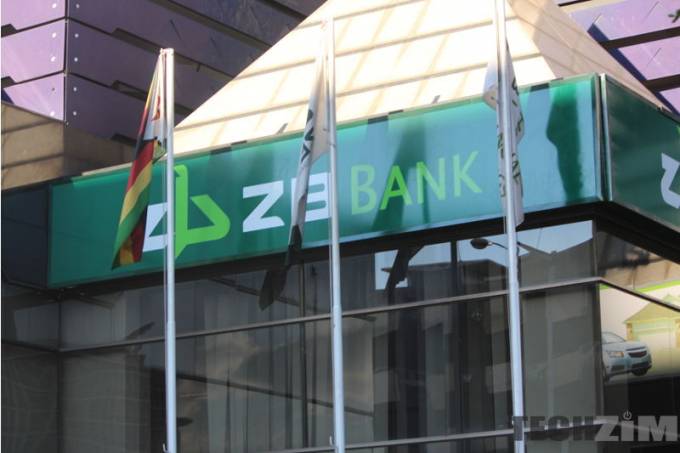
Customer deposits and other accounts at ZB Financial Holdings expanded by 52 percent to ZiG9.96 billion in the nine months ended September 30, 2026, anchoring a 28 percent expansion in total assets and a fivefold jump in core sustainable earnings.

Published

on

ZB Financial Holdings Limited (ZBFH) recorded a 52 percent surge in customer deposits and other accounts to ZiG9.96 billion during the nine months ended September 30, 2026, underscoring renewed depositor confidence and aggressive balance sheet expansion across Zimbabwe’s banking sector.

According to the Zimbabwe Stock Exchange-listed group’s third-quarter trading update, the deposit mobilization drive was underpinned by targeted customer retention initiatives, digital ecosystem upgrades, and tailored financial products. The inflow of funds propelled total assets up 28 percent to ZiG20.53 billion from ZiG16.08 billion at the close of December 2025, while cash and short-term funds climbed 47 percent to ZiG5.93 billion.

Armed with deeper liquidity buffers, ZB Financial Holdings aggressively expanded its credit book during the period under review. Mortgages and other advances surged 78 percent to ZiG5.52 billion, up from roughly ZiG3.10 billion at the start of the year, as the group pivoted toward servicing productive economic sectors amid gradually easing domestic interest rates.

The operational shift toward core financial intermediation yielded a sharp improvement in underlying earnings quality. While headline profit after tax declined 31 percent to ZiG420 million from ZiG610 million in the prior comparative period—largely due to reduced non-cash exchange gains and fair value adjustments—sustainable profit surged more than fivefold from ZiG40 million to ZiG215 million.

Across non-funded revenue streams, commissions and fees remained resilient at ZiG1.386 billion, while net insurance and assurance income rose 16 percent to ZiG133.8 million on the back of new policy underwriting and stronger market share. At the same time, strict cost containment kept operating expenses marginally lower at ZiG2.07 billion compared to ZiG2.09 billion a year earlier.

The strong deposit growth reflects broader stability across Zimbabwe’s financial services landscape during the third quarter. With the ZiG exchange rate holding largely steady and single-digit annual inflation anchoring market expectations, commercial banks have increasingly shifted focus from currency-hedging windfalls back to traditional balance sheet growth, loan book expansion, and transactional volume.

Management did not declare a dividend for the third quarter, opting instead to preserve capital buffers to support ongoing credit creation into the final quarter of the financial year. As the expanded ZiG5.52 billion loan book matures and begins generating fuller net interest margins, analysts expect ZB Financial Holdings’ core banking earnings to carry greater weight in its full-year performance.

Continue Reading

Trending

×