Connect with us

Business & Economy

Namib Minerals Accelerates Redwing Gold Mine Restart to November 2026

Published

on

Namib Minerals Accelerates Redwing Gold Mine Restart to November 2026

Harare — Nasdaq-listed African precious metals producer Namib Minerals has announced an accelerated operational restart for the historic Redwing Mine in Zimbabwe, with first gold production now targeted for November 2026.

The company adjusted its strategic timeline in response to new regulatory frameworks introduced by the Ministry of Mines and Mining Development. These guidelines reserve the small and medium-scale gold mining sectors for Zimbabwean citizens while establishing explicit operational thresholds for foreign-owned entities to meet by January 1, 2027.

Pivoting From Studies to Active Production

Initially, Namib announced in April 2026 that it would withhold production resumption at Redwing until the completion of a comprehensive Definitive Feasibility Study (DFS) aimed at a full infrastructural redesign. However, facing regulatory timelines, the company initiated a concurrent workstream to refurbish and recommission Redwing’s existing underground workings and processing facilities ahead of schedule.

The accelerated development programme follows major milestones achieved at the asset, including:

  • Successful Dewatering: Opening up underground access across the historic mine workings.

  • Infrastructure Refurbishment: Recommissioning the South Shaft winder and completing the rehabilitation of crushing operations.

  • Grid Power Restoration: Reconnecting reliable electricity to support continuous underground mining, dewatering, and processing activities.

“Restarting Redwing ahead of schedule is a defining milestone for Namib,” the company noted. “We believe the planned restart represents an important step in our transition from a single-asset gold producer to a multi-asset gold production platform, with How Mine as our producing foundation and Redwing representing the next phase of our growth.”

Production Ramp-Up and Path to First Gold

Located in the Penhalonga area of Manicaland Province, Redwing Mine boasts a rich history, having produced roughly 650,000 ounces of gold between 1981 and 2023.

Mine management is currently focused on completing milling, elution, and carbon-in-pulp (CIP) plant commissioning during the first half of November 2026, paving the way for the milestone first gold pour.

  • Initial Phase: Namib expects an initial conservative processing rate of approximately 3,600 tonnes of ore per month, yielding an estimated 338 ounces of gold monthly.

  • Expansion Phase: Output is targeted to scale up to approximately 10,000 tonnes of ore and 835 ounces of gold per month by the second quarter of 2027. This expansion hinges on the installation of a higher-capacity winder, which has already been ordered and is scheduled for delivery by the end of the first quarter of 2027.

Boosting National Gold Targets and Investor Confidence

The rapid revival of Redwing serves as a vital case study in aligning foreign direct investment with Zimbabwe’s regulatory objectives. Financially backed by strong local banking arrangements—including an indicative US$30 million Ecobank term sheet and supplementary capital injections—the project highlights robust institutional confidence in the country’s mining sector.

By bringing Redwing back on line ahead of schedule, Namib Minerals is set to make a measurable contribution to Zimbabwe’s national gold production goals for 2026, while driving sustainable local economic growth, creating regional employment, and supporting the government’s long-term vision of expanding annual gold output.

Continue Reading

Business & Economy

South Africa Set for AGOA Exit as US Finalises Major Trade Exclusion

Published

on

South Africa Set for AGOA Exit as US Finalises Major Trade Exclusion

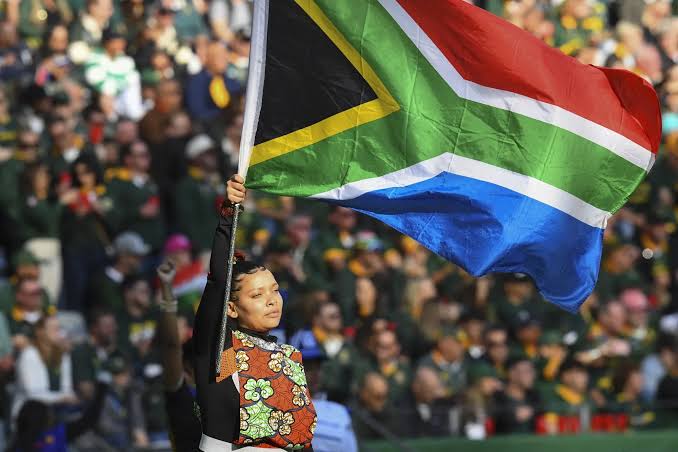
Johannesburg — South Africa is preparing to exit the landmark African Growth and Opportunity Act (AGOA) after the United States government formally announced its intention to terminate the country’s preferential trade eligibility effective January 1, 2027.

The decision, communicated by the U.S. Trade Representative’s office following a directive from Washington, concludes months of speculation surrounding bilateral tensions and brings an impending end to South Africa’s quarter-century participation in the duty-free export program.

Strained Relations and Trade Policy Hurdles

As the historic powerhouse and largest beneficiary of AGOA since its inception in 2000, South Africa exported approximately US$1.7 billion worth of goods under the framework in 2025. However, mounting diplomatic and trade frictions under the current U.S. administration have precipitated the exclusion.

U.S. officials cited persistent trade and investment barriers, concerns over economic policies, and foreign policy positions that Washington claims run counter to its strategic interests as the core drivers behind the termination notice. The removal notice also encompasses Rwanda, marking a significant narrowing of Washington’s preferential trade footprint on the continent.

South African officials have consistently maintained that the nation will not compromise its sovereign foreign policy stances or domestic socio-economic transformation frameworks to satisfy external demands. While President Cyril Ramaphosa previously warned business and political leadership to brace for a potential worst-case scenario, government representatives have emphasized that standard trade with the U.S. will continue outside of the preferential tariff framework.

Economic Implications and Diversification Strategies

Economists and trade analysts note that while the loss of AGOA preferential tariffs is a notable setback for bilateral commercial ties, the broader macroeconomic shock may be cushioned by existing market adjustments. A substantial portion of South Africa’s exports to the United States already moves under ordinary World Trade Organization (WTO) terms.

In response to the announcement, Trade, Industry and Competition Minister Parks Tau affirmed that the government is aggressively accelerating market diversification strategies. Pretoria is intensifying efforts to expand commercial footprints across the African Continental Free Trade Area (AfCFTA), alongside growing trade corridors in India, the European Union, and China, to safeguard local industries and secure jobs.

As the January 2027 transition window approaches, policymakers and private sector stakeholders are pivoting toward a redefined trade landscape—one that relies less on preferential U.S. access and more on robust multi-lateral partnerships across emerging global markets.

Continue Reading

Business & Economy

Zimbabwe’s 2027 Budget: What Business Leaders Should Watch Before 19 November

Published

on

Zimbabwe's 2027 Budget: What Business Leaders Should Watch Before 19 November

Zimbabwe’s 2027 National Budget will be presented on 19 November. The proposals aired at Parliament’s pre-budget seminar in Bulawayo expose one tension. Business wants lower taxes and costs. Treasury wants a deficit below 3% of GDP while growth slows to 3.5% in 2027 on El Niño drought risk.

None of the tax proposals is policy yet. Finance Minister Mthuli Ncube says Treasury is “seriously considering” them. Executives should plan around what is confirmed, which is strong revenue, low inflation and slowing growth. They should treat everything else as a scenario until the budget statement.

Key takeaways

  • The seminar runs in Bulawayo from 28 to 31 October. The budget follows on 19 November under the theme “Accelerating economic transformation and building resilience to climate shocks and global shocks.”
  • Three tax asks are on the table: a tax-free threshold of US$150 a month (from US$100), fuel held below US$2 a litre, and a lower IMTT. None is adopted.
  • Revenue is beating targets. First-half collections were ZiG137.8 billion against a ZiG124.4 billion target. But the Speaker says only 42.5% of the budget had been used by mid-year.
  • Treasury targets 3.5% growth in 2027 and a deficit below 3% of GDP. The IMF projects the same 3.5%, citing drought.
  • The IMF says Zimbabwe missed its floor on protected social and priority spending because of implementation bottlenecks.
  • The decisive question for business is whether approved money reaches contractors, projects and services on time.

What is on the table, and what is not decided

Three proposals dominate the seminar. Budget Finance Committee chairperson Lincoln Dhliwayo presented them on behalf of stakeholders.

Proposal Detail Treasury response Status
Higher tax-free income threshold From US$100 to US$150 a month Ncube: “seriously considering” Proposed
Fuel price support Keep fuel below US$2 a litre Under discussion Proposed
Lower IMTT ZiG rate from 1.5% to 1%. USD rate from 2% to 1%. Cuts to be weighed against the revenue effect Proposed

The IMTT history matters. The ZiG rate was already cut from 2% to 1.5% in January 2026. A year ago Ncube defended the 2% rate as a key revenue source, said scrapping it would leave a gap that other taxes would have to fill, and offered a half-point cut only if VAT rose by the same amount. The tax made up about 6% of first-half 2026 revenue, so any further cut raises the question of what replaces it.

Treat all three as asks, not decisions. Do not build forecasts on them before 19 November.

The fiscal backdrop: strong revenue, slowing growth

The 2026 mid-term review gives the clearest picture of the public finances before the budget.

Measure, January to June 2026 Figure
Revenue collected ZiG137.8 billion (about US$5.15 billion)
Revenue target ZiG124.4 billion, so collections ran 10.8% ahead
Expenditure ZiG123.6 billion
Surplus ZiG14.2 billion, directed to debt service and arrears owed to service providers
Budget utilisation at mid-year 42.5% (Speaker Jacob Mudenda)

VAT supplied 28% of first-half revenue, personal income tax 17%, corporate tax 14%, excise duty 8% and IMTT 6%. Treasury told the seminar that revenue also exceeded spending over the first nine months of 2026, producing a cumulative surplus, helped by better tax administration at ZIMRA.

The outlook is stable but slower. The IMF projects 5% growth for 2026 after 8.3% in 2025, and 3.5% in 2027 because of expected El Niño drought effects on farming. Annual ZiG inflation was 3.7% in September. Treasury’s 2027 assumptions rest on continued stability, strong mineral exports, a better business environment and easing geopolitical tensions. It wants growth driven more by investment than consumption.

The point for executives is that Government is collecting more than planned but spending less than appropriated. That gap, not the revenue number, decides what reaches the economy.

Five decisions that will shape business conditions

1. How much tax relief, and what replaces the revenue

A higher tax-free threshold could raise take-home pay for lower earners and support consumer demand, although the benefit depends on the final tax bands. A lower IMTT would cut the cost of collecting customer payments and moving working capital, which helps high-volume businesses most. Holding fuel below US$2 a litre would ease costs for transport, mining, farming and manufacturing, but the subsidy competes with infrastructure and social spending.

Watch for: final rates, effective dates, and any offsetting measure such as a change to VAT or excise duty.

2. Whether approved money is released on time

Mudenda told the seminar that budget utilisation was only 42.5% at mid-year despite revenue running ahead of target. He asked for health spending to meet the Abuja Declaration’s 15% of public expenditure, education spending of 15% to 20%, and at least 5% of national revenue reaching provinces and local authorities “in full and on time” under section 301(3) of the Constitution. He also reminded Parliament that section 303 bars withdrawals from the Consolidated Revenue Fund without its authority.

The IMF reached a similar view. Zimbabwe missed its floor on protected social and priority spending, and the Fund blames persistent implementation bottlenecks. The Herald has also reported that ministry bids for 2027 total about ZiG600 billion, roughly double expected Treasury revenue, so prioritisation will be hard.

For business, late releases mean slow payments to contractors, postponed projects and weaker demand from Government-linked supply chains.

Watch for: a published disbursement schedule, and progress on clearing arrears to suppliers.

3. Climate resilience and food security

The IMF ties the 2027 slowdown to El Niño-related drought effects on agriculture and flags a more severe drought as a downside risk. It urges Government to use stronger-than-expected revenue to build fiscal buffers for food-security and energy pressures. Treasury lists agricultural productivity, food security and climate resilience among its 2027 spending priorities.

Poor rains cut crop output, rural incomes and food supply, and raise import needs. The commercial opportunity lies in irrigation, water management, storage and food processing, but only if funded projects are built and maintained.

Watch for: allocations to irrigation and water infrastructure, grain reserves and the size of any contingency buffer.

4. Mining policy: royalties and beneficiation

Mining supplies much of Zimbabwe’s export income, so fiscal terms matter to investors. In February 2026 Government restricted exports of raw minerals and lithium concentrate to push local processing. Lithium miners asked in 2024, through the Chamber of Mines, for royalties linked to metal prices so that the State takes more when prices rise and gives relief when they fall.

Watch for: any change to royalty rates or beneficiation incentives in the budget statement.

5. Fiscal discipline and a wider tax base

Treasury aims for a 2027 deficit below 3% of GDP while funding infrastructure and housing, agriculture, climate resilience, digital transformation, human capital and social protection. The IMF wants prudent assumptions to avoid creating a structural deficit, no new arrears, published audited statements for state-owned enterprises, and continued borrowing controls on Mutapa and its subsidiaries. It also welcomes progress toward a more transparent foreign-exchange trading platform.

Treasury is also looking at ways to widen the tax base without raising rates. In August, Ncube proposed linking renewal of local-authority vendor licences to compliance with ZIMRA’s presumptive tax, with councils and ZIMRA sharing data on integrated platforms. Formal businesses should see a more level field if it works. Smaller traders will need clear rules and notice.

Watch for: the deficit target, arrears policy and how compliance rules for small traders are phased in.

What executives should do before 19 November

  1. Model tax scenarios. Test staff costs, consumer demand and transaction fees against a threshold of US$150 and an IMTT of 1%, and also against no change.
  2. Stress-test cash flow. Plan for different fuel prices and for Government payment delays of one to two quarters.
  3. Submit evidence through your association. The Confederation of Zimbabwe Industries, the Zimbabwe National Chamber of Commerce and the Chamber of Mines can carry specific cost and regulatory asks to Treasury.
  4. Map project exposure. List contracts that depend on public funds, irrigation, infrastructure or housing, and note when releases are due.
  5. Read the final language. Separate seminar proposals from measures adopted in the budget statement and later legislation.

The Business Diary analysis

Zimbabwe is entering the 2027 budget from a position of relative strength. Inflation is low, the ZiG has been stable and revenue is beating targets. Growth is expected to slow, climate risk is rising and every ministry wants more than Treasury can fund.

That makes the first-half numbers the most revealing. Government collected 10.8% more than planned, yet by mid-year it had used 42.5% of its budget. Tax relief will make the headlines on 19 November, but the harder reform is turning approved allocations into paid invoices, finished projects and working services.

Tax cuts that are not offset by revenue or savings would put the deficit target at risk. Offsetting taxes could erase the relief. A budget that promises more than Treasury can release would hurt business confidence more than a modest, reliable one.

The most useful test for the 19 November statement is whether each major allocation is tied to a measurable result, such as lower costs, better infrastructure, stronger food security or more jobs. Proposals are not policy. Delivery is what businesses will feel.

What’s next

Treasury presents the 2027 National Budget to Parliament on 19 November. Businesses should watch the tax thresholds, IMTT, fuel support, royalty and beneficiation terms, and the disbursement plan that backs the spending.

Sources

Continue Reading

Business & Economy

Zimbabwe Courts Russian Finance at Moscow Summit: What Has Been Agreed, and What Has Not

Published

on

Zimbabwe Courts Russian Finance at Moscow Summit - What Has Been Agreed, and What Has Not

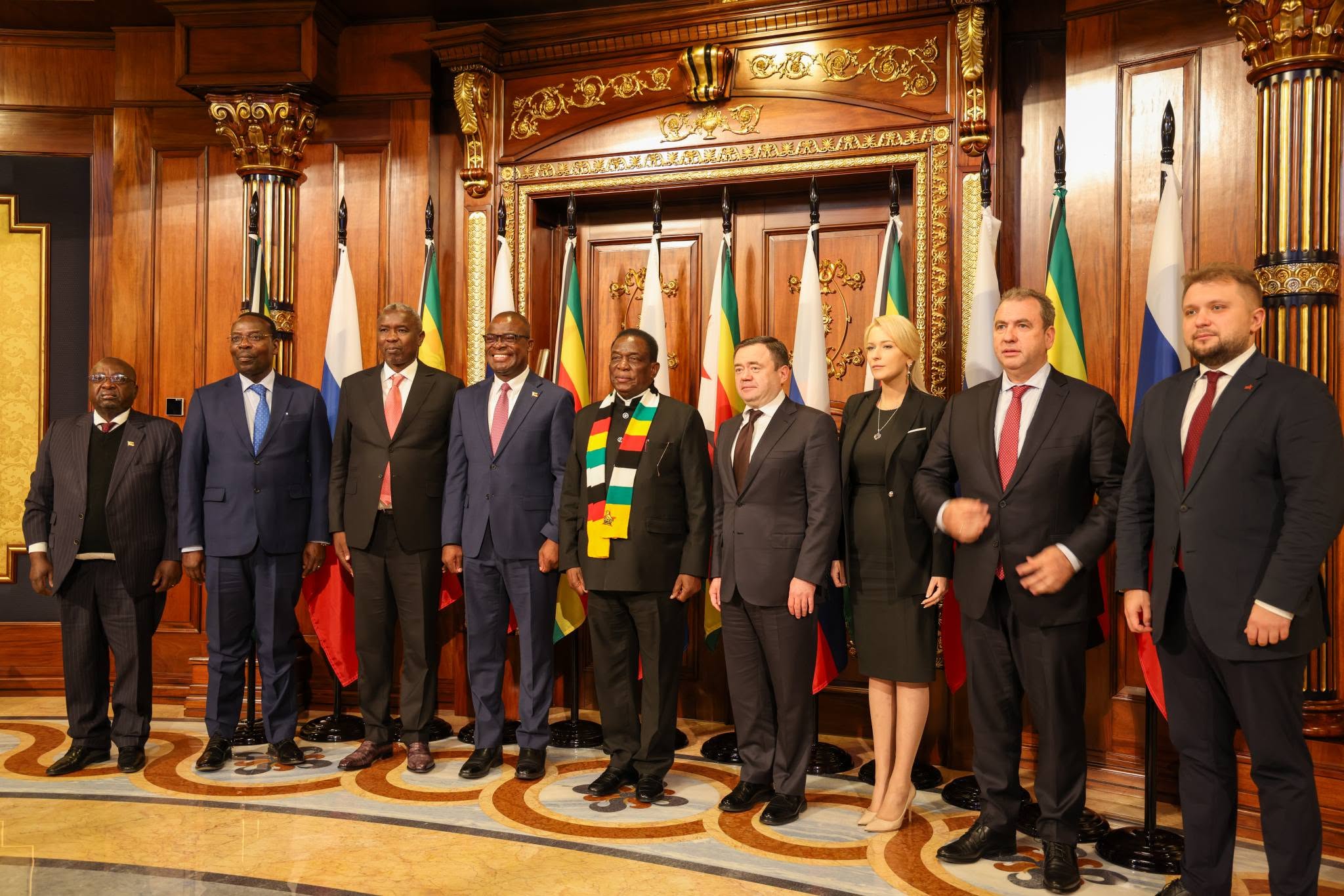
President Emmerson Mnangagwa is using the third Russia–Africa Summit in Moscow to open trade-finance, export and investment channels with Russia. Agreements have been signed, and he has proposed a working group with Russia’s PSB Bank. But no loan, credit line or dollar amount has been announced. For business, the signal is real. The money is not yet.

That distinction matters for any company deciding how much weight to give the summit. This article sets out what is signed, what is only proposed, why Zimbabwe wants the finance, and what to watch next. It reflects reporting available on 28 October, while the summit is still under way.

Key takeaways

  • The summit runs on 28–29 October 2026 in Moscow. President Mnangagwa attends as the COMESA chairperson.
  • He has proposed a joint technical working group with PSB Bank, the finance ministry and the Reserve Bank of Zimbabwe to drive trade finance. No financing terms have been published.
  • Zimbabwe’s economy is stable and growing, with the IMF projecting 5% for 2026 and 3.5% for 2027. Debt arrears still limit access to long-term external finance.
  • Zimbabwe–Russia trade is small, and published figures differ by source.
  • PSB Bank is under US, EU and UK sanctions, so any transaction needs careful compliance advice.
  • Past Russia–Africa summits produced many agreements. Delivery has lagged.

What has been signed, and what has not

The third Russia–Africa Summit and Economic and Humanitarian Forum brings African governments and businesses together with Russia to discuss trade, investment, technology, food security and energy. For Zimbabwe, the reporting so far breaks down as follows.

Item What reports say Status
ZimTrade–Roscongress agreement A five-year agreement to link Zimbabwean exporters with Russian buyers. Signed in June 2026 at the St Petersburg International Economic Forum, before the summit. Signed
Zimbabwe–Eurasia agreement State broadcaster ZBC reports that Foreign Minister Amon Murwira signed a cooperation agreement on 27 October with the Autonomous Non-Profit Organisation for the Development of International Cooperation (“Eurasia”), witnessed by President Mnangagwa. Reported signed. Terms not published.
PSB Bank working group President Mnangagwa proposed a joint technical working group of PSB Bank, the finance ministry and the Reserve Bank of Zimbabwe to drive trade finance. Proposed
Loan or credit line No amount, rate, maturity or disbursement schedule has been disclosed. Not confirmed


President Mnangagwa has also urged Zimbabwean and Russian institutions to turn signed deals into real projects, saying the test is the effect on ordinary citizens.

Both documents that were signed create frameworks for business contact. They do not, on their own, deliver export orders or investment. A financing proposal states an intention to negotiate. Neither guarantees money, factories or jobs.

Why Zimbabwe wants Russian finance

Zimbabwe’s economy is more stable than it was, but stability has not yet produced enough investment, productive capacity or formal jobs.

That is the gap Russian trade finance could fill. Zimbabwean companies need credit for machinery, fertiliser, mining equipment, transport, energy systems and export orders. A well-structured facility could help eligible firms pay suppliers, finance orders before customers pay, and build processing capacity. Those are potential benefits, not confirmed outcomes. Their value would depend on the amount, cost, repayment terms, currency, eligible borrowers, and whether the money finances Zimbabwean production or mainly purchases from Russian suppliers.

Zimbabwe–Russia trade: small, and the numbers differ

Published figures do not agree, so treat any single number with care.

Source Zimbabwe exports to Russia Zimbabwe imports from Russia
ITC Trade Map, via the Herald (2025) About US$2.4 million, up 80% from US$1.3 million in 2024 About US$42 million, mostly fertiliser (US$35 million) and cereals (US$5 million)
ZBC, citing ZimTrade (January–August 2026) US$22.2 million US$15.2 million


The second set would imply a sharp jump in 2026 and a small surplus for Zimbabwe. It could not be confirmed against another source, and it sits uneasily with the ITC data. The Herald does report a fivefold rise in direct agricultural exports to Russia this year, and puts 2025 bilateral trade at about US$80 million. Until ZimTrade publishes the underlying data, the safe conclusion is that trade is small and growing from a low base.

Where business could gain

These are potential areas, not announced summit projects.

  • Agriculture and food processing: tobacco is the established export. ZBC also lists peas, nuts, blueberries and coffee as possibilities. Market access, buyer relationships and trade finance would decide whether they develop.
  • Mining and beneficiation: equipment, technical services and processing partnerships. The strongest outcome would build local capability rather than expand raw exports.
  • Manufacturing and industrial equipment: viability depends on landed cost, after-sales support and spare-parts availability.
  • Energy, technology and healthcare: large projects need feasibility studies, approvals, funding and credible schedules.

Benefits for African business, and the risks

The opportunity

The summit is part of a wider push by African governments to diversify trading partners. Russia offers agricultural supplies, energy, mining and industrial technology, education and scientific cooperation, and Russian officials talk of new logistics and payment mechanisms. African exporters, in turn, can seek markets for agricultural products, minerals and selected manufactures. Zimbabwe, as COMESA chair, can also speak for a 21-member regional market.

The real value lies in regional value chains. Zimbabwean processors could source machinery through new partnerships and sell finished goods into SADC and COMESA markets, while engineering and mining-services firms could build regional capability. Government should ensure new partnerships favour local processing, skills transfer and employment over finished-goods imports.

The risks

  1. Sanctions and compliance. PSB Bank was designated by the United States on 22 February 2022 and is also under UK and EU sanctions. Banks, exporters and importers should take legal advice before any transaction that touches Russian institutions. Compliance obligations can reach firms through their incorporation, ownership, operations or use of particular financial systems.
  2. A delivery gap. The 2019 Sochi summit produced 92 agreements worth about 1 trillion roubles (about US$12.5 billion), and St Petersburg in 2023 produced roughly 240. Chatham House says Russia’s economic delivery in Africa remains limited.
  3. Lopsided trade. Russian exports to Africa were about US$22.7 billion against US$4.4 billion of African exports to Russia. Total Russia–Africa trade was about US$27 billion in 2025, against the US$40 billion target Putin set in 2019.
  4. Cost and terms. Interest, fees, insurance, collateral, currency of settlement and exchange-rate exposure decide whether credit is commercially useful.
  5. Arrears and governance. Debt arrears and investor confidence remain the larger barriers to finance from any source.

A new banking channel does not remove financial risk. The test is whether the finance is affordable, legally compliant, reliable and directed at productive investment.

What to watch next

  1. Financing details. Will PSB Bank or Moscow announce a credit line or facility, with amounts and terms?
  2. The working group. Will it be formally established, and will it publish priority projects and timelines?
  3. Commercial contracts. Will the ZimTrade–Roscongress agreement produce named buyers, export orders or business-to-business deals?
  4. Project quality. Do proposals include local processing, skills transfer, jobs and clear returns?
  5. Trade data. Will ZimTrade publish figures that confirm the reported rise in exports to Russia?

The Business Diary analysis

Zimbabwe’s push is commercially significant because it tries to move a long political friendship toward trade, financing and investment. The ZimTrade–Roscongress agreement offers a channel for business contact. The Eurasia agreement adds a framework for cooperation. The PSB Bank talks could matter most if they produce competitively priced trade finance for viable projects.

But cooperation agreements and funded investments are different things, and sanctions exposure raises the bar for any deal involving a Russian bank. The real test is specific projects, published terms, delivery milestones and measurable results.

For Zimbabwean businesses, the immediate job is practical: prepare bankable proposals, identify Russian buyers and suppliers, understand compliance requirements and use ZimTrade’s channels. For policymakers, it is to turn agreements into transparent arrangements that support exports, local production and jobs. Russian finance, if secured on sound terms, can complement a diversified strategy that also includes China, regional partners, Western markets and multilateral lenders. It cannot replace domestic reform.

Zimbabwe does not need more agreements. It needs agreements that finance production, open markets and raise productivity.

Sources


Continue Reading

Trending

×