Connect with us

Mining

Tanzania goes to Mining Indaba with investment agenda

Published

on

Tanzania goes to Mining Indaba with investment agenda

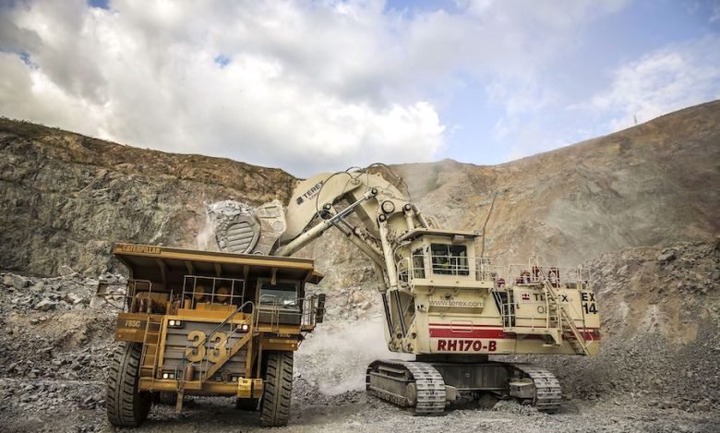
DAR ES SALAAM: Tanzania is set to participate for the first time in the prestigious Mining Indaba in Cape Town, South Africa, marking a significant milestone for the nation’s mining sector. The Ministry of Minerals will team up with the Tanzania Chamber of Minerals for the forthcoming historic event slated for February 5th to 8th, 2024.

Briefing reporters in Dar es Salaam on Thursday, January 25, 2024, Minister of Minerals, Mr. Anthony Mavunde, announced that Tanzania will take part in the event under the theme: “Advancing mining investment to accelerate prosperity.”

According to the minister, Tanzania is heading to the historic event with strategies aimed at diversifying its mining portfolio to attract a broader range of investors, especially for critical and strategic minerals, as well as promoting investment opportunities.

Mr. Mavunde added that the collaboration between the government and the private sector underscores a joint commitment to advancing the prosperity of Tanzania’s mining industry.

On his part, Engineer Philbert Rweyemamu, Chairman of the Tanzania Chamber of Mines, highlighted the collaboration between the government and the private sector as a testimony to their commitment to fostering mutually beneficial outcomes.

Rweyemamu called on all Tanzanians participating in the exhibition to ensure they actively seek investors. “This collaboration aims to empower everyone to benefit from Tanzania’s blessed mineral resources,” he insisted.

The Business Diary magazine is a comprehensive publication that centers around business and economic development news. It covers a wide range of topics including finance, mining, technology, environment, climate finance, and agriculture. With its focus on providing valuable insights and updates, the magazine caters to readers who are interested in staying informed about the latest developments and trends in the business and economic landscape of Zimbabwe.

Continue Reading
Click to comment

Leave a Reply

Your email address will not be published. Required fields are marked *


Mining

Mining, Community and the New CSR Compact in Zimbabwe’s Gold Sector: Better Brands at Penhalonga

Published

on

Mining, Community and the New CSR Compact in Zimbabwe’s Gold Sector: Better Brands at Penhalonga

By Staff Reporter

For much of the past decade, Zimbabwe’s gold mining sector has been defined by paradox — immense mineral wealth alongside deep community mistrust, environmental concerns and contested ownership structures.

In the heart of Penhalonga, a historic gold-mining settlement on the outskirts of Mutare, lies Redwing Mine, a gold-rich site that has been the focal point of controversy, development and  tensions  that have played out publicly and at times controversially.

Yet amid scrutiny and scepticism, Better Brands Mining Limited is increasingly positioning itself as a test case for whether community-centred mining can coexist with commercial extraction in Zimbabwe’s evolving minerals economy.

Better Brands Mining Limited, owned by Mabvuku-Tafara MP Scott Sakupwanya, has been at the forefront of gold mining activities in the area, sparking both praise and criticism from local residents and environmental watchdogs.

Its presence has attracted both criticism and cautious praise, reflecting broader national debates about artisanal mining, environmental management and corporate social responsibility (CSR).

Early perceptions of Better Brands were shaped by allegations of unsafe mining practices, environmental degradation and opaque operations — concerns echoed by civil society groups and environmental watchdogs.

Others hail the company as a champion of development in Mutasa district.

While some of these allegations were later challenged or contextualised by regulators, they underscored a deeper issue: the historical exclusion of communities from decision-making in extractive industries.

Despite some allegations being unfounded, Better Brands company has made significant strides in adhering to corporate social responsibility (CSR) principles, contributing to the growth of local communities.

Over the past two years, however, the company has recalibrated its approach.

“We are seeing development, even if it has not always been in the headlines,” said Clinton Masanga, director of the Penhalonga Youth Development Trust (PYDT). “There is now engagement, planning and visible infrastructure improvement.”

A scathing critique from a local resident painted a dire picture of Better Brands Mining Limited’s operations in Penhalonga.

The company’s CSR programmes have made a tangible impact on Penhalonga residents.

Locals heaped praises on Better Brands for its efforts in driving development, from infrastructure projects to supporting local initiatives. 

One such intervention was the reconstruction of the St Augustine turn-off bridge, a critical piece of local infrastructure that had collapsed and disrupted transport and economic activity. Masanga said the project was facilitated through collaboration between the company, local leadership and the Minister of State for Manicaland, who also serves as area Member of Parliament.

“We had challenges constructing the bridge, but the Minister of State for Manicaland, who is also our Member of Parliament roped in Better Brands Company to assist in the completion of St. Augustine turn-off bridge after it had collapsed.,” Masanga said.

Across Southern Africa, mining companies are increasingly under pressure to demonstrate that CSR is not a public relations exercise, but an integral part of business sustainability.

In Zimbabwe, where mining contributes more than 60 percent of export earnings, this shift is particularly significant.

Better Brands’ recent CSR initiatives — from infrastructure rehabilitation to community consultations on land use — reflect this broader regional trend.

Residents say the company now participates in structured platforms involving miners, local authorities and community representatives.

“We have done meetings with Better Brands Limited trying to solve issues that have been rearing their ugly heads in the community.”

“There is a picture we have been seeing as a community, maybe the approach they used when they began operations in Penhalonga was ill-advised but seeing them in this organised and structured mining residents are applauding them.”

With the Environmental Management Agency (EMA) overseeing its operations, the company is upholding stringent environmental standards.

“There was a bad start with some mining companies here, but things have improved,” said Weston Makoni, chairperson of the Penhalonga Residents Association. “We are seeing dialogue, meetings and a willingness to listen.”

Makoni added that transparency has been key to rebuilding trust.

He praised Better Brands for its newfound willingness to engage with the community, citing regular meetings between company officials and local stakeholders to discuss projects and initiatives.

Regular engagements between the company and residents have helped clarify which areas are designated for mining and which remain reserved for agriculture — a crucial issue in Penhalonga, where subsistence farming remains a primary livelihood.

“Better Brands has had meetings with residents in terms of identifying areas that will be set aside for mining because you will realise that Penhalonga is more of a farming area. Better Brands are really doing their best on developing Penhalonga.”

The Environmental Management Agency (EMA) continues to oversee mining operations in the area, enforcing environmental compliance standards. While environmental concerns persist — as they do across most mining zones in the region — regulators say improved coordination between miners and authorities has reduced unregulated activity.

A local resident, Shadreck Musamba, said the community increasingly views mining as an economic reality that must be managed rather than resisted.

“The world is changing. We no longer have industries in our cities,” Musamba said. “Mining is one of the ways communities like ours can participate in the economy — if it is done responsibly.”

This increased transparency and communication has helped to build trust and foster a sense of cooperation between the company and the community.  

Better Brands’ experience in Penhalonga illustrates both the risks and opportunities of this model.

Their story is neither one of unqualified success nor irredeemable failure. It is, rather, a case study in transition — from extractive dominance to negotiated coexistence.

As the company forges ahead it will be interesting to see how it navigates these complexities while continuing to contribute to the local community. 

In Penhalonga, residents are watching closely. Progress, they say, must remain visible, measurable and sustained.

Analysts say mining companies that fail to secure community buy-in face operational disruptions, reputational damage and regulatory pushback.

Across Southern Africa, countries such as Ghana, Zambia and Tanzania have intensified community-development obligations for mining firms. Zimbabwe’s approach remains less prescriptive but increasingly guided by policy emphasis on devolution, local beneficiation and inclusive growth.

Zimbabwe continues to expand gold output — which according to Fidelity Gold Refinery (FGR), rose to an all-time high of about 46.7 tonnes in 2025, up from 36.48 tonnes in 2024 — the sector’s future may depend less on geology and more on governance.

This growth, is driven by strong global prices, supportive policy, and increased deliveries from artisanal and small-scale miners.

Continue Reading

Mining

Mine Entra 2025: Beyond Extraction as Zimbabwe’s Mining Sector Repositions for Resilience

Published

on

Mine Entra 2025: Beyond Extraction as Zimbabwe’s Mining Sector Repositions for Resilience - the Business Diary

At a time when global mining is being reshaped by energy transition pressures, rising ESG expectations and intensifying competition for capital, Zimbabwe’s mining sector is being forced to rethink its traditional extraction-led model.

The 28th edition of Mine Entra, held in Bulawayo from October 8 to 10, emerged as a critical platform for that recalibration. Organised by the Zimbabwe International Trade Fair (ZITF) Company under the theme “Exploring Resilience and Growth in Mining, Engineering and Transport,” the exhibition attracted more than 250 exhibitors from 12 countries, including South Africa, China, the United Kingdom and Botswana.

More than a trade show, Mine Entra 2025 became a forum for policy dialogue, technology transfer and strategic reflection on how Zimbabwe can retain more value from its mineral wealth.

Beneficiation Takes Centre Stage

A recurring message across conference sessions was the urgent need to move beyond exporting raw minerals.

Economist Stevenson Dhlamini of the National University of Science and Technology said beneficiation dominated discussions, particularly in lithium and platinum group metals (PGMs).

“There was strong emphasis on domestic processing to capture more value within Zimbabwe,” Dhlamini said, noting that some lithium producers are targeting lithium sulfate exports by the end of 2025, while PGM producers are expanding local smelting capacity.

He said said the conference sessions, particularly the Afrexicon proceedings, provided rich insights into trends shaping the mining landscape.

“A primary lesson was the need to move beyond exporting raw minerals. There was strong emphasis on domestic processing to capture more value within Zimbabwe,” said Dhlamini.

Dhlamini said sustainability and Environmental, Social, and Governance (ESG) principles emerged as central themes, with increasing calls for environmentally responsible mining, community engagement, and ethical practices.

Dhlamini added that the expanded Buyers’ Program played a pivotal role in linking major mining houses with local suppliers, creating opportunities for small and medium enterprises (SMEs) in engineering, logistics, and safety.

“The strong attendance of both local and international stakeholders underscored the importance of partnerships and investment in building a resilient and competitive mining sector,” he said.

The push mirrors broader African policy trends. The African Union’s Africa Mining Vision advocates for mineral beneficiation as a pathway to industrialisation, job creation and export diversification. Countries such as Namibia and Botswana have demonstrated how local processing can significantly increase mining’s contribution to GDP.

Technology, ESG and Industry 4.0

Mine Entra also highlighted Zimbabwe’s gradual shift toward digitalisation, automation and artificial intelligence in mining operations. Exhibitors showcased technologies aimed at improving safety, productivity and cost efficiency—critical in a sector grappling with power shortages and rising input costs.

Bulawayo-based economic analyst Reginald Shoko said the expo reinforced the need for innovation-driven mining and the need for the mining industry to evolve beyond traditional extraction models towards a more innovative and sustainable approach.

“The key insights emphasised moving beyond extraction to focus on sustainability, innovation and measurable business outcomes,” Shoko said.

It highlighted the critical role of green technologies, ESG principles, and digital transformation in shaping the sector’s future.

“It also served as a vital platform for forging global connections and partnerships, with a strong focus on linking mining houses with suppliers through its Buyers’ Programme to unlock investment and drive innovation,” said Shoko.

According to PwC’s global mining outlook, access to capital is increasingly tied to credible ESG performance, particularly for projects linked to battery minerals and the energy transition.

SMEs, Supply Chains and Local Participation

Dhlamini added that the expanded Buyers’ Program played a pivotal role in linking major mining houses with local suppliers, creating opportunities for small and medium enterprises (SMEs) in engineering, logistics, and safety.

“The strong attendance of both local and international stakeholders underscored the importance of partnerships and investment in building a resilient and competitive mining sector,” he said.

However, participation challenges remain.

Dosman Mangisi, Secretary-General of the Junior Chamber of Mines Zimbabwe, said while exhibitor numbers were strong, local visitor turnout—particularly from small-scale miners—was lower than expected.

“Costs remain a challenge, especially for small-scale miners who are not frequent participants in such platforms,” Mangisi said.

“However, the event still had a significant impact in terms of showcasing new technologies that the mining sector should embrace to reduce the cost of doing business.”

The issue underscores a broader structural challenge: how to integrate artisanal and small-scale miners into formal value chains without excluding them through cost barriers.

Energy Transition and Power Security

Energy security emerged as another focal point. With electricity shortages constraining beneficiation efforts, stakeholders explored renewable energy investments, particularly solar, to support mining operations.

Across Southern Africa, mining companies are increasingly investing in captive renewable power to stabilise production and reduce carbon footprints. Zimbabwe’s lithium and PGM sectors, both energy-intensive, are expected to be early adopters.

Bulawayo’s Industrial Relevance

Hosting Mine Entra in Bulawayo reinforced the city’s historical role as an industrial hub.

ZITF Marketing and Corporate Communications Manager Thandolwenkosi Nkomo said the platform remains vital for policy engagement and business linkages.

“The positive feedback from exhibitors indicates the platform is valuable and worthy of investment,” Nkomo said.

Strategic Implications

As mineral prices remain volatile and global competition intensifies, Zimbabwe’s mining future will depend on its ability to move up the value chain, adopt technology and align with ESG expectations.

Mine Entra 2025 made one thing clear: resilience in mining will not come from digging deeper, but from thinking smarter.

Continue Reading

Mining

Gold price falls on diminished hope of US Fed rate cut

Published

on

Gold price falls on diminished hope of US Fed rate cut

Gold prices slipped on Monday as hopes for early interest rate cuts this year dampened, while focus shifted to the US Federal Reserve policy meeting and US nonfarm payrolls data due this week for further clarity on monetary policy.

Spot gold fell 0.5% to $2,327.09/oz by 3.34am GMT. US gold futures were down 0.4% at $2,338.30/oz.

“Short term, gold is facing some challenges given the likely delayed timeline for rate cuts. However if gold can remain in the $2200-$2350 range, the precious metal will be well positioned to capitalise on any potential downturn in US macro data in coming quarters,” Tim Waterer, chief market analyst at KCM Trade said.

The Federal Reserve’s policy meeting from April 30-May 1 and the non-farm payrolls data due on Friday are key for markets this week. The Fed is seen holding its benchmark interest rate steady at 5.25%-to-5.5% at this meeting.

“If we happen to hear a hawkish tilt from [US Fed chair] Jerome Powell this week, combined with another solid jobs print, gold could be facing a Test of some key support levels on the downside,” Waterer said.

Investors are now pricing in a single rate cut this year and see it coming in November, according to the CME’s FedWatch tool after a batch of sticky US inflation data and hawkish rhetoric from Fed officials including Powell.

Higher rates reduce the appeal of holding nonyielding gold.

“A seasonal pullback in regional demand is probable into mid-2024, but a structurally stronger consumption trend via the retail and PBoC (People’s Bank of China) channel is supportive of a higher gold price floor, boosting the base case for $3,000/oz gold over the next 12-15 months,” Citi research wrote in a note, adding that CNY devaluation fears may enhance local buying.

Spot silver rose 0.3% to $27.24/oz, spot platinum was up 0.5% to $919.95/oz and palladium gained 0.1% to $954.94/oz.

Continue Reading

Trending