Connect with us

Business

Meet French billionaire, Vincent Bollore, bidding $2.5 billion to acquire Africa’s Multichoice

Published

on

Meet French billionaire, Vincent Bollore, bidding $2.5 billion to acquire Africa’s Multichoice
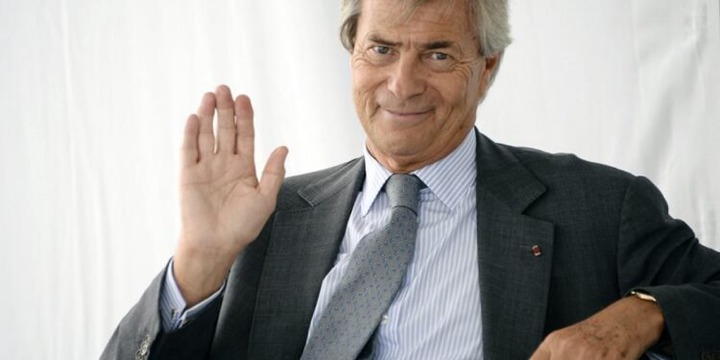
On Thursday, Vivendi SE’s Canal+ proposed to acquire the remaining shares of MultiChoice Group, the South African pay-TV company, in a deal valued at 46 billion rand ($2.5 billion).  

The Paris-based Canal+, led by French billionaire Vincent Bollore, who already holds a significant 31.7% stake in MultiChoice, offered 105 rand per share in cash, representing a 40% premium to the company’s recent closing price.  

The acquisition aligns with Vivendi’s strategy to merge Canal+’s local operations with MultiChoice, creating a conglomerate with close to 50 million subscribers. 

MultiChoice, founded in South Africa in 1985, expanded across Africa in the 1990s, offering packages featuring live English football matches and local content.  

As the owner of Showmax, a streaming service competing with Netflix in the region, MultiChoice has tapped into Africa’s rapidly growing entertainment market. Canal+’s bid reflects Bollore’s aim to capitalize on this trend, strengthening the new group’s position in local content and sports. 

To understand Bollore’s motivations behind this acquisition, exploring his history of company acquisitions and wealth accumulation provides valuable insights into his strategic vision for MultiChoice. 

Background 
Vincent Bolloré, born in Boulogne-Billancourt, embarked on his journey as a corporate raider in France. His academic pursuits led him to the Lycée Janson-de-Sailly, and later, he earned a business degree from Université Paris X Nanterre. Bolloré initiated his career as an investment bank trainee at Edmond de Rothschild. 

  •  Beginning with the family-controlled conglomerate Bolloré, engaged in maritime freight, African trade, and paper manufacturing, he showcased his prowess in strategic investments. 
  •  This extended to media ventures, including the launch of the Direct 8 television station in 2005. Recognized for leveraging large stakes in companies, Bolloré entered power struggles, notably with companies like Bouygues and Ubisoft, yielding substantial capital gains.  
  • In 2005, he took charge of advertising group Havas, becoming its predominant shareholder. Bolloré further diversified his media holdings with the introduction of the Direct Soir newspaper. His investment group’s penetration into Africa established him as a key player in the economies of former French colonies such as Ivory Coast, Gabon, Cameroon, and Congo. 

Despite his triumphs, Bolloré faced legal challenges in 2018, experiencing custody and subsequent indictment on corruption-related charges linked to political consulting and port concessions in Togo and Guinea. His journey reflects a dynamic career marked by strategic investments, power struggles, and a significant impact on both French and African business landscapes. 

Vincent Bollore’s fortune 

Vincent Bolloré, the former chairman of Bollore Group, presided over a French conglomerate and is worth $9.53 billion according to Bloomberg Index. 

 The group, headquartered in Puteaux, boasts diverse investments, including a substantial stake in the media and entertainment entity Vivendi and ownership of internet service provider Wifirst.  

  • The crux of Bolloré’s wealth lies in his controlling interest in Financiere Odet, the publicly traded holding company overseeing Bollore Group.  
  • Approximately 87% of Financiere Odet is under the billionaire’s ownership, as indicated by a comprehensive analysis of his holding structure and the 2022 annual report.  
  • Within the media landscape, Bolloré’s family conglomerate takes the lead as the primary shareholder in Vivendi, holding a significant 29.5% stake.  
  • Vivendi encompasses prominent entities like French pay TV leader Canal+, advertising giant Havas, publisher Prisma Media, and mobile games firm Gameloft.  
  • Notably, Vivendi recently secured EU regulatory approval for its acquisition of French media group Lagardère, positioning itself strategically in key markets such as France, the U.K., Spain, and the U.S.  

To gain antitrust approval, Vivendi made divestitures, including the sale of its publishing group Editis and Gala magazine from Prisma Media. This move enhances Vivendi’s foothold in crucial markets. The listed company anticipates reaching an annual revenue of around $18 billion (€17 billion) this year, building upon its 2022 performance.  

Bolloré, currently holding 18% of Universal Music Group shares, maintains an active role in navigating the intricate landscape of investments and acquisitions, showcasing his adept leadership in the ever-evolving business terrain. 

The Business Diary magazine is a comprehensive publication that centers around business and economic development news. It covers a wide range of topics including finance, mining, technology, environment, climate finance, and agriculture. With its focus on providing valuable insights and updates, the magazine caters to readers who are interested in staying informed about the latest developments and trends in the business and economic landscape of Zimbabwe.

Continue Reading
Click to comment

Leave a Reply

Your email address will not be published. Required fields are marked *


Business

Broadening the Base : Why Zimbabwe’s SME Strategy Could Define Fiscal Sustainability

Published

on

Broadening the Base : Why Zimbabwe’s SME Strategy Could Define Fiscal Sustainability

By Staff Reporter

For decades, tax authorities across Southern Africa have grappled with the same paradox: economies dominated by small and medium enterprises (SMEs) that generate substantial economic value, yet contribute disproportionately little to national tax revenues.

In Zimbabwe, where informal and small-scale businesses now account for more than 60 percent of gross domestic product, that challenge has moved to the centre of fiscal policy — and with the 2026 National Budget, government is signalling a decisive shift in how it intends to close the gap.

At the heart of this strategy is a clear directive to the Zimbabwe Revenue Authority (ZIMRA): make tax compliance simpler, fairer and more accessible for SMEs — not as a concession, but as a growth strategy.

Government has directed the ZIMRA to develop tailored, simplified strategies to bring small businesses and start-ups into the tax net in a bid to widen the tax base and meet ambitious revenue targets.

The policy push comes as Treasury sets its sights on US$7.57 billion in revenue for 2026, up from about US$6.2 billion previously, amid tightening fiscal conditions and rising demand for public services.

The medium-term revenue target stands at US$7.2 billion by end-2025, underscoring the urgency of broadening the tax base rather than increasing the burden on existing compliant taxpayers an uphill battle as a significant portion of economic activity remains outside the tax net.

Deputy Minister of Finance, Mr Kudakwashe Mnangagwa, framed SME compliance as both an economic and civic imperative and urged ZIMRA to widen the tax base and include the SME sector which accounts for more than 60% of Gross Domestic Product.

He said every tax payment is an act of patriotism, essential for national development in line with Vision 2030.

“ZIMRA must develop sector-specific strategies to bring start-ups, macro-operators, and small to medium enterprises into voluntary compliance and compliance must be fair, simple and enabling, never a barrier to innovation or enterprise,” Mr Mnangagwa said during the recent ZIMRA Taxpayer Appreciation Awards

“Taxes should create space for businesses to thrive, start-ups to grow and creativity to flourish.”

His remarks echo a growing regional consensus that coercive enforcement alone cannot sustainably integrate informal businesses into the tax system.

Zimbabwe’s SME sector has grown rapidly over the past decade, driven by de-industrialisation, demographic pressure and the expansion of informal trade.

According to the 2022 FinScope SME Survey, the sector contributes an estimated US$8.2 billion to National GDP, making it one of the most significant engines of economic activity.

Yet much of that value remains outside the formal tax net.

With more than 70 percent of the economy operating informally and largely cash-based, collecting value-added tax (VAT), corporate income tax and presumptive levies has proven increasingly difficult.

Weak record-keeping, limited digital access and mistrust of tax authorities have compounded the challenge.

Mr Mnangagwa condemned smuggling activities and tax evasion saying it undermined the country’s development.

Reports indicate that rampant tax evasion and widespread smuggling are crippling Zimbabwe’s revenue collection efforts, costing the nation millions of United States dollars annually and directly threatening the funding of critical public services, officials have warned.

According to official statistics, the government continues to lose vast sums to smuggling, tax fraud, under-invoicing and other illicit financial activities.

Some registered businesses fail to use or tamper with fiscalised electronic registers to underreport sales and avoid paying the correct amount of VAT.

Alongside reform, government has intensified its messaging on the costs of non-compliance. Smuggling, under-invoicing and tax fraud continue to drain public resources, costing the country millions of US dollars annually, according to official estimates.

Mnangagwa was blunt in his assessment, “Compliance is more than law, it is a moral commitment to our communities and future generations.”

“Every act of smuggling, evasion or corruption steals from our children, our communities and our future,” he said.

He linked revenue leakage directly to service delivery gaps, arguing that undeclared goods and falsified returns deprive hospitals of medicines, schools of textbooks and communities of infrastructure.

The challenge is not unique to Zimbabwe. The African Development Bank estimates that illicit financial flows cost the continent over US$80 billion annually, undermining development and investor confidence.

ZIMRA Chairperson, Mr Anthony Mandiwanza, said the authority is recalibrating its approach, balancing revenue mobilisation with practical support for taxpayers, making compliance simpler, especially for small and medium enterprises (SMEs) and start-ups.

Mr Mandiwanza said ZIMRA is pursuing a dual strategy anchored on aggressively expanding revenue collection while making compliance more accessible.

“In the spirit of leaving no one and no place behind, we are also taking services directly to citizens through mobile units, digital platforms, and kiosks at all regional offices,” he said.

“These initiatives are designed to address structural barriers faced by SMEs, including limited internet access, lack of digital literacy and high compliance costs relative to business size,” he said.

He said the push for “sector-specific strategies” and the expansion of mobile and digital tax services are designed to bring more players into the formal system voluntarily.

ZIMRA’s strategy aligns with international best practice. Across Africa, revenue authorities are increasingly adopting “facilitative compliance” models — simplifying registration, reducing filing frequency for small firms and offering education before penalties.

The Kenya Revenue Authority, for example, has rolled out mobile tax clinics and simplified turnover taxes for micro-enterprises, while South Africa’s SARS operates a graduated compliance framework for small businesses. Zimbabwe’s reforms suggest a similar trajectory.

Treasury’s revenue targets reflect growing confidence in macroeconomic stability, particularly following improved inflation control and currency management under the Zimbabwe Gold (ZiG) regime.

But analysts warn that targets of this scale cannot be met without tapping into the informal economy.

Economists note that Zimbabwe’s tax-to-GDP ratio, while improving, remains constrained by narrow compliance.

“Broadening the base is more sustainable than raising rates,” said one Harare-based fiscal analyst. “You cannot keep taxing the same formal firms harder while the majority of economic activity sits outside the system.”

Government’s SME support programmes strengthen this argument.

Treasury officials argue that formalisation and tax compliance should increasingly be tied to access to finance, markets and government support — a model used successfully in countries such as Rwanda and Mauritius.

In 2023, the government disbursed US$5,3 billion to support small and medium scale enterprises last year using the Small and Medium Enterprises Development Corporation, the Zimbabwe Women Microfinance Bank, the Zimbabwe Community Development Fund and the Women Development Fund.

Across Southern Africa, fiscal pressures are intensifying. Slower global growth, climate-related shocks and rising debt servicing costs have forced governments to seek more reliable domestic revenue streams.

Zimbabwe’s strategy reflects this regional reality. By focusing on SMEs — the most dynamic yet under-taxed segment of the economy — authorities are attempting to align revenue mobilisation with inclusive growth.

The 2026 Budget reinforces this logic by avoiding aggressive new taxes and instead focusing on compliance efficiency, digitalisation and behavioural change.

The push to ease SME compliance is not about lowering standards, but about widening opportunity. In an economy where small businesses are no longer peripheral but central, fiscal systems must adapt.

As the 2026 Budget takes effect, Zimbabwe’s revenue strategy sends a clear message: growth, compliance and development are not competing goals — they are mutually reinforcing.

The success of ZIMRA’s reforms will ultimately depend on execution. Simplification must be real, not rhetorical. Digital platforms must work reliably. Enforcement must remain firm but fair.

If successful, Zimbabwe could offer a regional case study in how to transition from a narrow, enforcement-heavy tax system to one built on participation and trust.

Continue Reading

Business

Meet World’s Richest Family Who live In $478m House, Own 700 Cars

Published

on

Meet World’s Richest Family Who live In $478m House, Own 700 Cars

According to The Jerusalem Post, the Nahyan royal family of the United Arab Emirates is a dominant corporate and political force in the Gulf area, as well as one of the world’s wealthiest families.

Their net worth is greater than the combined wealth of Microsoft founder Bill Gates and Amazon founder Jeff Bezos.

Sheikh Mohammed bin Zayed Al Nahyan, the head of the Nahyan family, is the UAE’s President and the ruler of Abu Dhabi.

He has 18 brothers, 11 sisters, nine children, and eighteen grandchildren. All of the family members reside together in the “Qasr Al-Watan,” a massive edifice spanning 380,000 square meters and valued at $478 million.

The family’s real estate holdings comprises opulent houses and developments both in the UAE and abroad.

They own eight aircraft, including one Airbus A320-200 and three Boeing 787-9s. Sheikh Mohammed’s personal collection includes a $478 million Boeing 747 and a $176 million Boeing 787.

In addition, they have three of the world’s largest yachts.

Their car collection is nothing short of astounding. According to reports, their vehicles are split out over four museums in the UAE and Morocco. The family owns more than 700 cars, including Ferraris and Lamborghinis.

The family owns 81% of the City Football Group, which includes football clubs like Manchester City, Mumbai City, Melbourne City, and New York City.

Continue Reading

Business

Want to work at Meta? Average salary package in Mark Zuckerberg’s company is…

Published

on

Want to work at Meta. Average salary package in Mark Zuckerberg's company is

Big companies often get highlighted for the huge compensations that they offer and the perks one gets while working for them. Meta’s average package is a whopping $379,000, according to a recent SEC filing. The company, which employs around 67,000 people, said that its median employee made over $379,000 in the year 2023.

Meta’s CEO Mark Zuckerberg testifies during the Senate Judiciary Committee hearing at the US Capitol, in Washington, US. (Reuters)

The average pay for a tech position falls between $35,000 to $120,000 depending on the role, but Meta’s pay is significantly higher than that. However, giants like Google and Amazon offer packages that go well above $300,000 for similar positions.

Unlock exclusive access to the latest news on India’s general elections, only on the HT App. Download Now!

Also, higher-level software engineers and researchers in Meta make more in base pay than product designers and user experience professionals in the company.

What Mark Zuckerberg said on working at Meta?

CEO Mark Zuckerberg said earlier this year that working at Meta is not easy even if it offers such lucrative packages. He said that the year 2024 will be the “year of efficiency” in the company as he expects employees to maximize output and productivity.

How much does Mark Zuckerberg earn?

In the year 2023, Mark Zuckerberg noted a total compensation of $24.4 million in ‘other compensation,’ and a base salary of $1. According to Fortune, this covered his costs related to his private jet. His wealth has increased by over $47 billion this year alone, despite receiving a nominal salary of $1 since 2013.

As per reports, the company’s net profit in the January to March period rose to $12.4 billion with total revenue up by 27 percent, at $36.5 billion.

The company wrote in a filing, “We believe that Mr. Zuckerberg’s role puts him in a unique position: he is synonymous with Meta and, as a result, negative sentiment regarding our company is directly associated with, and often transferred to, Mr. Zuckerberg. Mr. Zuckerberg is one of the most-recognized executives in the world, in large part as a result of the size of our user base and our continued exposure to global media, legislative, and regulatory attention.”

Continue Reading

Trending