Connect with us

Technology & Telecommunications

Liquid C2 partners with Google Cloud and Anthropic to bring advanced cloud, cyber security and generative AI capabilities to Africa

Published

on

Liquid C2 partners with Google Cloud and Anthropic to bring advanced cloud, cyber security and generative AI capabilities to Africa

Liquid C2, a business of Cassava Technologies, a pan-African technology group, today announced collaborations with global technology leader Google Cloud and artificial intelligence (AI) company Anthropic to deliver advanced cloud, cyber security solutions, and generative AI (gen AI) capabilities to African businesses across the continent.

Building on the November 2023 signature of a Memorandum of Understanding (MOU) for a collaboration with Google Cloud in Africa, Liquid C2 is set to improve cyber security and cloud offerings across the continent while introducing them to Google Cloud’s latest AI, data, collaboration, and security solutions. Customers of Liquid C2 can expect heightened security measures, access to advanced cloud technologies, and a commitment to securing their digital assets.

Liquid C2 is set to be one of Google Cloud’s largest Managed Security Service Providers (MSSPs) in Africa, combining Google Cloud’s leading security solutions with Liquid C2’s expertise and vision in offering comprehensive security consulting. In addition, the collaboration enables Liquid C2 to bring the capabilities of both Google Cloud and Anthropic’s AI models to its customers via Google Cloud’s Vertex AI platform1, helping businesses develop and deploy solutions quickly within their cloud environments.

As a strategic partner of Google Cloud’s innovative solutions in Africa, Liquid C2 will also deliver Google Workspace to customers across the continent. Designed to facilitate team connections in a cloud-native environment, Google Workspace also features embedded generative AI tools to help employees create content and achieve greater productivity and collaboration in the workplace.

By fortifying cyber security measures and infusing gen AI capabilities, Liquid C2 envisions a future where security, collaboration, and innovation go hand-in-hand, creating a safer, more productive digital experience for all. As Africa continues to emerge as a hub for technological advancements, collaboration between leading companies like Liquid C2, Google Cloud, and Anthropic play a crucial role in driving progress, fostering innovation, and attracting global investment.

In a separate but related development, Liquid C2 is also working directly with Anthropic, one of the largest and fastest-growing AI companies globally, to develop AI solutions for large enterprises that want to use it to improve productivity and revenue growth. Anthropic has a strategic partnership with Google Cloud, and Claude – Anthropic’s family of foundational AI models that excel at thoughtful dialogue, content creation, complex reasoning, creativity, and coding – is available in Google Cloud’s Vertex AI.

Liquid C2’s partnership with Anthropic signifies a shared commitment to empowering businesses in Africa with state-of-the-art AI solutions. By integrating AI models and services across various industries, Liquid C2 and Anthropic aim to accelerate growth for clients, further positioning Africa as a global player in the digital landscape. The collaboration presents opportunities to apply gen AI to African businesses irrespective of the industry or organisation size.

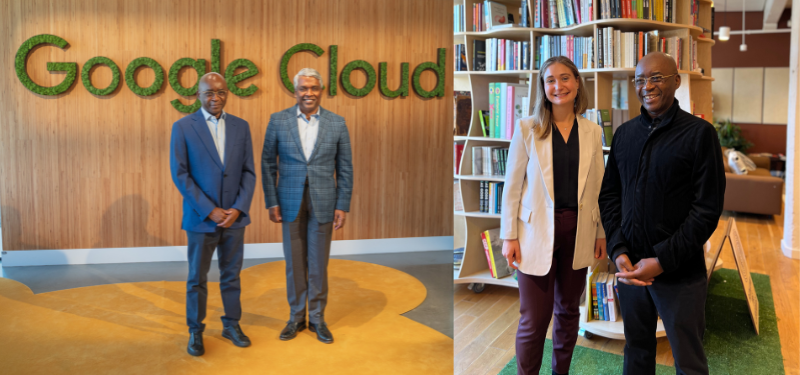
Thomas Kurian, CEO of Google Cloud said, “Businesses are increasingly turning to generative AI to drive operational efficiencies, improve the customer experience, and empower their employees like never before. Building on Google’s commitment to investing $1 billion to boost Africa’s digital transformation, our collaborations with market leaders like Liquid C2 and Anthropic will help bring gen AI, security, and other cloud technologies to businesses across the continent. This partnership has the opportunity to transform how African businesses serve and engage their customers as we provide them a foundation for innovation.”

Currently, more than 80% of the largest businesses and organisations operating in more than      31 African countries use a broad spectrum of advanced digital technologies from Liquid supplied by global vendors. Many are keenly interested in moving AI readiness. Liquid C2 will remain a multi-vendor provider, offering its customers best-in-class solutions.

Commenting on the collaboration, Strive Masiyiwa, Co-Founder and Executive Chairman of Cassava Technologies, said, “Our collaborations with Google Cloud and Anthropic signify a significant step change in our journey as Africa’s leading cloud and cyber security provider.      We recognise the importance of responsible AI in enabling access to economic opportunities and empowering individuals and businesses across the continent. Our partnerships with these two leading technology firms will help us deliver      AI-powered solutions that address the unique challenges and opportunities in      Africa’s digital transformation journey. Together, we are setting new benchmarks for these solutions that cater to the complex needs of a diverse clientele.”

Daniela Amodei, President of Anthropic, said: “We’re excited to partner with Liquid C2 and Google Cloud, bringing frontier AI to businesses across Africa. Combining Anthropic’s safe, steerable AI with Google Cloud’s secure, scalable infrastructure means this partnership has huge potential to enable African companies to grow.”


The Business Diary magazine is a comprehensive publication that centers around business and economic development news. It covers a wide range of topics including finance, mining, technology, environment, climate finance, and agriculture. With its focus on providing valuable insights and updates, the magazine caters to readers who are interested in staying informed about the latest developments and trends in the business and economic landscape of Zimbabwe.

Technology & Telecommunications

Econet Offers Smartphones From US$0.85 a Day as It Plans to Switch Off 3G

Econet Wireless Zimbabwe has launched smartphone payment plans from US$0.85 a day to move customers off older handsets before it switches off its 3G network in December 2027. Its AI subsidiary, Econet AI, has also upgraded its Shona language model, claiming it now handles 80 percent of customer queries.

Published

on

Econet Launches US$0.85-a-Day Smartphone Plans as 3G Switch-Off Looms

HARARE – Econet Wireless Zimbabwe has launched new smartphone payment plans that start at US$0.85 a day, as it presses customers on 2G and 3G handsets to move to 4G and 5G devices. The announcement was reported on 24 November 2026.

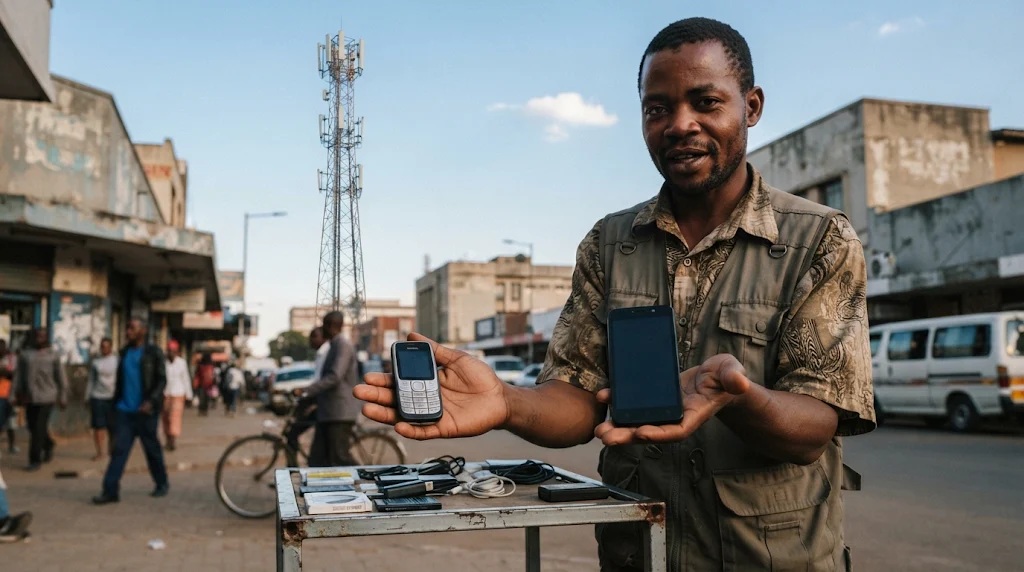
The campaign targets customers who use older phones, commonly known in Zimbabwe as tumbudzi, ahead of plans to switch off the 3G network by the end of December 2027. Econet chief executive Douglas Mboweni has said 3G will be retired first and 2G gradually later. A phone that supports only 3G will lose access to Econet’s mobile data services once the switch-off takes place.

In a separate development, Econet AI, a wholly owned subsidiary, launched Shona 2.0 on 11 November. The model powers Yamurai, the group’s customer-support chatbot. Econet says it can now understand and answer 80 percent of customer queries in Shona. It also understands customers who mix Shona and English, a common way of speaking in Zimbabwe. Billionaires Africa noted that Econet has not published independent testing or a methodology for the 80 percent figure.

Background

Econet is Zimbabwe’s largest mobile operator, with over 12.4 million active subscribers, according to the sector regulator POTRAZ. The company reported revenue of US$1.104 billion for the year ended February 2026, up 23 percent, according to Equity Axis. In July it said it would invest more than US$200 million to expand capacity and that more than three million of its subscribers use handsets too old to support many digital services. It operates more than 7,000 base stations across 2G, 3G, 4G and 5G.

The new plans follow earlier attempts to lower the cost of upgrading. In July 2025 Econet extended its Kancane Kancane credit scheme to 24 months with no deposit, with monthly instalments starting at US$3.28 depending on the device. POTRAZ data showed smartphone penetration at 55 percent in 2024, though Econet’s own annual report cites a higher figure and the two measures may differ.

Econet AI was launched as a standalone unit in April. It works with Cassava AI, the artificial intelligence arm of Cassava Technologies. Yamurai was reported in an earlier launch to handle more than 70 percent of customer enquiries. Econet said Ndebele 1.0 was launched last month and that Ndebele 2.0 is targeted for release before the end of November. The company is also training the Shona model on six dialects.

EcoAI Tokens

Econet also sells EcoAI Tokens, an aggregator that gives access to ChatGPT, Gemini, Claude and Mistral. Customers can pay with airtime or EcoCash. Techzim reported prices of 10 cents a day, 70 cents a week and US$3 a month when the product launched in August. Econet’s website lists a 90-day promotion giving eligible customers 3,000 free tokens a day.

Business Diary Analysis

The two announcements serve the same purpose. Econet cannot sell digital services, from mobile money to AI, to customers who cannot use them on their phones. The 3G switch-off gives the company a commercial reason to speed up device upgrades, and it releases spectrum for 4G and 5G. In effect, the operator is financing the handsets its future revenue depends on.

The headline daily price needs careful reading. Daily payments of US$0.85 add up to about US$25 a month, which is a large share of income for households near the poverty line, and the total cost depends on the repayment period and any interest. For comparison, the GSMA reports that Safaricom’s Lipa Mdogo Mdogo scheme in Kenya has financed more than two million 4G phones from about US$0.15 a day, although device types and markets differ. Default rates and the treatment of customers who miss payments will matter.

The AI strategy carries a different risk. Local-language models are a genuine differentiator in a market where most customers speak Shona or Ndebele, and a chatbot that resolves routine queries can lower support costs. The 80 percent claim, however, rests on the company’s own measure of comprehension. Techzim’s test of the EcoAI Token entry bundle found it ran out after two messages, and the product competes with free tiers offered by the AI providers themselves. The company reported 21 percent revenue growth for the half-year to August 2026 and credits AI adoption in part, but the figures do not show how much comes from consumer AI products.

Conclusion

Econet is using finance and language technology to widen the base of customers who can use its newer services. The 2027 deadline gives the device push a fixed timetable. The results will depend on how many customers take up the plans, whether they keep up payments, and whether the AI products show measurable savings or revenue.

What’s Next?

Watch for the full terms of the US$0.85 plans and any regulatory statement on the 3G switch-off. Also watch for the Ndebele 2.0 release and for Econet’s disclosure of how many smartphones it has financed.

Continue Reading

Technology & Telecommunications

Cassava’s Cape Town AI Factory Reaches Full Capacity as Demand for Computing Surges

Cassava Technologies’ Cape Town AI factory has reached full capacity with more than 2,000 Nvidia GPUs, signalling growing demand for AI computing across Africa.

Published

on

Cassava Technologies Seeks US$1 Billion to Expand AI Infrastructure Across Africa

CAPE TOWN – Cassava Technologies’ artificial intelligence factory in Cape Town has reached full capacity, marking a major milestone in the Zimbabwe-founded group’s ambitions to build a continental AI computing network.

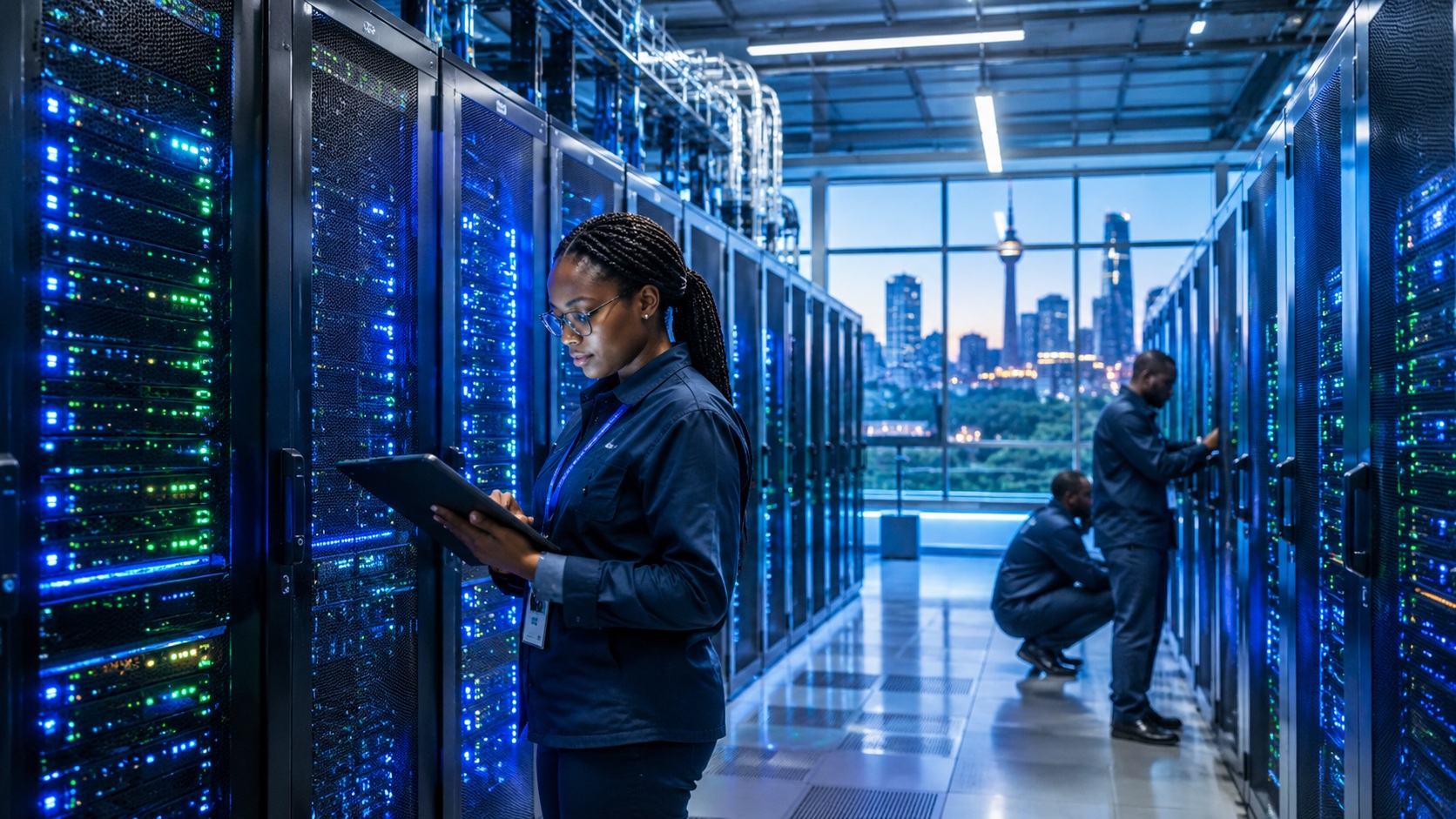
The facility, which operates with more than 2,000 Nvidia graphics processing units (GPUs), is running at full utilisation, according to Africa Data Centres chief executive Boyd Chislett, who disclosed the milestone on November 23.

Chislett said the 3-megawatt facility had reached full capacity on November 1, reflecting the demand Cassava has experienced for its AI computing services.

The milestone strengthens the commercial case for Cassava’s investment in specialised computing infrastructure as African businesses increasingly move from experimenting with artificial intelligence to deploying applications within their operations.

AI investment moves beyond experimentation

Cassava’s Cape Town facility provides computing capacity for businesses seeking to develop, train and run artificial intelligence models without having to rely entirely on infrastructure located outside Africa.

The demand is emerging as organisations explore AI applications in customer service, financial services, automation, data analysis, software development and business operations.

Vinay Hiralall, chief commercial officer of Cassava’s Liquid C2 business, said enterprise demand for AI services had accelerated over the past six months.

He indicated that AI-related work now accounted for approximately one in three deals being handled by the business, as companies shifted from testing AI tools towards implementation.

The change suggests that businesses are increasingly looking beyond AI demonstrations towards practical applications capable of improving productivity, automating workflows and supporting decision-making.

However, adoption remains uneven, with organisations still working to identify commercially viable use cases and understand how AI can be integrated into existing operations.

Cassava targets continental expansion

The Cape Town facility is part of Cassava Technologies’ broader plan to deploy approximately 12,000 Nvidia GPUs across African markets.

The group has identified South Africa, Egypt, Kenya, Nigeria and Morocco as strategic markets for its AI infrastructure expansion.

The investment programme is expected to combine specialised computing hardware with the company’s existing fibre networks, cloud services and data-centre operations.

Cassava’s infrastructure businesses include Liquid Intelligent Technologies, Liquid C2 and Africa Data Centres, giving the group an established connectivity and hosting platform on which to build its AI services.

The strategy is to provide businesses and institutions with access to computing capacity closer to their markets, potentially improving access, reducing latency and supporting data-governance requirements.

Capacity constraints raise expansion questions

The Cape Town facility’s full utilisation presents an opportunity for Cassava but also raises questions about how quickly the company can add capacity to meet demand.

AI infrastructure requires significant capital investment in GPUs, data-centre buildings, electricity, cooling systems, fibre connectivity and specialised technical skills.

Unlike conventional data-centre infrastructure, AI facilities are designed to support high-density computing workloads that place substantial demands on power and cooling systems.

Cassava is pursuing further expansion, including plans for additional AI facilities in Johannesburg and other African markets. The scale and timing of further deployments will depend on customer demand, financing, infrastructure availability and the economics of operating GPU-intensive facilities.

The company is also seeking up to US$1 billion from investors in the United States and Middle East to support its wider AI infrastructure expansion, according to Bloomberg. The fundraising remains under discussion and has not been confirmed as secured capital.

Our Analysis

Cassava’s Cape Town milestone is significant because it provides an indication that demand for AI computing capacity in Africa is beginning to translate into infrastructure utilisation.

The distinction matters. Building AI data centres requires substantial upfront capital, but commercial sustainability depends on customers using the infrastructure and generating recurring revenue sufficient to cover operating and financing costs.

Full capacity at the Cape Town facility strengthens the case for further investment, although utilisation alone does not establish profitability, pricing strength or the long-term returns on the project.

For Zimbabwe, the development is relevant because AI computing infrastructure is becoming a regional economic asset rather than simply a technology-sector investment.

Zimbabwean companies could potentially access AI computing services through Cassava’s regional network, enabling businesses to deploy data-intensive applications without investing in their own expensive GPU infrastructure.

Potential applications include financial modelling, customer analytics, agricultural forecasting, manufacturing optimisation, document processing, software development and business automation.

The opportunity, however, will depend on affordability, connectivity, data protection, skills and whether AI applications deliver measurable productivity gains.

Cassava’s expansion could also strengthen regional technology ecosystems by supporting developers, software companies, universities, research institutions and enterprises that require advanced computing resources.

The longer-term strategic question is whether Africa can build enough infrastructure to support AI adoption while ensuring that the facilities are commercially viable, energy-efficient and accessible to businesses beyond large corporations.

Whats next?

Cassava’s immediate challenge is expanding computing capacity as demand grows and its existing infrastructure reaches utilisation limits.

The company is pursuing a wider continental GPU deployment programme, while its proposed US$1 billion fundraising could provide additional capital for processors, data centres and supporting network infrastructure if successfully completed.

The pace of expansion will be closely tied to the ability to secure financing, reliable electricity, suitable facilities and customers willing to commit to AI computing services.

Cape Town’s full-capacity milestone gives Cassava a stronger commercial argument for expansion. But the next measure of success will be whether the group can replicate that demand across multiple markets while converting infrastructure investment into sustainable returns.

Africa’s AI race is increasingly moving from announcements to computing capacity. Cassava’s challenge now is to scale that capacity without losing sight of the economics.

Continue Reading

Technology & Telecommunications

Cassava Technologies Seeks US$1 Billion to Expand AI Infrastructure Across Africa

Strive Masiyiwa’s pan-African technology group is negotiating with US and Middle Eastern investors to finance Nvidia chips and expand AI computing, data-centre and fibre infrastructure across African markets.

Published

on

Cassava Technologies Seeks US$1 Billion to Expand AI Infrastructure Across Africa

HARARE – Cassava Technologies, the pan-African digital infrastructure group founded by Zimbabwean entrepreneur Strive Masiyiwa, is seeking to raise up to US$1 billion to expand its artificial intelligence infrastructure across the continent.

The proposed capital raise would primarily finance the acquisition of Nvidia graphics processing units (GPUs) for AI data centres, alongside upgrades to the company’s fibre-optic networks and data-centre infrastructure.

According to Bloomberg, Cassava is in discussions with prospective investors in the United States and Middle East. The negotiations remain ongoing, and there is no guarantee that the fundraising will be completed.

The company declined to comment on the reported financing discussions.

The fundraising would support Cassava’s ambitions to expand access to advanced computing infrastructure as African businesses, governments and technology developers increase demand for artificial intelligence services.

Building Africa’s AI computing capacity

Cassava’s fundraising ambitions build on an existing investment programme involving 12,000 Nvidia GPUs across African markets, estimated to cost up to US$720 million.

Its AI factory in Cape Town is operational and has reached full capacity, reflecting growing demand for computing resources capable of supporting AI development and deployment.

The group is expanding its infrastructure footprint across strategic African markets, including South Africa, Egypt, Kenya, Nigeria and Morocco.

The planned facilities are intended to provide computing capacity to businesses, governments, developers and research institutions seeking to train and run AI models closer to their markets.

The infrastructure could also reduce dependence on computing services hosted outside Africa, particularly for organisations handling sensitive information or applications requiring faster processing and reliable connectivity.

Africa’s AI ambitions will depend not only on the number of processors installed, but on the economic value businesses and governments are able to generate from them.

Sovereign cloud and data infrastructure

Cassava’s expansion is also linked to growing demand for sovereign cloud and AI infrastructure, allowing governments and businesses to maintain greater control over where their data is stored and processed.

In Egypt, the group is working with Vodafone Business and Elsewedy Electric on a separate data-centre development incorporating sovereign AI infrastructure.

The project is expected to begin with 20 megawatts of capacity, with plans to scale to 200 megawatts.

Sovereign cloud infrastructure is increasingly relevant to governments, financial institutions, healthcare providers and large enterprises that must manage sensitive data within specific regulatory and security frameworks.

The investments position Cassava to offer more than connectivity, potentially integrating cloud computing, AI processing, data hosting and enterprise digital services.

Competition for Africa’s AI market

Cassava’s expansion comes as global technology companies increase investment in African cloud computing and data-centre infrastructure.

Amazon Web Services, Microsoft and Google are among the major technology companies expanding their cloud and AI capabilities in African markets, competing for enterprise customers and government contracts.

The growth of AI applications is creating demand for specialised processors, high-performance computing, reliable electricity, cooling systems and high-capacity networks.

These requirements make AI infrastructure significantly more capital-intensive than conventional telecommunications services.

Cassava’s existing fibre network and data-centre operations provide a foundation for its expansion, but the company must continue investing in equipment, energy, physical infrastructure and technical capacity to sustain growth.

Our Analysis

Cassava’s proposed US$1 billion fundraising underscores a growing shift in Africa’s technology industry: the competition is no longer limited to internet access and mobile connectivity but increasingly extends to ownership of the computing infrastructure powering artificial intelligence.

For African businesses, the availability of locally accessible AI computing could create opportunities to develop products, automate processes, analyse data and deploy AI applications without relying exclusively on overseas infrastructure.

Zimbabwean businesses could potentially benefit from expanded regional computing capacity through cloud services, AI development platforms and enterprise technology solutions, particularly as demand grows for automation, data analytics and digital customer services.

However, infrastructure investment alone will not guarantee widespread AI adoption. Access costs, electricity reliability, connectivity, digital skills and the commercial viability of AI applications will determine how much value businesses can extract from these facilities.

Cassava’s challenge will be to translate its infrastructure investment into sustainable demand and recurring revenue. Data centres require substantial capital expenditure and ongoing operating costs, making capacity utilisation and long-term customer contracts critical to profitability.

The proposed fundraising would strengthen the company’s ability to compete for Africa’s emerging AI market, but its long-term returns will depend on whether the continent’s demand for AI computing develops fast enough to justify the scale of investment.

Whats next?

The immediate focus is whether Cassava can secure the proposed US$1 billion financing and on what terms.

The identity of investors, financing structure, deployment timetable and planned allocation of capital will provide a clearer picture of the scale and pace of the company’s expansion.

As African governments and businesses accelerate digital transformation, AI infrastructure is likely to become an increasingly strategic component of investment in telecommunications, cloud computing and technology services.

For Cassava, the fundraising represents an opportunity to strengthen its position in that market. For Africa, the broader question is whether the expansion of computing infrastructure can translate into affordable access, stronger local innovation and commercially sustainable AI businesses.

The continent’s AI ambitions will ultimately depend not only on the number of processors installed, but on the economic value businesses and governments are able to generate from them.

Continue Reading

Trending

×