Connect with us

Finance

Resolutions of the Monetary Policy Committee Meeting Held On 26 April 2024

Published

on

Reserve Bank of Zimbabwe Press Statement

The Monetary Policy Committee (MPC) of the Reserve Bank of Zimbabwe met on 26 April 2024 and deliberated on recent macroeconomic and financial developments in the economy following the announcement of the Monetary Policy Statement (MPS) on the 5th of April 2024.

The MPC noted that the 2024 MPS was well received by the market and is expected to ensure lasting stability, certainty, and predictability in the exchange rate and inflation. Preliminary indications since the announcement of the MPS show that the markets have been fairly stable. In this regard, the MPC affirmed its commitment to the consolidation of these positive sentiments and ensure a quick restoration of confidence, trust and anchoring of inflation expectations.

Considering the initial positive reaction from the market, the MPC has resolved to maintain the current policy matrix as follows:

  • To maintain the current Bank Policy rate at 20% per annum and an interest rate corridor of 11-25%;
  • To maintain the statutory reserve requirements for demand deposits and savings and time deposits in ZiG at 15% and 5%, respectively; and
  • To maintain the statutory reserve requirements for demand deposits and savings and time deposits in foreign currency at 20% and 5%, respectively.

The MPC will proactively review the monetary policy measures in line with exchange rate and inflation developments. To support the tight monetary policy stance, the MPC emphasized the need for the Reserve Bank to ensure the following:

  • Continue to work closely with Government to ensure a robust liquidity management system through the joint Liquidity Management Committee (LMC).
  • Contain money supply growth to the desired levels determined by targeted inflation, growth of the economy and increase in foreign reserves backing the ZiG currency;
  • Ensure the creation of effective demand for the domestic currency through strict adherence to the multicurrency system by all players in the economy consistent with the multicurrency system except for exempted services; and
  • To work closely with Government to encourage the increased use of ZiG for payment of goods and services to public entities including the settling of tax obligations on Quarterly Payments Date (QPDs).

The MPC also directed the Reserve Bank to ensure that there is effective communication on the new structured currency, ZiG, to cover the whole country to ensure that there is financial inclusion. The Reserve Bank was also directed to ensure that, at all times, any growth in reserve money is fully covered by reserves, in the form of gold, other precious minerals and foreign currency balances in the Reserve Bank’s Nostro account.

Overall, the MPC affirmed its strong commitment to fully implement the new monetary policy measures.

Dr. John Mushayavanhu 

Governor

29 April 2024

Continue Reading
Click to comment

Leave a Reply

Your email address will not be published. Required fields are marked *

Business

Zimbabwe’s Economic Diplomacy on the Global Stage: Minister Ncube’s Abidjan Engagement

Published

on

Zimbabwe's Economic Diplomacy on the Global Stage: Minister Ncube's Abidjan Engagement

ABIDJAN-In a significant stride for Zimbabwe’s economic revitalization, Hon. Prof. Mthuli Ncube, Minister of Finance, Economic Development, and Investment Promotion, led a high-level delegation to Abidjan on 30 March 2026. The delegation’s primary objective was to engage with Dr. Sidi Ould Tah, President of the African Development Bank (AfDB), to galvanize support for Zimbabwe’s Arrears Clearance and Debt Resolution (AC & DR) Process. This strategic move underscores Zimbabwe’s commitment to re-engaging with international financial institutions and bolstering its economic recovery trajectory.

The visit provided a platform for Minister Ncube to participate in the Strategic Ministerial Dialogue on Debt Sustainability and Financing Africa’s Development Priorities. The dialogue emphasized the imperative of strengthening domestic resource mobilization through digitalization, enhancing public financial management systems, and promoting transparency and accountability in debt reporting. These measures are critical for Zimbabwe as it seeks to optimize its resource utilization and attract sustainable investments.

A key takeaway from the dialogue was the call for prudent debt management, innovative financing instruments, and stronger partnerships to mitigate rising debt vulnerabilities while safeguarding critical development spending. Minister Ncube’s participation in this dialogue highlights Zimbabwe’s proactive approach to addressing its debt challenges and fostering sustainable economic growth.

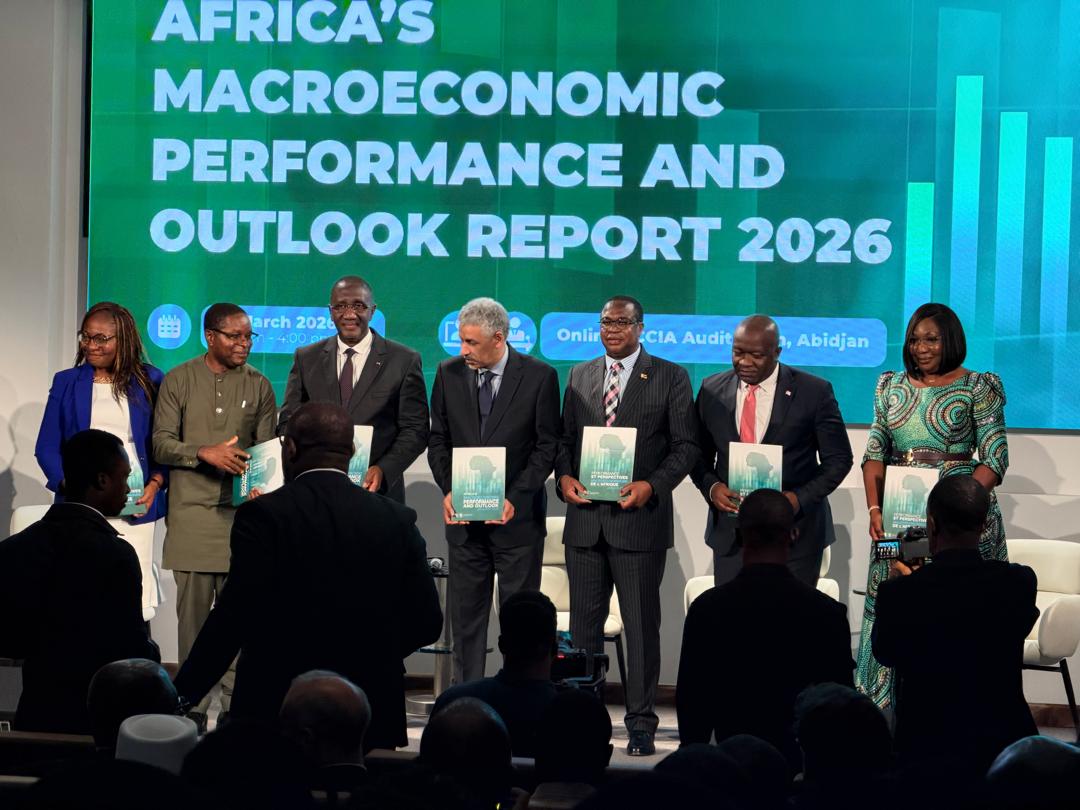
On the sidelines of the Abidjan engagements, Minister Ncube attended the launch of the Africa’s Macroeconomic Performance and Outlook 2026 Report as a panellist. The report painted a promising picture of Africa’s economic resilience, with a real GDP growth of 4.2% in 2025, surpassing the global average of 3.1%. Growth is projected at 4.3% in 2026 and 4.5% in 2027, with GDP per capita growth standing at 1.9%.

The report’s findings underscore Africa’s potential as a growth hub, notwithstanding risks from debt pressures and external shocks. It recommended coordinated policy action, structural reforms, and targeted investments in job creation, social protection, and human capital development to ensure inclusive and sustainable growth across the continent.

Minister Ncube’s engagement in Abidjan is a testament to Zimbabwe’s commitment to leveraging international partnerships and expertise to drive its economic agenda. The country’s participation in high-level dialogues and strategic engagements is crucial for attracting investments, clearing debt arrears, and fast-tracking economic recovery.

The outcomes of the Abidjan engagements are expected to inform Zimbabwe’s policy direction, particularly in areas of debt management, investment promotion, and economic diversification. As Zimbabwe charts its path towards sustainable development.

In conclusion, Minister Ncube’s Abidjan visit underscores Zimbabwe’s resolve to engage proactively with international financial institutions and development partners. By prioritizing debt sustainability, economic resilience, and inclusive growth, Zimbabwe is positioning itself for a brighter economic future.

Continue Reading

Finance

Advancing Economic Cooperation: Zimbabwe–Switzerland Partnership in Focus

Published

on

Advancing Economic Cooperation: Zimbabwe–Switzerland Partnership in Focus

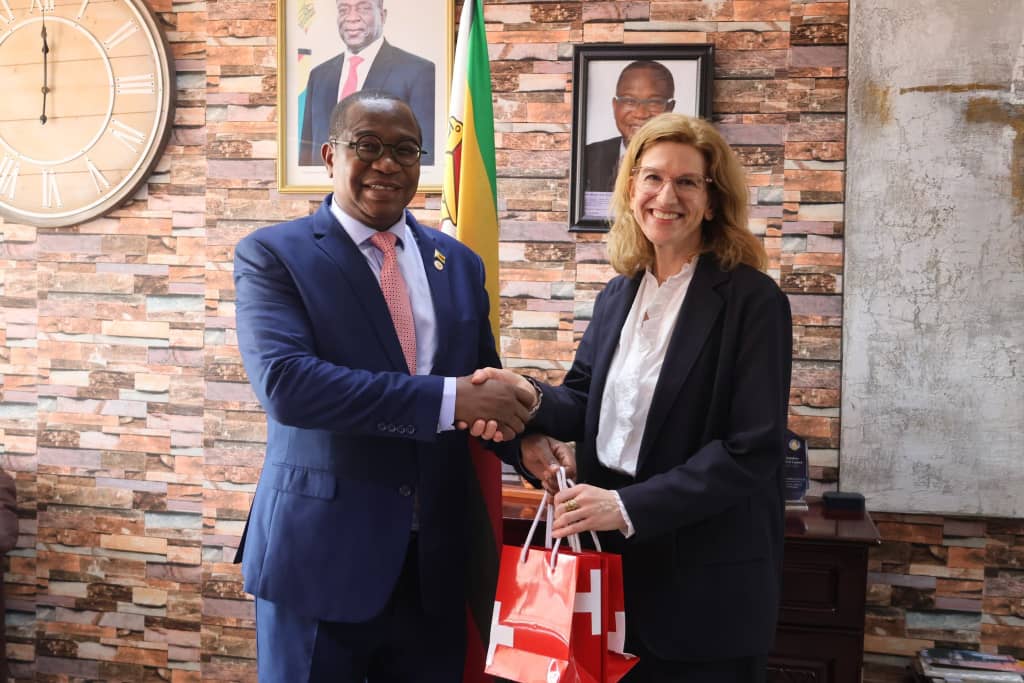
H.E. Stéphane Rey, Swiss Ambassador to Zimbabwe, yesterday met with Hon. Prof. Mthuli Ncube, Minister of Finance, Economic Development & Investment Promotion, to strengthen bilateral relations and review ongoing development cooperation.

Accompanied by Ms. Valerie Liechti (Assistant Director General & Head of Africa Division, SDC), discussions focused on the Structured Dialogue Process, farmer compensation, implementation of National Development Strategy 2, and the future of international cooperation—including coordination and financing of social protection systems.

Zimbabwe and Switzerland reaffirmed their longstanding cordial relations, anchored by key agreements such as the 2023 Bilateral Investment Promotion and Protection Agreement and the 2025 Double Taxation Agreement.

Switzerland’s continued support—amounting to approximately US$100 million since 2012—has contributed to critical sectors including agriculture, health, governance, and social protection.

Both parties reaffirmed their commitment to deepening cooperation, advancing sustainable development, and promoting inclusive economic growth in Zimbabwe.

Continue Reading

Finance

From Stability to Strategy: Zimbabwe’s 2026 Budget and the Economics of Confidence

Published

on

From Stability to Strategy - Zimbabwe’s 2026 Budget and the Economics of Confidence

By Staff Reporter

When Zimbabwe’s Minister of Finance, Economic Development and Investment Promotion, Professor Mthuli Ncube, rose to present the 2026 National Budget, the mood was markedly different from the crisis-laden budget statements of the past. Gone was the defensive tone that once characterised fiscal announcements in an economy battling hyperinflation, currency collapse and widening deficits.

In its place was a message of consolidation — one that positioned confidence, coordination and continuity as central pillars of economic policy.

The 2026 Budget did not arrive in isolation. It followed months of sustained macroeconomic stability, robust debate at the 2026 Pre-Budget Seminar in Bulawayo, and a growing consensus among economists and industry leaders that Zimbabwe had crossed a critical threshold: from stabilisation to strategy.

A Budget Anchored in Stability

At the heart of the 2026 Budget is a near-balanced fiscal position. Government projected revenues of ZiG288 billion against expenditures of ZiG290 billion, resulting in a modest deficit of ZiG3.2 billion, equivalent to roughly 0.2 percent of GDP. For a country historically burdened by large fiscal imbalances, the symbolism is powerful.

“This budget is about consolidating gains,” Ncube said during his presentation, noting that fiscal discipline had become a non-negotiable cornerstone of government policy.

The numbers reflect a deliberate shift away from deficit-driven growth and toward credibility-based economic management — a framework increasingly favoured across Southern Africa as governments grapple with rising debt and tightening global financial conditions.

Revenue Performance and the Tax Efficiency Debate

One of the more notable endorsements of government’s fiscal stance emerged during the pre-budget consultations. Dr Cornelius Dube, Chief Economist at the Confederation of Zimbabwe Industries (CZI), highlighted that Zimbabwe’s revenue performance has remained broadly aligned with economic growth.

Using the internationally recognised “tax points” metric — which measures how GDP growth translates into tax revenue — Dube noted that Zimbabwe consistently records ratios of around 1.1, well within the 1.1 to 1.3 range considered appropriate for developing economies.

“This shows Treasury’s capacity to collect revenue commensurate with growth,” Dube said.

The 2026 Budget builds on this performance by prioritising efficiency over expansion of the tax base. Rather than introducing aggressive new taxes, Treasury focused on improving compliance, closing leakages and refining underperforming revenue streams.

Presumptive tax — long a point of contention between government and the informal sector — received particular attention.

Acknowledging weak compliance, Ncube defended the earlier decision to reduce rates, arguing that lower, realistic taxes improve collection more effectively than punitive thresholds.

“If compliance is low, you adjust the rate,” he said. “That’s how you broaden the base,” said Ncube.

Monetary Stability as a Fiscal Asset

Perhaps the most transformative context for the 2026 Budget is the emergence of relative currency and price stability under the Zimbabwe Gold (ZiG) regime.

Inflation, which peaked at 271.7 percent in 2023, declined sharply to 32.7 percent by October 2025, according to ZimStat. Month-on-month inflation has moderated further, even turning negative in some periods — a development almost unthinkable just two years ago.

University of Zimbabwe economist Dr Carren Pindiriri described the shift as unprecedented.

“For the first time in a long time, people can keep local currency in the bank and retain value,” she said.

This stability has had tangible fiscal benefits. Predictable prices have improved expenditure planning, reduced the cost of government procurement and strengthened Treasury’s ability to meet obligations without resorting to inflationary financing.

The 2026 Budget reinforces this dynamic through continued coordination between Treasury and the Reserve Bank of Zimbabwe (RBZ) — a policy alignment that economists at the seminar widely credited for anchoring expectations.

Expenditure Priorities: Growth With Purpose

While fiscal restraint defines the budget’s framework, the allocation of spending reflects a strategic growth agenda.

Key priority areas include: Food security and agriculture, building on improved rainfall and productivity gains, Manufacturing and value addition, aligned with the National Development Strategy, Youth employment and skills development, responding to demographic pressures, and Infrastructure and social services, particularly health and education.

Rather than spreading limited resources thinly, the 2026 Budget adopts a targeted investment approach, seeking to crowd in private capital and enhance productivity.

This mirrors broader regional trends. Across Southern Africa, governments are increasingly positioning public spending as a catalyst — not a substitute — for private sector growth.

Debt, Re-engagement and Regional Positioning

Zimbabwe’s public and publicly guaranteed debt remains elevated, but its context has shifted. Following the rebasing of GDP, debt now stands at approximately 44.7 percent of GDP, a level that compares favourably with several regional peers.

More importantly, government has recommitted to arrears clearance and re-engagement with international creditors, a process viewed as essential for unlocking concessional financing and lowering the cost of capital.

Southern African economies face similar constraints. Zambia’s recent debt restructuring, for example, underscores the importance of fiscal transparency and policy consistency in restoring access to global markets.

In this environment, Zimbabwe’s disciplined 2026 Budget strengthens its credibility within regional and multilateral forums, including SADC, where macroeconomic convergence remains a shared objective.

Confidence: The Intangible Currency

Beyond fiscal tables and growth projections, the defining feature of the 2026 Budget is its emphasis on confidence — among businesses, consumers and investors.

At the pre-budget seminar, economists repeatedly stressed that Zimbabwe’s remaining challenge is not technical policy design, but public trust.

“The hesitation around the ZiG is often less about the currency itself and more about confidence in consistency,” Dube observed.

The budget addresses this indirectly through predictability: no abrupt policy reversals, no surprise taxes, and a clear commitment to rules-based management.

For the business community, this matters. Investment decisions hinge not only on returns, but on the reliability of the operating environment.

For Zimbabwe, restoring confidence in the ZiG may prove to be the most valuable investment of all.

Southern Africa Watching Closely

Zimbabwe’s fiscal trajectory is being closely monitored across the region. As South Africa grapples with weak growth, Namibia balances consolidation with social spending, and Malawi navigates inflationary pressures, Zimbabwe’s experience offers a relevant case study in post-stabilisation policy making.

The 2026 Budget does not claim perfection. Structural challenges remain, from informality to external financing constraints. Yet the shift in tone — from crisis response to strategic consolidation — signals a maturing policy framework.

From Seminar to Statement

In many respects, the 2026 Budget is the practical expression of ideas first debated at the pre-budget seminar: deeper policy coordination, realistic revenue mobilisation, disciplined spending and confidence-driven growth.

What distinguishes this budget is not radical reform, but consistency — a quality long absent from Zimbabwe’s fiscal history.

As Professor Ncube concluded in his address, stability is no longer the destination; it is the platform.

For Zimbabwe and its Southern African neighbours, the 2026 Budget suggests that when confidence becomes policy, growth becomes possible.

Continue Reading

Trending