Connect with us

Business & Economy

Tongaat investors jet into Zimbabwe for talks

Published

on

VISION Consortium (Vision)’s representatives are due for “crucial talks” in Zimbabwe this week, as the trans-Limpopo group seeks to tie up loose ends in its bid to acquire Tongaat Hullet (Tongaat).

While Finance minister Mthuli Ncube, Remoggo Investments (Remoggo) owner Rutenhuro Moyo and Mutapa Investment Fund (MIF) chair Chipo Mtasa would not readily comment on views that the Zimbabwean sovereign wealth fund SWF) was due to stake a claim in the deal, sources have told The Financial Gazette that the “investors were due for key stakeholder engagements, including regulators on Thursday and Friday”.

And at the back of Mtasa’s disclosures that they “were still working on several issues”, the government insiders have, however, insisted that the “Harare administration was expected to make a comprehensive statement on the transaction soon”.

Finance ministry secretary George Guvamatanga

Finance ministry secretary George Guvamatanga


As it is, the success of Moyo and his Vision alliance – comprising South African billionaire Robert Gumede’s – bid was not only attributable to their US$250 million offer to Tongaat’s lender group, but comes in the context of MIF’s known interest as well.

About mid-last year, it emerged that Mtasa’s newly-created behemoth, which falls under the Finance ministry, had dangled a US$95 million carrot for the company’s local assets.

“SWF is interested in acquiring 100 percent of… Triangle Limited and 50,3 percent of… Hippo Valley Estates (Hippo Valley)… held by Tongaat Hulett,” Treasury secretary George Guvamatanga said in a February 2023 letter.

“When the fund made its offer… it was drawing on… the fact of aged plant, equipment and… the need for new, higher-yielding (sugarcane) varieties,” he said.

Nonetheless, Vision’s selection as the preferred bidder has not only added intrigue to the long-drawn acquisition process following the wealthy Rudland family’s failure to buy the firm, but Moyo – an OK Zimbabwe, and National Trye Service major shareholder’s – emergence as a co-bidder has added an interesting twist.

The twists and turns also included Vision’s successes in fending off, if not outwitting, other suitors, including Tanzania’s Kagera and RGS Group Holdings of Mozambique.

With the consortium set to acquire 97,3 percent of the regional company – with assets in Zimbabwe, Botswana, Mozambique and South Africa (SA) – many are envious of Moyo’s grouping “for picking up an asset that can easily pay off its Rand 8 billion debt mountain within the next 10 years by flogging non-core assets and having to access to vast tracts of land across southern Africa.”

In Zimbabwe, for instance, Tongaat  has a potential to produce nearly 700 000 tonnes of raw sugar,  80 million litres of ethanol – for the alcohol and chemical industries – has always been a ‘net exporter of power’ from its Lowveld operations, owns a large herd of cattle estimated at  20 000-plus and access to nearly 45 000 hectares of land.

And it is the capability to co-underwrite such a massive transaction, which some say is being backed by ABSA and Investec of SA, that has brought Moyo under sharper focus and his shrewd dealmaking in general. At some point, he even made a bid for Schweppes Zimbabwe.

A solid and proven businessman, the 58-year-old serial entrepreneur was recently thrown into the limelight after his US$420 000 investment into fintech start-up Jamboo, which aims to tap into Africa’s burgeoning diaspora remittances market.

Remoggo Investments (Remoggo) owner Rutenhuro Moyo

Remoggo Investments (Remoggo) owner Rutenhuro Moyo


On the other hand, Moyo has a rich resume, which includes successful stints at global companies such as Anglo American, Old Mutual, The Coca-Cola Company and Cyril Ramaphosa’s Shanduka Group.

And it is at the latter that he created, and headed the South African president’s fast-moving consumer group’s unit, which manufactured and distributed Coca-Cola products and owned the McDonalds franchise there.

Moyo, who sits on the Hippo and FBC Holdings boards, also owns FedEx through Supa Swift and the Tsebo Catering franchise in the country, which serves as the exclusive food supplier to Zimbabwe Platinum’s Ngezi mines, and Royal Golf Club, among other key establishments.

And with his acquisition of a Tongaat stake through his Mauritian-registered outfit, the reclusive tycoon is also likely to emerge as one of the “single largest customers, and beneficiaries of two of the country’s biggest dams” – Tugwi Mukosi and Osborne in Manicaland – as well as cementing his place as a major investor in a sector that is Zimbabwe’s second largest employer after government.

Against the background of Tongaat’s battles with South African unions over profit share and contract farming – a set of issues almost similar to what Guvamatanga raised in one of his July letters – and Moyo’s own “sparring” with the Harare administration over his retail operations, it remains to be seen how Moyo’s “foreseen cooperation” with the same authorities, and specifically MIF, will pan out.

As the company is reportedly targeting for 50 000 hectares of land – probably to make up for the portion taken by Billy Rautenbach’s Nuanetsi game project – these are not only some of the issues that the Treasury secretary was alluding to by referring to “water, and land rights”, but what the Remoggo chair has to navigate in his quest for the insolvent sugar producer!

Source: Fingaz

The Business Diary magazine is a comprehensive publication that centers around business and economic development news. It covers a wide range of topics including finance, mining, technology, environment, climate finance, and agriculture. With its focus on providing valuable insights and updates, the magazine caters to readers who are interested in staying informed about the latest developments and trends in the business and economic landscape of Zimbabwe.

Business & Economy

Air Zimbabwe Secures EuroAtlantic Aircraft to Stabilise London Route After Wet-Lease Disruption

Air Zimbabwe has appointed Portugal-based EuroAtlantic Airways as its new wet-lease partner for the Harare–London service after the withdrawal of Spanish carrier Plus Ultra disrupted flights earlier this week. The replacement arrangement is intended to restore operational continuity ahead of the festive travel season.
Published

on

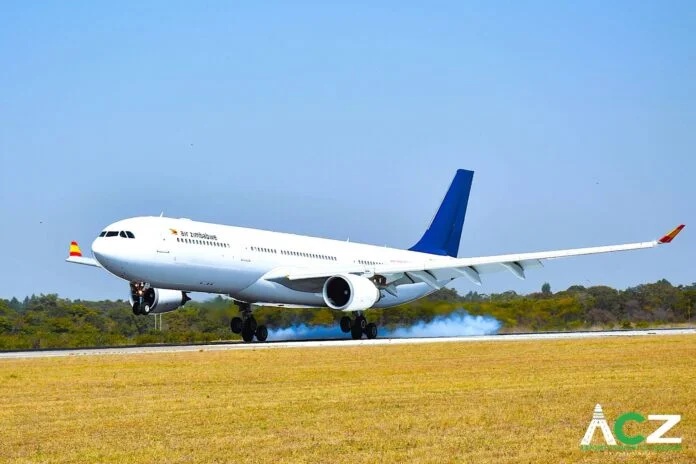
HARARE, 26 November 2026 – Air Zimbabwe has engaged Portuguese aviation company EuroAtlantic Airways to provide an Airbus A330-300 aircraft for its Harare–London route, replacing Spanish carrier Plus Ultra following an unexpected disruption to the previous wet-lease arrangement.

In a press statement issued on Thursday, the national airline said the new partnership would strengthen its operational resilience and ensure continuity of its international service.

Under the agreement, EuroAtlantic will provide the aircraft, crew, maintenance and insurance under an Aircraft, Crew, Maintenance and Insurance (ACMI) arrangement, commonly known as a wet lease.

The move follows the withdrawal of Plus Ultra’s aircraft earlier this week, which forced Air Zimbabwe to reschedule services and make alternative arrangements for affected passengers.

John Mangudya, chief executive of the Mutapa Investment Fund, which oversees Zimbabwe’s state-owned enterprises, confirmed the new partnership, although the financial terms of the agreement have not been disclosed.

Replacement aircraft restores London operations

The replacement arrangement provides Air Zimbabwe with an aircraft and operational support without requiring the national carrier to deploy its own aircraft and crew on the long-haul route.

The aircraft identified in media reports is registered as CS-TGJ. It is an Airbus A330-300 configured with 27 business-class seats and 263 economy-class seats, giving it a total capacity of 290 passengers.

The aircraft also has an in-flight entertainment system.

EuroAtlantic specialises in aircraft leasing, charter operations and ACMI services, supplying aircraft and operational support to other airlines. The arrangement allows Air Zimbabwe to continue operating the route while relying on its partner for the aircraft and associated technical services.

Plus Ultra withdrawal disrupted flights

The change follows operational difficulties involving Plus Ultra, which had supplied the Airbus A330-300 used by Air Zimbabwe since the resumption of direct flights to London in July.

The Spanish airline suspended its flight operations on November 23 amid financial difficulties and subsequently recalled the aircraft it had been leasing to Air Zimbabwe.

The withdrawal disrupted the Harare–London schedule, resulting in the postponement of the London–Harare flight scheduled for November 23 and the corresponding outbound service from Harare.

Air Zimbabwe apologised to affected passengers and said it had been working on alternative arrangements, including transferring some travellers to other airlines and providing accommodation where necessary.

Passenger advisory and revised schedule

Air Zimbabwe said the London–Harare service was scheduled to operate on Thursday, November 26.

According to the airline’s passenger advisory, check-in was scheduled to open at 13:30 hours, with departure set for 17:40 hours. Passengers were advised to arrive at the airport in good time to complete check-in and boarding formalities.

The airline also indicated that passengers booked on the affected November 23 service and those scheduled to travel on November 26 should take note of the revised arrangements.

The outbound Harare–London flight originally scheduled for November 25 had, however, been rescheduled to Friday, November 27, according to earlier operational updates. Passengers should therefore confirm their individual flight details directly with the airline before travelling.

Festive season expansion remains in focus

The replacement agreement comes just days after Air Zimbabwe announced plans to increase frequencies on the London route from three to four flights weekly, effective December 1.

The additional frequency was intended to accommodate increased passenger demand during the festive season, when travel between Zimbabwe and the United Kingdom typically rises.

Air Zimbabwe resumed direct scheduled flights between Harare and London Gatwick on July 22, 2026, ending a 14-year absence from the route.

The service had been relaunched using an Airbus A330-300 supplied by Plus Ultra under an ACMI arrangement. The return to London followed the acquisition of the necessary UK Foreign Operator Permit from the Civil Aviation Authority.

Our Analysis

The EuroAtlantic agreement is an important operational intervention for Air Zimbabwe because the London route is strategically significant for the national carrier’s international recovery.

Direct connectivity between Harare and London serves several markets, including Zimbabwe’s diaspora, business travellers, tourists, students and government-related travel. It also provides an important link for trade and commercial relationships between Zimbabwe and the United Kingdom.

However, the disruption exposes a structural vulnerability in the airline’s current long-haul operating model.

Air Zimbabwe’s reliance on wet-leased aircraft means that the continuity of its international services depends partly on the operational and financial stability of external aviation partners. When a lessor withdraws an aircraft, the airline can face immediate disruption unless replacement capacity is secured.

The EuroAtlantic agreement provides a practical solution, but the undisclosed commercial terms make it difficult to assess the cost implications for Air Zimbabwe.

Wet leasing can reduce the immediate capital burden of acquiring and maintaining long-haul aircraft. However, it also creates recurring leasing costs and dependence on external operators.

For the national airline, the longer-term challenge will be balancing operational flexibility with financial sustainability, fleet development and consistent service delivery.

The timing is also significant. Air Zimbabwe is attempting to expand the London route during the peak travel season. Maintaining schedule reliability will be essential to protecting passenger confidence and building a sustainable customer base.

Whats Next?

The immediate priority is restoring the normal flight schedule and ensuring passengers affected by the disruption reach their destinations.

Attention will then turn to the planned increase to four weekly frequencies from December 1 and whether the new wet-lease arrangement can support the additional capacity.

Air Zimbabwe has not disclosed the financial terms or duration of its agreement with EuroAtlantic Airways. Greater clarity on these arrangements would help establish the cost and operational implications of the partnership.

For now, the replacement aircraft gives the national carrier a route back to operational continuity. The more important test will be whether it can maintain reliable services and rebuild confidence in its international operations.

Continue Reading

Business & Economy

Minister Tagwirei Hosts French Envoy to Advance Zimbabwe-France Trade and Investment

Moving swiftly to assert operational command of his portfolio, Minister of Economic Development and Investment Promotion Senator Dr. Kudakwashe Tagwirei hosted the Ambassador of France to Zimbabwe for high-level talks focused on unlocking investment opportunities, strengthening bilateral trade, and advancing pragmatic economic cooperation between Harare and Paris.

Published

on

Minister Tagwirei Hosts French Envoy to Advance Zimbabwe-France Trade and Investment

HARARE — Zimbabwe’s drive to translate its “Open for Business” mantra into tangible international capital gained fresh momentum this week as the Minister of Economic Development and Investment Promotion, Senator Dr. Kudakwashe Tagwirei, hosted the Ambassador of France to Zimbabwe for high-level bilateral talks.

Moving swiftly to assert operational command of his newly established portfolio, Dr. Tagwirei used the engagement to outline Harare’s immediate economic priorities, focusing squarely on unlocking direct investment opportunities, expanding bilateral trade volumes, and building structured economic cooperation between Zimbabwe and France.

Since taking the helm of the separated Ministry of Economic Development and Investment Promotion in October 2026, Dr. Tagwirei has prioritized results-driven economic diplomacy over political rhetoric. His background as a prominent industrialist and entrepreneur—having built major commercial footprints across Zimbabwe’s energy, mining, agriculture, and infrastructure sectors—brings a private-sector urgency to a ministry specifically designed to mobilize capital alongside the Ministry of Finance’s fiscal stewardship.
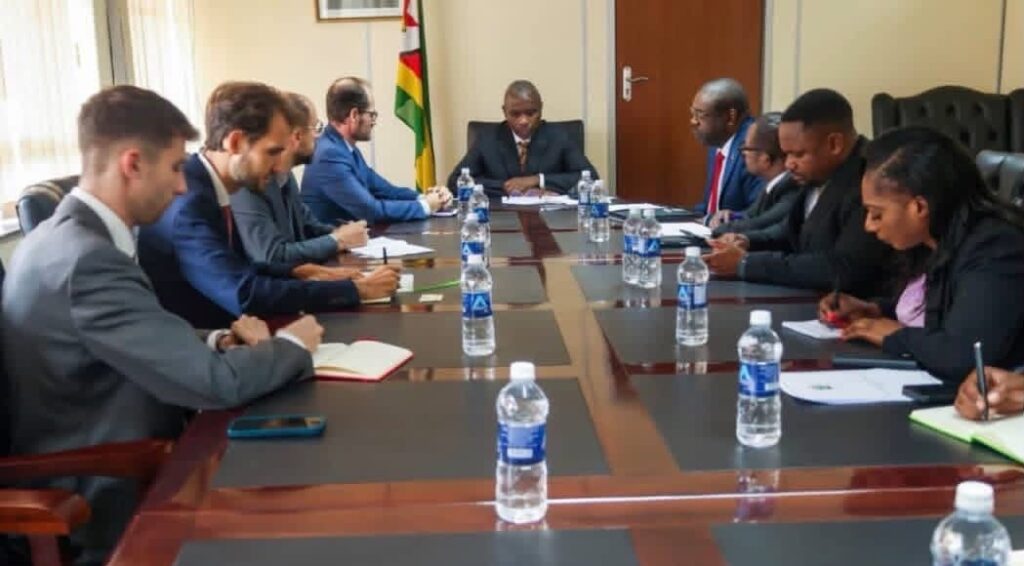
Harare and Paris Chart Pragmatic Economic Course as Minister Tagwirei Engages French Envoy

Harare and Paris Chart Pragmatic Economic Course as Minister Tagwirei Engages French Envoy

The meeting with the French envoy signals a notable step in Zimbabwe’s broader engagement and re-engagement agenda championed by President Dr. Emmerson Mnangagwa. Guided by the foreign policy doctrine of being “a friend to all and an enemy to none,” Harare has consistently sought to reset relations with Western capitals by anchoring discussions in mutual economic interest rather than historical friction.

As a leading voice within the European Union, France’s willingness to engage directly with the Ministry of Economic Development and Investment Promotion underscores a growing pragmatic consensus: sustainable progress between Harare and Brussels is best achieved through commercial partnerships, trade facilitation, and direct dialogue rather than megaphone diplomacy.

For Dr. Tagwirei’s ministry, the engagement sets the tone for an active, outward-looking mandate. With Zimbabwe consolidating recent macroeconomic stability—marked by steady GDP growth and sharply moderated inflation—the Ministry is positioning itself as the primary bridge for international investors seeking bankable projects in a reforming market.

By pairing private-sector execution with state-level diplomacy, Dr. Tagwirei is signaling to both regional and European partners that his office is fully operational, aligned with Vision 2030, and ready to convert diplomatic goodwill into concrete economic output.

Continue Reading

Business & Economy

RGM Airport Cargo Village Gets National Project Status

The proposed US$1.3 billion cargo village at Robert Gabriel Mugabe International Airport has been awarded National Project Status. The designation is meant to unlock fiscal incentives and lower costs for a privately financed project. The Airports Company of Zimbabwe (ACZ) says it will help turn Harare into a regional cargo hub.


Published

on

RGM Airport Cargo Village Gets National Project Status

HARARE – The Robert Gabriel Mugabe International Airport (RGMIA) Cargo Village has been awarded National Project Status, the Airports Company of Zimbabwe said. In a statement reported by The Herald, ACZ said the designation is a milestone for Zimbabwe’s aviation and logistics infrastructure. The project is a partnership between ACZ and the local logistics firm Transvaal Africa.

ACZ said the designation is expected to unlock investment, give access to fiscal incentives, reduce implementation costs and speed up cargo-handling and logistics infrastructure. Transvaal Africa chief executive Patson Moyo told a press conference on Tuesday that the status would ease the financial burden through rebates. He said the village will have 142 warehouses with specialised equipment, an airport hotel and an aviation fuel system. Groundbreaking is expected in the first quarter, with completion by 2030.

Scope and capacity

The first phase will cover 520 hectares, rising to 1,000 hectares when complete, according to reports of the briefing. ACZ chief executive Tawanda Gusha said the airport currently handles 30,000 to 40,000 tonnes of cargo a year against a potential of 100,000 tonnes. He said capacity must grow so that cargo airlines keep flying to Zimbabwe. He added that the village will consolidate cargo operations that are now spread across different parts of the airport.

The project value has been reported at US$1.3 billion. When Transvaal announced the project in December 2025 it was described as an investment of just over US$1 billion.

Background

The cargo village follows a US$153 million terminal expansion at the airport, which added a terminal, aprons and infrastructure. That expansion was financed by a Chinese concessional loan. ACZ has said it wants to turn the airport into a regional hub for passengers and cargo. It has described cargo operations as fragmented and wants them housed under one roof. The planned secondary runway has been folded into the cargo village project. The facility is also due to be designated a Special Economic Zone, with a cold-chain hub for agro-processing and exports. The government is separately building a US$250 million expressway between the airport and the city centre.

National Project Status is a designation under Zimbabwe’s investment framework for significant projects. The IFC’s private sector diagnostic of Zimbabwe lists among its benefits relief from withholding tax on interest paid to service loans. The government gave the same status to the US$3 billion Harare Light Rail project earlier this year.

Business Diary Analysis

For the treasury, the attraction is that private capital carries the cost. The project is financed by Transvaal under a public-private partnership, so the state does not borrow to build it, unlike the terminal expansion. The trade-off is that the designation reduces the investor’s costs through rebates and relief, which means lower tax revenue for the state in the early years. The final package of incentives and the state’s equity stake have not been published. The government approved new PPP guidelines this year that entrench a minimum 30 percent state stake in project vehicles, and it is not yet clear how they apply here.

For exporters, the case is practical. Horticulture, mining and agro-processing producers depend on reliable cold storage and air freight to reach markets in Europe and the Middle East. Consolidated handling and a cold-chain hub could shorten turnaround times and reduce spoilage. The test is utilisation. Raising volumes from 30,000 to 40,000 tonnes towards 100,000 tonnes depends on airlines choosing Harare, which depends in turn on competitive handling charges and the reliability of power, customs and ground transport. Regional rivals such as Johannesburg and Lusaka are also investing.

Timelines add another risk. Completion by 2030 depends on groundbreaking in 2027 and on financing being secured. Designation lowers the cost of capital but does not guarantee delivery. Investors and shippers will want evidence of financial close, construction contracts and anchor tenants before treating the project as bankable.

Conclusion

National Project Status gives the cargo village regulatory and tax support at an early stage. The next milestones, such as groundbreaking and the release of the incentive terms, will show whether the village can lift Zimbabwe’s air cargo capacity.

What’s Next?

Watch for the groundbreaking date, the published terms of incentives and state equity, and the first anchor tenants or cargo airlines. Also watch for updates on the secondary runway and the airport road project.

Sources: The Herald; Zimbabwe Situation; 263Chat; ZANU-PF news; The Herald, Dec 2025; Bulawayo24; CAPA; IFC private sector diagnostic; InfraPPP World; NewsDay, PPP rules; AidData

Continue Reading

Trending

×