
Connect with us

Business & Economy

Minister Tagwirei Hosts French Envoy to Advance Zimbabwe-France Trade and Investment

Moving swiftly to assert operational command of his portfolio, Minister of Economic Development and Investment Promotion Senator Dr. Kudakwashe Tagwirei hosted the Ambassador of France to Zimbabwe for high-level talks focused on unlocking investment opportunities, strengthening bilateral trade, and advancing pragmatic economic cooperation between Harare and Paris.


Published

on

Minister Tagwirei Hosts French Envoy to Advance Zimbabwe-France Trade and Investment

HARARE — Zimbabwe’s drive to translate its “Open for Business” mantra into tangible international capital gained fresh momentum this week as the Minister of Economic Development and Investment Promotion, Senator Dr. Kudakwashe Tagwirei, hosted the Ambassador of France to Zimbabwe for high-level bilateral talks.

Moving swiftly to assert operational command of his newly established portfolio, Dr. Tagwirei used the engagement to outline Harare’s immediate economic priorities, focusing squarely on unlocking direct investment opportunities, expanding bilateral trade volumes, and building structured economic cooperation between Zimbabwe and France.

Since taking the helm of the separated Ministry of Economic Development and Investment Promotion in October 2026, Dr. Tagwirei has prioritized results-driven economic diplomacy over political rhetoric. His background as a prominent industrialist and entrepreneur—having built major commercial footprints across Zimbabwe’s energy, mining, agriculture, and infrastructure sectors—brings a private-sector urgency to a ministry specifically designed to mobilize capital alongside the Ministry of Finance’s fiscal stewardship.
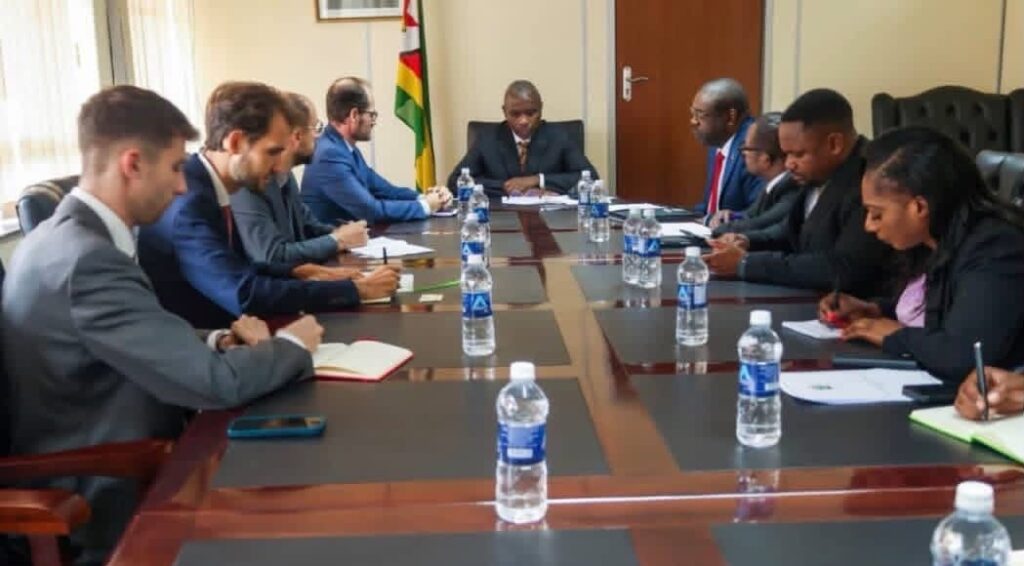
Harare and Paris Chart Pragmatic Economic Course as Minister Tagwirei Engages French Envoy

Harare and Paris Chart Pragmatic Economic Course as Minister Tagwirei Engages French Envoy

The meeting with the French envoy signals a notable step in Zimbabwe’s broader engagement and re-engagement agenda championed by President Dr. Emmerson Mnangagwa. Guided by the foreign policy doctrine of being “a friend to all and an enemy to none,” Harare has consistently sought to reset relations with Western capitals by anchoring discussions in mutual economic interest rather than historical friction.

As a leading voice within the European Union, France’s willingness to engage directly with the Ministry of Economic Development and Investment Promotion underscores a growing pragmatic consensus: sustainable progress between Harare and Brussels is best achieved through commercial partnerships, trade facilitation, and direct dialogue rather than megaphone diplomacy.

For Dr. Tagwirei’s ministry, the engagement sets the tone for an active, outward-looking mandate. With Zimbabwe consolidating recent macroeconomic stability—marked by steady GDP growth and sharply moderated inflation—the Ministry is positioning itself as the primary bridge for international investors seeking bankable projects in a reforming market.

By pairing private-sector execution with state-level diplomacy, Dr. Tagwirei is signaling to both regional and European partners that his office is fully operational, aligned with Vision 2030, and ready to convert diplomatic goodwill into concrete economic output.


The Business Diary magazine is a comprehensive publication that centers around business and economic development news. It covers a wide range of topics including finance, mining, technology, environment, climate finance, and agriculture. With its focus on providing valuable insights and updates, the magazine caters to readers who are interested in staying informed about the latest developments and trends in the business and economic landscape of Zimbabwe.

Continue Reading

Business & Economy

RGM Airport Cargo Village Gets National Project Status

The proposed US$1.3 billion cargo village at Robert Gabriel Mugabe International Airport has been awarded National Project Status. The designation is meant to unlock fiscal incentives and lower costs for a privately financed project. The Airports Company of Zimbabwe (ACZ) says it will help turn Harare into a regional cargo hub.

Published

on

RGM Airport Cargo Village Gets National Project Status

HARARE – The Robert Gabriel Mugabe International Airport (RGMIA) Cargo Village has been awarded National Project Status, the Airports Company of Zimbabwe said. In a statement reported by The Herald, ACZ said the designation is a milestone for Zimbabwe’s aviation and logistics infrastructure. The project is a partnership between ACZ and the local logistics firm Transvaal Africa.

ACZ said the designation is expected to unlock investment, give access to fiscal incentives, reduce implementation costs and speed up cargo-handling and logistics infrastructure. Transvaal Africa chief executive Patson Moyo told a press conference on Tuesday that the status would ease the financial burden through rebates. He said the village will have 142 warehouses with specialised equipment, an airport hotel and an aviation fuel system. Groundbreaking is expected in the first quarter, with completion by 2030.

Scope and capacity

The first phase will cover 520 hectares, rising to 1,000 hectares when complete, according to reports of the briefing. ACZ chief executive Tawanda Gusha said the airport currently handles 30,000 to 40,000 tonnes of cargo a year against a potential of 100,000 tonnes. He said capacity must grow so that cargo airlines keep flying to Zimbabwe. He added that the village will consolidate cargo operations that are now spread across different parts of the airport.

The project value has been reported at US$1.3 billion. When Transvaal announced the project in December 2025 it was described as an investment of just over US$1 billion.

Background

The cargo village follows a US$153 million terminal expansion at the airport, which added a terminal, aprons and infrastructure. That expansion was financed by a Chinese concessional loan. ACZ has said it wants to turn the airport into a regional hub for passengers and cargo. It has described cargo operations as fragmented and wants them housed under one roof. The planned secondary runway has been folded into the cargo village project. The facility is also due to be designated a Special Economic Zone, with a cold-chain hub for agro-processing and exports. The government is separately building a US$250 million expressway between the airport and the city centre.

National Project Status is a designation under Zimbabwe’s investment framework for significant projects. The IFC’s private sector diagnostic of Zimbabwe lists among its benefits relief from withholding tax on interest paid to service loans. The government gave the same status to the US$3 billion Harare Light Rail project earlier this year.

Business Diary Analysis

For the treasury, the attraction is that private capital carries the cost. The project is financed by Transvaal under a public-private partnership, so the state does not borrow to build it, unlike the terminal expansion. The trade-off is that the designation reduces the investor’s costs through rebates and relief, which means lower tax revenue for the state in the early years. The final package of incentives and the state’s equity stake have not been published. The government approved new PPP guidelines this year that entrench a minimum 30 percent state stake in project vehicles, and it is not yet clear how they apply here.

For exporters, the case is practical. Horticulture, mining and agro-processing producers depend on reliable cold storage and air freight to reach markets in Europe and the Middle East. Consolidated handling and a cold-chain hub could shorten turnaround times and reduce spoilage. The test is utilisation. Raising volumes from 30,000 to 40,000 tonnes towards 100,000 tonnes depends on airlines choosing Harare, which depends in turn on competitive handling charges and the reliability of power, customs and ground transport. Regional rivals such as Johannesburg and Lusaka are also investing.

Timelines add another risk. Completion by 2030 depends on groundbreaking in 2027 and on financing being secured. Designation lowers the cost of capital but does not guarantee delivery. Investors and shippers will want evidence of financial close, construction contracts and anchor tenants before treating the project as bankable.

Conclusion

National Project Status gives the cargo village regulatory and tax support at an early stage. The next milestones, such as groundbreaking and the release of the incentive terms, will show whether the village can lift Zimbabwe’s air cargo capacity.

What’s Next?

Watch for the groundbreaking date, the published terms of incentives and state equity, and the first anchor tenants or cargo airlines. Also watch for updates on the secondary runway and the airport road project.

Sources: The Herald; Zimbabwe Situation; 263Chat; ZANU-PF news; The Herald, Dec 2025; Bulawayo24; CAPA; IFC private sector diagnostic; InfraPPP World; NewsDay, PPP rules; AidData

Continue Reading

Business & Economy

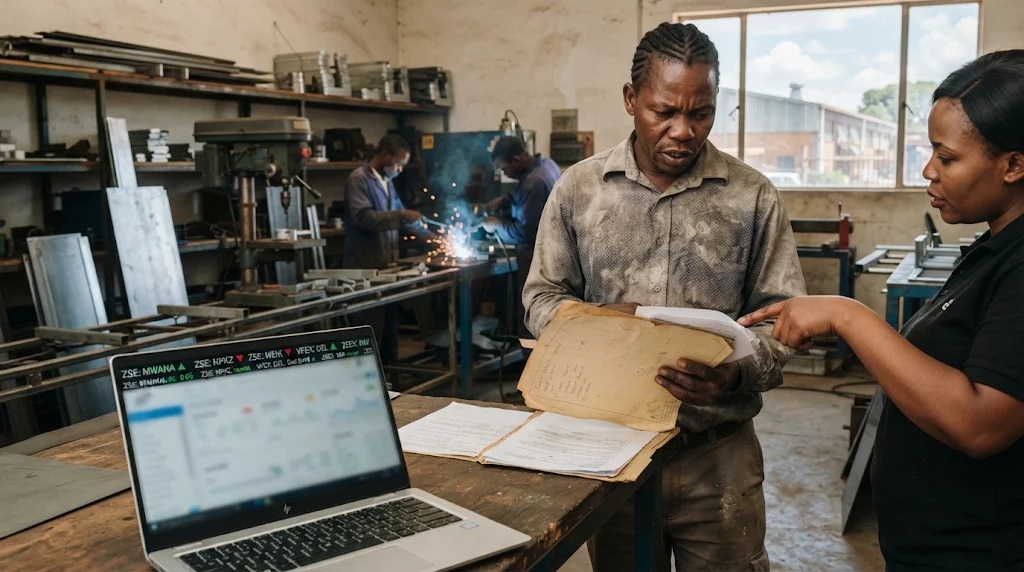
ZSE Opens SME Funding Platform as Mwana Group Seeks US$1m in First ZEEX Listing

The Zimbabwe Stock Exchange group has opened a regulated route for small and medium enterprises to raise capital from investors. Mwana Group, which is seeking US$1 million to expand production, is set to be the platform’s first listed company. The test will be whether investors and entrepreneurs use it.
Published

on

ZSE Opens SME Funding Platform as Mwana Group Seeks US$1m

HARARE – The Zimbabwe Stock Exchange (ZSE) group has opened a new capital-raising pathway for small and medium enterprises (SMEs), and Mwana Group is set to become its first listed company. Mwana is seeking US$1 million to expand production.

The platform is the Zimbabwe Entrepreneurship Exchange (ZEEX). It is regulated by the Securities and Exchange Commission of Zimbabwe and sits within ZSE Holdings alongside the ZSE and the Victoria Falls Stock Exchange (VFEX). Finance Minister Mthuli Ncube launched it in Bulawayo on Friday, 24 July 2026, according to NewsDay.

Mwana Group’s initial public offering (IPO) has opened ahead of an expected listing this year, according to a Herald commentary published about two weeks ago. The ZEEX has also said the offer is open for subscription on its website. The Business Diary could not obtain the offer price, closing date or number of shares.

Background

The ZSE’s own difficulties lie behind the new platform. The main board has lost companies in recent years, including Econet Wireless Zimbabwe, which delisted in March. Its market capitalisation fell to about US$2.58 billion at the end of April, while the VFEX stood at US$3.53 billion. In June the exchange temporarily cut its minimum listing capitalisation from US$10 million to US$1 million for 36 months and waived initial listing fees.

ZEEX operates in two parts. Private Markets lets issuers raise funds from qualified investors without listing or secondary trading. Public Markets offers listing and trading, with ongoing disclosure and governance requirements. A ZSE Holdings interview from 2025 described a proposed three-tier structure, running from US$50,000 to US$250,000 for micro-SMEs to US$1 million and above for scale-ups. The final listing rules should be checked against the exchange’s published documents.

What is known about the platform and Mwana

The ZEEX has secured up to US$50 million in investment commitments, NewsDay reported, and ZSE Holdings said investor interest was stronger than expected. The Herald commentary said the platform has a first target of at least US$10 million in invoice financing by year-end. It also said more than 30 companies are in the pipeline, with roughly 70 percent seeking a listing.

Mwana’s founding shareholders have agreed not to sell their shares for five years after listing, according to the same commentary, which described the company as a “classic ZEEX company” rather than a blue chip. Daily Brand has reported that InvestIQ Oak Wealth is the sponsoring broker, and has published reports on Mwana’s plans for local tractor production. The Business Diary could not confirm that the IPO proceeds will fund tractor manufacturing, and the company’s own prospectus should settle that point.

Business Diary Analysis

The importance of the Mwana offer lies less in its size than in what it tests. SMEs account for roughly 60 percent of GDP, according to government figures, yet most are informal and find bank credit hard to obtain because lending is largely collateral-based. FinScope estimated that nearly two million MSMEs generate about US$14.2 billion in annual turnover. A functioning equity channel would give the best-prepared of these firms an alternative to borrowing.

There are reasons for caution. Listing requires disclosure, governance standards and sharing ownership, which many owner-managed businesses resist. Analysts at Equity Axis noted that Kenya’s and other regional SME boards simplified rules yet attracted limited uptake. They also noted that the structural problems that drove established companies off the main board remain. A US$1 million raise will also show how much appetite retail and institutional investors have for small, unrated issuers.

The pipeline figure is promising but unproven. Thirty companies is a modest number against the size of the SME sector, and the exchange has yet to show that a company can list, attract trading and raise follow-on capital.

Conclusion

ZEEX gives Zimbabwe’s SMEs a regulated route to equity that did not exist before, and Mwana Group is the first company to use it. Whether the platform becomes a lasting source of capital will depend on the outcome of this first offer, the quality of the issuers that follow and the liquidity of their shares.

What’s Next?

Watch for the IPO’s closing date, the subscription level and the listing date. Also watch for the next issuers from the pipeline, and whether ZSE Holdings reaches its invoice-financing target by year-end.

Continue Reading

Business & Economy

UN to pilot credit guarantee for youth-led businesses, pressing corporates to buy from them

The United Nations is working with the Reserve Bank and banks on a scheme to ease lenders’ risk. No amount or start date has been disclosed.


Published

on

Varun Beverages Expands Zimbabwe Capacity Twelvefold, Plans Two More Lines and 1,000 Pushcarts

HARARE, 24 November – The United Nations is working with the Reserve Bank of Zimbabwe, Government and financial institutions to pilot a credit guarantee scheme that would encourage lenders to finance businesses run by young people. The announcement was made at the 2026 National Youth Empowerment Symposium in Harare.

UN Resident Coordinator Dr Rosemary Kalapurakal said the proposed facility would address the risks that discourage banks from lending to young entrepreneurs, particularly those without adequate collateral. A guarantee generally covers part of a lender’s loss if a borrower defaults. This can allow loans that collateral rules would otherwise block.

She said finance must be matched with access to markets if youth-led enterprises are to grow. She challenged large companies to move beyond traditional corporate social responsibility and integrate youth-owned businesses directly into their supply chains.

Industry and Commerce Minister Mangaliso Ndlovu told the symposium that young entrepreneurs could enter manufacturing by producing goods Zimbabwe currently imports. The report did not give the pilot’s size, the participating banks, the guarantee’s coverage or a start date, and it did not say which UN agency would run it.

Background

Dr Kalapurakal presented her credentials as Resident Coordinator on 25 June 2026. At the time she pledged UN support linked to the National Youth Strategy 2026–2030 and the African Continental Free Trade Area, including pathways into entrepreneurship in manufacturing. The strategy was launched in October 2025. The UN has also announced a five-year, US$50 million youth empowerment programme for 2026–2030 covering ages 15–35, which lists start-up financing among its measures.

Government has its own small funds. A US$1 million Youth Economic Empowerment Fund was launched in April through Empower Bank. An Empower Bank update reported 537 applications worth about US$1.39 million and 202 approvals, with US$510,213 disbursed. That update is undated.

The Reserve Bank has said a credit guarantee scheme was re-established and is being recapitalised to support lending to groups with inadequate collateral. A Herald report said more than 85 percent of youths who borrowed from an earlier US$10 million revolving Youth Fund failed to repay. That report is also undated, so treat the figure as historical context.

Business Diary Analysis

A guarantee lowers lenders’ losses, but it does not guarantee good loan terms. An ILO review notes that guarantee schemes widen access to finance without necessarily delivering favourable terms. Banks will still price in the repayment history of earlier youth funds, and the share of each loan the guarantee covers will decide how much collateral they drop.

Pairing credit with buyers is the useful part of the proposal. A young manufacturer with a contract from a mining house or retailer has a revenue source to repay from, which should reduce default risk. The minister has said mining companies already spend about 85 percent of their procurement locally. If true, that is a large pool of demand. Whether corporates will buy from young firms beyond their CSR budgets is the open question. This is interpretation, not established fact.

What’s Next?

Watch for the pilot’s size, guarantee terms, participating banks and start date, and for the Reserve Bank’s role. Also watch whether the pilot builds on the existing scheme the central bank has said it is recapitalising, and whether any corporate commits to a youth procurement target.

Continue Reading

Trending

×