Connect with us

Mining & Minerals

Redwing Mine Roars Back to Life, Reigniting Zimbabwe’s Gold Production Ambitions

Redwing Mine has poured its first gold after seven years out of commercial production, marking a major milestone in the revival of one of Zimbabwe’s historic gold operations. Its return could strengthen output, investment and economic activity in Manicaland, although sustained production will depend on further rehabilitation and expansion.

Published

on

Redwing Mine Resumes Gold Production After Seven Years

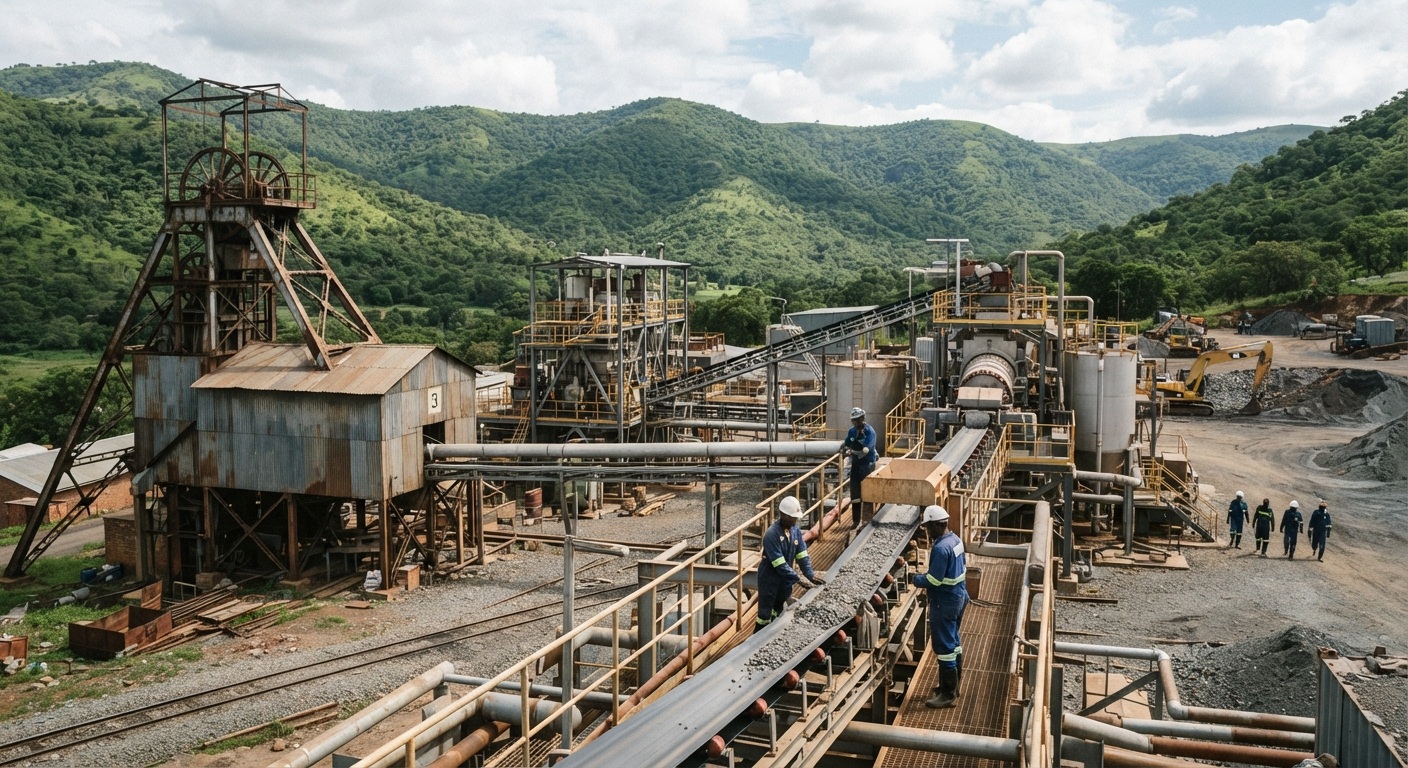
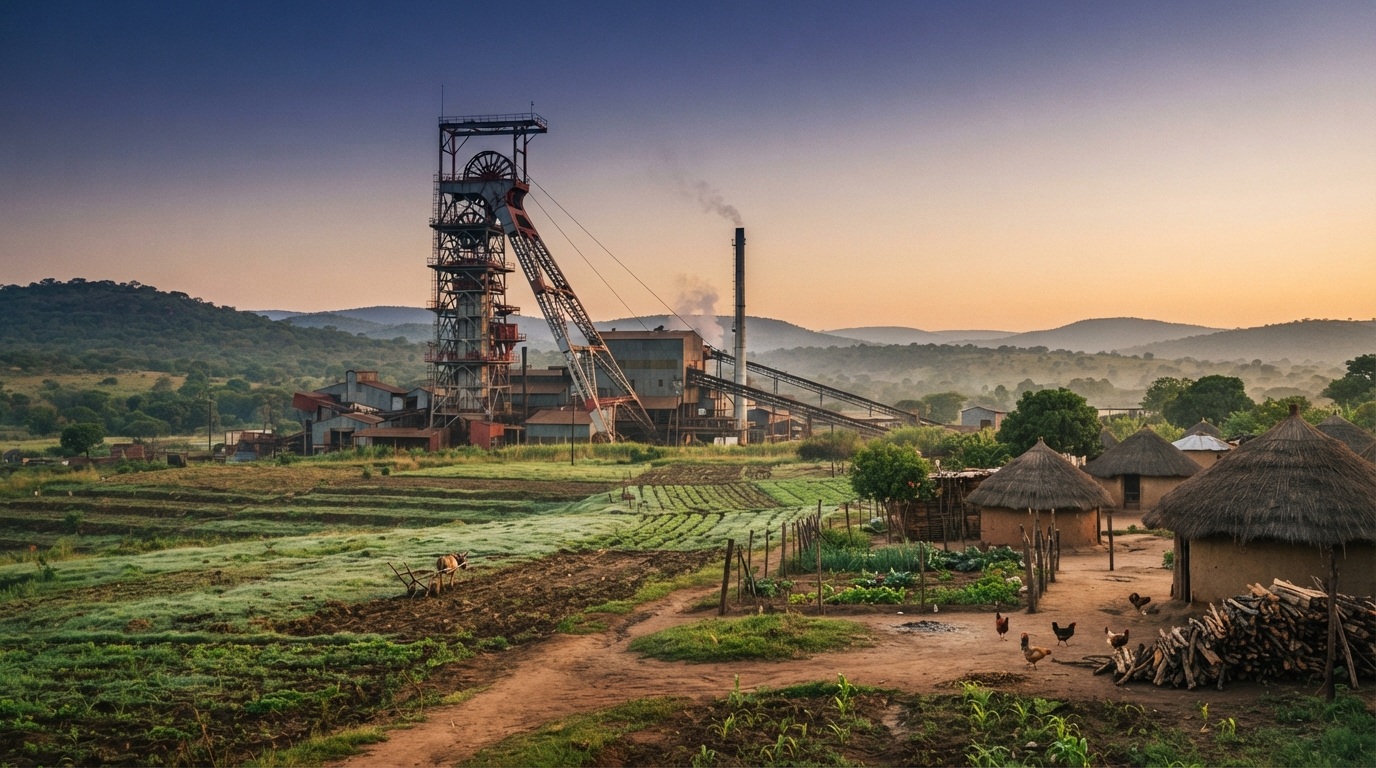
PENHALONGA, MANICALAND – Redwing Mine has returned to gold production after seven years of inactivity, with operator Namib Minerals pouring its first gold at the historic Penhalonga operation on November 23.

The milestone marks the revival of one of Zimbabwe’s long-established gold mines and gives Namib Minerals a second producing asset alongside its flagship How Mine in Bulawayo.

The restart follows an accelerated rehabilitation and recommissioning programme covering critical underground infrastructure and processing facilities. Commercial mining at Redwing had ceased in 2019 when the operation was placed on care and maintenance under its previous ownership.

Namib Minerals said the immediate priority is to establish consistent mining and processing operations before increasing production.

The company is pursuing a phased ramp-up, with further investment and technical work expected to determine the mine’s long-term production potential.

Seven years after closure, Redwing returns

Redwing is a century-old gold operation located in Penhalonga, near Mutare in Manicaland Province.

The mine was previously part of the gold assets associated with Metallon Corporation, once one of Zimbabwe’s largest gold producers. Metallon placed Redwing on care and maintenance in 2019 amid difficult operating and economic conditions.

The operation has historically produced approximately 650,000 ounces of gold between 1981 and 2023, according to Namib Minerals.

Its revival has required substantial work to restore access to underground workings and bring essential infrastructure back into operation.

Grid electricity was restored in June 2026, supporting the dewatering programme and subsequent rehabilitation activities.

Namib completed the dewatering programme in September, ahead of its original fourth-quarter target. Removing accumulated underground water allowed the company to resume access for technical investigations and mining preparations.

The accelerated restart culminated in the first gold pour this week.

Production ramp-up and further investment

While the first gold pour confirms the return of production, Redwing is not yet operating at its intended long-term capacity.

Namib Minerals is prioritising operational consistency before increasing throughput.

A higher-capacity underground winder is expected to be delivered by the end of the first quarter of 2027. The equipment is intended to improve the movement of workers, ore and materials through the mine, supporting higher operating capacity.

The company also expects to complete the technical programme for Redwing’s Definitive Feasibility Study in early 2027.

The study will assess the mine’s redevelopment potential, including opportunities to redesign operations and increase long-term production capacity. Resource-definition drilling is expected to follow.

Namib has indicated that its broader Zimbabwean mine restart programme involves substantial investment. However, estimates for the full redevelopment remain subject to technical assessment and financing decisions.

The company has said it will provide 2027 production and cost guidance in the first quarter of next year, once sufficient operating data is available.

A wider opportunity for Manicaland

Redwing’s return could provide an economic boost to Penhalonga and the wider Manicaland economy.

Mining operations generate demand for engineering, transport, equipment maintenance, security, accommodation, catering and other supporting services.

Local suppliers and small businesses could benefit as activity increases, while sustained production could support direct and indirect employment.

The mine’s revival also restores an important industrial asset to a province with established mining and agricultural activities.

However, the scale of the economic benefit will depend on the pace of expansion, employment levels, local procurement and the extent to which suppliers from surrounding communities participate in the mine’s supply chain.

The environmental and social dimensions of the restart will also remain important. Penhalonga has experienced longstanding mining-related pressures, making responsible water management, land rehabilitation, worker safety and community engagement important considerations as operations expand.

Zimbabwe’s gold production ambitions

Redwing’s return comes as Zimbabwe seeks to increase gold production and strengthen mining’s contribution to exports and economic growth.

The country produced a record 46.7 tonnes of gold in 2025, according to figures reported by Reuters. National output is expected to exceed 50 tonnes in 2026.

The revival of previously dormant mines is part of the broader opportunity to increase production from existing mineral assets rather than relying exclusively on new discoveries.

For Namib Minerals, Redwing also reduces dependence on a single producing operation. Its How Mine produced approximately 25,000 ounces in 2025, according to Reuters.

The group is also advancing development opportunities at Mazowe Mine.

Namib’s longer-term ambition is to build towards combined annual gold production of approximately 300,000 ounces across its portfolio. This is a company-wide target, not a confirmed production forecast for Redwing alone, and remains dependent on technical studies, financing, regulatory approvals and execution.

Business Diary Analysis

Redwing’s reopening is important because it demonstrates the potential economic value of rehabilitating established mining assets.

Restarting an existing mine can offer advantages over developing a greenfield project. Existing geological information, historical production records, mining infrastructure and established access routes can provide a foundation for redevelopment.

However, a mine returning to production after years of inactivity does not automatically become commercially sustainable. Underground rehabilitation, equipment replacement, electricity supply, processing capacity and working capital all influence operating costs and production reliability.

For Zimbabwe, the wider benefit lies in converting dormant mineral assets into consistent export-generating operations.

Gold remains an important source of foreign currency, while mining supports employment, local procurement, transport and demand for industrial services.

Redwing’s revival could strengthen these linkages in Manicaland, but the economic contribution will depend on sustained output and the extent to which local businesses participate in the supply chain.

The investment also highlights the importance of a predictable operating environment for mining companies. Long-term capital commitments require confidence in mining rights, regulatory processes, fiscal arrangements, infrastructure and the ability to repatriate investment returns.

The next phase will therefore be more significant than the first gold pour itself. Investors, workers and the surrounding community will be looking for evidence that the operation can sustain production, expand responsibly and generate lasting economic value.

Whats Next?

Namib Minerals’ immediate focus is to stabilise operations and progressively increase production at Redwing.

The delivery of the higher-capacity underground winder, completion of the feasibility study and further resource-definition work will be key milestones during the first half of 2027.

The company is also expected to release its 2027 production and cost guidance in the first quarter, providing investors with a clearer picture of Redwing’s contribution to its wider portfolio.

For Penhalonga, the priority will be translating the mine’s return into employment, business opportunities and responsible local development.

Redwing has taken an important step towards reclaiming its place in Zimbabwe’s gold industry. Its long-term significance, however, will be measured by sustained production, investment discipline and the economic value it creates beyond the mine gates.

The Business Diary magazine is a comprehensive publication that centers around business and economic development news. It covers a wide range of topics including finance, mining, technology, environment, climate finance, and agriculture. With its focus on providing valuable insights and updates, the magazine caters to readers who are interested in staying informed about the latest developments and trends in the business and economic landscape of Zimbabwe.

Mining & Minerals

China backs Zimbabwe’s lithium processing drive as export ban nears with one plant built

Beijing’s envoy says Chinese miners are investing downstream, but only one of three Chinese-owned sulphate plants is complete and the other two are due next year.

Published

on

China backs Zimbabwe's lithium processing drive as export ban nears with one plant built

HARARE, 23 November – China has reaffirmed its support for Zimbabwe’s shift from exporting raw minerals to a value-added lithium industry, with Chinese Ambassador Zhou Ding saying Chinese miners are increasingly investing in downstream processing.

Speaking at the Mining Media Awards in Harare on Thursday, Zhou said Huayou’s Prospect Lithium has produced what he described as Africa’s first lithium sulphate, with annual capacity of 50,000 tonnes. He said Sinomine’s Bikita Minerals and Yahua’s Kamativi Mining Company are building sulphate plants due for commissioning next year.

Zhou said China’s approach rests on the principle that “African resources belong to Africa”. He urged Zimbabwe to keep policy stable, transparent and predictable, and pointed to cooperation on the Hwange and Kariba South power stations. He said planned solar and waste-to-energy projects would add more than 1,000 megawatts, at investments above US$700 million.

The timing matters. Zimbabwe will stop concentrate exports from January to push miners to process more domestically. On 9 October, Information Ministry Permanent Secretary Nick Mangwana said producers had been given enough time and there was no reason to delay. Producers had asked for a six-month delay, to June 2027. A Reuters report in July said only Huayou’s plant was complete and it could process only its own output, while the Bikita and Kamativi plants were unlikely to be ready by January. The ambassador’s timeline is consistent with that.

Lithium is now central to export earnings. The Minerals Marketing Corporation said lithium earned US$746 million in the first half of 2026, of which concentrate contributed US$672.8 million and lithium sulphate US$73.2 million. The finance ministry put first-half lithium exports at US$782 million, against US$237 million a year earlier. By the nine-month mark, lithium had overtaken platinum group metals as the biggest mineral export after gold. Production is expected to be 2.14 million tonnes this year, slightly below 2025. The minerals marketing body attributed the growth mainly to higher concentrate prices, and recorded US$190 million in sulphate sales over the period. Lithium exports topped US$2.159 billion in the first three quarters. That makes sulphate under a tenth of the total, by my calculation.

Chinese capital dominates. Chinese firms have invested about US$2 billion since 2021. Sinomine, Chengxin, Yahua, Huayou and Tsingshan dominate lithium mining. Most lithium exports go to China.

Producers are also lobbying on tax. On 12 November they proposed cutting the royalty on lithium sulphate and carbonate from 7 percent to 3 percent, while keeping 7 percent on concentrates. The reports reviewed do not show whether the 2027 National Budget, presented on 19 November, addressed the request.

Background

Zimbabwe banned raw lithium ore exports in December 2022. In June 2025 the government announced a total ban on concentrate exports from January 2027. It suspended exports of concentrates and other unprocessed minerals on 26 February 2026, alleging malpractice and leakages. It introduced a quota and compliance system in April. Huayou shipped Africa’s first lithium sulphate consignment two months after the halt. A ministry position paper describes a long-term path from sulphate to battery-grade chemicals, then precursor and cathode materials, and ultimately batteries and electric vehicles.

Business Diary Analysis

The “backing” is mostly corporate capital, not a state-to-state commitment. The ambassador’s remarks endorse investments Chinese companies are already making. On government-level finance, Finance Minister Mthuli Ncube said in June that Zimbabwe was considering mineral-backed deals with China for roads and railways. I found no agreement reported.

The sequencing risk is real. If only Arcadia is operating in January, concentrate from other mines has no domestic outlet unless transitional arrangements are made. Former Mines Minister Winston Chitando urged producers to invest in sulphate plants or sign toll-treatment agreements. Whether government allows such a bridge will decide whether the ban builds capacity or interrupts exports. This is interpretation, not established fact.

The royalty request shows the tension in the policy. Government wants more value kept at home, and producers say the fiscal take affects project viability. Concentration also carries risk. Analysts have asked whether Zimbabwe is building an independent refining sector or deepening its role in China’s supply chain.

What’s Next?

Watch for any transitional export arrangement ahead of 1 January and for the government’s reply on royalties. Also watch commissioning at Bikita and Kamativi, whether the 2027 Budget changed lithium taxes, and any confirmed financing agreement with China.

Continue Reading

Mining & Minerals

Zimbabwe Miners Project US$14.6bn Revenue in 2027, but Power Costs and Lithium Rules Cloud the Outlook

Published

on

Zimbabwe Miners Project US$14.6bn Revenue in 2027, but Power Costs and Lithium Rules Cloud the Outlook

Zimbabwe’s mining executives expect mineral revenue to reach about US$14.6 billion in 2027, up from an estimated US$13.6 billion this year, according to the Chamber of Mines of Zimbabwe’s annual State of the Mining Industry Survey Report. The report, titled Mining Prospects 2027, was presented in Harare by lead researcher Professor Albert Makochekanwa.

Mines and Mining Development Minister Polite Kambamura attributed the projected increase to favourable prices and strong output growth in gold, lithium and coal, according to Business Times. The survey’s profitability index for 2027 stands at +33.2. Executives also expect improvement in the fiscal framework, the investment climate, access to foreign currency and electricity availability, and expect mining employment to rise as expansion projects proceed.

The survey is a measure of executive sentiment. It is not an official forecast from the statistics office or the finance ministry.

The report put the industry’s capital requirement for 2027 at more than US$1.9 billion. About US$1.2 billion of it is earmarked for beneficiation infrastructure, with most of that for lithium, according to the Herald. Executives also proposed a price-linked royalty. Under that system, state revenue would rise when commodity prices rise and relief would be given to producers when prices fall.

Electricity was the clearest source of concern. Makochekanwa warned that supply constraints and high production costs could undermine the anticipated growth. The report puts the general mining tariff at US cents 14.21 per kilowatt hour against a regional average of US cents 7.80, an 82% premium, according to Mining Zimbabwe. Mining companies sell into global markets and have little room to pass the cost on.

The grid also featured at the launch. ZETDC senior manager Engineer John Diya told delegates the utility needs about US$2.4 billion to rehabilitate its transmission and distribution network. He said generation is adequate but the network is the biggest reliability risk for industry.

On lithium, the survey projects concentrate output of 2.3 million tonnes in 2027, up from 2.2 million this year, and lithium sulphate output of 208,000 tonnes as new plants come online, according to Mining Weekly. Zimbabwe exported 33,807 tonnes of lithium sulphate between April and September. Miners want the planned January 2027 ban on concentrate exports moved to July 2027 to finish building processing plants. If the ban takes effect as scheduled, the survey projects a stockpile of 1.4 million tonnes of concentrate by the end of next year. Kambamura told a ministry workshop on 2 November that only lithium sulphate would be exported from January, according to Mining.com.au.

Background

The survey, first published in 2015, is the main empirical reference for government and private-sector planning, according to the Herald. Last year’s edition projected mineral earnings of US$7.5 billion for 2026 and capacity utilisation of 95% in 2026, up from 88% in 2025, NewsDay and the Herald reported. The Chamber also reported that 2025 export earnings rose to a record US$8.5 billion from US$5.9 billion, according to NewsDay. Mines shed about 4,300 jobs in 2025, the Independent reported.

Business Diary Analysis

Two numbers in the report need explaining. The 2026 revenue estimate of US$13.6 billion is far above the US$7.5 billion forecast a year ago, and the published findings do not explain the gap. Firmer commodity prices, gold in particular, would be consistent with it, but that is the Business Diary’s inference, and “revenue” may be defined differently from the “earnings” used last year. Capacity utilisation tells a different story: the new report puts it at 76% for 2026, against the 95% the Chamber projected last year, before a forecast rise to 91% in 2027, according to Mining Zimbabwe. If both figures are on the same basis, mines are running well below plan despite higher revenue, which suggests prices rather than volumes are driving earnings.

The forecast is only as reliable as its assumptions about power and policy. Executives expect better electricity availability next year, yet the tariff premium and grid condition cited at the launch are the same pressures that held output back this year. Lithium shows how policy can cut either way. Beneficiation is bringing new capital and higher-value exports, but a ban that arrives before the plants are ready would leave a large stockpile and an income gap.

What’s Next?

Finance Minister Mthuli Ncube was scheduled to present the 2027 national budget today, and the royalty request will test whether the fiscal framework moves in the industry’s favour. Next to watch is whether the government keeps the January lithium concentrate ban or grants the extension miners are asking for.

Continue Reading

Mining & Minerals

Mines Bill Hearings Expose Farmer, Miner and Investor Tensions as Government Targets Year-End Passage

Parliament’s nationwide hearings on the Mines and Minerals Bill, now in their third day, have drawn demands from farmers and small-scale miners for stronger land protections and a working digital cadastre. The Mines Minister has set year-end as the target for completing the Bill, with the first quarter of 2027 as the fallback.

Published

on

Mines Bill Hearings Expose Farmer, Miner and Investor Tensions as Government Targets Year-End Passage

Farmers, small-scale miners and community leaders have used Parliament’s public hearings on the Mines and Minerals Bill to demand tougher safeguards for land, communities and the environment. The Government has meanwhile signalled that it wants the Bill completed before the end of 2026.

The Portfolio Committee on Mines and Mining Development is holding the hearings nationwide from 17 to 22 November 2026. At the Bulawayo session on Tuesday, the committee heard from the Zimbabwe Farmers Union (ZFU), the Zimbabwe Miners Federation (ZMF), the Zimbabwe Indigenous Miners Association (ZIMA), Umguza Rural District Council and individual miners and farmers. Written submissions are due before 22 November.

Mines and Mining Development Minister Polite Kambamura has said the Government is working to conclude the outstanding legislative stages before the end of the year, but accepts the process could slip into the first quarter of 2027.

The sharpest objections came from farmers. ZFU Umguza district chairman Vision Sithole told the committee that a 100-hectare ceiling on land protected from prospecting is unacceptable, because A2 farmers hold more than 200 hectares. He also opposed clauses 37 to 39, which he said allow prospecting on larger holdings after consultation alone and bar a farmer who refuses from obtaining mining rights for 10 years. ZFU asked for written farmer consent before prospecting, a farmer’s first right of refusal to take equity, a mandatory compensation formula and surface rentals.

The ZMF welcomed the Bill as long overdue, noting that small-scale miners now produce more gold than large-scale operators. Its representative, Liberty Mlambo, objected to a provision he said suspends the Mining Cadastral Registry, and said Treasury has funded the registry for a decade without completing it. He argued the law should not take effect until the registry works. He also asked that artisanal miners, estimated at more than a million, get a legal path to formal small-scale status, and that at least three of the six appointed Mining Affairs Board members be working small-scale miners.

Committee chairperson Remigio Matangira said the Bill compels miners to contribute to rehabilitation and will direct revenue to roads and development. He also said beneficiation, meaning processing minerals such as lithium and coal locally rather than exporting raw ore, will create jobs and raise tax revenue.

The Bill, gazetted on 25 June 2025, would repeal and replace the Mines and Minerals Act (Chapter 21:05) of 1961. It proposes a Mining Cadastre Register to record all mining rights and a stricter “use it or lose it” principle, and it keeps small-scale mining exclusively for Zimbabweans. The Government could also declare minerals such as rare earths “strategic,” which would require a minimum US$1 million investment and a joint venture with the State. The Bill has a long history. Earlier versions were tabled, debated and shelved, with some lapsing in Parliament or stalling before Presidential assent. Parliament records show the current Bill at Second Reading stage in the National Assembly.

For the industry, the legislation is tied to a long-running complaint about regulatory certainty. Mining companies have called for streamlined licensing and a review of fees and charges they consider excessive or duplicative, and the Minister has said ESG compliance is intended to become a prerequisite for applications, renewals and extensions of mining rights.

Business Diary Analysis

The hearings show that the Bill has to balance three constituencies whose priorities partly conflict. Investors want predictable titles and procedures, farmers want veto-like protection for productive land, and small-scale miners want formal recognition. Whatever emerges will satisfy none of them fully, so the details will matter more than the overall direction.

The digital cadastre is the credibility test. Title certainty underpins financing, and boundary disputes are the practical source of the land clashes witnesses described. The ZMF’s claim that the registry has been a decade in the making, which we have not independently verified, suggests that even a well-drafted law may not deliver certainty until the system exists.

The timeline is demanding. The hearings end on 22 November, and the Bill must then pass committee reporting and the remaining parliamentary stages. A first-quarter 2027 outcome looks the more realistic of the Minister’s two targets, though that is our assessment and not an official forecast. For investors, the strategic-minerals provisions and the pending fee review are the items most likely to affect project economics.

What’s Next?

Watch for the committee’s report once hearings close, any amendments to the 100-hectare land protection and the compensation clauses, and whether Parliament confirms its timetable for the remaining stages.

Continue Reading

Trending

×