Connect with us

Business & Economy

CBZ hives off two directors in shock move

Published

on

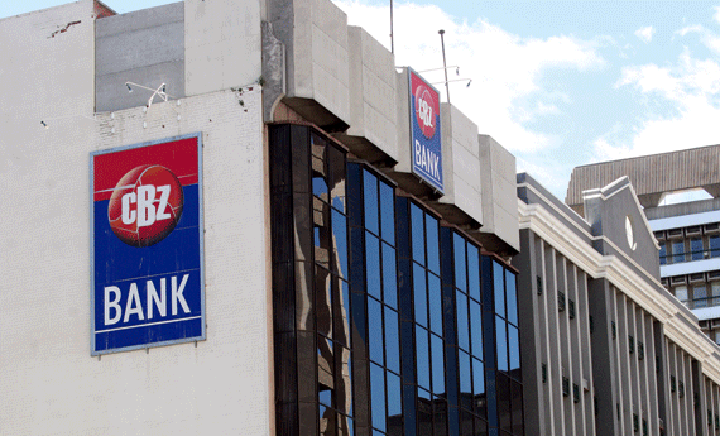
DISTINGUISHED banker Marc Holtzman’s sudden departure as board chairperson at the Commercial Bank of Zimbabwe (CBZ) Holdings has rattled the market and sparked speculation that he was pushed out.

Holtzman, who once served as board chairperson at the Bank of Kigali (Rwanda), was head-hunted in 2019 to steer efforts to grow the financial institution’s balance sheet and attract foreign capital.

In a notice to shareholders this week, CBZ announced the departure of Holtzman and chief executive officer Blessing Mudavanhu.

The shock departures come at a time CBZ has assumed a controlling stake in ZB Financial Holdings (ZBFH) in a transaction that strategically positions the financial behemoth to drive national development projects.

As part of its growth and expansionary drive, CBZ has already concluded a 31,22% purchase in First Mutual Holdings Limited (FMHL) from the former majority shareholder, the National Social Security Authority (Nssa), which once held 65,53% shareholding in FMHL.

However, in the statement, CBZ did not give specific reasons explaining why Holtzman and Mudavanhu were leaving the financial institution, triggering speculation in the market that the former “could have been pushed out”, by shareholders.

The financial institution’s group executive marketing and corporate affairs, Matilda Nyathi, later told the Independent that Holtzman had left CBZ to pursue “other interests”, having played “a significant role in supporting the Zimbabwean economy”.

Through the astute leadership of Holtzman, Nyathi said, the outgoing banker was able to unlock lines of international credit.

“Holtzman retired to pursue other interests as was advised by our notice. (He) demonstrated exceptional leadership and made significant contributions to the Holdings’ growth … whilst also playing a significant role in supporting the Zimbabwean economy.

“Marc Holtzman’s appointment, coupled with his strategic initiatives, brought about significant changes to the group’s performance. Firstly, he adopted a comprehensive approach to reach out to foreign investors. The bank has over the period raised international lines of credit.”

In the statement, CBZ noted that the institution would continue to leverage on the solid professional relationships built by Holtzman during his tenure.

“Whilst the board and management will miss Marc’s insights and wisdom, the company will continue to benefit from the many relationships that he built over the years with key stakeholders,” excerpts from CBZ statement to its shareholders read.

A source close to the developments said: “All this happened because of a fight for control of the institution by some shareholders”.

Holtzman will be replaced by ZBFH board chairperson Luxon Zembe, who also has a long-standing history in the banking field.

Questions sent to Holtzman on his mobile phone were not addressed at the time of going to print. His mobile phone was also not available.

The Independent wanted to understand the reasons why he is leaving CBZ at a time the entity is about to tie up the ZBFH takeover deal and what his next adventure would be.

A brief history of Holtzman shows that he once served as the vice-chairperson of Barclays Plc, a British multinational universal bank and executive of Kazakhstan’s largest private bank.

In 2021, Holtzman was part of the delegation that travelled with President Emmerson Mnangagwa to South Africa for the Inter Africa Trade Fair held in Durban.

Holtzman’s web of international connections extends to Washington DC, where he served under President Ronald Reagan’s administration.

Under his watch, the US Treasury cleared CBZ of a US$385 million penalty for processing transactions for a designated entity, ZB Bank.

When the hefty penalty was imposed, the Office of Foreign Assets Control (Ofac) indicated that CBZ had perpetrated numerous violations of US sanctions on Zimbabwe.

Concerning Mudavanhu’s closing chapter at CBZ Holdings, having been at the helm for five years, the executive told the Independent he was leaving because his contract with the financial institution had expired.

Away from the banking world, Mudavanhu said his next adventure would be focused in the field of academia at the University of Cape Town and Witwatersrand University in neighbouring South Africa.

He explained: “I have a five-year contract which expires this year. This gives me an opportunity to do other things such as research and teaching specifically at the University of Cape Town and Witwatersrand.

“My most (outstanding) achievement has been the rebranding of CBZ, which ushered in a new company with new ambitions leading into the acquisition of a large insurance company,” Mudavanhu said.

“The revamping and commercialisation of command agriculture and now the digital transformation are (among) some of my key achievements in my five-year tenure.”

Mudavanhu, whose name has been thrown in the hat among candidates tipped to take over as Reserve Bank of Zimbabwe governor when the tenure of incumbent John Mangudya ends, highlighted that he will be “happy” to take up a position where he can contribute meaningfully.

Mangudya is serving his last term as central bank chief, which ends next year.

“I have not been approached on any opportunities outside CBZ and will be happy to consider opportunities where I can make meaningful contributions,” Mudavanhu said.

Lawrence Nyazema will replace Mudavanhu as group chief executive officer at CBZ.

The Business Diary magazine is a comprehensive publication that centers around business and economic development news. It covers a wide range of topics including finance, mining, technology, environment, climate finance, and agriculture. With its focus on providing valuable insights and updates, the magazine caters to readers who are interested in staying informed about the latest developments and trends in the business and economic landscape of Zimbabwe.

Continue Reading
Click to comment

Leave a Reply

Your email address will not be published. Required fields are marked *

Business & Economy

Air Zimbabwe Secures EuroAtlantic Aircraft to Stabilise London Route After Wet-Lease Disruption

Air Zimbabwe has appointed Portugal-based EuroAtlantic Airways as its new wet-lease partner for the Harare–London service after the withdrawal of Spanish carrier Plus Ultra disrupted flights earlier this week. The replacement arrangement is intended to restore operational continuity ahead of the festive travel season.
Published

on

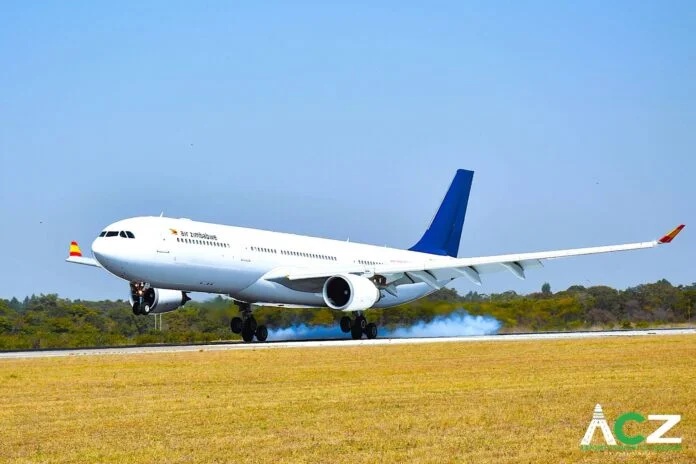
HARARE, 26 November 2026 – Air Zimbabwe has engaged Portuguese aviation company EuroAtlantic Airways to provide an Airbus A330-300 aircraft for its Harare–London route, replacing Spanish carrier Plus Ultra following an unexpected disruption to the previous wet-lease arrangement.

In a press statement issued on Thursday, the national airline said the new partnership would strengthen its operational resilience and ensure continuity of its international service.

Under the agreement, EuroAtlantic will provide the aircraft, crew, maintenance and insurance under an Aircraft, Crew, Maintenance and Insurance (ACMI) arrangement, commonly known as a wet lease.

The move follows the withdrawal of Plus Ultra’s aircraft earlier this week, which forced Air Zimbabwe to reschedule services and make alternative arrangements for affected passengers.

John Mangudya, chief executive of the Mutapa Investment Fund, which oversees Zimbabwe’s state-owned enterprises, confirmed the new partnership, although the financial terms of the agreement have not been disclosed.

Replacement aircraft restores London operations

The replacement arrangement provides Air Zimbabwe with an aircraft and operational support without requiring the national carrier to deploy its own aircraft and crew on the long-haul route.

The aircraft identified in media reports is registered as CS-TGJ. It is an Airbus A330-300 configured with 27 business-class seats and 263 economy-class seats, giving it a total capacity of 290 passengers.

The aircraft also has an in-flight entertainment system.

EuroAtlantic specialises in aircraft leasing, charter operations and ACMI services, supplying aircraft and operational support to other airlines. The arrangement allows Air Zimbabwe to continue operating the route while relying on its partner for the aircraft and associated technical services.

Plus Ultra withdrawal disrupted flights

The change follows operational difficulties involving Plus Ultra, which had supplied the Airbus A330-300 used by Air Zimbabwe since the resumption of direct flights to London in July.

The Spanish airline suspended its flight operations on November 23 amid financial difficulties and subsequently recalled the aircraft it had been leasing to Air Zimbabwe.

The withdrawal disrupted the Harare–London schedule, resulting in the postponement of the London–Harare flight scheduled for November 23 and the corresponding outbound service from Harare.

Air Zimbabwe apologised to affected passengers and said it had been working on alternative arrangements, including transferring some travellers to other airlines and providing accommodation where necessary.

Passenger advisory and revised schedule

Air Zimbabwe said the London–Harare service was scheduled to operate on Thursday, November 26.

According to the airline’s passenger advisory, check-in was scheduled to open at 13:30 hours, with departure set for 17:40 hours. Passengers were advised to arrive at the airport in good time to complete check-in and boarding formalities.

The airline also indicated that passengers booked on the affected November 23 service and those scheduled to travel on November 26 should take note of the revised arrangements.

The outbound Harare–London flight originally scheduled for November 25 had, however, been rescheduled to Friday, November 27, according to earlier operational updates. Passengers should therefore confirm their individual flight details directly with the airline before travelling.

Festive season expansion remains in focus

The replacement agreement comes just days after Air Zimbabwe announced plans to increase frequencies on the London route from three to four flights weekly, effective December 1.

The additional frequency was intended to accommodate increased passenger demand during the festive season, when travel between Zimbabwe and the United Kingdom typically rises.

Air Zimbabwe resumed direct scheduled flights between Harare and London Gatwick on July 22, 2026, ending a 14-year absence from the route.

The service had been relaunched using an Airbus A330-300 supplied by Plus Ultra under an ACMI arrangement. The return to London followed the acquisition of the necessary UK Foreign Operator Permit from the Civil Aviation Authority.

Our Analysis

The EuroAtlantic agreement is an important operational intervention for Air Zimbabwe because the London route is strategically significant for the national carrier’s international recovery.

Direct connectivity between Harare and London serves several markets, including Zimbabwe’s diaspora, business travellers, tourists, students and government-related travel. It also provides an important link for trade and commercial relationships between Zimbabwe and the United Kingdom.

However, the disruption exposes a structural vulnerability in the airline’s current long-haul operating model.

Air Zimbabwe’s reliance on wet-leased aircraft means that the continuity of its international services depends partly on the operational and financial stability of external aviation partners. When a lessor withdraws an aircraft, the airline can face immediate disruption unless replacement capacity is secured.

The EuroAtlantic agreement provides a practical solution, but the undisclosed commercial terms make it difficult to assess the cost implications for Air Zimbabwe.

Wet leasing can reduce the immediate capital burden of acquiring and maintaining long-haul aircraft. However, it also creates recurring leasing costs and dependence on external operators.

For the national airline, the longer-term challenge will be balancing operational flexibility with financial sustainability, fleet development and consistent service delivery.

The timing is also significant. Air Zimbabwe is attempting to expand the London route during the peak travel season. Maintaining schedule reliability will be essential to protecting passenger confidence and building a sustainable customer base.

Whats Next?

The immediate priority is restoring the normal flight schedule and ensuring passengers affected by the disruption reach their destinations.

Attention will then turn to the planned increase to four weekly frequencies from December 1 and whether the new wet-lease arrangement can support the additional capacity.

Air Zimbabwe has not disclosed the financial terms or duration of its agreement with EuroAtlantic Airways. Greater clarity on these arrangements would help establish the cost and operational implications of the partnership.

For now, the replacement aircraft gives the national carrier a route back to operational continuity. The more important test will be whether it can maintain reliable services and rebuild confidence in its international operations.

Continue Reading

Business & Economy

Minister Tagwirei Hosts French Envoy to Advance Zimbabwe-France Trade and Investment

Moving swiftly to assert operational command of his portfolio, Minister of Economic Development and Investment Promotion Senator Dr. Kudakwashe Tagwirei hosted the Ambassador of France to Zimbabwe for high-level talks focused on unlocking investment opportunities, strengthening bilateral trade, and advancing pragmatic economic cooperation between Harare and Paris.

Published

on

Minister Tagwirei Hosts French Envoy to Advance Zimbabwe-France Trade and Investment

HARARE — Zimbabwe’s drive to translate its “Open for Business” mantra into tangible international capital gained fresh momentum this week as the Minister of Economic Development and Investment Promotion, Senator Dr. Kudakwashe Tagwirei, hosted the Ambassador of France to Zimbabwe for high-level bilateral talks.

Moving swiftly to assert operational command of his newly established portfolio, Dr. Tagwirei used the engagement to outline Harare’s immediate economic priorities, focusing squarely on unlocking direct investment opportunities, expanding bilateral trade volumes, and building structured economic cooperation between Zimbabwe and France.

Since taking the helm of the separated Ministry of Economic Development and Investment Promotion in October 2026, Dr. Tagwirei has prioritized results-driven economic diplomacy over political rhetoric. His background as a prominent industrialist and entrepreneur—having built major commercial footprints across Zimbabwe’s energy, mining, agriculture, and infrastructure sectors—brings a private-sector urgency to a ministry specifically designed to mobilize capital alongside the Ministry of Finance’s fiscal stewardship.
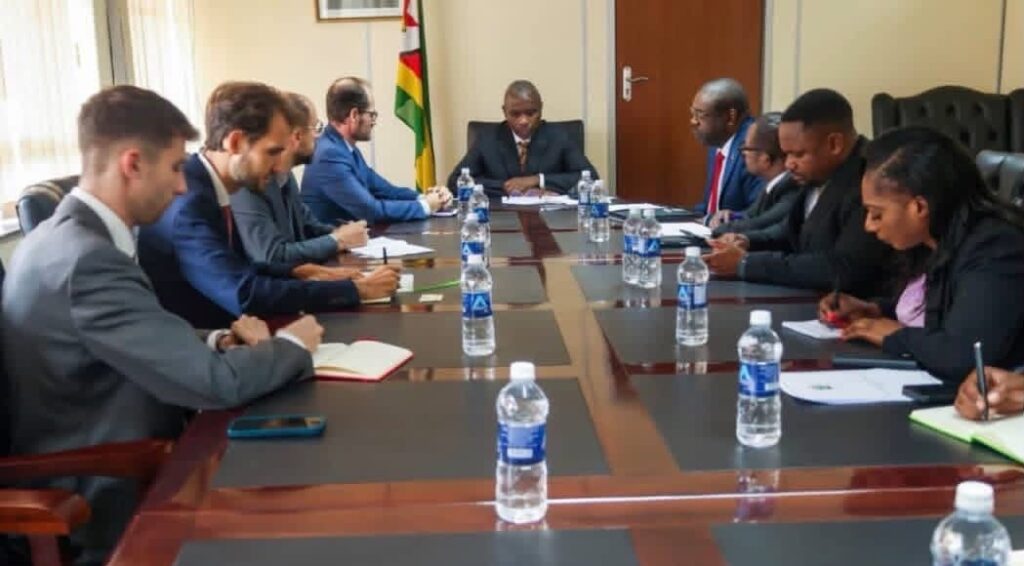
Harare and Paris Chart Pragmatic Economic Course as Minister Tagwirei Engages French Envoy

Harare and Paris Chart Pragmatic Economic Course as Minister Tagwirei Engages French Envoy

The meeting with the French envoy signals a notable step in Zimbabwe’s broader engagement and re-engagement agenda championed by President Dr. Emmerson Mnangagwa. Guided by the foreign policy doctrine of being “a friend to all and an enemy to none,” Harare has consistently sought to reset relations with Western capitals by anchoring discussions in mutual economic interest rather than historical friction.

As a leading voice within the European Union, France’s willingness to engage directly with the Ministry of Economic Development and Investment Promotion underscores a growing pragmatic consensus: sustainable progress between Harare and Brussels is best achieved through commercial partnerships, trade facilitation, and direct dialogue rather than megaphone diplomacy.

For Dr. Tagwirei’s ministry, the engagement sets the tone for an active, outward-looking mandate. With Zimbabwe consolidating recent macroeconomic stability—marked by steady GDP growth and sharply moderated inflation—the Ministry is positioning itself as the primary bridge for international investors seeking bankable projects in a reforming market.

By pairing private-sector execution with state-level diplomacy, Dr. Tagwirei is signaling to both regional and European partners that his office is fully operational, aligned with Vision 2030, and ready to convert diplomatic goodwill into concrete economic output.

Continue Reading

Business & Economy

RGM Airport Cargo Village Gets National Project Status

The proposed US$1.3 billion cargo village at Robert Gabriel Mugabe International Airport has been awarded National Project Status. The designation is meant to unlock fiscal incentives and lower costs for a privately financed project. The Airports Company of Zimbabwe (ACZ) says it will help turn Harare into a regional cargo hub.


Published

on

RGM Airport Cargo Village Gets National Project Status

HARARE – The Robert Gabriel Mugabe International Airport (RGMIA) Cargo Village has been awarded National Project Status, the Airports Company of Zimbabwe said. In a statement reported by The Herald, ACZ said the designation is a milestone for Zimbabwe’s aviation and logistics infrastructure. The project is a partnership between ACZ and the local logistics firm Transvaal Africa.

ACZ said the designation is expected to unlock investment, give access to fiscal incentives, reduce implementation costs and speed up cargo-handling and logistics infrastructure. Transvaal Africa chief executive Patson Moyo told a press conference on Tuesday that the status would ease the financial burden through rebates. He said the village will have 142 warehouses with specialised equipment, an airport hotel and an aviation fuel system. Groundbreaking is expected in the first quarter, with completion by 2030.

Scope and capacity

The first phase will cover 520 hectares, rising to 1,000 hectares when complete, according to reports of the briefing. ACZ chief executive Tawanda Gusha said the airport currently handles 30,000 to 40,000 tonnes of cargo a year against a potential of 100,000 tonnes. He said capacity must grow so that cargo airlines keep flying to Zimbabwe. He added that the village will consolidate cargo operations that are now spread across different parts of the airport.

The project value has been reported at US$1.3 billion. When Transvaal announced the project in December 2025 it was described as an investment of just over US$1 billion.

Background

The cargo village follows a US$153 million terminal expansion at the airport, which added a terminal, aprons and infrastructure. That expansion was financed by a Chinese concessional loan. ACZ has said it wants to turn the airport into a regional hub for passengers and cargo. It has described cargo operations as fragmented and wants them housed under one roof. The planned secondary runway has been folded into the cargo village project. The facility is also due to be designated a Special Economic Zone, with a cold-chain hub for agro-processing and exports. The government is separately building a US$250 million expressway between the airport and the city centre.

National Project Status is a designation under Zimbabwe’s investment framework for significant projects. The IFC’s private sector diagnostic of Zimbabwe lists among its benefits relief from withholding tax on interest paid to service loans. The government gave the same status to the US$3 billion Harare Light Rail project earlier this year.

Business Diary Analysis

For the treasury, the attraction is that private capital carries the cost. The project is financed by Transvaal under a public-private partnership, so the state does not borrow to build it, unlike the terminal expansion. The trade-off is that the designation reduces the investor’s costs through rebates and relief, which means lower tax revenue for the state in the early years. The final package of incentives and the state’s equity stake have not been published. The government approved new PPP guidelines this year that entrench a minimum 30 percent state stake in project vehicles, and it is not yet clear how they apply here.

For exporters, the case is practical. Horticulture, mining and agro-processing producers depend on reliable cold storage and air freight to reach markets in Europe and the Middle East. Consolidated handling and a cold-chain hub could shorten turnaround times and reduce spoilage. The test is utilisation. Raising volumes from 30,000 to 40,000 tonnes towards 100,000 tonnes depends on airlines choosing Harare, which depends in turn on competitive handling charges and the reliability of power, customs and ground transport. Regional rivals such as Johannesburg and Lusaka are also investing.

Timelines add another risk. Completion by 2030 depends on groundbreaking in 2027 and on financing being secured. Designation lowers the cost of capital but does not guarantee delivery. Investors and shippers will want evidence of financial close, construction contracts and anchor tenants before treating the project as bankable.

Conclusion

National Project Status gives the cargo village regulatory and tax support at an early stage. The next milestones, such as groundbreaking and the release of the incentive terms, will show whether the village can lift Zimbabwe’s air cargo capacity.

What’s Next?

Watch for the groundbreaking date, the published terms of incentives and state equity, and the first anchor tenants or cargo airlines. Also watch for updates on the secondary runway and the airport road project.

Sources: The Herald; Zimbabwe Situation; 263Chat; ZANU-PF news; The Herald, Dec 2025; Bulawayo24; CAPA; IFC private sector diagnostic; InfraPPP World; NewsDay, PPP rules; AidData

Continue Reading

Trending

×