Connect with us

Business & Economy

Chipo Mtasa steps down from Zimplats board

Published

on

Chipo Mtasa steps down from Zimplats board

Former TelOne managing director, Chipo Mtasa, has stepped down from the board of Zimplats, the country’s  largest producer of platinum group metal (PGM) producer, Zimplats,  effective January 8, 2024.

Mtasa was chosen on October 28, 2019, to serve as a non-executive director.

She was on the board as a member of the remuneration committee and as chairperson  of the audit and risk committees.

“The board of directors of Zimplats wish to announce that Mrs Chipo Mtasa has resigned as a non executive director of the Company with effect from 8 January 2024.

“Chipo was elected as an independent non-executive director of the Company at the annual general meeting held on 28 October 2019.

“She served as the chairperson of the board’s audit and risk committee and was a member of the remuneration committee.

“The board extends its sincere appreciation to Chipo for her valuable contribution to the Company during her period as a director of the Company and wishes her every success in the future,” the company said.

Mtasa said she had to step down from Zimplats to focus on the new assignment at Mutapa Investment Fund.

“I am now in a very demanding role as chair of Mutapa Investment Fund so I had to step down from other boards for me to focus on this assignment.”

This comes after the government decided to operationalize the former sovereign wealth fund, and Mtasa was recently appointed to chair the board of the Mutapa Investment Fund.

Source: Business Times

The Business Diary magazine is a comprehensive publication that centers around business and economic development news. It covers a wide range of topics including finance, mining, technology, environment, climate finance, and agriculture. With its focus on providing valuable insights and updates, the magazine caters to readers who are interested in staying informed about the latest developments and trends in the business and economic landscape of Zimbabwe.

Business & Economy

Zimbabwe and Kenya Sign Seven Agreements as Trade Reaches US$57.6m

Presidents Emmerson Mnangagwa and William Ruto upgraded the two countries’ cooperation framework to a Bi-National Commission in Nairobi on Friday. The new deals cover housing, customs and trade promotion, while tax, extradition and energy pacts remain unfinished.
Bilateral trade rose 63% to US$57.6 million in 2025. It is still dominated by Zimbabwean tobacco and sugar.
Published

on

Zimbabwe and Kenya Sign Seven Agreements as Trade Reaches US$57.6m

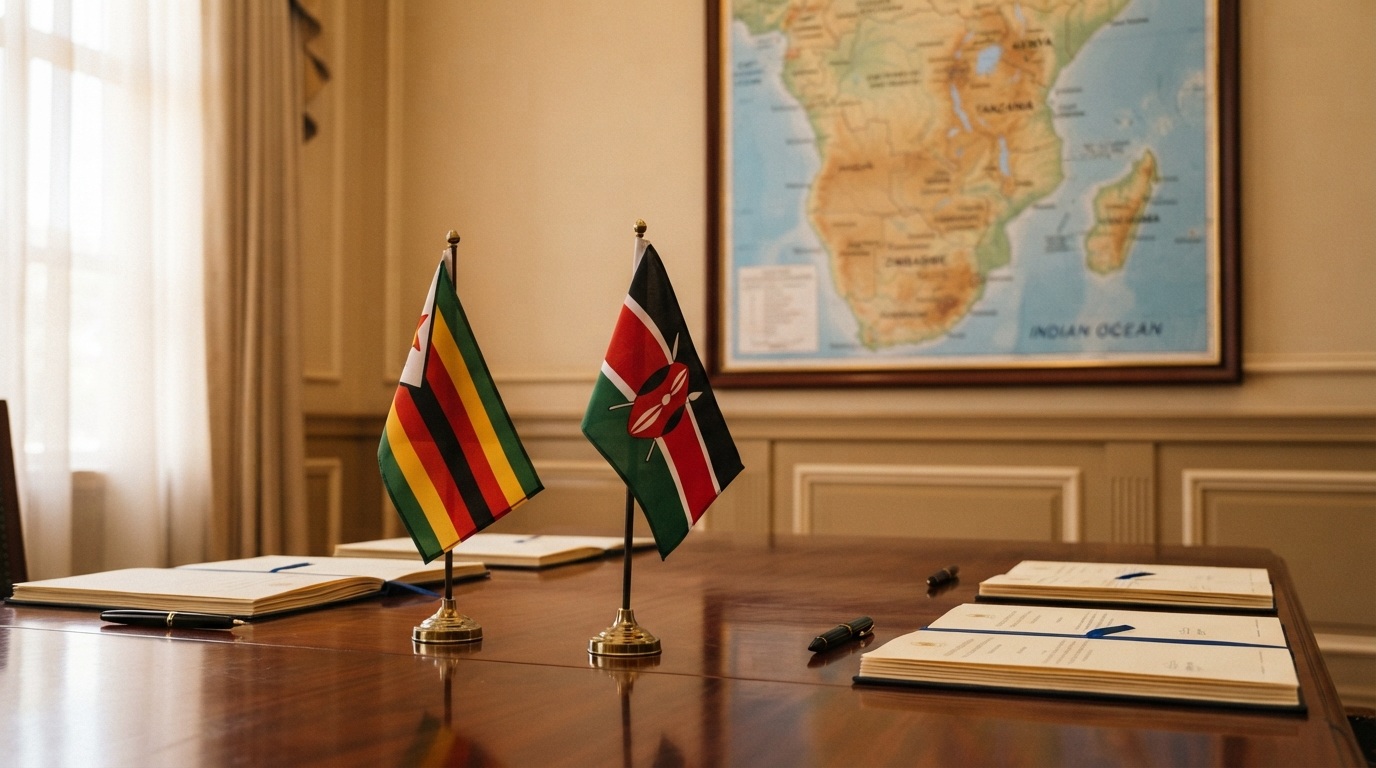
NAIROBI: Zimbabwe and Kenya signed seven memoranda of understanding on Friday, 27 November 2026, at State House in Nairobi. The signing followed the inaugural Bi-National Commission, co-chaired by Presidents Emmerson Mnangagwa and William Ruto.

The Bi-National Commission replaces the Joint Permanent Commission on Cooperation, which was led by ministers. The new body sits at head-of-state level. Mr Mnangagwa told Kenyan officials that the upgrade reflects the growing strength of the two countries’ ties.

The seven memoranda cover affordable housing and building technologies, immigration and migration management, diplomatic training, arts and heritage, news exchange between their state agencies, customs mutual assistance, and trade promotion. The trade promotion pact is between the Kenya Export Promotion and Branding Agency and ZimTrade. The customs agreement commits both sides to help each other facilitate lawful trade and combat customs offences. Mr Ruto said the new agreements bring the total number of bilateral instruments to 24.

“Our focus now is implementation,” Mr Ruto said, according to the Kenya Broadcasting Corporation. He said the two sides were still negotiating agreements on extradition, mutual legal assistance, transfer of sentenced persons, prisons and correctional services, energy, maritime affairs and avoidance of double taxation. Both governments have told their teams to finalise them quickly. The leaders will meet again in Zimbabwe on a date to be agreed to review progress.

Trade figures

Trade between the two countries grew from US$35.3 million in 2024 to US$57.6 million in 2025, an increase of about 63%. Both governments have targeted US$70 million a year by the end of 2026. No 2026 figures have been published. Reaching the target would need a further rise of about 22%.

Mr Ruto estimated that the two countries could unlock about US$53 million in additional export opportunities. He said Kenya could expand exports of processed palm oil, cement clinker and coated iron and steel products. Zimbabwe could expand sugar products and ceramic tiles.

Zimbabwe’s current exports to Kenya are narrow. ZimTrade data cited by Zimbabwe Situation put tobacco at about US$12 million and sugar at about US$7 million in 2025, roughly 95% of the total. The reports reviewed give no figure for the overall trade balance or for Kenya’s exports to Zimbabwe.

Pending steps

Both sides agreed to reduce tariff and non-tariff barriers, simplify customs procedures, ease cross-border payments and harmonise standards. They plan cooperation in agriculture, including agro-processing, storage and cold chains, and in mining, including exploration, technology transfer and processing. A Kenya-Zimbabwe Business Forum is scheduled for 2 February 2027 in Nairobi.

Zimbabwe has proposed an in-market warehouse in Kenya to cut delivery times and logistics costs for small farmers and small businesses. It is a proposal only. The investment agencies, ZIDA and KenInvest, are exploring reciprocal opportunities. Kenya Airways is seeking approval for fifth-freedom traffic rights on the Harare–Johannesburg route. The leaders also welcomed Nairobi’s air links to Harare and Victoria Falls.

Mr Ruto also said Western sanctions on Zimbabwe are unfair and unnecessary and disproportionately affect its citizens. Kenya has made similar statements before, including during his April 2024 state visit to Zimbabwe.

Background

The commission builds on Mr Ruto’s visit to the Zimbabwe International Trade Fair in Bulawayo in April 2024. In October 2026, Mr Ruto handed the chairmanship of the Common Market for Eastern and Southern Africa (COMESA) to Mr Mnangagwa at the bloc’s summit in Harare. At the handover Mr Ruto said he had introduced Mr Mnangagwa to an African investor with an interest in Zimbabwe. He said the investor claimed US$1.7 billion to invest. The investor was not named, and no sectors or timeline were given.

Zimbabwe’s Foreign Affairs Minister, Professor Amon Murwira, said the commission aims to turn political goodwill into commercial exchanges. He also said Zimbabwe no longer exports raw minerals as a matter of policy.

Business Diary Analysis

The following is analysis, not reported fact. The agreements signed on Friday are mostly enabling instruments. They create channels for trade, customs cooperation and promotion but commit no money. The instruments that would change business costs are still unsigned. Avoidance of double taxation is the most important for companies. Energy, maritime affairs and extradition follow.

The trade is small and lopsided. At US$57.6 million, it is a fraction of Kenya’s total imports, which Zimbabwe Situation put at about US$22 billion in 2025. Tobacco and sugar make up almost all of Zimbabwe’s exports. On those figures, Zimbabwe’s exports to Kenya were about US$20 million, which would imply a deficit with Kenya of roughly US$37 million. That is a derived estimate to be checked against ZIMSTAT and Kenyan data.

Zimbabwean exporters will have to diversify beyond leaf and sugar. Kenya’s suggested opportunities in sugar products and ceramic tiles are a start. The Kenyan side’s palm oil, clinker and coated steel offer Zimbabwean manufacturers competition as well as supply. Kenya’s own sugar market has been supplied mostly through imports, so Zimbabwean sugar faces COMESA competition.

Three things will show whether the commission delivers. One is the signing of the double taxation agreement. Another is the 2026 trade figure against the US$70 million target. The third is whether the February 2027 business forum produces contracts and not just introductions.

Sources: AllAfrica: Mnangagwa in Kenya for inaugural BNC, KBC: seven MoUs, Zimbabwe Situation: BNC opens new economic opportunities, Dawan Africa: Ruto hosts Mnangagwa, AllAfrica: Ruto hands COMESA chair to Zimbabwe, Herald: Zim, Kenya must leverage rich shared history

Continue Reading

Business & Economy

Air Zimbabwe Secures EuroAtlantic Aircraft to Stabilise London Route After Wet-Lease Disruption

Air Zimbabwe has appointed Portugal-based EuroAtlantic Airways as its new wet-lease partner for the Harare–London service after the withdrawal of Spanish carrier Plus Ultra disrupted flights earlier this week. The replacement arrangement is intended to restore operational continuity ahead of the festive travel season.
Published

on

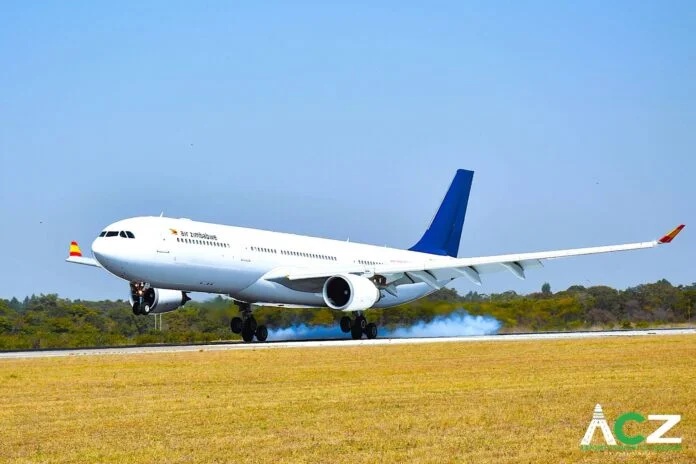
HARARE, 26 November 2026 – Air Zimbabwe has engaged Portuguese aviation company EuroAtlantic Airways to provide an Airbus A330-300 aircraft for its Harare–London route, replacing Spanish carrier Plus Ultra following an unexpected disruption to the previous wet-lease arrangement.

In a press statement issued on Thursday, the national airline said the new partnership would strengthen its operational resilience and ensure continuity of its international service.

Under the agreement, EuroAtlantic will provide the aircraft, crew, maintenance and insurance under an Aircraft, Crew, Maintenance and Insurance (ACMI) arrangement, commonly known as a wet lease.

The move follows the withdrawal of Plus Ultra’s aircraft earlier this week, which forced Air Zimbabwe to reschedule services and make alternative arrangements for affected passengers.

John Mangudya, chief executive of the Mutapa Investment Fund, which oversees Zimbabwe’s state-owned enterprises, confirmed the new partnership, although the financial terms of the agreement have not been disclosed.

Replacement aircraft restores London operations

The replacement arrangement provides Air Zimbabwe with an aircraft and operational support without requiring the national carrier to deploy its own aircraft and crew on the long-haul route.

The aircraft identified in media reports is registered as CS-TGJ. It is an Airbus A330-300 configured with 27 business-class seats and 263 economy-class seats, giving it a total capacity of 290 passengers.

The aircraft also has an in-flight entertainment system.

EuroAtlantic specialises in aircraft leasing, charter operations and ACMI services, supplying aircraft and operational support to other airlines. The arrangement allows Air Zimbabwe to continue operating the route while relying on its partner for the aircraft and associated technical services.

Plus Ultra withdrawal disrupted flights

The change follows operational difficulties involving Plus Ultra, which had supplied the Airbus A330-300 used by Air Zimbabwe since the resumption of direct flights to London in July.

The Spanish airline suspended its flight operations on November 23 amid financial difficulties and subsequently recalled the aircraft it had been leasing to Air Zimbabwe.

The withdrawal disrupted the Harare–London schedule, resulting in the postponement of the London–Harare flight scheduled for November 23 and the corresponding outbound service from Harare.

Air Zimbabwe apologised to affected passengers and said it had been working on alternative arrangements, including transferring some travellers to other airlines and providing accommodation where necessary.

Passenger advisory and revised schedule

Air Zimbabwe said the London–Harare service was scheduled to operate on Thursday, November 26.

According to the airline’s passenger advisory, check-in was scheduled to open at 13:30 hours, with departure set for 17:40 hours. Passengers were advised to arrive at the airport in good time to complete check-in and boarding formalities.

The airline also indicated that passengers booked on the affected November 23 service and those scheduled to travel on November 26 should take note of the revised arrangements.

The outbound Harare–London flight originally scheduled for November 25 had, however, been rescheduled to Friday, November 27, according to earlier operational updates. Passengers should therefore confirm their individual flight details directly with the airline before travelling.

Festive season expansion remains in focus

The replacement agreement comes just days after Air Zimbabwe announced plans to increase frequencies on the London route from three to four flights weekly, effective December 1.

The additional frequency was intended to accommodate increased passenger demand during the festive season, when travel between Zimbabwe and the United Kingdom typically rises.

Air Zimbabwe resumed direct scheduled flights between Harare and London Gatwick on July 22, 2026, ending a 14-year absence from the route.

The service had been relaunched using an Airbus A330-300 supplied by Plus Ultra under an ACMI arrangement. The return to London followed the acquisition of the necessary UK Foreign Operator Permit from the Civil Aviation Authority.

Our Analysis

The EuroAtlantic agreement is an important operational intervention for Air Zimbabwe because the London route is strategically significant for the national carrier’s international recovery.

Direct connectivity between Harare and London serves several markets, including Zimbabwe’s diaspora, business travellers, tourists, students and government-related travel. It also provides an important link for trade and commercial relationships between Zimbabwe and the United Kingdom.

However, the disruption exposes a structural vulnerability in the airline’s current long-haul operating model.

Air Zimbabwe’s reliance on wet-leased aircraft means that the continuity of its international services depends partly on the operational and financial stability of external aviation partners. When a lessor withdraws an aircraft, the airline can face immediate disruption unless replacement capacity is secured.

The EuroAtlantic agreement provides a practical solution, but the undisclosed commercial terms make it difficult to assess the cost implications for Air Zimbabwe.

Wet leasing can reduce the immediate capital burden of acquiring and maintaining long-haul aircraft. However, it also creates recurring leasing costs and dependence on external operators.

For the national airline, the longer-term challenge will be balancing operational flexibility with financial sustainability, fleet development and consistent service delivery.

The timing is also significant. Air Zimbabwe is attempting to expand the London route during the peak travel season. Maintaining schedule reliability will be essential to protecting passenger confidence and building a sustainable customer base.

Whats Next?

The immediate priority is restoring the normal flight schedule and ensuring passengers affected by the disruption reach their destinations.

Attention will then turn to the planned increase to four weekly frequencies from December 1 and whether the new wet-lease arrangement can support the additional capacity.

Air Zimbabwe has not disclosed the financial terms or duration of its agreement with EuroAtlantic Airways. Greater clarity on these arrangements would help establish the cost and operational implications of the partnership.

For now, the replacement aircraft gives the national carrier a route back to operational continuity. The more important test will be whether it can maintain reliable services and rebuild confidence in its international operations.

Continue Reading

Business & Economy

Minister Tagwirei Hosts French Envoy to Advance Zimbabwe-France Trade and Investment

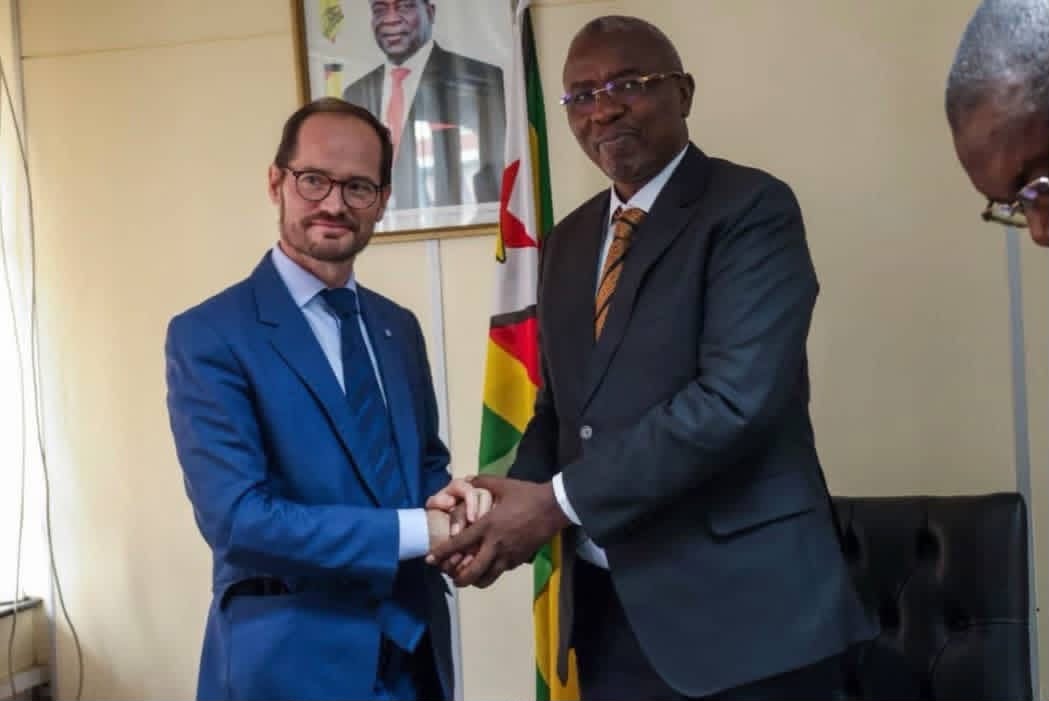
Moving swiftly to assert operational command of his portfolio, Minister of Economic Development and Investment Promotion Senator Dr. Kudakwashe Tagwirei hosted the Ambassador of France to Zimbabwe for high-level talks focused on unlocking investment opportunities, strengthening bilateral trade, and advancing pragmatic economic cooperation between Harare and Paris.
Published

on

Minister Tagwirei Hosts French Envoy to Advance Zimbabwe-France Trade and Investment

HARARE — Zimbabwe’s drive to translate its “Open for Business” mantra into tangible international capital gained fresh momentum this week as the Minister of Economic Development and Investment Promotion, Senator Dr. Kudakwashe Tagwirei, hosted the Ambassador of France to Zimbabwe for high-level bilateral talks.

Moving swiftly to assert operational command of his newly established portfolio, Dr. Tagwirei used the engagement to outline Harare’s immediate economic priorities, focusing squarely on unlocking direct investment opportunities, expanding bilateral trade volumes, and building structured economic cooperation between Zimbabwe and France.

Since taking the helm of the separated Ministry of Economic Development and Investment Promotion in October 2026, Dr. Tagwirei has prioritized results-driven economic diplomacy over political rhetoric. His background as a prominent industrialist and entrepreneur—having built major commercial footprints across Zimbabwe’s energy, mining, agriculture, and infrastructure sectors—brings a private-sector urgency to a ministry specifically designed to mobilize capital alongside the Ministry of Finance’s fiscal stewardship.
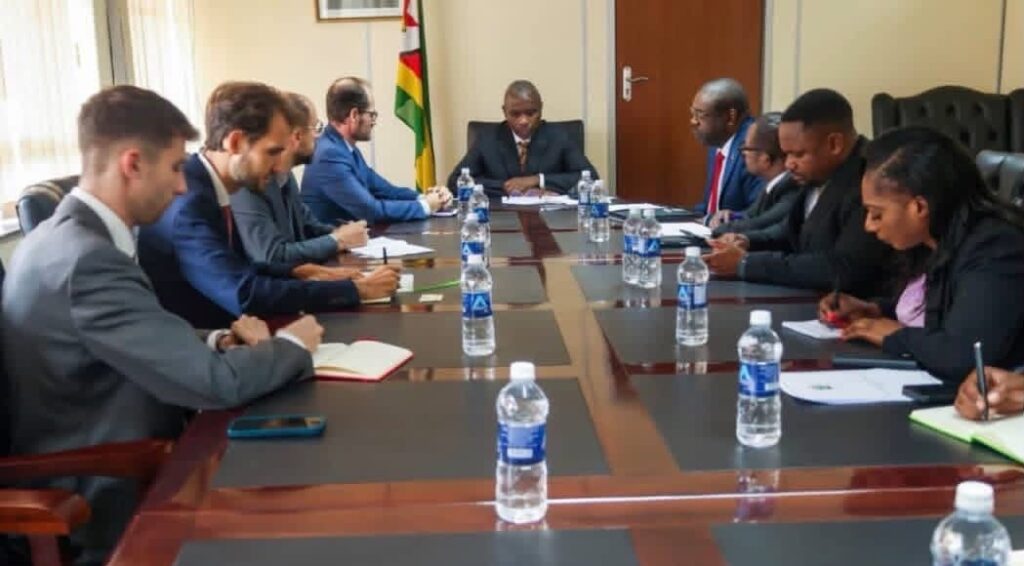
Harare and Paris Chart Pragmatic Economic Course as Minister Tagwirei Engages French Envoy

Harare and Paris Chart Pragmatic Economic Course as Minister Tagwirei Engages French Envoy

The meeting with the French envoy signals a notable step in Zimbabwe’s broader engagement and re-engagement agenda championed by President Dr. Emmerson Mnangagwa. Guided by the foreign policy doctrine of being “a friend to all and an enemy to none,” Harare has consistently sought to reset relations with Western capitals by anchoring discussions in mutual economic interest rather than historical friction.

As a leading voice within the European Union, France’s willingness to engage directly with the Ministry of Economic Development and Investment Promotion underscores a growing pragmatic consensus: sustainable progress between Harare and Brussels is best achieved through commercial partnerships, trade facilitation, and direct dialogue rather than megaphone diplomacy.

For Dr. Tagwirei’s ministry, the engagement sets the tone for an active, outward-looking mandate. With Zimbabwe consolidating recent macroeconomic stability—marked by steady GDP growth and sharply moderated inflation—the Ministry is positioning itself as the primary bridge for international investors seeking bankable projects in a reforming market.

By pairing private-sector execution with state-level diplomacy, Dr. Tagwirei is signaling to both regional and European partners that his office is fully operational, aligned with Vision 2030, and ready to convert diplomatic goodwill into concrete economic output.

Continue Reading

Trending

×